
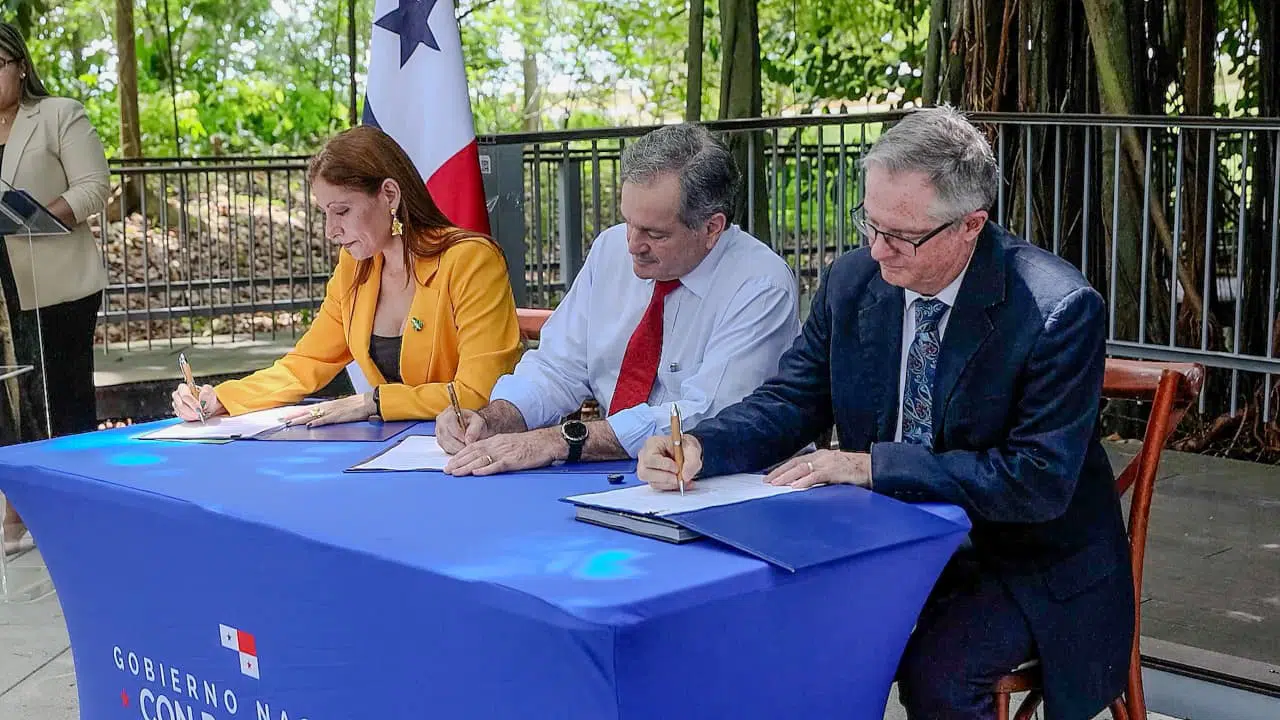
Panama has embarked on a pivotal journey to bolster its national biodiversity conservation efforts, formally initiating the comprehensive evaluation and update of its network of Key Biodiversity Areas (KBAs). This critical process, underscored by the signing of an Understanding Agreement on May 18, 2026, between the Panamanian Ministry of Environment, the KBA Partnership, and the Amphibian Survival Alliance (ASA), signifies a profound commitment to safeguarding the nation’s unparalleled natural heritage. The initiative is set to redefine conservation strategies, aligning Panama with global biodiversity targets and cementing its role as a leader in environmental stewardship in Central America.
The signing ceremony, held with prominent environmental leaders and government officials, including the Minister of Environment, Juan Carlos Navarro, Dr. Gina Della Togna (Executive Director of the Amphibian Survival Alliance), and Dr. Andrew Plumptre (Head of the KBA Secretariat), marked a new era for Panama’s conservation agenda. This agreement is not merely a formality but a strategic move that directly supports Panama’s obligations under the Kunming-Montreal Global Biodiversity Framework (KMGBF), adopted in December 2022. Specifically, it targets commitments related to spatial planning, ecosystem restoration, and the crucial goal of effectively conserving at least 30% of the planet’s land and marine areas by 2030, often referred to as the "30×30" target. By systematically identifying, mapping, and documenting sites essential for the persistence of biodiversity, Panama aims to create a robust foundation for its National Biodiversity Strategy and Action Plan (NBSAP), ensuring that conservation efforts are data-driven, strategic, and impactful.
Understanding Key Biodiversity Areas (KBAs) and Their Global Significance
Key Biodiversity Areas (KBAs) are globally significant sites for biodiversity conservation, identified using a set of internationally agreed-upon criteria. These criteria, established in the "Global Standard for the Identification of Key Biodiversity Areas" (IUCN, 2016), aim to identify sites that contribute significantly to the global persistence of biodiversity across all taxonomic groups and ecosystems. The KBA Standard provides a robust, scientific framework, ensuring that identified sites are truly irreplaceable or highly vulnerable, making their conservation a global priority. The KBA Partnership, a collaboration of 13 leading international conservation organizations including BirdLife International, Conservation International, IUCN, and WWF, works to implement this standard globally, supporting countries in identifying, mapping, monitoring, and conserving these critical sites.
The concept extends beyond mere species richness, incorporating elements such as the presence of globally threatened species, restricted-range species, significant congregations of species, and critical ecological processes. The identification of KBAs is a rigorous process, involving extensive scientific data collection, expert consultation, and stakeholder engagement. Once identified, KBAs serve as crucial tools for conservation planning, informing national policies, guiding protected area designation, influencing development decisions, and mobilizing conservation funding. They are fundamental for achieving international commitments like the KMGBF, particularly the 30×30 target, as they pinpoint the most important areas that must be effectively conserved.
Panama: A Megadiverse Nation at a Crossroads
Panama, a narrow land bridge connecting North and South America, is globally recognized as a megadiverse country, boasting an extraordinary array of ecosystems and species. Its unique geographical position has made it a biological corridor, facilitating the migration and dispersal of countless species over millennia. The country’s diverse habitats range from lush tropical rainforests, cloud forests, and mangroves to extensive coral reefs and vibrant marine ecosystems in both the Pacific and Atlantic oceans. This rich biodiversity includes a high number of endemic species, particularly amphibians, reptiles, and plants, found nowhere else on Earth. For instance, Panama is home to over 10,000 plant species, 1,000 bird species (more than the entire North American continent), 250 mammal species, and over 200 amphibian species. Many of these species, like the critically endangered Panamanian golden frog (Atelopus zeteki), are iconic symbols of the country’s natural wealth but also stark reminders of the threats they face.
However, this invaluable natural heritage is under increasing pressure. Deforestation, driven by agricultural expansion, cattle ranching, and illegal logging, continues to threaten primary forests. Urbanization, infrastructure development (such as road construction and hydroelectric projects), and unsustainable resource extraction further fragment habitats. Climate change poses an existential threat, altering ecosystems, increasing the frequency and intensity of extreme weather events, and contributing to the spread of diseases affecting vulnerable species like amphibians. The update of Panama’s KBA network is therefore not just an administrative exercise but an urgent, strategic imperative to identify and protect the most critical strongholds of this biodiversity before it is irrevocably lost. By clearly delineating these areas, Panama can better focus its conservation efforts, allocate resources more effectively, and integrate biodiversity protection into national development planning, fostering sustainable practices that benefit both nature and people.

A Historical Perspective: From Important Bird Areas to Comprehensive KBAs
Panama’s journey toward identifying and protecting its most critical biodiversity sites has a rich history, spearheaded by dedicated local and international organizations. The foundational work began in 1995 when the Sociedad Audubon de Panamá, a venerable conservation leader and partner of BirdLife International, launched the Important Bird Areas (IBA) program. With crucial funding from the Natura Foundation, this initiative aimed to identify sites vital for the conservation of bird populations, recognizing birds as excellent indicators of ecosystem health. The program systematically gathered data on bird distribution, migratory patterns, and habitat requirements, laying the groundwork for future, broader conservation efforts.
This diligent work culminated in 2009 with the publication of "IBAs of the Americas," a landmark document that brought global visibility to these critical avian sites. Within this publication, 53 global IBAs were identified across Panama, covering an impressive 2,501,046 hectares, which constituted nearly 29% of the country’s terrestrial surface. These sites became cornerstones of Panama’s conservation discourse, influencing early environmental policy and raising public awareness about the importance of bird conservation.
The global conservation landscape evolved significantly in 2016 with the official publication of the "Global Standard for the Identification of Key Biodiversity Areas." This new framework expanded the scope beyond birds to encompass all taxonomic groups and ecosystems, creating a comprehensive "umbrella" standard. Consequently, all existing IBAs in Panama were recognized as KBAs, forming the initial basis for the country’s KBA network. However, as the original IBAs were primarily identified through an avian lens, a more exhaustive and multi-taxa assessment was deemed necessary to fully capture the breadth of Panama’s biodiversity. The current initiative, led by the Ministry of Environment and supported by ASA and the KBA Partnership, seeks to build upon this legacy, ensuring that the updated KBA network reflects the latest scientific understanding and includes sites critical for amphibians, mammals, reptiles, plants, fish, and invertebrates, as well as crucial ecosystem services. This expansion from bird-centric sites to a holistic biodiversity approach marks a significant maturation of Panama’s conservation strategy.
The Technical Backbone: The National KBA Coordination Group (GNC)
A crucial and immediate step following the MOU signing was the establishment of the National KBA Coordination Group (GNC). On May 19, 2026, a day after the official agreement, a pivotal meeting was convened to discuss and formalize the creation of this expert body. The GNC is envisioned as a multidisciplinary collective, bringing together Panama’s foremost experts in various species groups (e.g., ornithologists, herpetologists, botanists, mammalogists, ichthyologists), ecosystem specialists, and professionals in public policy and land-use planning.
The primary mandate of the GNC will be to oversee and facilitate the identification and evaluation of new and existing KBAs across Panama. This will involve synthesizing existing scientific data, conducting new field research where necessary, applying the rigorous KBA criteria, and engaging with local communities and stakeholders. The group will play a vital role in ensuring that the KBA identification process is scientifically sound, inclusive, and transparent. Furthermore, in a subsequent phase, the GNC will be instrumental in developing strategies for the effective conservation and management of these identified sites, working closely with government agencies, NGOs, and local communities. The formation of the GNC underscores a commitment to a science-driven and collaborative approach, leveraging national expertise to achieve robust conservation outcomes. Gabriela Toscano, Biodiversity Conservation Manager for BirdLife Americas, participated in the GNC formation meeting, sharing crucial technical insights and outlining the group’s functions, emphasizing the importance of rigorous methodology and collaboration.
Voices from the Frontlines of Conservation
The initiation of this KBA update process has garnered significant enthusiasm from both national and international conservation communities. Leaders expressed optimism about the profound impact this will have on Panama’s biodiversity.

Rosabel Miró, Executive Director of the Sociedad Audubon de Panamá, reflected on her organization’s long-standing commitment: “In 2009, we published a map with 57 KBAs identified at that time in Panama, in collaboration with Conservation International, a current member of the KBA Partnership. This achievement influenced national authorities to recognize these sites in official documents such as the Environmental Atlas (2010) and the National Biodiversity Strategy and Action Plan 2018-2050, among others. In this new, highly participatory process, we will collaborate to ensure that many individuals across the country contribute updated scientific information. This marks a new chapter in the conservation of local and migratory biodiversity, and we will continue to disseminate its importance to all Panamanians.” Her statement highlights the continuity of efforts and the crucial role of citizen science and broad participation in the updated KBA identification.
Gabriela Toscano of BirdLife Americas shared her excitement, emphasizing the historical significance of this endeavor: “We are witnessing a historic milestone for nature in Panama! The launch of this process fills us with joy and optimism, as it represents a great opportunity to unite science and action in favor of the country’s incredible biodiversity.” Her words resonate with the broader scientific community’s belief in evidence-based conservation.
Dr. Andy Plumptre, Head of the KBA Secretariat, reiterated the international support for Panama’s initiative: “I look forward to supporting the Ministry of Environment, the Amphibian Survival Alliance, and all institutions within the National KBA Coordination Group as they update their KBA network and work towards its conservation.” Plumptre’s statement underscores the collaborative nature of the KBA Partnership and its commitment to providing technical guidance and expertise to ensure the success of Panama’s conservation goals. These collective voices reinforce the collaborative spirit and the shared vision for a more sustainably managed Panama.
Broader Implications and Future Outlook
The comprehensive update of Panama’s KBA network carries profound implications for the nation’s environmental future, its economy, and its international standing. Firstly, it will significantly strengthen Panama’s national conservation policy and planning. By clearly identifying its most critical biodiversity sites, the government can integrate these KBAs into its land-use planning frameworks, environmental impact assessments, and sectoral development plans, thereby minimizing conflicts between development and conservation. This strategic approach will enable more informed decision-making, ensuring that future infrastructure projects or resource exploitation activities avoid or mitigate impacts on irreplaceable natural assets.
Economically, the enhanced KBA network can bolster Panama’s ecotourism sector, which relies heavily on its pristine natural environments and unique wildlife. Protecting these areas can attract more visitors, generating revenue and creating local employment opportunities in sustainable tourism. Furthermore, intact ecosystems within KBAs provide essential ecosystem services, such as clean water, climate regulation, pollination, and natural hazard protection, which are vital for the well-being of local communities and the national economy. For instance, the protection of cloud forests within KBAs can secure water sources for major cities and agricultural regions.
Internationally, this initiative elevates Panama’s reputation as a responsible global citizen committed to biodiversity conservation. It demonstrates tangible progress towards the Kunming-Montreal Global Biodiversity Framework targets, particularly the 30×30 goal. This leadership can attract further international funding, technical assistance, and partnerships for conservation projects, enhancing Panama’s capacity to address complex environmental challenges.
However, the path ahead is not without its challenges. Effective implementation will require sustained political will, adequate financial resources, robust legal frameworks, and continuous stakeholder engagement. Challenges such as land tenure issues, enforcement against illegal activities, and managing human-wildlife conflicts will need careful consideration. The success of the KBA update will ultimately depend on the ability to translate scientific identification into on-the-ground conservation action, involving local communities, indigenous groups, and the private sector as active partners.
In conclusion, Panama’s commitment to updating its Key Biodiversity Areas represents a momentous stride towards securing its natural heritage for future generations. By integrating rigorous science, historical knowledge, and broad collaboration, Panama is setting a powerful example for other nations, demonstrating that biodiversity conservation is not just an environmental imperative but a cornerstone of sustainable development and national prosperity. This initiative promises to safeguard the intricate web of life that defines Panama, ensuring that its vibrant ecosystems continue to thrive and contribute to the health of the planet.
