
The Albanian coast in spring is a breathtaking spectacle of nature, a vibrant tapestry of life where the ancient meets the ephemeral. Flamingos elegantly wade through the shallow, nutrient-rich lagoons, their pink plumage a striking contrast against the turquoise waters. Above, the majestic Dalmatian Pelicans glide with serene grace, masters of their aquatic domain. This delicate ecosystem also serves as a critical waypoint for millions of migratory birds, finding essential rest and sustenance within the shelter of ancient pine forests before embarking on the arduous legs of their journeys between the continents of Europe and Africa. This unparalleled sanctuary is known as Pishë Poro-Nartë, recognized globally as one of the Mediterranean’s most significant remaining wild coastlines and a site of immense ecological importance. Yet, this globally vital natural heritage is currently under siege, with heavy machinery tearing through its pristine landscape.
Unapproved Destruction Unleashes Ecological Crisis
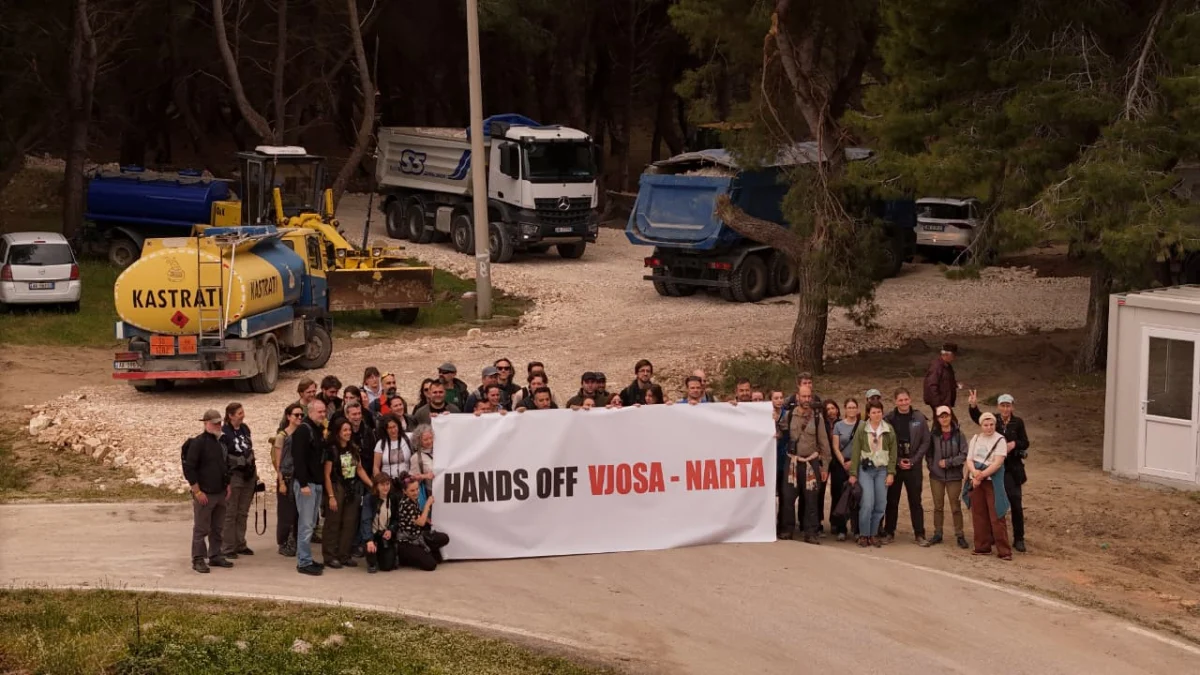
At the close of April, without any publicly approved project, environmental impact assessment (EIA), public consultation, or even a visible construction permit, bulldozers and other heavy machinery commenced operations within this protected area. Reports indicate widespread felling of ancient trees, the leveling of sand dunes meticulously shaped over centuries by natural forces, and the irreversible alteration of the landscape. The sheer audacity of the operation is compounded by a profound lack of transparency: local authorities and environmental groups alike remain in the dark about who authorized these destructive works, what is being built, or by whom. This opacity, in itself, constitutes a significant part of the unfolding scandal, raising serious questions about governance, the rule of law, and accountability within Albania’s administrative structures.
Pishë Poro-Nartë: A Sanctuary of Global Significance
Pishë Poro-Nartë is not merely a scenic stretch of coastline; it is an integral component of the Vjosë-Nartë Protected Landscape, an area that encompasses a vital portion of the Vjosë River delta – famously known as one of Europe’s last wild rivers, a designation recently underscored by its proposed status as a National Park. The broader protected landscape is a biodiversity hotspot, providing refuge to an astonishing array of wildlife. It is home to over 70 species classified as endangered and supports more than 200 distinct bird species, many of which are reliant on its unique habitats for survival. The ancient pine forest, specifically targeted by the current destruction, is irreplaceable. Its ecological value extends far beyond Albania’s borders, as it lies directly on the Adriatic Flyway, one of Europe’s most critical migration corridors. The loss of this forest and the degradation of the Pishë Poro-Nartë wetlands would trigger cascading ecological consequences, impacting avian populations across vast geographical regions and disrupting the delicate balance of an entire continent’s migratory patterns.
A Legislative Loophole Deliberately Exploited
The current crisis at Pishë Poro-Nartë unfolds against a troubling backdrop of controversial legislative changes in Albania. The Albanian government previously amended its Law on Protected Areas, introducing provisions that permit the construction of luxury resorts and other major developments within these otherwise safeguarded zones. This amendment stands in direct contradiction to established European Union nature protection standards, which strictly prohibit such activities in areas designated for conservation. Given Albania’s status as an EU accession candidate country, the European Commission has unequivocally stated that this law must be reformed to align with the acquis communautaire – the body of common rights and obligations that is binding on all EU member states. The Albanian government has, in turn, provided assurances that it will indeed amend the contentious legislation.
However, the reality on the ground paints a starkly different picture. While the promised legal reforms are debated and drafted on paper, the destructive works at Pishë Poro-Nartë are racing ahead. Aleksandër Trajçe, the Director of PPNEA (Protection and Preservation of Natural Environment in Albania), BirdLife’s Albanian partner organization, articulates the apparent cynical logic behind this rushed construction: "build now, before a stricter law makes it impossible." This strategy effectively creates a fait accompli, preempting future protective measures and cementing irreversible damage before new regulations can take effect.
What makes the current situation even more alarming is that the ongoing works appear to be illegal even under the existing, already controversial legislation. The complete absence of environmental assessments, public consultation, transparent permitting processes, and any official explanation from authorities regarding the nature or authorization of the development constitutes a grave violation of current Albanian law and international best practices for environmental governance. The situation is further complicated by the fact that a major development project, reportedly linked to Jared Kushner, has also been planned for this ecologically sensitive area. While the direct connection between the current illegal works and this larger planned project remains officially unclear, its existence highlights the intense development pressure facing Albania’s coastlines.
Chronology of Concern
- Pre-2024: The Albanian government amends its Law on Protected Areas, allowing development within conservation zones. The European Commission raises concerns, emphasizing the need for alignment with EU environmental directives as part of Albania’s accession process. Albanian authorities offer assurances of legislative reform. Plans for significant development projects in the Pishë Poro-Nartë area, including one linked to Jared Kushner, are reported.
- End of April 2024: Heavy machinery, including bulldozers, moves into the Pishë Poro-Nartë Protected Landscape. Trees are felled, and sand dunes are leveled. These operations proceed without visible permits, environmental impact assessments, or public consultation, sparking immediate alarm among local environmental groups.
- Early May 2024: PPNEA and other conservation organizations document the destruction, alerting national and international partners, including BirdLife Europe & Central Asia. Calls for intervention and transparency intensify.
- Mid-May 2024: BirdLife Europe’s Regional Director, Ariel Brunner, and Head of Policy, Anouk Puymartin, travel to Tirana to engage with Albanian authorities. Discussions are reported as "constructive," with further assurances given that environmental legislation will be updated within the year.
- Present: Despite assurances, the illegal works at Pishë Poro-Nartë continue. Conservation groups issue urgent public calls for an immediate halt to all construction, full transparency regarding permits and project documents, and a comprehensive legal investigation into the violations that have already occurred.
Official Responses and Broader Implications
During their visit to Tirana, BirdLife Europe’s representatives conveyed their message directly to Albanian authorities. While welcoming the assurances of legislative reform, they underscored the critical urgency of the situation on the ground. As Ariel Brunner stated during a press conference in Tirana, "Bulldozers are operating in a completely illegal way, based on unclear decisions and a total lack of transparency – and this needs to stop." This statement encapsulates the core demand of the conservation community: that good intentions on paper must translate into immediate action to halt ongoing environmental destruction. The irony is stark: by the time a reformed law comes into force, the very forests and habitats it was meant to protect may already be irrevocably lost.
The implications of the Pishë Poro-Nartë scandal extend far beyond the immediate ecological damage. It represents a significant challenge to the rule of law and good governance in Albania. The lack of transparency, the apparent disregard for legal processes, and the unaddressed destruction within a protected area undermine public trust and raise serious questions about the integrity of administrative institutions. For an aspiring EU member state, such actions are particularly detrimental. Environmental protection, transparency, and adherence to the rule of law are fundamental pillars of the EU acquis, particularly under Chapter 27 (Environment and Climate Change) of the accession negotiations. Persistent non-compliance and flagrant violations of environmental safeguards could significantly impede Albania’s progress towards EU membership, damaging its international reputation and undermining the credibility of its commitment to European values.
Furthermore, the destruction of Pishë Poro-Nartë represents a profound betrayal of the Albanian people, who stand to lose one of their most valuable natural assets. The wild coastlines of Albania hold immense potential for sustainable eco-tourism, offering long-term economic benefits that respect and preserve the country’s natural heritage. Replacing unique ecosystems with potentially unsustainable resort developments not only destroys invaluable biodiversity but also foregoes opportunities for a more sustainable and inclusive economic future. It is also a betrayal of Albania’s commitments to international environmental conventions and to the millions of migratory birds and other species that depend on this critical stopover point every year.
Calls for Immediate Action and Accountability
In light of the ongoing destruction and the lack of transparency, BirdLife Europe & Central Asia, PPNEA, and other conservation organizations are issuing an urgent, unambiguous call to action for Albanian institutions. They demand:
- Immediate Halt to All Works: All construction activities within the Pishë Poro-Nartë Protected Landscape must cease without delay.
- Full Transparency: Every permit, project document, environmental assessment, and decision related to the site must be immediately published and made accessible to the public.
- Comprehensive Legal Investigation: A full and impartial legal investigation must be launched into how these illegal works were initiated, who authorized them, and who is responsible for the egregious violations of environmental protection laws.
The future of Pishë Poro-Nartë, and indeed the credibility of Albania’s environmental governance and its European aspirations, hangs precariously in the balance. The international community, alongside Albanian civil society, watches closely to see if the assurances made will translate into concrete actions to protect this globally significant wild coastline from irreversible destruction. The time for debate is over; the time for decisive action to safeguard Albania’s natural heritage is now.
