
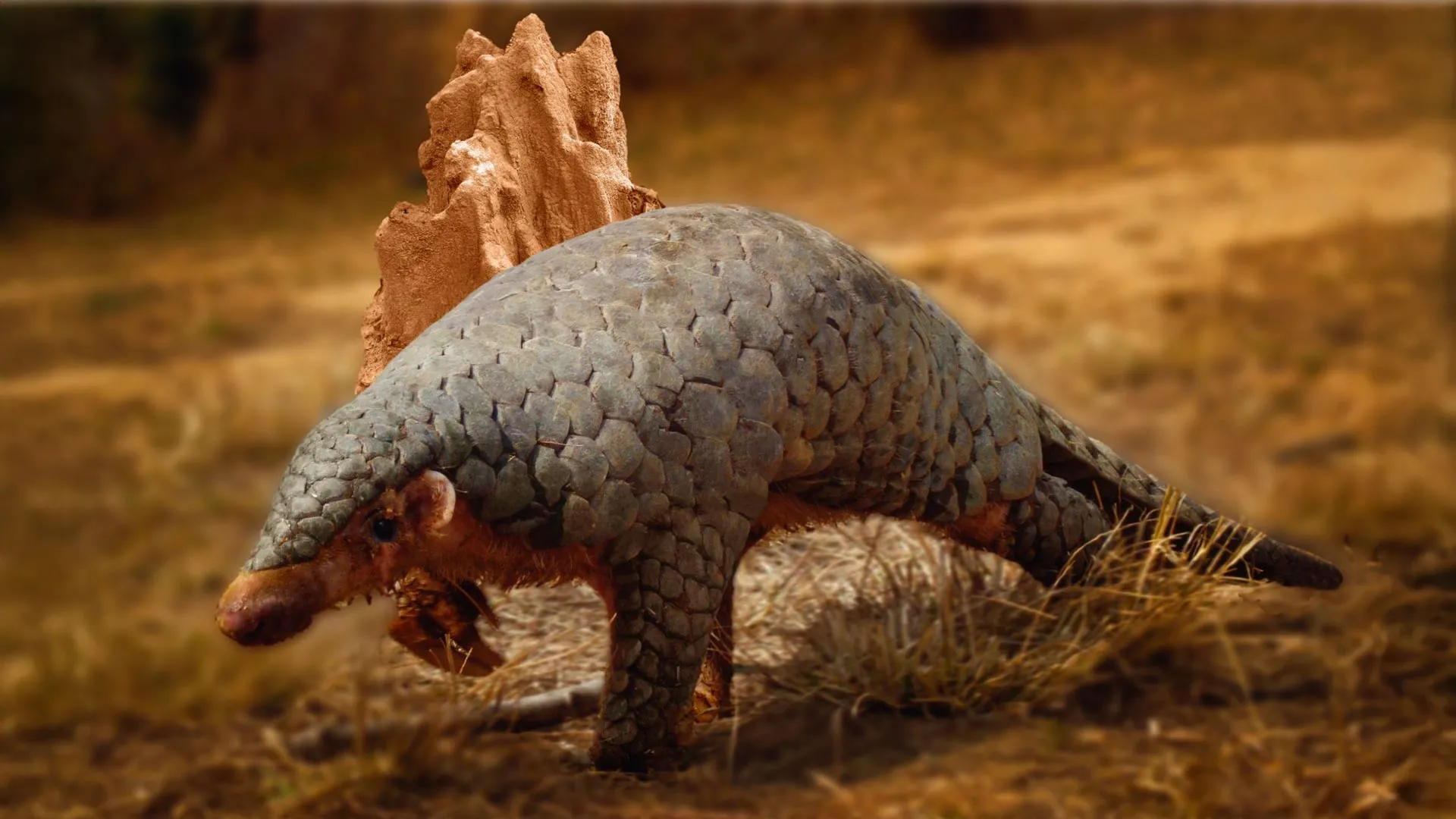
The global fight against wildlife trafficking has received a critical scientific boost following the definitive confirmation of a previously unrecognized pangolin species inhabiting the Himalayan foothills of Nepal and Northern India. Known scientifically as Manis aurita, this elusive mammal adds a vital piece to the complex puzzle of Asian biodiversity and provides conservationists with an upgraded forensic tool to dismantle the illegal wildlife trade.
The findings, recently published in the peer-reviewed journal Communications Biology, are the culmination of more than five years of intensive international research. By bridging modern genetic sequencing techniques with historical museum archives dating back nearly two centuries, an international team of scientists has successfully untangled a convoluted taxonomic riddle. The discovery not only rectifies a historical misclassification but also establishes a rigorous scientific baseline for species protection, regional wildlife forensics, and targeted anti-poaching operations.
Pangolins, often described as walking pinecones due to their overlapping keratin scales, represent a unique branch of mammalian evolution that stretches back millions of years. As the world’s most heavily trafficked mammals, these secretive creatures face unprecedented extinction risks driven by international demand for their scales—falsely believed to possess medicinal properties—in traditional practices. With scientists racing against time to protect remaining wild populations, the formal validation of Manis aurita marks a turning point in how researchers and law enforcement agencies approach conservation.
Untangling the Evolutionary Family Tree
The taxonomic journey that led to the rediscovery of Manis aurita began to accelerate in 2025, when a separate research initiative determined that animals previously categorized broadly as Chinese pangolins actually comprised two distinct species. While one population resided primarily within China proper, the other occupied the rugged mountain habitats and Himalayan foothills extending across parts of Nepal, India, Bhutan, and Myanmar. Initially, researchers designated this mountain-dwelling variant as Manis indoburmanica, commonly referred to as the Indo-Burmese pangolin.
However, strict rules govern scientific nomenclature. Under the principle of priority, when a biological organism has been assigned multiple scientific names throughout history, the earliest validly published name must take precedence.
Concurrently, a decade-long investigation led by Anderson Feijó, the Negaunee Assistant Curator of Mammals at the Field Museum and co-corresponding author of the study, was already underway. Feijó and his colleagues were analyzing DNA evidence alongside detailed morphological characteristics to map the complete evolutionary history of pangolins globally. During this extensive review, the research team encountered historical records of Manis aurita, a pangolin species originally described in 1836. Over subsequent decades, however, M. aurita had been systematically reclassified and lumped together as a mere subspecies of the Chinese pangolin.
This historical oversight created a formidable scientific challenge: determining the precise biological relationship between the newly proposed indoburmanica lineage and the historically archived aurita specimens. Were they genetically identical, or did they represent separate evolutionary paths?
Unlocking Secrets from 1836 Using Ancient DNA
The definitive answer to this taxonomic puzzle emerged from the historic halls of the Natural History Museum in London. Through rigorous collaboration, the museum’s curation and genetics teams successfully extracted and sequenced DNA directly from a nearly 190-year-old historical type specimen of the Nepalese subspecies originally collected in 1836.
When geneticists compared the ancient DNA from the London museum specimen against modern biological samples gathered from Himalayan pangolins, the genetic profiles matched identically. This empirical evidence proved conclusively that the animals temporarily designated as M. indoburmanica in 2025 were, in fact, members of the exact same species first documented and named M. aurita nearly two centuries prior. Consequently, Manis aurita was reinstated as the correct, senior scientific name for the Himalayan pangolin.
"This finding marks the culmination of more than five years of research that began in Nepal, where we first documented evidence suggesting that Himalayan pangolins represented a distinct evolutionary lineage," stated Narayan Koju, a researcher at Nepal Engineering College at Pokhara University and the study’s first author. "The confirmation of Manis aurita as a valid species demonstrates the importance of long-term research, international collaboration, and museum collections."
Morphologically, Manis aurita possesses distinct physical traits that separate it from its relative, the Chinese pangolin. According to Feijó, the Himalayan pangolin features a noticeably larger body, an elongated tail, and smaller external ears—anatomical nuances that ultimately inspired the species’ Latin epithet, aurita, a nod to its unique ear structure. Furthermore, the geographic distributions of the two species are completely allopatric, meaning their natural ranges do not overlap.
A Powerful New Forensic Tool Against Poaching
The formal recognition of Manis aurita carries profound implications for wildlife conservation and international law enforcement. Pangolins are targeted relentlessly by poachers, primarily driven by illicit markets where their scales are sold for use in traditional medicine. Because enforcement agents in destination markets and transit hubs almost exclusively recover bags of detached scales rather than intact, identifiable carcasses, tracing the origin of poached animals has historically remained exceptionally difficult.
"In the marketplaces you basically only find pangolin scales, not the whole animals, which makes it hard to know which species are being hunted and where they are coming from," explained Feijó.
By establishing distinct genetic markers and clear geographic boundaries for Manis aurita, conservation scientists can now apply advanced DNA analysis to confiscated contraband. Wildlife forensics laboratories can analyze seized scales to determine precisely which species they belong to and cross-reference that data with regional mapping. This capability allows authorities to trace illegal shipments backward, identifying specific poaching hotspots and enabling law enforcement to direct interdiction efforts where they are most urgently needed.
In addition to bolstering anti-trafficking operations, accurate taxonomy directly improves wildlife management and ecological restoration initiatives. Conservationists emphasize that past reintroduction programs risked failure or genetic contamination by inadvertently releasing species outside their native habitats—such as introducing Chinese pangolins into historical Himalayan ranges.
"Before, you might have introduced Chinese pangolins into Nepal, because you didn’t know the difference," Feijó noted. "By defining the differences between the species and the limits of where each species is found, we can make better conservation decisions."
The Indispensable Value of Museum Archives
The successful resolution of the pangolin family tree underscores a broader trend in modern conservation biology: the critical, often underappreciated role of natural history museums. Because wild pangolins are exceptionally rare, elusive, and nocturnal, gathering fresh biological samples across their entire geographic range is logistically prohibitive and frequently impossible.
Museum collections act as irreplaceable biological repositories, preserving historical specimens gathered over centuries. These archives provide contemporary scientists with access to genetic material from diverse, undisturbed populations that may now be depleted or locally extinct in the wild.
"Using museum collections allows us to have access to more individuals across the species’ range," Feijó emphasized. "If you only rely on fresh material, since the animals are so rare to find in the wild, this greatly limits the information that you can gather. We used collections to have a more complete sampling of the species. It’s a big advantage to have this resource available as a repository of material that we can look back and keep learning from."
The collaborative study reflects a massive global effort, drawing contributions from a diverse roster of institutions including Guangzhou University, Nepal Engineering College, Pokhara University, the Chinese Academy of Sciences, the University of Washington, the Smithsonian National Museum of Natural History, the University of Sevilla, the Guangdong Academy of Forestry, Tribhuvan University, Aspect Ecology Oxfordshire, the Chinese Wildlife Forensic Science Service, the Chengdu University of Traditional Chinese Medicine, and the Field Museum.
As conservationists and policymakers digest the findings, the message from the scientific community remains clear. "We can’t protect what we do not know," Feijó concluded, "and now that we have confirmed that this other species of pangolin exists, we can use that information to help protect these endangered animals."
