
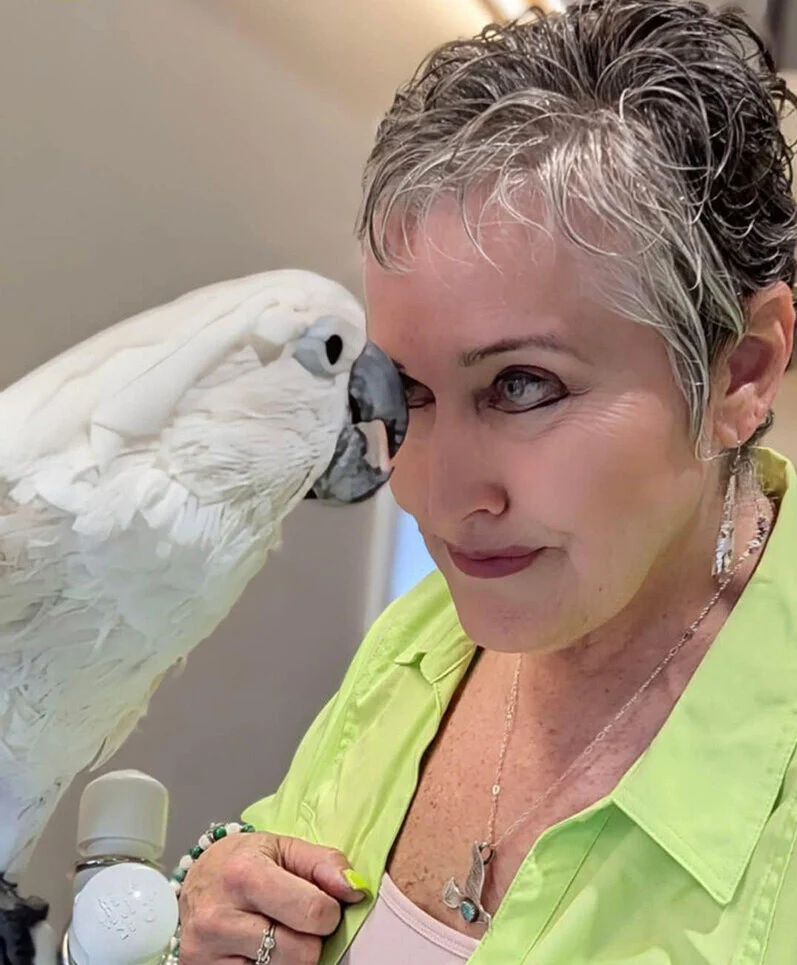
The narrative of human-animal connection has long transcended the traditional boundaries of companionship, evolving into a sophisticated framework of therapeutic support that addresses complex physical, emotional, and cognitive needs. At the center of this movement stands an extraordinary umbrella cockatoo named Boo, whose life trajectory—from a victim of severe neglect to a pioneering therapeutic figure—has culminated in a historic achievement. As the first avian recipient of the prestigious Pet Partners Pet of the Year award, Boo’s journey serves as a poignant case study in the transformative power of resilience, specialized veterinary care, and the evolving role of non-traditional therapy animals in modern healthcare.
A Historic Milestone for Avian Therapy
In 2026, the nonprofit organization Pet Partners, based in Bellevue, Washington, concluded its annual Pet of the Year campaign, which serves as both a recognition program and a significant fundraising initiative. This year’s campaign set a record, raising $158,275 to support the organization’s mission of facilitating animal-assisted interventions. The most notable outcome of the event was the selection of Boo, an umbrella cockatoo, as the organization’s representative animal. This marks the first time in the history of the award that a bird has achieved this distinction, signaling a broader acceptance of avian species in professional therapeutic environments.
The award is not merely a symbolic gesture; it acknowledges the rigorous standards to which Boo and his handler, Amy Hurst, are held. To qualify as a Pet Partners team, animals must pass a comprehensive evaluation that tests their temperament, reliability, and ability to handle unpredictable environments. Boo’s victory highlights his exceptional performance in these areas, particularly his capacity to engage with diverse populations, including individuals on the autism spectrum, youth groups, and patients undergoing stroke recovery.
The Chronology of a Remarkable Recovery
Boo’s path to becoming a national representative for animal therapy was neither linear nor easy. His early life was defined by systemic neglect and abuse, which resulted in profound physical and psychological trauma. Among the most severe consequences of his early environment was the loss of his vision. For a decade, Boo navigated a world of darkness, relying entirely on his other senses and the unwavering dedication of his owner, Amy Hurst.
The pivotal turning point in Boo’s life occurred when he became a candidate for a groundbreaking surgical procedure designed to restore his sight. While veterinary ophthalmology is a specialized field, the decision to perform surgery on a bird of Boo’s age—now 41 years old—was significant. The success of the procedure, which allowed Boo to see the world again after ten years of blindness, was widely covered in veterinary and avian welfare circles as a triumph of modern medicine.
Following his recovery, Boo did not simply return to a quiet life; he transitioned into a role of active service. The restoration of his vision provided him with a new level of confidence and environmental awareness, which proved essential for his work as a registered Pet Partners support bird. His life can be categorized into three distinct phases: the period of endurance during his years of neglect, the phase of medical restoration, and his current chapter as a therapeutic companion.
The Science and Scope of Animal-Assisted Intervention
The reliance on animals for emotional support is a well-documented phenomenon with quantifiable benefits. According to current data, approximately 18% of pet owners identify their animals as essential to their ability to manage life challenges, anxiety, or depressive symptoms. This support is not merely anecdotal; it is grounded in the physiological responses that occur during human-animal interactions, such as the reduction of cortisol levels and the increase in oxytocin production.
Pet Partners operates as a national leader in this space, maintaining a registry of over 10,000 active volunteer teams across the United States. Unlike service animals, which are trained to perform specific tasks for a single person with a disability, therapy animals like Boo are trained to provide psychological and physiological comfort to multiple people in institutional settings.

The inclusion of an umbrella cockatoo in these programs is particularly valuable due to the bird’s high intelligence and capacity for complex interaction. Cockatoos are known for their social nature and ability to mirror human emotion, which makes them highly effective in settings where patients may struggle with verbal communication or social isolation. In stroke recovery programs, for instance, the presence of an animal can serve as a catalyst for movement and engagement, encouraging patients to perform repetitive tasks that might otherwise feel tedious or demoralizing.
Professional Perspectives and Programmatic Impact
The implications of Boo’s recognition extend beyond the celebration of one individual bird. Experts in animal-assisted therapy note that the diversification of species in therapy programs helps reach patients who may not respond to traditional canine or equine therapy.
"The criteria for Pet of the Year focuses on the animal’s impact, the handler’s commitment, and the team’s ability to represent the mission of human-animal connection," stated a spokesperson familiar with the Pet Partners program. "Boo’s journey is a testament to the fact that healing is a two-way street. He was healed by his human, and now he spends his days helping to heal others."
Amy Hurst’s role as the handler cannot be overstated. The bond between an avian companion and a human is complex, requiring high levels of trust and mutual understanding. Hurst’s dedication to Boo—from facilitating his complex surgery to training him for his certification—has provided the stability necessary for him to perform his duties effectively. Her work reflects the broader philosophy of the animal-human bond, where the animal’s well-being is prioritized as the foundation for its therapeutic utility.
Broader Implications for Animal Welfare and Therapy
The success of the 2026 fundraising efforts, which resulted in $158,275 for Pet Partners, highlights the growing public interest in funding these initiatives. These funds are designated for training new handlers, covering the costs of evaluations, and expanding the reach of therapy programs into underserved areas, such as rural hospitals and specialized schools.
Boo’s story also brings attention to the long-term potential of senior animals. At 41 years old, Boo represents a segment of the animal population that is often overlooked. His ability to adapt to new environments and learn new skills well into his "senior" years challenges the perception that therapeutic work is only for younger, highly energetic animals.
Moreover, the success of the surgery that restored Boo’s vision serves as a reminder of the advancements in veterinary science. As more owners seek sophisticated care for their pets, the potential for older or disabled animals to lead fulfilling, productive lives increases. Boo is not just a success story for avian welfare; he is a beacon for the potential of geriatric care in exotic animals.
Conclusion: A Legacy in Motion
As Boo continues his work as a registered therapy bird, his legacy is already being felt in the lives of the individuals he encounters. Whether he is facilitating a hand therapy session or providing a calming presence for a student on the autism spectrum, his actions are a manifestation of the resilience he developed during his own recovery.
The Pet Partners Pet of the Year award is a recognition of this ongoing contribution. By honoring an umbrella cockatoo, the organization has acknowledged the unique, multifaceted ways in which non-traditional animals can support human health. As society continues to explore the boundaries of mental health support and emotional stability, the role of animals—and the stories of those who, like Boo, overcome great adversity to provide comfort to others—will remain an essential component of that progress. Boo’s second act is not merely a return to life; it is an active, ongoing commitment to the well-being of his community, guided by a handler whose dedication has transformed a personal struggle into a public triumph.
