
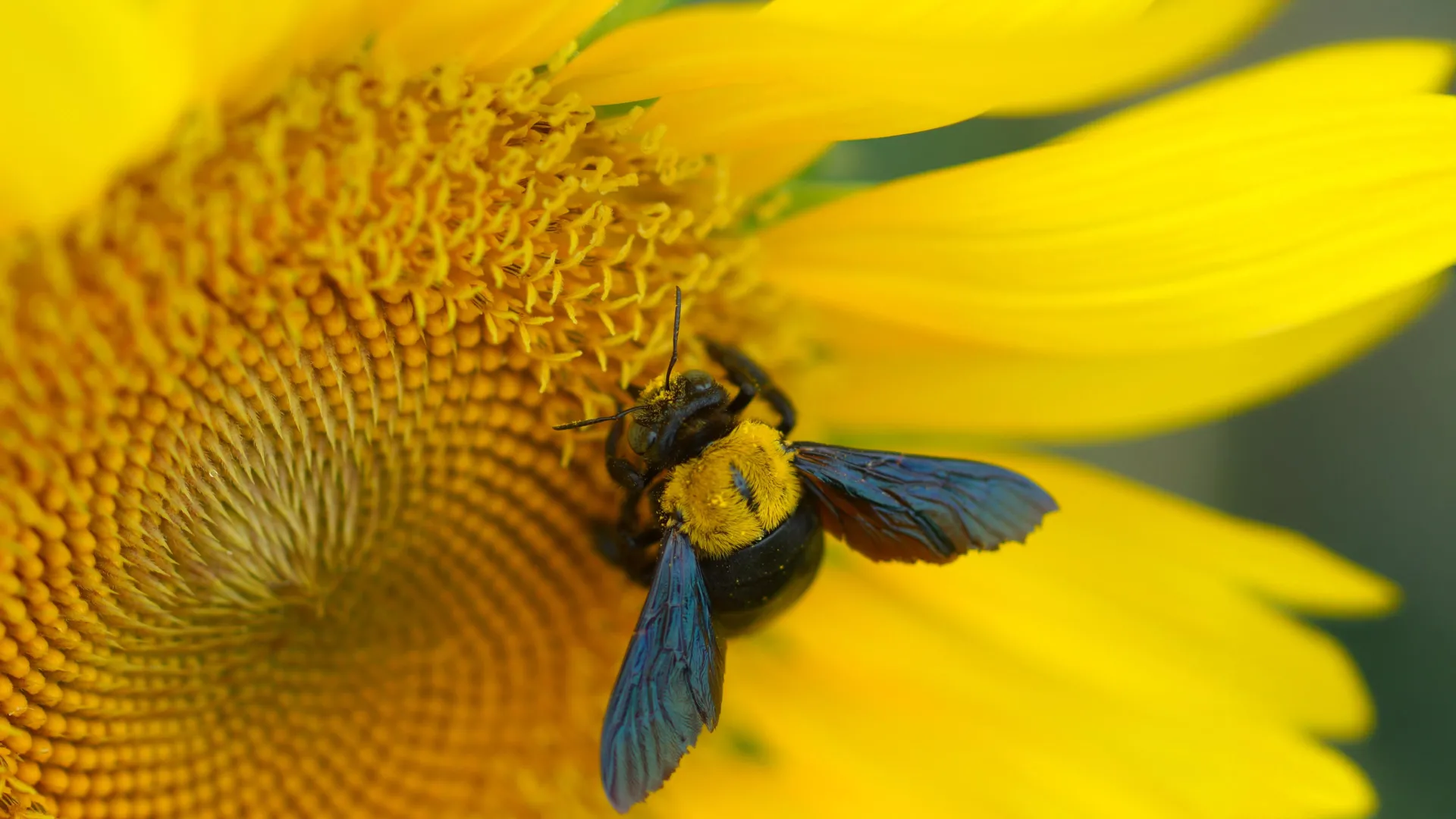
The survival of native pollinators is facing an unprecedented reckoning as global temperatures continue to rise, with new scientific findings revealing that Australia’s stem-nesting bee species are on the frontline of climate vulnerability. Published in the esteemed journal Nature Communications, a comprehensive multi-institutional study has shed light on how distinct architectural nesting habits profoundly dictate a species’ ability to endure extreme heat events. While subterranean-dwelling bees possess natural geological buffers against thermal extremes, insects that rely on thin plant stems and twigs are left severely exposed to the intensifying crucible of anthropogenic climate change.
The collaborative research initiative brought together academic powerhouses from across the Australian continent, featuring leading experts from Macquarie University, The University of Sydney, La Trobe University, Flinders University, the University of Wollongong, Adelaide University, and The University of Queensland. By examining the physiological heat tolerances of 95 distinct native bee species stretching from the tropical northern latitudes down to the temperate southern regions, the scientific consortium has established a critical baseline for understanding how evolutionary traits interact with modern environmental degradation.
As global policymakers grapple with escalating greenhouse gas emissions and subsequent weather volatility, this study underscores the urgent necessity of integrating localized ecological architecture into conservation frameworks. The findings transition the conversation from broad regional warming trends to the micro-habitats where life-or-death thermal thresholds are crossed daily.
Nesting Micro-Habitats and the Architecture of Survival
Australia’s vast and ancient ecosystems support an estimated 1,700 native bee species, displaying a remarkable diversity of life histories, morphologies, and ecological niches. Unlike the introduced European honeybee, which forms massive, perennial colonies in hives and hollows, the vast majority of Australia’s native bees are solitary or semi-social, engineering specialized nests designed to protect their developing brood.
Broadly categorized, these native species fall into three primary nesting guilds: subterranean diggers that excavate burrows into the earth; wood-nesters that utilize pre-existing cavities in decaying logs, tree trunks, and fallen timber; and stem-nesters that carve out or utilize narrow hollows inside plant stems, dry reeds, and small twigs.
According to the research team, these physical choices dictate a bee’s thermal reality. Subterranean species benefit from the earth’s natural thermal mass, which acts as a powerful insulating blanket, buffering them against the punishing peaks of daytime surface temperatures. Conversely, stem-nesting species find themselves housed in delicate, highly responsive structures. A thin plant stem offers virtually no thermal insulation, leaving the resident bees and their larvae completely at the mercy of ambient air temperature spikes.
"Bees that nest underground can hide from extreme heat—as a result, they don’t experience temperatures as high as those that live above ground, particularly species that live in thin plant stems that offer very little insulation from the heat outside," explains lead author Dr. Carmen da Silva, a Research Fellow within the Pollinator Futures Research Centre at Macquarie University in Sydney. "Stem-nesting species appear to have the lowest capacity to escape unfavorable environmental temperatures and are likely to be the most impacted by anthropogenic climate change in the near term."
This localized vulnerability highlights a stark disconnect between a species’ physiological makeup and the physical reality of its micro-climate. Even if a stem-nesting bee possesses a moderate cellular tolerance for heat, the physical greenhouse effect of a sun-baked twig can easily push internal temperatures past lethal physiological thresholds.
Geographical Gradients and the Tropical Trap
Beyond the micro-habitat of the nest, the study uncovered a macro-geographical vulnerability that has alarmed conservation biologists. The research team identified a stark latitudinal gradient in heat tolerance, revealing that bee species inhabiting tropical regions closer to the equator face the most severe immediate risks from climate change.
While intuition might suggest that tropical species are naturally pre-adapted to high temperatures, the study’s authors caution that evolutionary adaptation has its limits. Many tropical species are already living precariously close to their maximum thermal tipping points. With narrower safety margins between their baseline environment and their critical thermal limits, tropical stem-nesting bees possess very little evolutionary buffer to cope with accelerated global warming.
Dr. Vanessa Kellermann, Senior Lecturer in the Department of Ecology, Plant and Animal Sciences at La Trobe University and a senior author of the study, emphasizes the counterintuitive nature of these ecological findings.
"Predicting which species will be vulnerable to climate change is one of the biggest challenges in ecology," notes Dr. Kellermann. "We found bee species with the highest heat tolerance were not necessarily the safest from warming, because many of them already live in extremely hot environments."
This realization dismantles the comforting assumption that organisms native to hot climates are inherently safe from the impacts of rising global temperatures. When an ecosystem shifts past a certain thermal baseline, even historically heat-adapted organisms can experience catastrophic population declines as temperatures systematically breach their physiological capacities.
The Broader Ecological and Agricultural Implications
The systematic decline of native bee populations carries profound implications that stretch far beyond academic entomology. Bees are foundational keystones in terrestrial ecosystems, acting as primary pollinators for a vast array of native flora that form the structural and nutritional backbone of Australian bushland. Without effective pollination, plant recruitment stalls, cascading upward to impact herbivores, insectivorous birds, and apex predators alike.
Furthermore, Australia’s multi-billion-dollar agricultural sector relies heavily on the pollination services provided by both native and managed insect populations. While honeybees manage a significant share of commercial pollination, native bees are irreplaceable specialists in several high-value horticultural industries.
"Bees are critical in ecosystems all over the world because of their role as pollinators, and they’re under threat from warming and drying climates," stresses Dr. da Silva. "Bees sustain native ecosystems and play a crucial role in agricultural crop production—tropical native bees are vital pollinators for crops like macadamia nuts, avocados, mangos, and lychees."
The loss of these specialized pollinators could introduce severe economic shocks to tropical and subtropical agricultural producers, driving down crop yields and increasing reliance on costly, vulnerable commercial pollination management systems. The economic resilience of orchards specializing in macadamias and avocados is directly tied to the survival of the wild native pollinators buzzing through their canopies.
A Chronology of Mounting Ecological Concern
The publication in Nature Communications represents the culmination of years of escalating scientific concern regarding insect biodiversity loss globally. Over the past decade, entomologists have documented widespread declines in insect biomass across North America, Europe, and parts of the Southern Hemisphere—a phenomenon frequently referred to by researchers as the "insect apocalypse."
Historically, much of the research surrounding climate-induced insect decline focused on habitat destruction, pesticide accumulation, and invasive species. However, as global mean temperatures continue to shatter historical records—with international climate agencies confirming consecutive years of record-breaking heat—thermal stress has emerged as an independent, primary driver of ecological collapse.
In the Australian context, this timeline of pressure was dramatically accelerated by the catastrophic 2019–2020 "Black Summer" bushfires, which scorched millions of hectares of forest and bushland. These unprecedented fires devastated insect habitats, fragmented populations, and forced researchers to look more closely at the compounding threats of chronic heatwaves and drought. The collaborative multi-university study was designed precisely to address this knowledge gap, systematically quantifying thermal tolerances across a broad geographical and taxonomic spectrum to shift conservation strategies from reactive triage to proactive defense.
Closing the Knowledge Gap in Native Bee Behavior
Despite their ecological and economic importance, Australia’s native bee populations remain remarkably understudied compared to their European or North American counterparts. Much of the behavior, reproductive biology, and fine-scale distribution of the country’s 1,700 species remains shrouded in scientific mystery.
Co-senior author Dr. Ros Gloag, Senior Lecturer in Evolutionary Biology in the School of Life and Environmental Sciences at the University of Sydney, points out that safeguarding these species requires a fundamental shift in how researchers approach invertebrate conservation.
"We still know so little about most of Australia’s amazing native bees," remarks Dr. Gloag. "This study helps us recognise that having a better understanding of native bee behavior is key to identifying the greatest threats to their wild populations."
Without granular data on where specific species nest, how they forage under thermal stress, and what micro-climatic refugia they utilize during heatwaves, conservationists cannot effectively design targeted interventions.
Policy Responses and Future Conservation Strategies
In the wake of these findings, environmental scientists and conservation policymakers are calling for a reassessment of land management practices. Traditional conservation frameworks often prioritize broad land clearing bans and floral resource protection, but the new study suggests that structural micro-habitat preservation is equally critical.
For stem-nesting and wood-nesting bees, the presence of standing dead timber, fallen branches, native shrubs with suitable pithy stems, and undisturbed leaf litter is a matter of survival. Modern forestry practices, agricultural clean-up routines, and urban landscaping often remove these vital structural elements under the guise of "tidiness," inadvertently stripping the landscape of essential nesting architecture.
Conservationists are urging land managers, local councils, and private property owners to adopt "bee-friendly" habitat management strategies. This includes leaving dead wood intact, preserving native reeds and thick-stemmed understory plants, and creating artificial nesting blocks or "bee hotels" designed with adequate thermal insulation to protect vulnerable larvae from baking in direct sunlight.
Furthermore, agricultural producers are being encouraged to integrate diversified native vegetation corridors into crop layouts. These buffer zones not only provide critical floral resources throughout the year but also create shaded micro-climates where stem-nesting bees can establish populations shielded from the worst excesses of ambient heat.
Conclusion: A Call for Urgent Ecological Literacy
The research published in Nature Communications serves as a stark reminder that the impacts of climate change are deeply nuanced, operating on a micro-geographic scale that defies broad generalizations. By proving that stem-nesting species and tropical populations face the most immediate danger, the study provides conservationists with a precise roadmap for prioritizing intervention resources.
As the planet continues on its current warming trajectory, the fate of Australia’s stem-nesting native bees hangs in the balance. Protecting these vital pollinators will require a coordinated national effort combining rigorous physiological research, enlightened agricultural policy, and proactive micro-habitat preservation. Only through a granular understanding of how these insects interact with their immediate physical environments can humanity hope to safeguard the silent engine of its most vital terrestrial ecosystems.
