
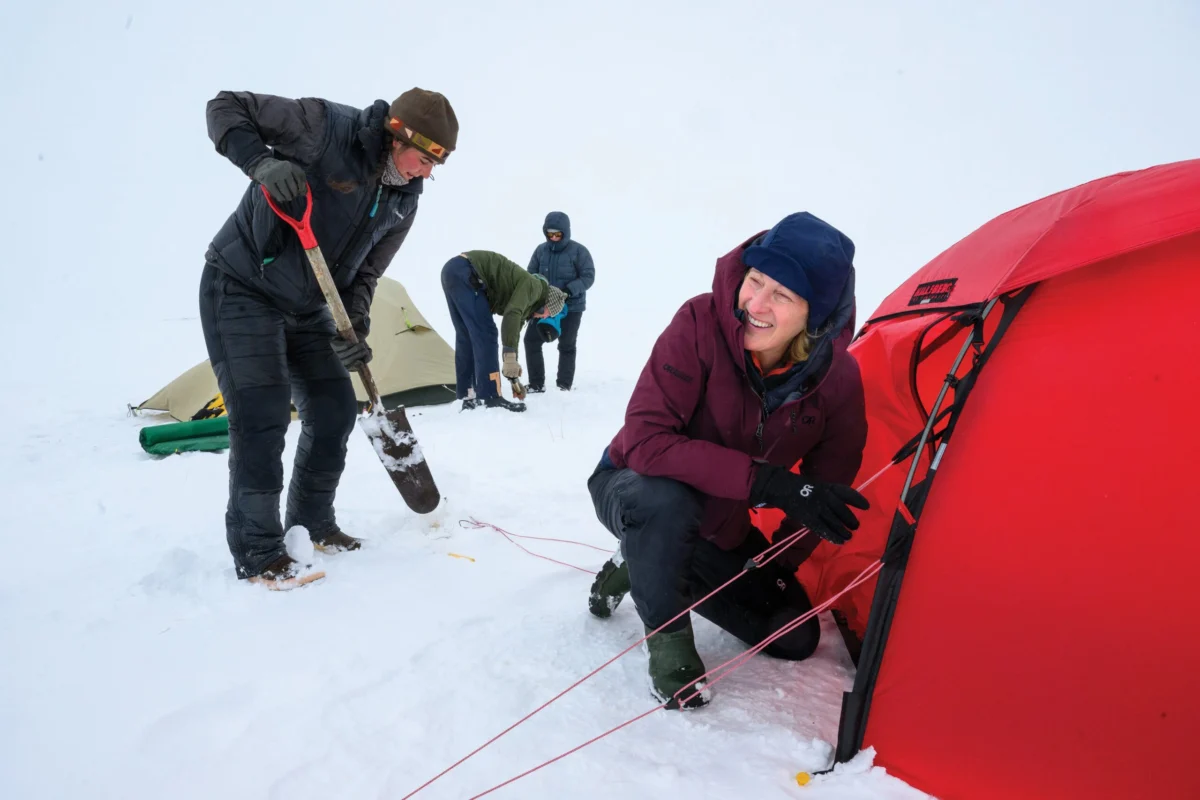
The remote expanse of Teshekpuk Lake, nestled within Alaska’s Western Arctic, serves as one of the most vital ecological hubs in the Northern Hemisphere. Stretching across thousands of square miles of pristine wetlands and tundra, the region functions as a critical breeding ground for migratory birds that traverse entire continents. Recently, the leadership of the National Audubon Society embarked on a firsthand expedition to this rugged landscape, an initiative designed to bridge the gap between high-level policy decision-making and the raw, physical reality of the ecosystems that conservation efforts seek to protect. This journey into the heart of the Western Arctic highlights the interconnectedness of global flyways and the fragile, exacting nature of Arctic spring.
The Ecological Significance of Teshekpuk Lake
Teshekpuk Lake is not merely a geographic feature; it is a biological engine. As the largest lake in Arctic Alaska, its surrounding wetlands provide essential habitat for a diverse array of species. The area is globally recognized for its importance to migratory waterfowl, including the Pacific Black Brant, the Greater White-fronted Goose, and the Tundra Swan.
The region’s unique hydrology—characterized by complex drainage patterns and proximity to the Beaufort Sea—creates a nutrient-rich environment that supports rapid growth during the short, intense Arctic summer. For millions of birds, this landscape is a mandatory stopover or a terminal destination for nesting and brood-rearing. The health of these avian populations is a direct indicator of the health of the entire Western Arctic, reflecting the environmental integrity of the flyway that stretches from the Arctic Circle down to the coastal wetlands of the southern United States and beyond.
A Chronology of Conservation Efforts
The history of Teshekpuk Lake is marked by a decades-long struggle to balance industrial interest with environmental stewardship. The area lies within the National Petroleum Reserve-Alaska (NPR-A), a vast tract of land historically managed for energy development.
- 1976: The Naval Petroleum Reserves Production Act shifted the management of the NPR-A from the Department of the Navy to the Department of the Interior, opening the door for oil and gas leasing while emphasizing the need for environmental protection.
- Late 1990s–2000s: Escalating interest in oil exploration brought Teshekpuk Lake to the forefront of national conservation debates. Environmental advocacy groups began documenting the critical nature of the calving grounds for the Teshekpuk Caribou Herd, which utilizes the same geography as the migratory birds.
- 2013: The Bureau of Land Management (BLM) finalized an Integrated Activity Plan that established significant protections for the Teshekpuk Lake Special Area, acknowledging its status as a "globally significant" habitat.
- 2023–2024: Renewed regulatory debates regarding infrastructure development in the Western Arctic have once again highlighted the tension between national energy security and the preservation of irreplaceable biodiversity.
Field Observations: The Reality of the Arctic Frontier
The expedition to the lake occurred during the transition period between winter and spring, a time of extreme climatic sensitivity. While the calendar suggested the arrival of spring, the reality on the ground remained dominated by ice and snow. This delay in the seasonal thaw serves as a stark reminder of the volatility inherent in Arctic ecosystems.
For the researchers and conservationists present, the experience underscored the "essentials" of life in the north. The movement across the tundra, conducted via skis and snowshoes, revealed a landscape that is simultaneously harsh and hyper-abundant. During a three-day window, observers recorded nearly 30 distinct species, including the Snow Goose, various loon species, and the hardy Ptarmigan.
The auditory landscape of the tundra—the calls of migratory birds echoing across vast, silent expanses—serves as an indicator of successful arrival and breeding readiness. However, as noted during the expedition, weather shifts in the Arctic are not merely inconvenient; they are transformative. A late thaw can lead to a compressed nesting season, reducing the window for chicks to hatch and grow before the return of winter. This "cascading effect" means that a single week of unfavorable weather can dictate the reproductive success of an entire year’s cohort.
Data-Driven Implications for Global Flyways
Scientific monitoring confirms that the data gathered at Teshekpuk Lake holds profound implications for the broader North American flyways. Audubon’s long-term tracking data suggests that migratory birds serve as "sentinel species." By monitoring population health, nesting success, and arrival times at Teshekpuk, scientists can gain predictive insights into the environmental health of regions thousands of miles to the south.
For instance, the survival of the Pacific Black Brant depends on the availability of specific vegetation during the brief Arctic summer. If the timing of the thaw shifts due to climate change—a phenomenon already observed in historical meteorological data—the synchronization between the birds’ arrival and the peak availability of their food sources is disrupted. This phenomenon, known as phenological mismatch, is a growing concern for wildlife biologists.
Official Responses and Institutional Stance
Representatives from conservation organizations, including the National Audubon Society, emphasize that the protection of the Western Arctic is a moral and scientific necessity. In an era where the "bird curve"—the trend line of avian population health—is trending downward, the focus has shifted toward proactive landscape-level protection.
"The decisions made in boardrooms regarding land use policy have immediate, material consequences for the birds we see on the tundra," said an organization representative familiar with the expedition. "Our role is to ensure that the scientific data we collect in places like Teshekpuk informs the regulatory framework governing these public lands."
Conversely, industry proponents argue that responsible development can coexist with conservation. The challenge, according to government agencies like the BLM, lies in identifying "no-go" zones where the ecological cost of development outweighs the economic benefit, versus areas where mitigation strategies might be successfully implemented.
Broader Impacts: Connecting the Local to the Global
The narrative of Teshekpuk Lake is one of radical connectivity. The birds that breed on the shores of this Arctic lake do not exist in isolation. They connect the northernmost reaches of the globe to urban parks, coastal estuaries, and working farmlands across the hemisphere.
The conservation of this region is therefore not just a local issue for Alaska; it is a component of a larger strategy to maintain the functionality of global ecosystems. As the climate changes, the refuge provided by undisturbed landscapes becomes increasingly important. If the Arctic is the nursery for a significant percentage of the continent’s migratory birds, then the degradation of this landscape constitutes a systemic threat to biodiversity on a continental scale.
The conclusion drawn by those who have spent time in the field is that the protection of the Western Arctic requires a sustained, multifaceted approach. It involves advocacy at the federal level, rigorous scientific research on the ground, and a commitment to educating the public about the importance of these "invisible" connections.
Ultimately, the goal is to "bend the bird curve" upward. Achieving this requires acknowledging that the Arctic is not a distant, abstract concept but a foundational piece of a global mosaic. Whether through the preservation of marshes in the southern United States or the protection of nesting grounds in Alaska, the effort is unified by the understanding that every acre of habitat saved is a victory for the resilience of nature.
As the seasonal cycle at Teshekpuk Lake continues—the ice retreating to reveal the vast, greening tundra—the urgency of this mission remains clear. The birds will continue to return, following the path they have traced for millennia. It is the responsibility of human institutions to ensure that the landscapes awaiting their arrival remain intact, functional, and capable of sustaining the life that depends upon them.
