
The Great Salt Lake, a terminal body of water that serves as a critical stopover for millions of migratory birds and a vital economic engine for Utah, is currently navigating one of the most precarious periods in its recorded history. Despite facing the dual pressures of a record-low snowpack and blistering summer temperatures in 2026, the lake has managed to avoid dipping to the catastrophic levels observed in 2022. This relative stability—a reprieve rather than a recovery—is the direct result of a strategic, multi-year shift toward collaborative water management and aggressive, voluntary conservation programs.
At the center of this effort is the Great Salt Lake Watershed Enhancement Trust (the Trust), an organization co-managed by the National Audubon Society and The Nature Conservancy. By moving away from traditional, rigid water rights management toward a model defined by flexibility and partnership, the Trust has begun to demonstrate that the decline of the lake is not an inevitability, but a challenge that can be mitigated through collective human action.
A Chronology of Crisis and Response
To understand the significance of the current situation, one must look at the trajectory of the last five years. In 2022, the Great Salt Lake reached an all-time low elevation, exposing vast swaths of the lakebed and triggering alarms regarding air quality, ecological collapse, and the future of the local brine shrimp industry. That year served as a wake-up call for state legislators, environmental organizations, and municipal water districts alike.
Following the 2022 crisis, the state of Utah, in conjunction with private entities, began to formalize the framework that now governs the Trust’s activities. The years 2023 and 2024 saw significant investment into water banking and leasing mechanisms. By 2025, these programs began to produce measurable results, with significant volumes of water successfully diverted to Farmington, Gilbert, and Ogden Bays. As of October 2026, the Trust is on track to match its 2025 transaction volumes, an achievement that is statistically impressive given that the current water year has seen significantly less precipitation and snowmelt than the previous period.
The Mechanism of Flexibility: How Water Reaches the Lake
The core innovation in the Trust’s approach is the transition from "static" water rights to "dynamic" leasing agreements. In traditional western water law, the "use it or lose it" doctrine often discouraged conservation. If a holder did not use their full allocation, they risked losing the right to that water in the future. The Trust has circumvented this by creating a voluntary, incentivized program that allows water rights holders—including municipalities, agricultural producers, and industrial entities—to lease their water to the lake.
This flexibility manifests in several ways:
- Variable Volumetric Leasing: Agreements that allow the amount of water leased to fluctuate based on annual availability, ensuring that users do not over-commit during drought years.
- Temporal Flexibility: Moving away from seasonal delivery windows to deliver water at times when the lake needs it most, such as during critical nesting seasons for migratory birds.
- Multi-Sector Integration: Coordinating between municipal, industrial, and agricultural partners to ensure that conservation in one sector (such as urban residential reduction) creates a "surplus" that can be legally protected and moved to the lake.
A primary example of this is the partnership between the Trust and the Metropolitan Water District of Salt Lake & Sandy. Through this agreement, the District is committed to sending an annual average of 2,500 acre-feet of water to the lake over the next decade. This water, saved through efficiency upgrades and public conservation awareness, represents a new, permanent flow into the terminal system.
Data-Driven Conservation: Impact and Implications
The effectiveness of these efforts is best viewed through the lens of data. Water consumption in the Great Salt Lake Basin is heavily dominated by agriculture, which accounts for approximately 75% of water diversions. However, municipal conservation—driven by cities like Salt Lake and Sandy—is increasingly providing the "cushion" necessary during heat-stressed summers.
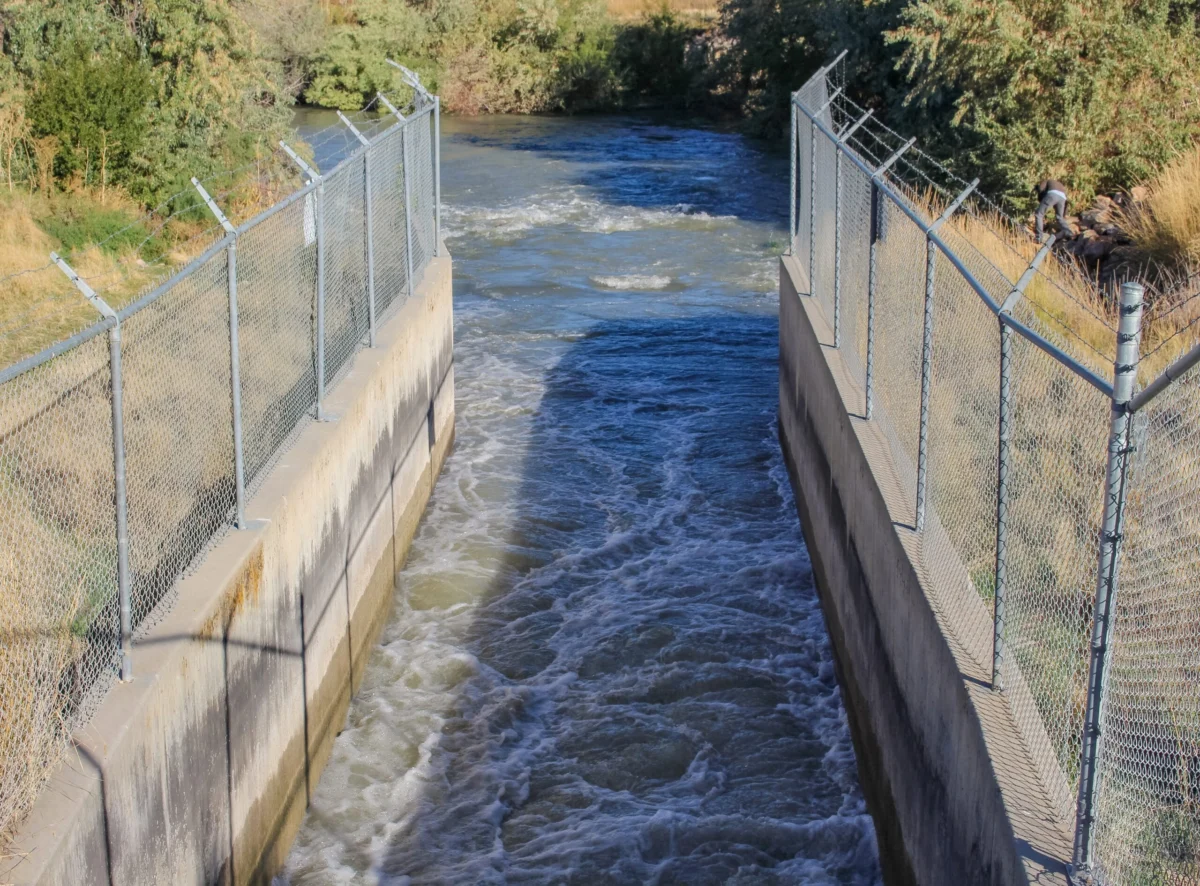
When residents reduce their lawn watering or businesses transition to xeriscaping, the resulting reduction in demand reduces the draw on the municipal supply. When those municipal supplies are backed by conserved water rights, the Trust can facilitate the "instream" delivery of that water all the way to the lake’s shoreline.
The economic implications are equally critical. A shrunken Great Salt Lake threatens a mineral extraction industry worth billions and a regional economy that relies on the lake for snow-making moisture. The cost of failing to manage the lake is projected to far exceed the current investments in water leasing and infrastructure improvements. By securing water for the lake today, the Trust and its partners are essentially paying an insurance premium against the much higher costs of total ecological and economic collapse.
The Network: Institutional Partnerships
The success of the Trust is not a solo endeavor. It operates as a linchpin in a much larger, complex network of stakeholders. The coordination required to move water from a mountain stream, through a municipal treatment plant or irrigation canal, and finally into the Great Salt Lake requires the cooperation of:
- The Great Salt Lake Commissioner’s Office: Providing high-level policy guidance and regulatory alignment.
- The Utah Divisions of Forestry, Fire and State Lands and Wildlife Resources: Ensuring that the water reaches the areas where it provides the most biological benefit.
- Industrial and Institutional Anchors: Entities like Rio Tinto Kennecott, the Jordan Valley Water Conservancy District, and The Church of Jesus Christ of Latter-day Saints have become foundational partners. Their willingness to coordinate their water usage helps maintain flows to critical habitats like Farmington and Gilbert Bays.
- New Regional Collaborators: The expansion of these efforts into the Weber and Bear River systems—through partnerships with the Weber Basin Water Conservancy District and agricultural entities like Huntsville Abbey Farm—is evidence that the "proof of concept" is scaling up to cover the entire watershed.
Analysis: Resilience in an Era of "Historic" Extremes
The phrase "historic drought" has become a common headline, but for water managers, it is now the baseline condition. The current climate reality in the Intermountain West suggests that precipitation patterns will remain erratic. Therefore, the strategy of the Trust is a shift from crisis management to systemic resilience.
The fundamental change is the recognition that the Great Salt Lake is a "beneficial user" of water. For much of the 20th century, water was seen only as a resource to be consumed for economic development. The current movement views the lake as a living system that requires a baseline flow to survive. The ability of the Trust to match 2025 water transaction levels during the drier 2026 season indicates that the infrastructure for this conservation is becoming more efficient and less reliant on "lucky" weather years.
Looking Toward the Future
While the current efforts are preventing the worst-case scenarios, officials and environmental scientists caution that the work is far from finished. The goal is to establish a permanent, reliable, and sufficient water supply that can sustain the lake even in back-to-back years of extreme drought.
The National Audubon Society and The Nature Conservancy have signaled that their primary goal for the next two years is the expansion of the voluntary leasing program. This involves not only securing more water but also diversifying the types of participants in the program. As more agricultural producers and industrial water users see the value in these flexible, compensated agreements, the total volume of water reaching the lake is expected to grow.
Ultimately, the lesson of the 2026 water year is that while the climate may continue to throw extreme challenges at the Great Salt Lake, the combination of technological innovation, legislative support, and a robust network of partners can successfully buffer the system against the most severe outcomes. The path to a healthy Great Salt Lake remains long, but the implementation of flexible, market-based conservation strategies has provided a functional roadmap for the years ahead. With winter approaching, the focus turns to the potential for snowpack accumulation, but the institutional foundation built by the Trust ensures that regardless of the weather, the lake will have a seat at the table in the state’s water future.
