
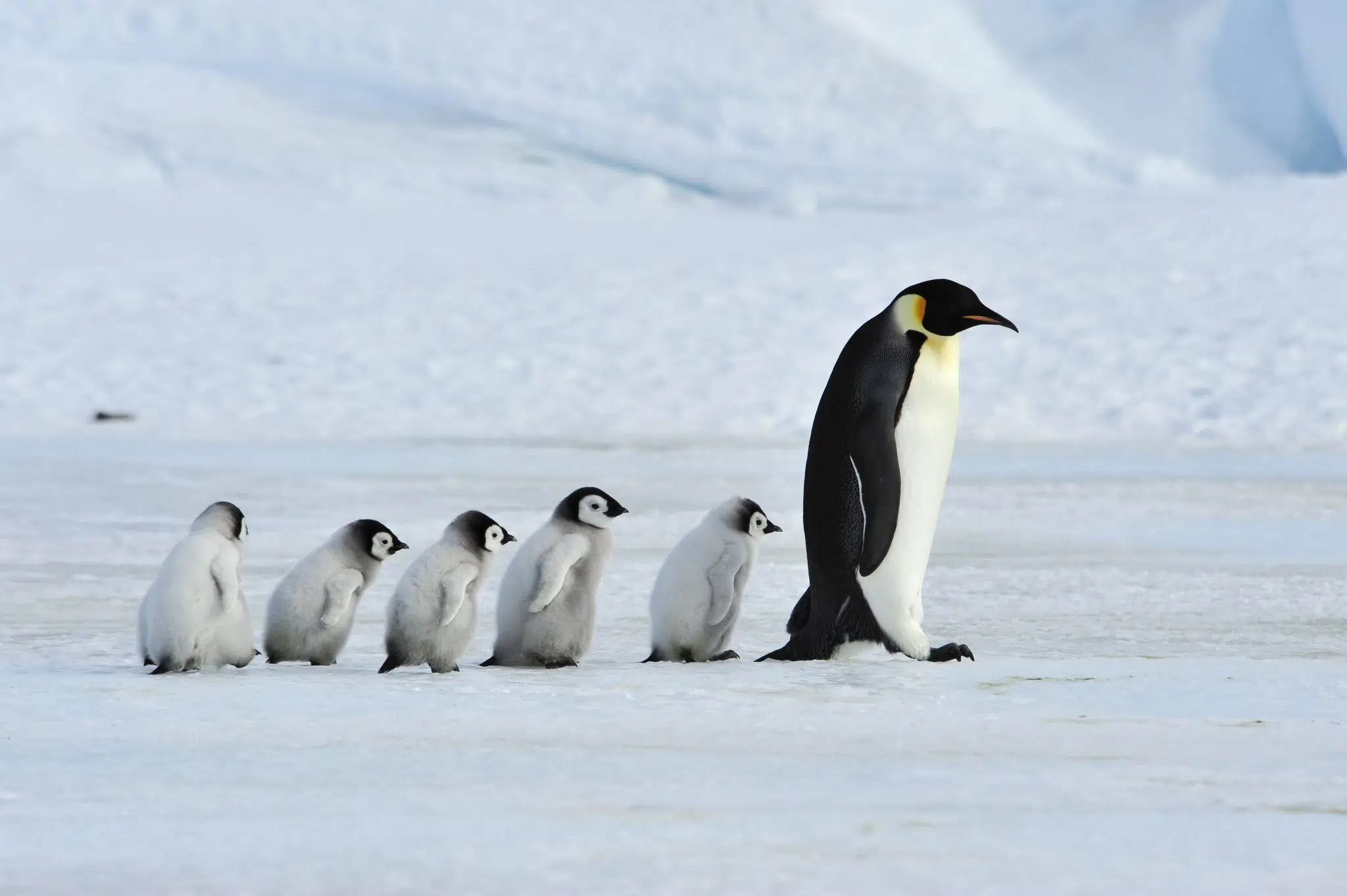
BirdLife International’s latest Red List assessment has unveiled a stark and distressing reality for the iconic Emperor Penguin, officially uplisting the species from "Near Threatened" to "Endangered" on the IUCN Red List of Threatened Species. This critical re-evaluation underscores the profound and accelerating impact of climate change on the fragile Antarctic ecosystem, prompting an urgent call for governments worldwide to designate the Emperor Penguin as an Antarctic Specially Protected Species during the upcoming 48th Antarctic Treaty Consultative Meeting in May.
The Perilous Plight of the Emperor Penguin
As the official Red List Authority for birds, BirdLife International, in collaboration with the IUCN SSC Penguin Specialist Group, undertakes rigorous annual reassessments of global bird extinction risks. These evaluations are crucial for identifying species most vulnerable to environmental shifts and guiding targeted conservation efforts. The reclassification of the Emperor Penguin (Aptenodytes forsteri), a species globally cherished for its resilience and unique life cycle in one of Earth’s harshest environments, represents a grave warning sign emanating from the planet’s southernmost reaches.
The primary driver behind this alarming decline is unequivocally climate change. Scientists project that the drastic reduction and increasingly erratic patterns of sea ice persistence in the Antarctic region will lead to a halving of the Emperor Penguin population by the 2080s. This forecast paints a grim future for a species intrinsically linked to the frozen landscape for its very survival.
Dependency on Sea Ice: A Matter of Life and Death

Emperor Penguins exhibit an extraordinary life cycle that is entirely dependent on stable sea ice, specifically "fast ice"—sea ice that is firmly anchored to the coastline, ocean floor, or grounded icebergs. This fast ice serves as the indispensable platform for multiple critical stages of their annual cycle: breeding, chick rearing, and moulting.
During the Antarctic winter, typically from April to December, adult penguins trek significant distances across the ice to established breeding colonies, where they lay a single egg. The male incubates the egg through the harshest months, enduring extreme cold and prolonged darkness without food, relying solely on fat reserves. Once the chick hatches, both parents take turns foraging and feeding their offspring. The chicks remain on the fast ice for several months, growing and developing their waterproof plumage.
The moulting season is equally perilous. During this period, adult penguins shed their old feathers and grow new ones, a process that renders them non-waterproof and unable to enter the frigid ocean to hunt for food. They must remain on stable ice for several weeks, vulnerable and reliant on their fat reserves. If the fast ice breaks up prematurely due to rising temperatures, both chicks and moulting adults face catastrophic consequences. Chicks, not yet waterproof, are plunged into the freezing waters, leading to widespread drowning and hypothermia. Adults mid-moult can also perish from exposure or starvation if their ice platform disappears.
Quantifiable Losses and Scientific Projections
The impact of changing sea ice dynamics is not merely theoretical; it is demonstrably affecting penguin populations right now. Satellite imagery, a vital tool for monitoring remote Antarctic colonies, indicates a significant loss of approximately 10% of the Emperor Penguin population between 2009 and 2018 alone. This translates to an estimated disappearance of over 20,000 adult penguins within less than a decade. These losses are directly linked to the unprecedented and sustained record lows in Antarctic sea ice extent observed since 2016.
Rob Martin, Red List Team Manager at BirdLife International, who spearheaded this crucial reassessment, articulated the gravity of the situation: "The Emperor Penguin’s shift from Near Threatened to Endangered is a worrying signal of the reach of climate change impacts into the most remote parts of the globe. Future projections for the species robustly point to severe reductions over the rest of this century. Emperor Penguins are completely dependent on the Antarctic habitat for breeding, moulting and feeding, but it will become harder for them to survive as ice patterns become less predictable and this crucial habitat keeps decreasing."

While specific instances of tragedy, such as the observed collapse of breeding colonies into the sea before chicks are able to swim, are challenging to quantify precisely in terms of overall population impact, comprehensive population modelling offers a clear and dire outlook. These models, which incorporate a wide range of future climate scenarios, consistently demonstrate that without immediate, abrupt, and dramatic reductions in global greenhouse gas emissions, Emperor Penguin populations are destined for rapid and severe decline throughout the 21st century.
A Call for Global Governance and Protection
The urgency of the Emperor Penguin’s plight is amplified by an impending diplomatic opportunity. Governments worldwide will convene in May for the 48th Antarctic Treaty Consultative Meeting (ATCM) in Hiroshima, Japan. This annual gathering is the primary forum for overseeing and shaping environmental protection policies for the Antarctic continent, a region governed by an international treaty system dedicated to peace and scientific research.
BirdLife International plays a critical role in informing these high-level discussions by providing authoritative Red List assessments, like the one for the Emperor Penguin, to guide decision-making. The organization is now specifically urging signatory governments of the Antarctic Treaty to leverage this meeting to designate the Emperor Penguin as an "Antarctic Specially Protected Species" (ASPS).
Such a designation would not be merely symbolic; it would impose legally binding obligations on governments to actively prevent actions that directly harm or disturb Emperor Penguins and their vital habitat. This includes regulating human activities such as tourism, scientific research, and any potential resource extraction in areas critical for penguin survival. It would also mandate increased monitoring and research into the species’ population dynamics and the specific threats it faces.
Martin Harper, CEO of BirdLife International, underscored the broader implications: "Penguins are already among the most threatened birds on Earth. The Emperor Penguin’s move to Endangered is a stark warning: climate change is accelerating the extinction crisis before our eyes. Governments must act now – starting by designating the Emperor Penguin as an Antarctic Specially Protected Species this May."

The ATCM offers a unique platform for international cooperation on conservation. While the Antarctic Treaty System has historically focused on scientific research and preventing military activity, the escalating environmental crisis demands a more robust and proactive approach to species protection. A decision to grant ASPS status to the Emperor Penguin would demonstrate a collective commitment to safeguarding one of the planet’s most iconic species and, by extension, the integrity of the Antarctic environment.
Broader Implications: A Barometer for Global Health
The fate of the Emperor Penguin serves as a powerful barometer for the health of our planet, particularly in the context of global climate change. These magnificent birds, often perceived as symbols of wilderness and resilience, are now sounding a critical alarm. Their dependence on a stable cryosphere makes them exceptionally vulnerable to even slight increases in global temperatures.
The cascading effects of sea ice loss extend beyond the penguins themselves. The entire Antarctic marine food web, from krill to seals and whales, is intricately linked to sea ice dynamics. Krill, the primary food source for many Antarctic species, rely on ice algae growing on the underside of sea ice during winter. A reduction in sea ice can lead to a decline in krill populations, subsequently impacting all species higher up the food chain, including the Emperor Penguin.
Furthermore, the situation highlights the formidable challenge of implementing effective conservation measures in a global commons like Antarctica. While the Antarctic Treaty System provides a framework for governance, the ultimate solution to climate-driven threats like sea ice loss lies in global action to reduce greenhouse gas emissions. The call to protect Emperor Penguins is therefore not just about a single species; it is a plea for fundamental changes in human behavior and energy policies worldwide.
The "birds are our compass" mantra, frequently invoked by BirdLife International, resonates deeply here. The health of avian populations, particularly those at the extremes of Earth’s ecosystems, offers invaluable insights into the broader health of our world. The Emperor Penguin’s escalating extinction risk is a chilling reminder that the impacts of human-induced climate change are no longer distant threats but present realities, permeating even the most remote and seemingly pristine corners of the globe. Urgent and decisive action to decarbonize our economies and transition to sustainable practices is no longer an option but an imperative to prevent irreversible ecological collapse and safeguard Earth’s biodiversity for future generations.
