
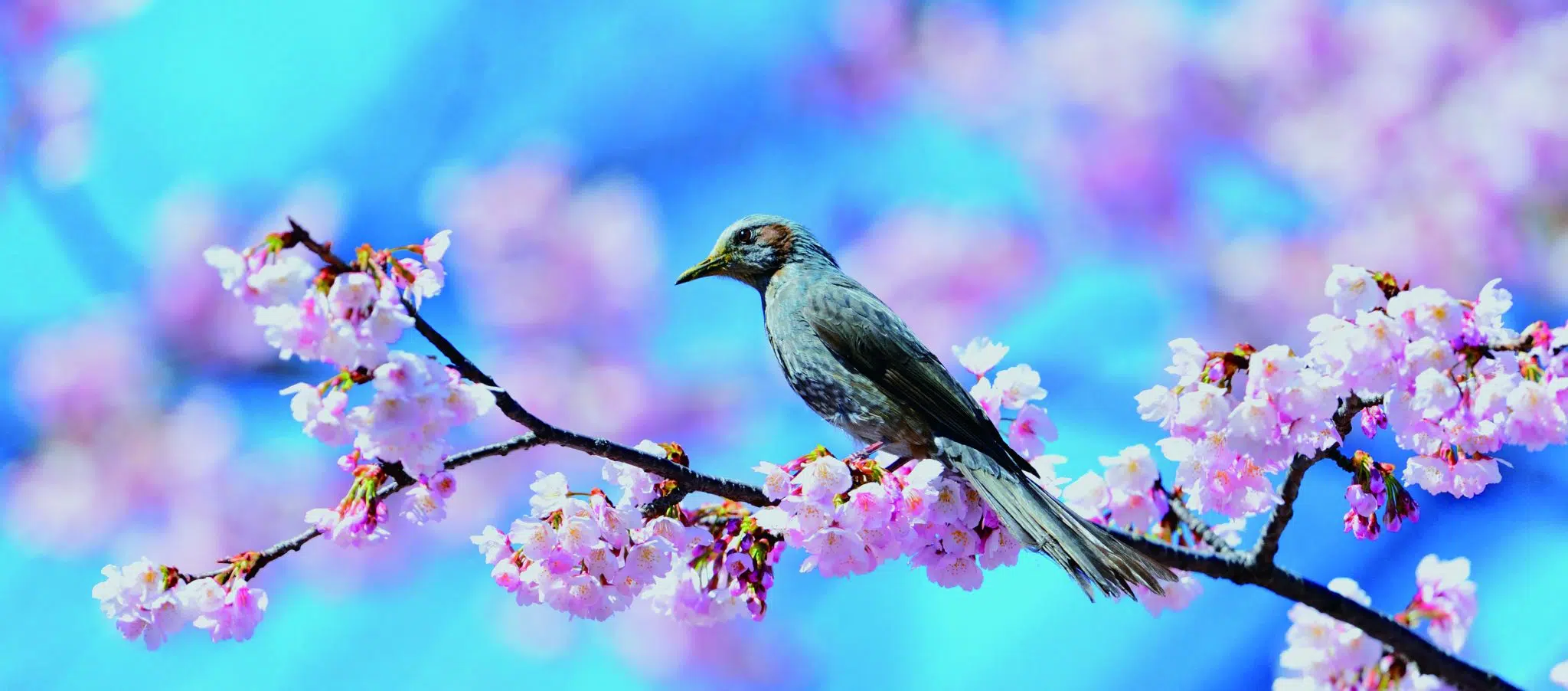
The advent of spring, characterized by its gentle breezes and the burgeoning of new life, signals a period of profound natural transition. However, as noted by HIH Princess Takamado in the April 2026 issue of Fujingahou Magazine, the cherished seasons of spring and autumn appear to be gradually shortening, a phenomenon often attributed to the discernible impacts of global climate change. In her evocative photographic essay, "Through the Lens," Princess Takamado champions the often-overlooked beauty and ecological significance of common avian species, focusing this installment on the ubiquitous yet underappreciated Brown-eared Bulbul (Hypsipetes amaurotis), a bird whose presence helps to define the Japanese spring.
The article, featuring photos and text by HIH Princess Takamado, with photo editing by Koichi Fujiawara (NATURE’S PLANET) and editorial input from Yuki Masuda (Fujingahou), emphasizes that even familiar birds warrant closer observation and appreciation. This English rendition, prepared by BirdLife International for reference, underscores the Princess’s compelling argument for a renewed perspective on Japan’s avian inhabitants.
Ecological Profile: The Brown-eared Bulbul Up Close
Known in Japanese as hiyodori, a name derived from its distinctive "hee-yo, hee-yo" call, the Brown-eared Bulbul is, for many Japanese, as common as the sparrow or crow. Despite its pervasive presence, it often falls victim to a dismissive familiarity, frequently eliciting remarks such as, "Oh… it’s just a Brown-eared Bulbul," even among ardent birdwatching enthusiasts. This perception often overlooks the bird’s subtle charm. A closer look reveals a distinctive appearance: a brown cheek patch that gives it its common name, a somewhat tousled head where longer feathers form a crest that stands erect when the bird is excited or alarmed, and a broad, pale band visible on the underside of its wings during flight, which can appear strikingly whitish depending on the light.
Brown-eared Bulbuls are medium-sized passerine birds belonging to the Pycnonotidae family. They are highly vocal and possess a strong sense of territoriality, often observed aggressively driving away other birds from coveted feeding spots like camellia or cherry blossoms. Their loud, piercing cries, while sometimes considered annoying by humans, serve as crucial communication signals within their social structure, asserting dominance and warning of potential threats. This combination of perceived aggressiveness and pervasive vocalizations has, regrettably, contributed to their mixed reception among the Japanese populace.

A Global Perspective: Valued by International Birders
Ironically, despite their less-than-stellar reputation domestically, Brown-eared Bulbuls are a significant draw for international birders visiting Japan. The primary reason for this heightened interest is their restricted geographical distribution. Hypsipetes amaurotis is largely endemic to East Asia, with its main stronghold being the Japanese archipelago. Its range extends to the southern Korean Peninsula and Sakhalin, but Japan offers the most accessible and numerous opportunities for foreign visitors to observe this species. This limited distribution elevates the bulbul from a common sight to a coveted sighting for those traveling from regions where it is absent, highlighting a common paradox in avian appreciation: rarity often equates to perceived value.
Historical Shift: From Satoyama to Urban Dwellers
Princess Takamado’s personal recollections highlight a significant ecological shift. She notes that in her childhood, some 50 to 60 years ago, despite abundant greenery in central Tokyo, she rarely heard the bulbul’s calls or saw them in her family garden. This observation aligns with historical records indicating that Brown-eared Bulbuls primarily inhabited satoyama forests – secondary woodlands traditionally managed by local communities – at elevations between 400 and 1,000 meters. These birds would typically descend to lower plains only during the colder winter months.
The dramatic expansion of Brown-eared Bulbuls into urban areas over the past half-century is a fascinating case study in avian adaptability. This migration is largely attributed to the increase in "greening" efforts within Japanese cities. Post-war urban development in Japan led to a significant loss of natural habitats. However, subsequent environmental awareness and planning initiatives resulted in the creation of numerous city parks, residential gardens, and the extensive planting of street trees. These green corridors and patches, while human-made, inadvertently replicated some of the ecological features of their traditional satoyama habitats, providing both shelter and food sources that were previously scarce in urban environments.
The Brown-eared Bulbul’s presence now extends year-round across urban landscapes, from Hokkaido in the north to Kyushu and the Izu Islands in the south. Migratory populations in snowy regions like Hokkaido and Tohoku still undertake seasonal journeys, forming large flocks in autumn to move to warmer southern areas for winter, returning north from late April to May. These daytime migrations offer spectacular viewing opportunities across the country, further cementing their status as a visible component of Japan’s natural heritage.
Dietary Adaptability: The Omnivore’s Advantage
A crucial factor underpinning the Brown-eared Bulbul’s successful urbanization is its highly adaptable, omnivorous diet. Unlike specialists that rely on a narrow range of food items, the bulbul can exploit a wide variety of resources available in human-dominated landscapes. They are avid nectar feeders, consuming nectar from plum, apricot, camellia, and cherry blossoms, playing a role in pollination. They also forage on willow buds and young leaves, demonstrating their capacity to utilize diverse plant parts.

Beyond plant matter, their diet includes a significant proportion of insects, providing essential protein, especially during breeding season. As seasons change, they readily switch to fruits and berries from street trees such as nandina and pyracantha, ensuring a continuous food supply throughout the year. Their resourcefulness extends to drinking sap from broken tree branches and raiding suburban orchards and vegetable gardens for fully ripened fruits like persimmons, mandarins, grapes, and apples, as well as leafy vegetables such as cabbage and Chinese cabbage. This broad dietary spectrum, coupled with their ability to find food in close proximity to human dwellings, has made them exceptionally resilient to urban ecological pressures.
Ingenious Breeding Strategies in Urban Settings
The adaptability of Brown-eared Bulbuls is also evident in their breeding habits. They successfully raise their young in city parks, residential areas, and even private gardens, utilizing the resources available in these human-modified environments. Their nests, while incorporating traditional materials like twigs and plant fibers, frequently feature unconventional elements such as vinyl and plastic debris. This pragmatic use of anthropogenic materials highlights their ingenuity and "tough way of surviving," demonstrating a remarkable capacity to integrate human waste into their life cycle. This behavior, while seemingly minor, is a clear indicator of a species thriving in a rapidly changing world.
The Dynamics of Interaction: A Princess’s Observations
HIH Princess Takamado’s personal anecdotes offer charming insights into the bulbul’s behavior. She recounts how a Brown-eared Bulbul acts as a vigilant sentinel in her garden, its loud cry serving as a warning that sends other birds scattering from the birdbath. This territoriality, though sometimes perceived negatively, is a natural and necessary behavior for resource allocation.
More endearingly, Princess Takamado describes a specific interaction during winter when she maintained a feeding table. If the table was empty, a bulbul would sometimes "flap its wings against the large glass window of the sunroom, flying straight up it from bottom to top." Such a dramatic display, undoubtedly a deliberate attempt to draw attention, proved effective. Once food was replenished, other birds would also benefit, leading the Princess to reflect on this as a "small act of mutual support among the birds," where the bulbul’s assertive nature indirectly facilitated communal feeding. These personal observations humanize the species, transforming it from a mere scientific subject into a character with agency and a subtle, if loud, personality.
Conservation Implications: Subspecies, Species, and Threats
The Brown-eared Bulbul, while currently not globally threatened, presents a complex conservation puzzle when viewed through the lens of its genetic diversity. Populations across the Japanese archipelago, including resident birds of island regions such as Ogasawara, Amami, and Okinawa, along with those on the Izu Islands, are currently classified into eight distinct subspecies. These subspecies exhibit variations in form and coloration, reflecting adaptations to their specific island environments.

Ornithological research suggests that these eight subspecies can be grouped into three larger categories, with growing scientific consensus that they may eventually be reclassified as three separate species. This potential reclassification carries significant conservation implications. If the Brown-eared Bulbul were divided into distinct species, the smaller, geographically isolated island populations, which often exhibit unique genetic lineages and face localized threats, would likely be designated as Endangered. Island endemic species are inherently more vulnerable to extinction due to limited habitat, smaller population sizes, and heightened susceptibility to introduced predators or diseases. For example, the unique populations on the Amami Islands, part of a UNESCO World Heritage site known for its rich biodiversity, or the Ogasawara Islands, home to numerous endemic species, would immediately warrant higher conservation priority if recognized as distinct species. This highlights the critical importance of ongoing taxonomic research in informing conservation strategies, especially in biodiverse island nations like Japan. BirdLife International, as a global authority on bird conservation, plays a vital role in assessing species’ threat status based on scientific data, including taxonomic revisions.
Broader Ecological Significance and Climate Change Nexus
The Brown-eared Bulbul’s remarkable adaptability also positions it as an important indicator species for urban ecological health. Its ability to thrive amidst human development suggests a certain resilience, but its sensitivity to seasonal changes, as observed by Princess Takamado, connects it to broader environmental concerns. Climate change, with its potential to shorten spring and autumn, can disrupt crucial biological cycles such as migration, breeding seasons, and the availability of food sources like specific blossoms and insects. Even for an omnivorous generalist, shifts in phenology—the timing of biological events—can lead to mismatches between food availability and reproductive needs, potentially impacting population success over time.
Furthermore, Brown-eared Bulbuls play an ecological role in urban ecosystems as seed dispersers and potential pollinators. By consuming fruits and berries, they help distribute seeds, contributing to the propagation of plants in parks and gardens. Their nectar feeding activities, though perhaps less significant than those of specialized pollinators, contribute to the overall health of urban flora. Thus, their presence is not merely aesthetic; it is integral to the functioning of urban biodiversity.
A Call for Reappreciation
The journey of the Brown-eared Bulbul, from its traditional satoyama habitat to its current omnipresence in urban Japan, mirrors the nation’s own ecological transformation. HIH Princess Takamado’s passionate plea encourages a shift in perception. Rather than dismissing it as "just a Brown-eared Bulbul," she advocates for a warmer observation and appreciation of its "handsome appearance and acrobatic movements." This perspective is not merely about aesthetic enjoyment; it is about recognizing the intrinsic value of every species, especially those that share our immediate environment.
In an era where biodiversity loss is a critical global concern, fostering an appreciation for common species is a vital first step towards broader environmental stewardship. The Brown-eared Bulbul, with its resilience, adaptability, and complex taxonomic status, serves as a poignant reminder that even the most familiar creatures hold untold stories and critical ecological importance. As Japan and the world grapple with the challenges of climate change and habitat degradation, understanding and valuing the lives of birds like the Brown-eared Bulbul becomes an essential part of our collective responsibility towards nature. Their continued presence in our urban spaces offers a constant invitation to connect with the natural world and to remember that every living being, no matter how common, contributes to the rich tapestry of life on Earth.
