
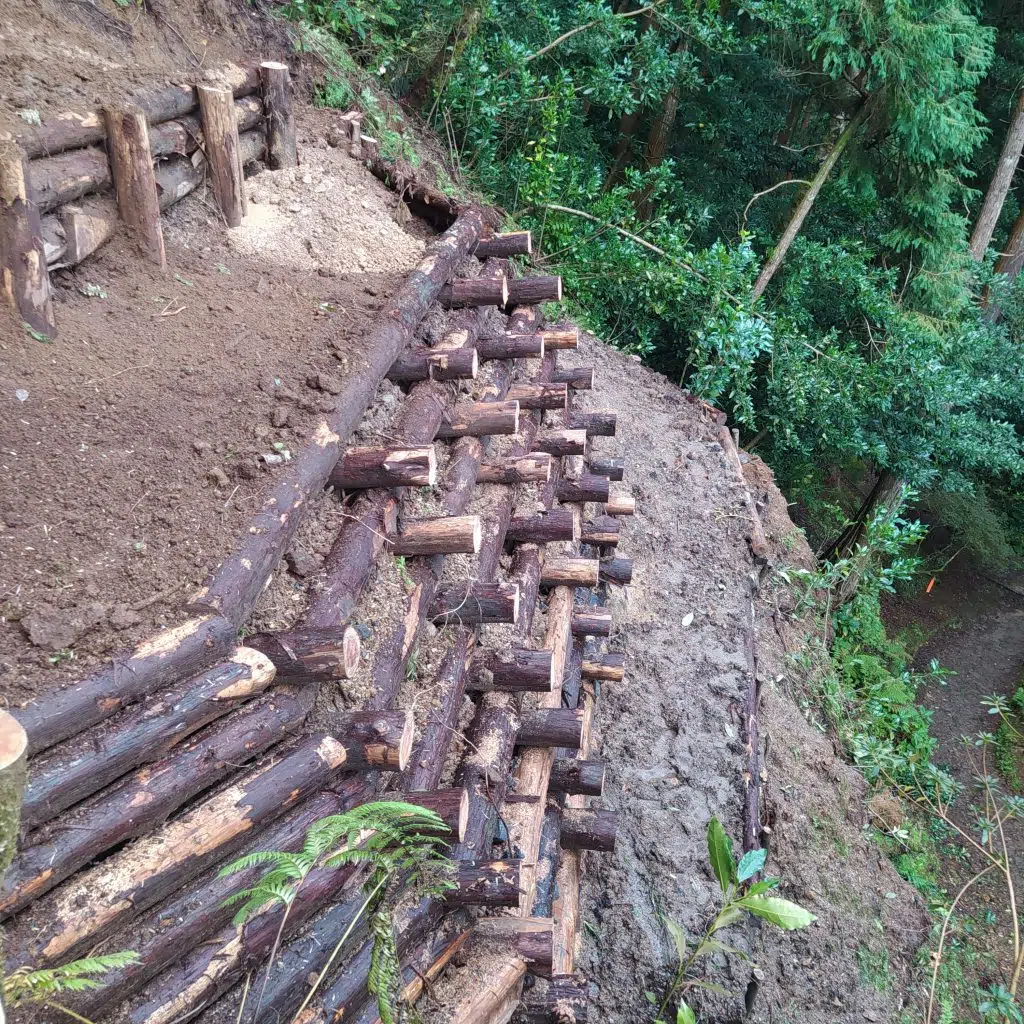
The Azores archipelago, a volcanic chain in the North Atlantic, is currently serving as a global testing ground for a radical shift in civil engineering. As climate change increases the frequency of extreme weather events, traditional infrastructure—long reliant on rigid concrete—is proving increasingly fragile. In response, conservationists and engineers are turning to "natural engineering," an approach that integrates timber, native vegetation, and stone to stabilize landscapes. By working with, rather than against, the natural dynamics of volcanic soil, these living structures are offering a blueprint for sustainable land management that gains strength over time, a stark contrast to the inevitable decay of man-made synthetic materials.
The Origins of a Natural Paradigm Shift
The transition toward natural engineering in the Azores began in 2012, spearheaded by the Sociedade Portuguesa para o Estudo das Aves (SPEA), the Portuguese partner of BirdLife International. The initiative was born out of necessity. SPEA’s primary objective was the restoration of the native Laurissilva forest, a critical habitat for endemic species. However, the restoration teams faced significant geographical hurdles: unstable volcanic slopes prone to landslides, widespread invasive plant encroachment, and mountain streams severely degraded by high-intensity rainfall events.
In traditional engineering, such conditions would be met with concrete retaining walls, culverts, and concrete-lined drainage channels. However, the Azores’ dynamic landscape—characterized by loose pyroclastic soil and high moisture levels—often renders rigid structures ineffective. Over time, heavy concrete structures often crack or subside due to the shifting earth, requiring expensive, carbon-intensive maintenance. Recognizing this, SPEA began to investigate bioengineering techniques that have been utilized for decades in the Swiss Alps to prevent avalanches and on the slopes of Mount Etna in Italy for soil stabilization.

Chronology of a Living Laboratory
The application of these techniques has evolved from small-scale pilot projects to large-scale infrastructure solutions. The following timeline outlines the progression of natural engineering in the archipelago:
- 2012: SPEA initiates the pilot phase for native forest restoration, identifying the need for alternatives to concrete in high-risk zones.
- 2015–2018: Early experiments in small-scale drainage management and slope stabilization are conducted at the Mata dos Bispos site.
- 2019: The LIFE IP Azores Natura project launches, providing the necessary funding and framework to scale up natural engineering across multiple islands.
- 2020–2022: The construction of the Iberian Peninsula’s largest natural retaining wall. This structure, standing nine meters high and spanning 30 meters, successfully stabilizes a volatile slope while handling a retention capacity of over 270 tonnes.
- 2023–Present: The success of these projects leads to government commissions, including the stabilization of water springs for the Vila Franca do Campo public supply and restoration work at the popular Lagoa do Congro site.
Technical Efficacy: How Nature Stabilizes the Ground
The mechanics of natural engineering rely on the synergy between physics and biology. Unlike a concrete wall, which acts as a static, impermeable barrier, natural structures are porous. When torrential rain hits a natural retaining wall composed of logs and native vegetation, the structure allows water to pass through, preventing the dangerous buildup of hydrostatic pressure that typically leads to the failure of concrete structures.
Rui Botelho, coordinator of SPEA Azores, emphasizes the regenerative nature of this approach: "In living walls, water seeps through and drains away, rather than accumulating as it does in concrete. And even if an earthquake breaks the roots, they regenerate on their own." This self-healing property is a defining advantage of nature-based solutions. As roots grow and intertwine, they create a subterranean web that anchors the soil, effectively turning a protective wall into a living organism that becomes more resilient the longer it remains in place.
Addressing Tourism and Ecosystem Degradation
Beyond erosion control, natural engineering is playing a vital role in managing the human footprint on the Azores’ delicate ecosystems. The archipelago has seen a surge in ecotourism, which brings the challenge of trail degradation. In areas with peat or clay-heavy soils, high foot traffic often leads to the widening of paths as hikers attempt to circumvent mud-filled sections. This "braiding" of trails results in the destruction of sensitive vegetation and disrupts natural drainage patterns.

SPEA has implemented natural engineering solutions to address this, utilizing raised timber walkways and integrated drainage channels that guide water away from paths without forcing it into damaging runoff streams. By keeping visitors on designated paths through better infrastructure design, the organization protects the biodiversity of the surrounding landscape.
Comparative Analysis: Concrete vs. Bioengineering
To understand the broader implications of this work, it is necessary to compare the life-cycle costs and outcomes of traditional versus natural infrastructure.
| Feature | Concrete Infrastructure | Natural Engineering |
|---|---|---|
| Material Origin | Resource-intensive (cement, steel) | Local, renewable (logs, stone, soil) |
| Foundation | Requires deep, invasive digging | Minimal site disturbance |
| Durability | Subject to cracking and erosion | Increases strength via root growth |
| Drainage | Often requires external pipes | Inherently porous/permeable |
| Carbon Footprint | High (production and transport) | Low (sequestration via vegetation) |
While proponents of natural engineering are quick to praise its benefits, they also acknowledge its limitations. Tarso Costa, Senior Conservation Officer at SPEA Azores, notes, "Humans were already creating nature-based solutions long before they started building with concrete." However, the modern iteration of these solutions requires a rigorous scientific foundation. "Natural engineering is not a panacea," Costa explains. "It is not suitable for every situation. It cannot replace large-scale heavy infrastructure like dams, and it requires a multi-disciplinary approach involving engineers, biologists, and agronomists."
Broader Implications and Future Outlook
The work being done in the Azores serves as a case study for climate adaptation in island environments. As global temperatures rise, the intensity of precipitation events in the Atlantic is projected to increase, placing greater strain on existing infrastructure. The success of the LIFE IP Azores Natura project—which has already restored over 3 km of stream banks—suggests that natural engineering is a viable, cost-effective, and ecologically beneficial strategy for public works.

Furthermore, the integration of ancestral knowledge with modern hydraulic modeling and soil mechanics offers a path toward a more sustainable engineering future. By shifting the focus from "controlling" the environment to "collaborating" with it, planners can create infrastructure that supports biodiversity while providing robust protection against natural disasters.
The growing demand for SPEA’s services—from managing municipal water sources to securing critical access routes—demonstrates a burgeoning confidence in these methods among local authorities. As these living structures continue to stabilize the slopes of the Azores, they provide a compelling answer to a question that civil engineers have been asking for decades: how can we build in a way that respects the environment while protecting it? The answer, increasingly, appears to be found not in the factory, but in the forest. By learning to work with the natural world, we may find that the most durable infrastructure is the kind that grows.
