
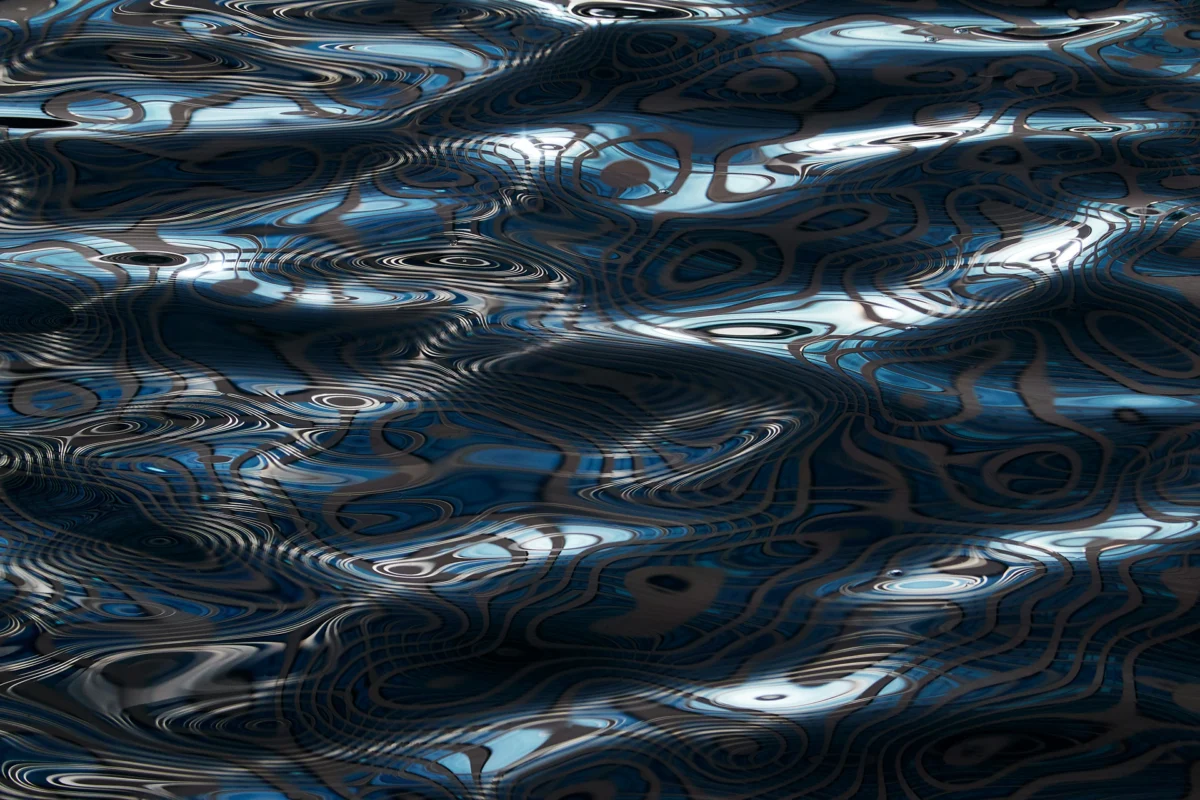
The photographic series Fleeting Reflections challenges conventional perceptions of art and nature photography, offering a compelling testament to the power of sustained observation and an unwavering commitment to in-camera capture. When viewers encounter these mesmerizing images for the first time, a common assumption arises: they must be the product of intricate digital manipulation, perhaps meticulously crafted in software like Photoshop. Yet, the artist behind Fleeting Reflections consistently and proudly asserts the opposite. These captivating visuals are not born from post-processing wizardry but are direct recordings of light interacting with the urban environment—specifically, the glass and steel architecture of London’s Canary Wharf financial district reflecting and refracting on the ever-changing surface of its docks. The essence of this work lies in the pure, unadulterated capture of these ephemeral moments, sometimes as a single decisive frame, at other times as carefully constructed in-camera multiple exposures. It is a process devoid of digital "tricks," relying instead on profound attention, relentless repetition, and the passage of time.
The Genesis of a Decade-Long Dedication
The concept of time stands as the fundamental bedrock of the Fleeting Reflections project. Spanning more than a decade, the photographer’s journey has unfolded almost exclusively within the confines of a single square mile around the Canary Wharf docks. This prolonged engagement has fostered a deep understanding that truly meaningful creative work, particularly in abstract and nature photography, is not merely about technical prowess but is built upon a trilogy of core principles: accessibility, repeatability, and patience. While the broader photography community often fixates on the technical minutiae of cameras, lenses, and shooting modes, for the creator of Fleeting Reflections, these tools serve merely as supporting instruments. The true driving force behind the series is the profound and dynamic relationship between a chosen place, persistent effort, and disciplined practice. This philosophy subtly critiques a prevailing trend in photography that often prioritizes exotic locales and expensive gear over the foundational elements of artistic vision and diligent work.

Canary Wharf: An Unconventional Muse
Canary Wharf, internationally recognized as a bustling hub of finance characterized by its towering steel and glass edifices, might seem an unlikely canvas for abstract nature photography. However, the artist perceives this urban landscape not as a concrete jungle, but as a dynamic array of light sources. The imposing skyscrapers, designed for commerce and efficiency, inadvertently become generators of artistic potential, casting vibrant colours and sharp lines onto the water’s surface below. The elements then take over, with the wind sculpting these reflected lights into an infinite variety of waves, ribbons, and fractured patterns. The photographer’s role transforms from a mere observer to an attentive listener, attuned to the visual symphony orchestrated by light, water, and wind.
Pillar One: Accessibility – The Power of Proximity
A quiet, yet pervasive, myth within nature photography dictates that artists must embark on arduous journeys to dramatic, remote wildernesses to produce images of significant value. The Fleeting Reflections series stands as a powerful refutation of this notion. The entirety of this extensive body of work has emerged from a mere square mile of water, nestled amidst a dense cluster of office towers. This urban setting is not a compromise but a deliberate choice, driven by the first pillar: accessibility.

The profound ability to "listen" so closely to the environment of Canary Wharf stems directly from its easy access. The photographer can reach the location readily, explore it on foot, and, crucially, return to it repeatedly. This eliminates the logistical barriers often associated with grand landscape photography—no flights, no permits, no weeks off work, no pre-dawn hikes to remote peaks. Instead, creativity can flourish during a mere 40-minute window, under "bad" light by conventional standards, or even amidst a downpour that transforms the water’s surface into a textured, hammered metal.
The concept of accessibility, while seemingly mundane, is absolutely foundational to this project’s success. Without the practical ability to frequently engage with a subject, a photographer cannot cultivate the deep familiarity required to move beyond superficial observations. The easier it is to stand before a chosen subject, the more intimately and honestly one can study its ever-unfolding character. This accessibility fosters a relationship, transforming a mere location into a collaborative partner in the artistic process.
Pillar Two: Repeatability – Unveiling Endless Variation
The second indispensable pillar underpinning Fleeting Reflections is repeatability. This principle involves selecting a subject that possesses an inherent capacity for continuous transformation, capable of surprising the artist and offering fresh possibilities with each encounter. The docks of Canary Wharf exemplify this quality in abundance; nothing there ever truly repeats itself.

Consider the stark contrasts: a serene morning might render long, glassy stretches of colour, reflecting the towers with pristine clarity. A gusty afternoon, however, could shatter those identical reflections into serrated lines, evoking the iconic waveform imagery of Joy Division’s Unknown Pleasures. The passage of a boat can smear the reflections into fluid, hand-drawn appearances. Even fleeting elements like diesel slicks on the water’s surface can create iridescent interference patterns that vanish within minutes, never to reappear in precisely the same form.
Because the environment is so dynamically repeatable, the photographer can genuinely revisit the "same" scene hundreds, even thousands, of times, yet consistently feel engaged in new creative work. It’s not uncommon for the artist to remain in a single spot for hours, meticulously observing a small patch of water as it cycles through a myriad of visual personalities. At this stage, the focus shifts from photographing static architecture to documenting the behaviour of light and water.
This is where in-camera technical proficiency becomes vital. High-speed burst rates are employed to freeze micro-moments of intricate detail on the water’s surface before they dissipate. Multiple exposure modes are utilized to layer gestures and further enhance the abstract qualities already present. However, these techniques are only effective because the subject continuously provides an inexhaustible supply of raw, dynamic material. The visual palette shifts with the weather, the geometric forms bend and warp with the wind, and the overall mood of the scene transforms with the tide. Without repeatability, photographic endeavors risk producing mere postcards; with it, a cohesive and evolving body of work can emerge.
Pillar Three: Patience – The Unglamorous Core of Mastery

The final pillar, patience, is arguably the most underestimated yet profoundly crucial element of the Fleeting Reflections methodology. This patience manifests long before the shutter button is pressed. It involves a prolonged waiting game for the ideal weather conditions to align with the photographer’s available time. The intense glare of hard sun on still water produces a distinct visual effect compared to the soft, flat light of a drizzly day. Not every combination yields useful results. The artist often walks for miles, diligently checking various angles and perspectives in the water, only to find nothing that suits the day’s specific conditions.
Even when conditions appear promising, patience transforms into a demanding physical exercise. The photographer may stand at a single location for up to four hours, capturing as many as 3,000 frames of what, to a casual passerby, might appear to be "the same scene." This meticulous dedication is driven by the search for that singular instant where colour, rhythm, structure, and tension coalesce into perfect harmony. This process cannot be rushed; it demands a sustained presence and an acute awareness to recognize the fleeting moment of alignment.
The rigorous patience extends into the post-capture phase. Thousands of almost identical-looking images are downloaded, initiating a slow, deliberate culling process on the iMac. This is where discipline truly asserts itself. The photographer moves through the vast collection purposefully, seeking the precise frame where every element aligns, rigorously rejecting the vast majority. The acceptance rate is brutally low, a testament to the uncompromising standards applied.
Furthermore, the processing itself is characterized by restraint. Working primarily in Capture One, the artist employs only global adjustments—levels, clarity, sharpness, and contrast. Crucially, there is no manipulation of shapes or forms in Photoshop. The intent is not to "create" forms but to reveal what was inherently present in the water. This choice carries significant philosophical weight, underpinning the aesthetic. The honesty and integrity of the work are paramount. The photographer desires to be able to state, unequivocally and truthfully, "this happened."

Beyond the immediate act of shooting and editing, there exists an even longer form of patience: the patience to allow the work to mature. The Fleeting Reflections project was not publicly exhibited or promoted in any significant way for several years. During this prolonged period, the artist continuously returned to Canary Wharf, shooting, refining, and diligently discerning what felt essential from what constituted mere visual noise. It took approximately seven years before the collection achieved a level of coherence deemed suitable for presentation to a publisher. This culminated in the publication of the first book, Fleeting Reflections, by Triplekite in 2017. This initial success led to exhibitions at the Greenwich Gallery in 2017 and Anise Gallery in London in 2019, followed by a second volume, Fleeting Reflections II, released in 2023.
Observers, witnessing these milestones, might mistakenly assume a swift or seamless progression. However, the reality was a slow, deliberate, and deeply obsessive journey. The photographs themselves, while striking, represent only the visible apex of the project. Beneath this surface lies thousands of hours dedicated to walking, watching, waiting, shooting, editing, rejecting, and, most importantly, persistently returning to the source of inspiration.
Implications for Contemporary Photography and Artistic Practice
The Fleeting Reflections project offers profound lessons for photographers across all genres, particularly those navigating the increasingly crowded and digitally saturated landscape of contemporary art. Its most salient message is that the creation of deeply personal and distinctive work does not necessitate dramatic landscapes or exotic locales. What truly matters are the enduring qualities of access, repeatability, and patience.

The project challenges the prevalent notion that "nature photography" must exclusively depict pristine wilderness. By finding profound natural beauty—the interplay of light, water, and atmospheric conditions—within a highly urbanized, man-made environment, Fleeting Reflections expands the very definition of the genre. It suggests that nature is not confined to remote sanctuaries but is an omnipresent force, constantly interacting with and transforming even the most engineered spaces. This perspective encourages photographers to look closer to home, to explore their immediate surroundings with fresh eyes, and to discover the extraordinary in the seemingly ordinary.
For aspiring photographers, the advice is clear and actionable: identify a location that is easily and frequently accessible—be it a local canal, a harbour wall, a marsh on the outskirts of town, or even rainwater collecting in a car park. Cultivate a consistent relationship with this place, returning in all moods and all weather conditions, until its responses become predictable and deeply understood. Then, commit to the slow, iterative process: walking, waiting, refining the vision, and maintaining brutal honesty during the editing phase.
The patience advocated here is far from passive. It is a highly active, conscious decision to invest oneself fully in a chosen subject for the necessary duration to achieve a profound understanding. Over time, this sustained attention becomes visibly embedded within the photographs themselves. While viewers may initially be drawn to the striking colours and shapes, what they are ultimately perceiving is the distilled essence of the artist’s unwavering attention—a visual dialogue forged over a decade of dedicated engagement. The Fleeting Reflections series thus stands not only as a remarkable artistic achievement but also as a powerful manifesto for a more mindful, persistent, and deeply connected approach to photography.
