
For the vast majority of evolutionary history, survival was an isolated, solitary endeavor. Countless ancient animal species reproduced through broadcast spawning or simply laid their eggs and abandoned them to the whims of nature, leaving newborns to fend for themselves without guidance, protection, or nourishment. Yet, across vast expanses of evolutionary time, a profound behavioral shift occurred. Creatures began to stay behind. They built nests, defended vulnerable young, and provisioned them with food. How this complex transition from indifference to intense parental care actually transpired has long remained one of evolutionary biology’s most enduring enigmas.
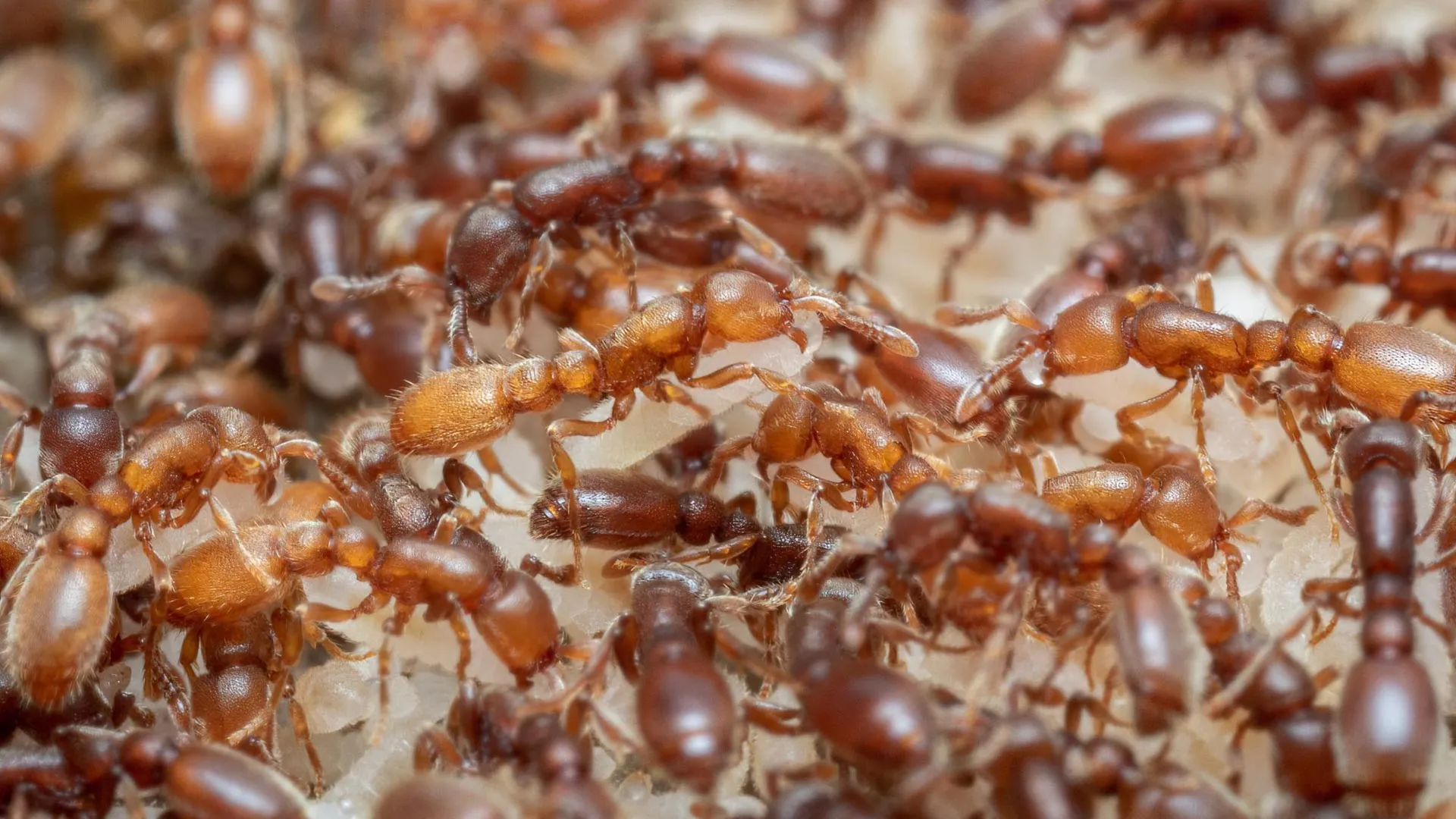
Now, groundbreaking research published in the prestigious journal Nature offers a compelling and elegant explanation. By examining the intricate neurological machinery of clonal raider ants (Oerapheidole or similar model species in social insect research), scientists have discovered that evolution did not reinvent the wheel. Rather than engineering entirely novel brain systems from scratch to facilitate parental caregiving, nature appears to have engaged in biological recycling. It co-opted ancient neural pathways originally dedicated to regulating hunger and feeding behavior, rewiring them to foster social care and nursing.
This revelation bridges a longstanding gap in neurobiology. It suggests that the profound emotional and physical investments seen in mammalian mothering, avian nest protection, and insect larval tending might all share a deeply conserved, primordial evolutionary blueprint.
The Evolutionary Puzzle of Caregiving
Parental care across the animal kingdom manifests in a staggering variety of forms. Mammals nourish their dependent offspring with specialized milk secretions; birds construct elaborate nests, taking turns guarding eggs and foraging for nestlings; and social insects such as ants, bees, and wasps feed and groom helpless larvae. For decades, evolutionary biologists debated the origins of these behaviors. Ancestral species offered virtually no care at all, raising the central question of how natural selection could favor the investment of vast amounts of energy into raising someone else’s genetic cargo.
The prevailing hypothesis within the scientific community pointed toward the evolutionary recycling of pre-existing biological systems. Decades of prior research, predominantly conducted on mammals, hinted that neuropeptides—small protein-like molecules used by neurons to communicate across synapses—might have shifted over evolutionary epochs from merely signaling internal energy deficits (hunger) to actively promoting prosocial and nurturing behaviors toward dependents.
However, proving this direct physiological and evolutionary connection has proven notoriously difficult. Traditional laboratory workhorses in neuroscience, such as the fruit fly (Drosophila melanogaster) and the nematode roundworm (Caenorhabditis elegans), exhibit virtually no parental care for their offspring. Conversely, while laboratory mice provide extensive, easily observable maternal care, the mammalian brain is profoundly complex, consisting of roughly 100 million interconnected neurons. Teasing apart the precise molecular pathways responsible for specific behavioral shifts in such a dense neural network is a monumental task.
Enter the clonal raider ant. Boasting a brain composed of approximately 60,000 cells, the ant provides a uniquely tractable middle ground. It possesses a sophisticated social structure reminiscent of vertebrate societies, yet operates on a neural scale simple enough for comprehensive, high-resolution mapping.
Tracking Behavioral Shifts One Ant at a Time
To unlock the secrets hidden within these miniature brains, a team of researchers led by scientists at The Rockefeller University deployed a high-tech approach to behavioral tracking. The team engineered an automated behavioral monitoring system that paired individual ants with individual larvae, allowing scientists to meticulously record and quantify hundreds of distinct caregiving interactions over extended periods.
With the behavioral baseline established, the researchers embarked on a massive biochemical cataloging effort. They identified, isolated, and synthesized the complete set of neuromodulatory chemical messengers utilized within the ant brain—a comprehensive catalogue known as the neuropeptidome.
"We annotated the neuropeptidome of this ant, the complete set of neuropeptides," explained study co-author Dr. Kay. "There were 70 that we could identify. It took a lot of hard work, but now we have a set of molecules that we can investigate in numerous ways."
With these 70 chemical keys in hand, the team tested each individual molecule to observe whether it could directly alter or induce caregiving behaviors. This investigation intersected neatly with a well-documented phenomenon in ant colony biology: the strict, age-dependent division of labor.
In clonal raider colonies, young ants spend the initial phase of their adult lives safely inside the dark confines of the nest, exclusively tending to and nursing the developing brood. As they age, however, their physiological profile and behavioral tendencies shift dramatically. Older ants abandon nursery duties, crossing the threshold of the nest to brave the outside world as foragers, tasked with securing food for the entire colony.
The researchers tracked where the most promising neuropeptide candidates were produced in the brain, how their cellular concentrations fluctuated across the lifespan of an individual ant, and what immediate behavioral consequences occurred when the activity of these molecules was experimentally amplified or suppressed. Furthermore, they cross-referenced these variables by comparing well-fed ants with food-deprived counterparts, directly testing whether caregiving circuitry remained functionally tethered to ancient foraging and feeding networks.
Two Brain Molecules Dictate Social Roles
The results of these meticulous trials revealed a striking neurochemical choreography. Caregiving in ants remains intimately and functionally intertwined with the brain systems that process hunger and energy balance. Specifically, two distinct signaling molecules were found to act as opposing behavioral switches, steering the ant toward either nursing or foraging depending on age and internal physiological states.
The first molecule, Neuropeptide F (NPF)—an invertebrate homologue of the vertebrate neuropeptide Y system—actively encouraged ants to remain in the nest and care for developing larvae. The second molecule, Allatostatin A (AstA), exerted the exact opposite pressure, prompting the insects to abandon the brood chamber, cross the perimeter, and initiate foraging expeditions.
Age-related shifts in brain chemistry mirrored these behavioral transformations. Young, nursing ants naturally maintained high concentrations of NPF and low concentrations of AstA within critical sensory and integration centers of the brain. Older, foraging ants demonstrated the precise inverse pattern: diminished NPF and elevated AstA. When the researchers artificially manipulated the activity levels of these molecules, the ants altered their behaviors in real-time, proving that NPF and AstA were not merely correlative markers of age, but causal drivers of social roles.
The Hunger-Care Connection
Perhaps the most surprising and revealing aspect of the study was how these neural switches responded to nutritional stress. When ants were experimentally deprived of food, their internal neurochemistry shifted dramatically: NPF levels spiked while AstA levels plummeted. Consequently, hungry ants began to behave less like ravenous foragers seeking self-preservation and more like devoted caregivers. Once the ants were fed, the chemical seesaw inverted once again, dulling their drive to tend larvae and re-igniting their impulse to hunt for external resources.
"We learned that parental behaviors build on the neural circuitry for feeding, and that makes some sense," noted Dr. Daniel Kronauer, head of the Laboratory of Social Evolution and Behavior at Rockefeller University. "Parental behavior is a lot about feeding—not just yourself, but your offspring."
This discovery provides empirical weight to the theory that parental care evolved primarily through the metabolic expansion of preexisting feeding drives. Rather than inventing an entirely new psychological framework for nurturing from a sterile evolutionary void, ancestral animals effectively repurposed the motivation to find, process, and consume food, projecting that self-nourishing drive outward toward dependent offspring.
Broader Implications for Evolutionary Biology
The implications of this research extend far beyond the biology of social insects. Mammals, separated by hundreds of millions of years of divergent evolution, utilize strikingly similar neuropeptidergic signaling pathways—including neuropeptide Y systems—to regulate maternal bonding, feeding, and social attachment.
By demonstrating that vastly different animal lineages rely on deeply homologous chemical architectures to solve the universal problem of offspring care, the study suggests that evolutionary trajectories are far more constrained and orderly than scientists previously assumed.
"It amazes me that similar parenting behaviors have evolved so many times in so many distinct animal lineages," Dr. Kay remarked. "Our paper suggests that the evolutionary routes to these sorts of behaviors are far more constrained than we may have naively imagined. That’s very exciting, because it may eventually lead to a blueprint of how these complex social behaviors evolve."
Researchers are now mapping the precise downstream neural circuits influenced by NPF and AstA in ants. Comparing these mapped pathways with equivalent neural networks in mice and other vertebrates could soon yield a comprehensive, cross-species blueprint of parenting behavior.
Shedding Light on Healthy Brain Aging
Beyond illuminating the deep evolutionary roots of parenting, the clonal raider ant model offers an unprecedented window into an entirely different biological frontier: the study of normal, healthy brain aging.
Contemporary neuroscientific research is heavily skewed toward investigating late-stage, highly destructive neurodegenerative pathologies such as Alzheimer’s disease and frontotemporal dementia. While critical for human medicine, this focus leaves a massive void in our understanding of how the healthy brain gradually changes over a normal lifespan in the absence of overt pathology.
Because age-related behavioral transitions are structurally essential to the survival of an ant colony, colonies provide a natural, highly accessible laboratory for observing how baseline neurochemistry reshapes behavior over time. The Rockefeller team suspects that the neuromodulatory mechanisms governing age-dependent transitions in ants operate similarly across the animal kingdom, potentially offering new conceptual frameworks for understanding human cognitive aging.
"There’s a lot of research and funding invested in studying late-stage neurodegenerative diseases, but we actually know very little about how the brain changes throughout the normal healthspan of an individual," Kronauer emphasized. "In ant colonies, these dynamics are central to the organization of the society. Our discovery provides a striking demonstration that neuromodulators can produce age-dependent changes in behavioral proclivities in ants, and I suspect that that’s the case in other animals as well, including in humans."
As researchers continue to decode the molecular messages passing through these 60,000-neuron brains, the humble clonal raider ant stands poised to reshape our understanding of not only how society and parenting first emerged on Earth, but how brains age gracefully across the animal kingdom.
