
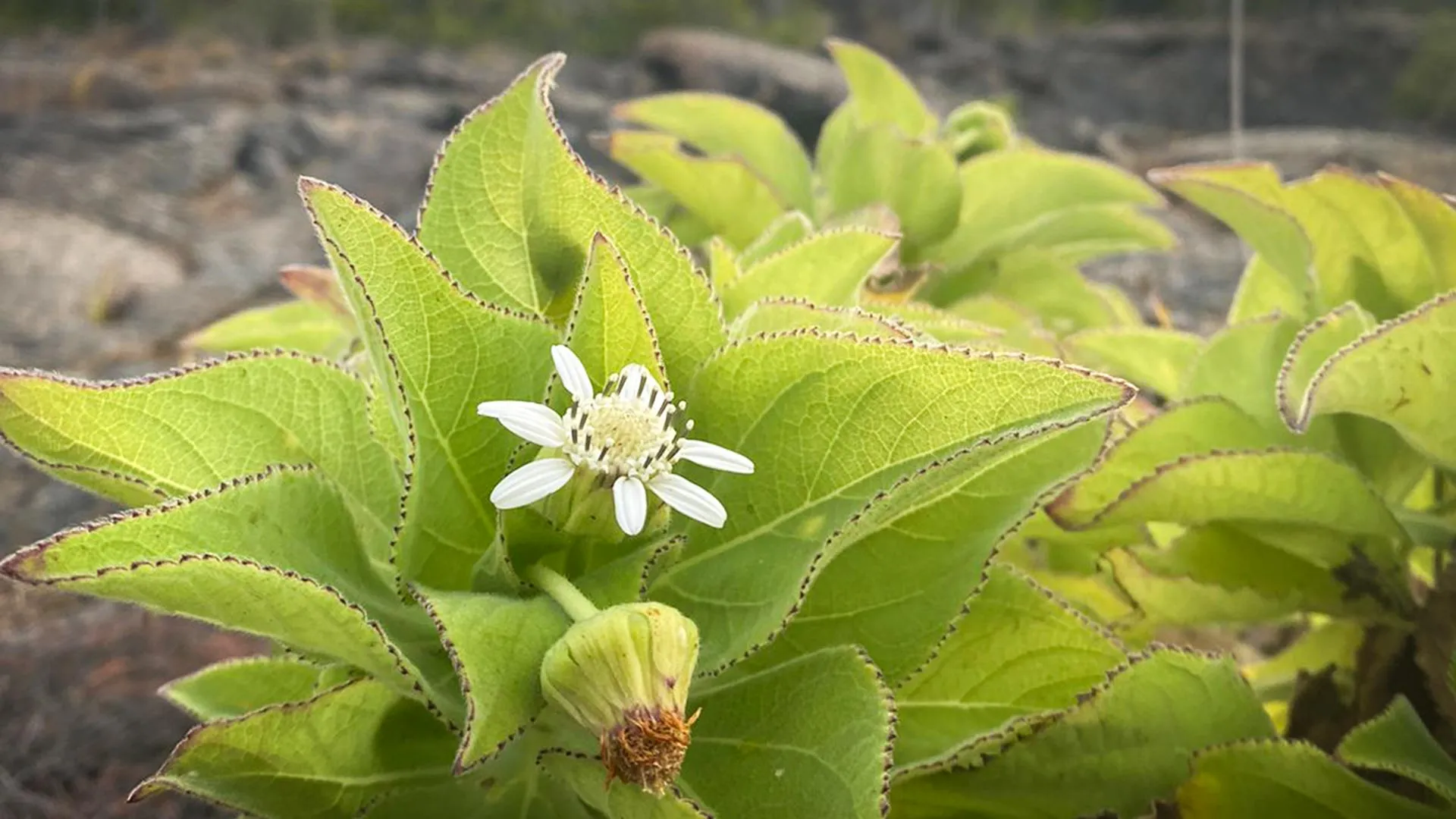
Nearly two centuries after Charles Darwin’s historic voyage aboard the HMS Beagle fundamentally altered our understanding of life on Earth, the enchanted landscapes of the Galapagos Islands continue to serve as an unparalleled natural laboratory for evolutionary biologists. While the archipelago’s diverse mockingbirds and iconic finches have long held center stage in scientific textbooks as quintessential examples of natural selection and adaptive radiation, a new, comprehensive genomic study reveals that the region’s flora harbors secrets just as profound. Researchers investigating the rapid diversification of Scalesia—a genus of endemic plants commonly known as the Galapagos giant daisies—have uncovered groundbreaking insights into parallel evolution, proving that nature can independently arrive at identical physical traits using entirely different genetic toolkits.
The findings, published in the peer-reviewed journal Nature Communications, are the culmination of a massive international research effort involving institutions such as the Norwegian University of Science and Technology (NTNU), the Royal Botanic Gardens, Kew, the University of California, Davis, the University of Copenhagen, the Charles Darwin Foundation, the University of Georgia, and the University of British Columbia. By sequencing the complete genomes of every known Scalesia species, the scientific team has not only mapped the complex evolutionary history of these remarkable plants but has also challenged long-held assumptions regarding how complex traits emerge across isolated populations.
A Legacy Rooted in 1835
To fully understand the significance of the recent Scalesia discovery, it is necessary to look back at the foundational chronology of evolutionary science. In September 1835, the HMS Beagle reached the Galapagos archipelago, a volcanic island chain situated roughly 1,000 kilometers off the coast of Ecuador. During his five weeks exploring the islands, Charles Darwin meticulously collected geological and biological specimens, including a wide array of birds and plants.
Among Darwin’s botanical harvests were 78 plant specimens that would later be identified as entirely new to science. Crucially, these historical samples included four distinct species of Scalesia. At the time, however, the young naturalist was primarily captivated by the archipelago’s fauna. Famously, Darwin collected a series of small, unassuming birds that he initially believed to be a mixed assortment of sparrows, warblers, woodpeckers, and a single tit. It was only after returning to England and consulting with prominent ornithologist John Gould that Darwin learned the true nature of the specimens: they were all closely related ground and tree finches. The birds had evolved from a single mainland ancestor, their beak shapes uniquely modified to exploit different ecological niches and food sources across the various islands.
These finches, alongside Darwin’s observations of tortoises and mockingbirds, became the cornerstone of his revolutionary theory of evolution by natural selection, detailed in his 1859 landmark publication, On the Origin of Species. Darwin posited that populations gradually change over vast stretches of time because individuals possessing physical traits best suited to their surrounding environment are statistically more likely to survive, reproduce, and pass those advantageous traits on to subsequent generations.
While the fauna of the Galapagos became household names, the archipelago’s flora underwent its own dramatic evolutionary explosions—a phenomenon known as adaptive radiation. Among the most striking examples of this botanical radiation is Scalesia, a genus that evolved from a single ancestral daisy species that drifted from mainland South America millions of years ago.
The Rapid Rise of the Galapagos Giant Daisies
Despite their relatively recent arrival and short evolutionary timeline—with every currently existing Scalesia species having emerged within the past one million years—the genus has diversified into a dazzling array of forms. Unlike their modest, herbaceous daisy relatives on the South American mainland, Scalesia species on the islands have adapted to radically divergent microclimates, ranging from the sun-baked, arid lowlands to the cool, mist-shrouded highland forests.
The morphological diversity within this single genus is staggering. Depending on the species and its habitat, a Scalesia plant can manifest as a low-lying, resilient shrub or tower overhead as a magnificent canopy-forming tree stretching up to twenty meters into the air. This striking phenotypic plasticity has long fascinated botanists, but the most visually arresting feature of the genus lies within its foliage.
Scalesia leaves vary dramatically across species. Some plants exhibit large, smooth, entire leaves, while others display intricate, deeply lobed structures adorned with serrated edges. For decades, evolutionary biologists hypothesized that these deeply lobed leaves served a critical adaptive function: by increasing surface area and facilitating airflow, the specialized leaf shapes likely helped the plants regulate internal temperatures and minimize catastrophic water loss in scorching, hyper-arid environments. Until the recent genomic investigation, however, the precise genetic mechanisms driving this adaptation remained entirely unknown.
Cracking the Genomic Code of Parallel Evolution
To uncover the biological underpinnings of these leaf variations, the international research team embarked on an ambitious genomic sequencing project. By analyzing the complete genetic blueprints of every recognized Scalesia species, the scientists sought to trace how and when these complex traits evolved across the plant family tree.
The results yielded a profound surprise. The genomic data revealed that deeply lobed leaves did not evolve just once in a common ancestor of the group. Instead, this intricate leaf morphology evolved independently multiple times across entirely separate, divergent branches of the Scalesia family tree—a textbook manifestation of a evolutionary phenomenon known as parallel evolution.
Parallel evolution occurs when unrelated or distantly related organisms independently develop similar physical solutions to parallel environmental challenges. Historically, scientists frequently observed this occurrence at the macroscopic level, but modern genomics now allows researchers to peer beneath the surface to examine the underlying DNA.
Conventional genetic theory often assumed that when different lineages independently arrived at the same physical trait, they likely utilized the same underlying genetic changes, often orchestrated by a single "master control" gene. The Scalesia study shattered this simplistic expectation.
"Even more surprising was that each time this trait evolved, it did so through different genes—even though all of them belong to the same biological system controlling leaf development," explains Vanessa Bieker, a researcher at the Royal Botanic Gardens, Kew, and the first-generation lead author of the publication.
Rather than relying on a singular master switch, evolution within the Scalesia genus appears to operate through an intricate, decentralized network of interacting genes. When confronted with environmental stress, natural selection tweaked different components, pathways, and regulatory regions within this larger genetic network across different lineages. The result was the convergent appearance of identical physical traits—deeply lobed leaves—engineered via entirely distinct genetic trajectories.
"This provides a clear example of parallel evolution: nature arriving at the same solution multiple times, but through different genetic pathways," Bieker notes. "Instead of being controlled by a single gene, evolution appears to draw on an entire network, tweaking different components to produce similar outcomes."
Unmapped Lineages and Ongoing Speciation
Beyond unlocking the secrets of parallel gene deployment, the genomic mapping provided startling insights into the contemporary state of the Galapagos ecosystem. The data indicates that the evolutionary story of Scalesia is far from concluded; in fact, active speciation may be occurring in real-time across the archipelago.
The researchers discovered that populations classified under the same nominal species frequently exhibit immense genetic divergence and have clearly been physically isolated from one another for prolonged geological periods. This deep genetic fragmentation suggests that numerous Scalesia populations currently lumped together by taxonomists may actually represent entirely distinct, evolutionarily significant lineages that have not yet been formally recognized or described by science.
"Populations within the same species show large genetic differences and have been isolated from one another for long periods. This means new species may be in the process of forming," explains Professor Michael D. Martin of the NTNU University Museum.
This active, ongoing divergence presents both an extraordinary opportunity for evolutionary biologists and a pressing challenge for conservationists tasked with preserving the fragile ecosystems of the Galapagos National Park.
Implications for Conservation and Biodiversity Management
The realization that Scalesia populations are undergoing active, decentralized speciation carries immediate and practical implications for environmental management. Historically, conservation units have typically been drawn around broad, formally recognized species classifications. However, if individual populations within a single species are following independent, isolated evolutionary trajectories, managing them as a monolithic group could inadvertently threaten distinct genetic lineages.
Consequently, the research team argues that conservation frameworks in the Galapagos must evolve to match the dynamic reality of the genomic data. The scientists advocate for a paradigm shift in which isolated Scalesia populations are managed as individual, autonomous conservation units. By safeguarding the unique genetic diversity harbored within these isolated pockets, conservationists can help ensure that the evolutionary processes that built the archipelago’s rich biodiversity are allowed to continue unimpeded.
Furthermore, the study offers an unprecedentedly detailed window into adaptive radiation—the evolutionary process whereby a single ancestral lineage rapidly multiplies into a diverse array of specialized forms to exploit empty ecological niches. By demonstrating how modular, flexible genetic networks can facilitate rapid adaptation and parallel evolution, the Scalesia genome project sheds light on how complex life forms can repeatedly innovate in response to ecological pressures.
"More than 150 years after Darwin’s work on the Galápagos transformed our understanding of life on Earth, these islands continue to reveal new biology," reflects Professor Martin. "Our findings highlight the flexibility and creativity of evolution."
As modern genomics continues to intersect with the historical legacy of the Galapagos, the islands remain an endless source of scientific discovery. From the finches that inspired a foundational biological revolution to the towering giant daisies quietly rewriting our understanding of genetic networks, the archipelago proves that the book of evolution is still being written—gene by gene, leaf by leaf, across the isolated shores of the Pacific.
