
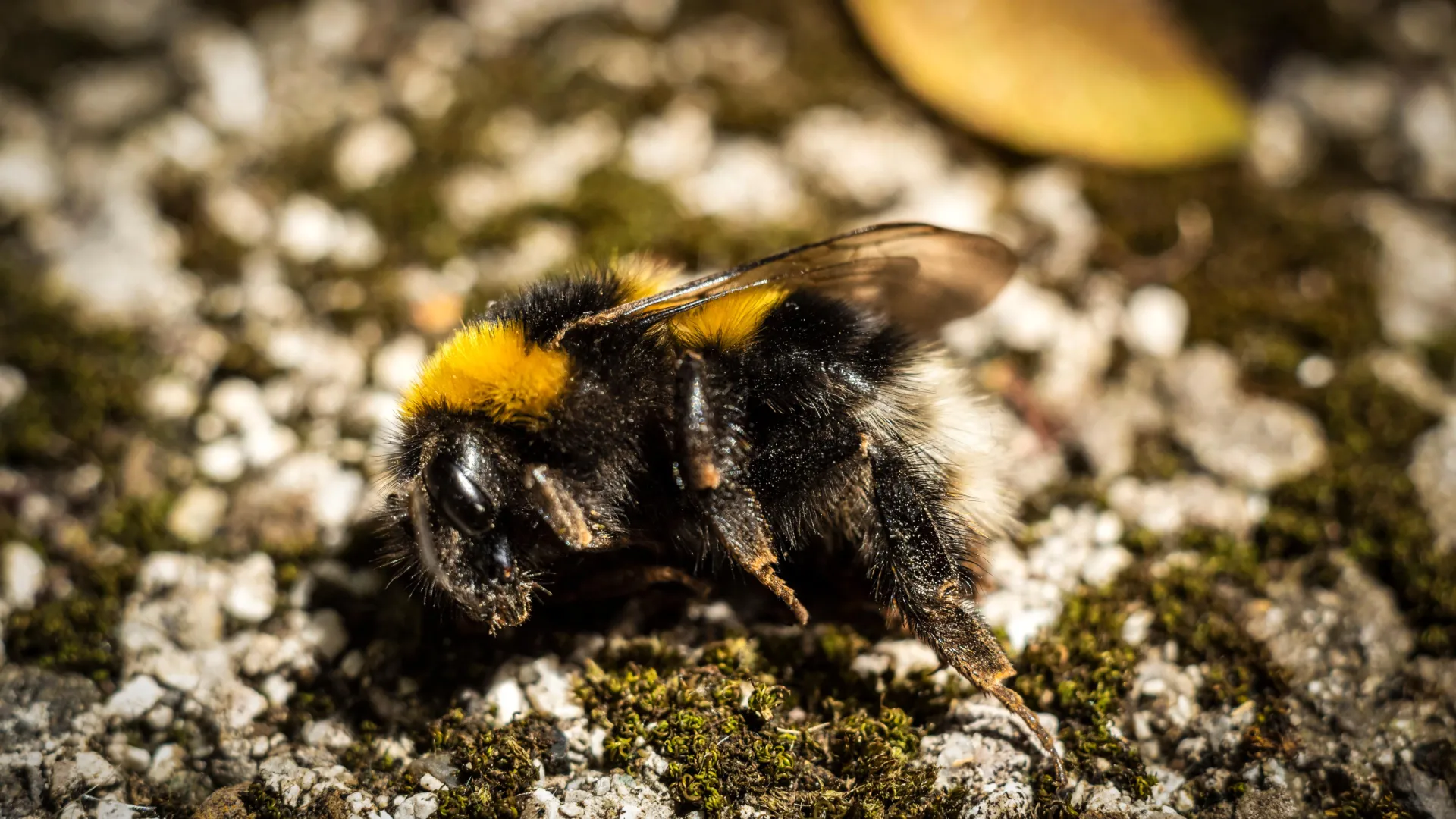
As temperatures soar during the summer months, a distressing sight has become increasingly common across urban and rural pavements alike: the motionless bodies of dead bumblebees. While discovering these fallen insects may seem like an isolated seasonal oddity, entomologists and conservationists warn that it is symptomatic of a much broader, systemic ecological crisis. The decline of wild pollinators is accelerating rapidly across the globe, driven by an compounding cocktail of extreme weather events, toxic agricultural chemicals, rapid habitat fragmentation, and ecological disruptions caused by climate change.
Understanding why these vital insects are perishing in such high numbers requires a comprehensive look at their biology, the pressures of modern human activity, and the fragile state of global ecosystems.
Inside the Hive: Natural Mortality and Colony Maintenance
To comprehend the phenomenon of dead bees on pavements, one must first examine the complex social structures of bumblebees. Unlike honeybees, which maintain perennial colonies that can survive across multiple years through winter stores, bumblebees live in annual societies. These colonies are founded in the spring by a single mated queen and are subsequently maintained by generations of female worker bees.
These workers have an exceptionally high metabolic rate and an intensely active, albeit short, lifespan lasting only four to six weeks. Consequently, older worker bees naturally die off in large numbers as the summer progresses. However, their presence on pavements is not always a simple matter of dropping where they expired mid-flight.
Colony hygiene plays a critical role in the survival of a bumblebee nest. To prevent pathogens, fungi, and diseases from sweeping through the hive and decimating the remaining brood, healthy young worker bees actively remove their deceased nestmates. They transport the bodies considerable distances away from the colony entrance, often dropping them onto nearby paved walkways, roads, and open pathways during their foraging trips. While natural attrition and hygienic disposal account for a portion of the dead bees found during summer, a significant and growing proportion of these fatalities are premature, caused by severe environmental stressors.
The Lethal Toll of Extreme Heatwaves and Thermal Stress
Weather patterns are playing an increasingly destructive role in pollinator mortality. Record-breaking temperatures have become a defining feature of European summers. In recent years, England recorded its warmest June on record, accompanied by prolonged heatwaves that pushed temperatures to unprecedented highs. Similar extreme heat events are forecast to become the norm, creating perilous conditions for cold-sensitive or temperature-regulated insects.
Prolonged exposure to extreme heat induces severe thermal stress in bumblebees, altering their neurological development and threatening the long-term stability of local populations. Heatwaves severely disrupt critical biological functions, including reproduction, flight capacity, and the ability to forage efficiently for nectar and pollen.
Social insects like bees rely heavily on behavioral thermoregulatory mechanisms to manage internal hive temperatures. When conditions become excessively hot, worker bees engage in collective cooling behaviors, such as fanning their wings rapidly to circulate air and lower the temperature of the brood. However, there are strict physiological limits to how effective these cooling strategies can be during prolonged heatwaves.
Furthermore, as ambient temperatures rise, bees may be forced to increase their foraging activity and cover greater geographical distances to find dwindling floral resources. While bees can thermoregulate to a degree by shifting heat through their hemolymph during flight, extreme thermal environments push their biological systems past the breaking point, leading to exhaustion, dehydration, and eventual death.
The Chemical Threat: Pesticides and the War on Dandelions
Beyond natural mortality and thermal stress, human intervention remains a primary driver of declining bee populations. The widespread commercial and domestic use of synthetic pesticides and herbicides continues to degrade the fitness and survival rates of wild pollinators.
Agricultural insecticides—applied primarily to protect crops from herbivorous insects—routinely inflict collateral damage on beneficial species responsible for pollination. Chemical classes such as organophosphates, synthetic pyrethroids, and phenylpyrazoles are known to cause immediate paralysis, neurological disorientation, and death in bees. Even at sub-lethal doses, these chemicals severely disrupt a bee’s ability to navigate, remember floral locations, and return safely to the hive.
Although regulatory bodies in the United Kingdom and the European Union have implemented strict bans on the most hazardous neonicotinoid pesticides, chemical pest control remains ubiquitous in both intensive farming and urban gardening.
Simultaneously, the chemical destruction of native plants removes essential food sources, leading to starvation. A prime example of this is the humble dandelion. Frequently classified as an unwelcome weed and eradicated using selective herbicides, dandelions serve as a critical, early-season lifeline for emerging queens and hungry worker bees, offering a massive and reliable source of high-energy nectar. When homeowners and local authorities relentlessly weed and spray public green spaces, they inadvertently strip the landscape of foundational sustenance for local fauna.
Habitat Fragmentation and Phenological Mismatches
Habitat loss compounds these chemical and thermal pressures. The relentless expansion of housing developments, intensive industrial agriculture, and infrastructure projects such as roads and commercial parks continues to fragment and shrink the natural foraging grounds of wild bees. Without diverse, interconnected habitats to support them, local populations lose genetic diversity and resilience, making them acutely vulnerable to environmental shocks.
Compounding this habitat degradation is a phenomenon known to ecologists as phenological mismatch. Climate change is fundamentally altering the seasonal clockwork of nature. Phenological mismatch occurs when two interdependent organisms—such as a specific species of flowering plant and its primary pollinator—fall out of sync in their seasonal appearances.
As winters grow milder and springs arrive earlier, plants may begin flowering weeks ahead of their historical schedules. If bees emerge from hibernation before these floral resources are available, or if flowers wither before bees reach their peak foraging period, both species suffer catastrophic consequences. Starving bees find themselves in a barren landscape, while plants fail to achieve pollination and subsequent reproduction. This growing temporal disconnect threatens to unravel complex ecological webs built over millennia.
The Scale of the Crisis: From Local Declines to Global Food Security
Insects represent the most diverse and abundant group of animals on Earth, yet they are simultaneously facing the most severe extinction risks of any major taxonomic group. The scale of the pollinator crisis has alarmed the scientific community.
Data from the International Union for Conservation of Nature (IUCN) highlights the alarming acceleration of this trend. In Europe, the number of wild bee species classified as facing a high risk of extinction has more than doubled over the past decade, rising from 77 assessed species in 2014 to at least 172 today—accounting for approximately 10 percent of all evaluated species.
The loss of these insects carries profound implications for planetary health and human survival. Insects perform essential ecosystem services, acting as decomposers, pest controllers, nutrient recyclers, and foundational food sources for birds, amphibians, and small mammals. However, their most economically and socially critical contribution is crop pollination.
Scientific assessments indicate that bees are among the most diverse insect groups known, comprising more than 21,000 documented species globally, with thousands more yet to be formally described. Together with other pollinators, they support approximately 75 percent of all global food crops and nearly 90 percent of all wild flowering plants. Staple foods, fruits, vegetables, and nuts rely heavily on insect-mediated pollination to maintain yield and quality.
Economists and agricultural scientists warn that an unmitigated collapse of pollinator populations could trigger a severe global food security crisis, resulting in nutrient deficiencies, soaring agricultural costs, and widespread ecological destabilization.
Actionable Solutions: What Individuals and Communities Can Do
While the challenges facing pollinators are formidable, conservationists emphasize that coordinated, grassroots interventions can make a measurable difference in halting and reversing these declines.
At the consumer level, individuals can exercise influence by adopting mindful purchasing habits. Supporting local, sustainably produced agriculture encourages farming systems that prioritize nature-friendly practices and minimize chemical inputs. Homeowners can likewise contribute by abandoning routine chemical treatments in gardens, opting instead for biological pest control and applying any necessary treatments sparingly and responsibly.
Mitigating habitat loss can begin directly in private gardens and municipal public spaces. Planting a diverse array of native, nectar-rich flowering species ensures a continuous food supply throughout the spring, summer, and autumn months. Crucially, leaving sections of lawns unmown allows native weeds and wildflowers to establish, creating vital micro-habitats and safe havens for foraging insects.
On an immediate, micro-scale, individuals can assist struggling bees encountered during extreme summer heatwaves. Bees found motionless on pavements are often simply exhausted or dehydrated rather than dying of old age. Conservation organizations recommend offering a simple revival solution: mixing white granulated sugar and water at a strict two-to-one ratio. Placing a few drops of this sugar water near the bee can provide an immediate energy boost. If it is safe to do so without risk of stings or allergic reactions, gently moving the bee onto a nearby flower or into a shaded area can protect it from further thermal stress and pedestrian traffic, offering a small but meaningful lifeline in an increasingly hostile environment.
