
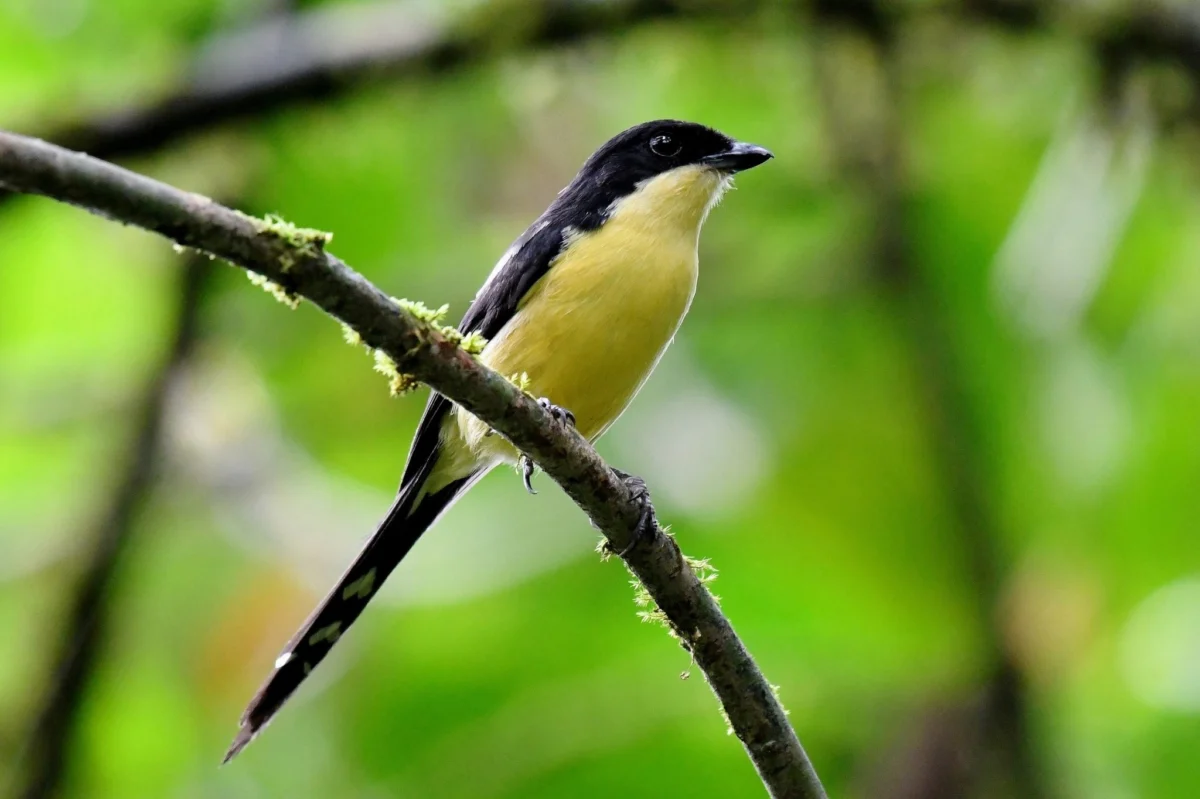
The Global Birdfair 2026 has announced its unwavering support for BirdLife International’s critical conservation initiatives aimed at protecting the unique endemic bird species of São Tomé and Príncipe, a small island nation nestled in the Gulf of Guinea. This significant partnership is set to bolster efforts to prevent the extinction of several avian marvels, including the enigmatic Dwarf Ibis, the elusive São Tomé Grosbeak, and the striking Newton’s Fiscal, all of which are teetering on the brink of survival and are listed as Critically Endangered on the IUCN Red List. The collaboration underscores a global commitment to preserving biodiversity in one of the world’s most vital, yet vulnerable, ecological hotspots.
São Tomé and Príncipe: A Jewel of Biodiversity Under Threat
São Tomé and Príncipe, an archipelago off the western equatorial coast of Central Africa, is renowned for its exceptional biodiversity, often referred to as the "Galapagos of Africa." Its isolation has fostered the evolution of a high number of endemic species, found nowhere else on Earth. The lush, volcanic landscapes provide a sanctuary for a myriad of flora and fauna, making it a critical area for global conservation. However, this ecological richness is under severe pressure from a combination of human activities and environmental challenges.
Among the island’s most iconic inhabitants are three avian species whose existence hangs precariously in the balance. The Dwarf Ibis (Bostrychia bocagei), a reclusive forest dweller with a distinctive call, is believed to have a population numbering fewer than 2,000 mature individuals. Its shy nature and preference for dense, undisturbed forest make it particularly vulnerable to habitat fragmentation. The São Tomé Grosbeak (Crithagra concolor), once considered lost to science for over a century before its rediscovery, now survives in isolated pockets of primary forest, with estimates suggesting fewer than 250 adult birds remain. This species, with its robust bill adapted for cracking tough seeds, epitomizes the island’s unique evolutionary pathways. Similarly, Newton’s Fiscal (Lanius newtoni), a strikingly patterned black-and-white shrike, inhabits the higher-altitude forest ridges in the island’s interior. With an estimated population also falling below 250 individuals, it ranks among Africa’s rarest birds, its future inextricably linked to the preservation of its specialized forest habitat. The critically endangered status of these species signifies an extremely high risk of extinction in the wild, demanding immediate and concerted conservation action.
The Mounting Pressures on São Tomé’s Avian Treasures
Despite legal protections being in place for these rare species, their populations continue to face relentless threats. The primary driver of decline is habitat loss and degradation, stemming largely from agricultural expansion and timber extraction. The islands’ fertile volcanic soil, combined with economic pressures, leads to the conversion of pristine forest into plantations for crops such as cocoa, coffee, and palm oil. This not only directly destroys critical habitats but also fragments remaining forest patches, isolating populations and hindering gene flow. Timber extraction, often for local construction and fuelwood, further exacerbates deforestation.
Beyond habitat destruction, these fragile bird populations contend with other significant pressures. Hunting, although legally restricted for many species, remains a concern, particularly due to traditional practices and subsistence needs. Disturbance from human encroachment further stresses sensitive species, disrupting breeding cycles and foraging behaviors. A particularly insidious threat comes from invasive alien species, such as rats, feral cats, and monkeys, introduced to the islands over centuries. These non-native predators prey on eggs, chicks, and adult birds, outcompeting native species for resources and introducing diseases to which endemic wildlife has no natural immunity. The cumulative effect of these pressures places an immense burden on species already existing in extremely low numbers.

BirdLife International’s Enduring Commitment: A Chronology of Action
BirdLife International, a global partnership of conservation organizations, has been actively engaged in São Tomé and Príncipe since 2018, working alongside local partners to address these complex conservation challenges. Their long-term strategy focuses on strengthening protected area management and fostering sustainable livelihoods that reduce human pressure on the islands’ invaluable biodiversity. This approach recognizes that effective conservation cannot occur in isolation from the communities that share the landscape.
The initial phase of BirdLife’s engagement involved comprehensive ecological surveys, capacity building for local conservationists, and the establishment of monitoring programs for key species. These foundational efforts provided crucial data on population dynamics, distribution, and the specific threats faced by the endemic birds, informing subsequent, more targeted interventions. The organization also worked closely with governmental agencies to enhance the legal frameworks for environmental protection and to improve the enforcement of existing conservation laws.
Empowering Local Stewards: The "Agents of Change" Initiative (2022-2024)
A pivotal initiative implemented between 2022 and 2024 showcased the transformative power of community engagement. Recognizing that local communities, particularly those who live closest to the forests, hold invaluable traditional ecological knowledge, BirdLife launched a project to collaborate directly with local hunters. The aim was to shift perceptions of wildlife conservation from being a restrictive measure to an opportunity for shared stewardship and sustainable practices.
This innovative program resulted in the remarkable recruitment of 75 hunters who voluntarily joined as "Agents of Change." Leveraging their intimate knowledge of the forest and its inhabitants, these individuals became crucial allies in conservation efforts. They now actively assist in locating rare species, such as the elusive Dwarf Ibis, and play a vital role in reporting illegal bird hunting activities. This initiative transformed their skills and experience, traditionally associated with resource extraction, into powerful tools for conservation monitoring and enforcement.
Beyond surveillance, the Agents of Change participated in a collaborative process with national authorities, biologists, and civil society organizations to review and update São Tomé and Príncipe’s hunting laws. Their practical insights and lived experience were instrumental in developing a more effective and equitable roadmap for sustainable hunting practices. Furthermore, a specialized mentoring program was offered to 25 selected hunters, focusing on developing alternative economic activities. This program aimed to demonstrate how diversification could positively impact family incomes while simultaneously reducing reliance on unsustainable forest resource extraction. Participants received training in basic management and financial skills, fostering entrepreneurship. A competition followed, where the five most promising business ideas received technical and financial support to develop and implement their plans. These ventures, ranging from ecotourism initiatives to sustainable agriculture, exemplify how local communities can become direct beneficiaries and active contributors to conservation, balancing human needs with the imperatives of biodiversity protection.
Global Birdfair 2026: A Catalyst for the Future

Building on the success of these foundational efforts, the Global Birdfair 2026 project will inject renewed momentum into BirdLife’s work in São Tomé. The project’s strategic focus is twofold: to fill critical knowledge gaps regarding the endangered bird species and to significantly strengthen local capacity for their long-term protection.
Researchers, in collaboration with dedicated park rangers and informed community members, will embark on intensified studies to gain a deeper understanding of these species. This includes detailed mapping of their precise habitats, analyzing population trends with greater accuracy, and identifying specific ecological requirements. Such data is paramount for designing highly targeted and effective conservation interventions. For instance, understanding the specific dietary needs of the São Tomé Grosbeak or the nesting site preferences of the Dwarf Ibis can inform bespoke habitat restoration efforts.
Concurrently, the project will continue to prioritize and strengthen community involvement. This ensures that conservation strategies are not only scientifically sound but also deeply rooted in local knowledge, fostering a sense of ownership and long-term stewardship among the people who share their lives with these birds. This participatory approach is vital for the sustainability of conservation gains, transforming abstract environmental goals into tangible benefits and responsibilities for local populations. The Global Birdfair’s support provides the necessary resources to scale up these initiatives, allowing for broader outreach, more extensive training programs, and the implementation of larger-scale habitat protection measures.
Broader Implications and the Path Forward
The commitment from Global Birdfair 2026 and BirdLife International extends beyond merely saving a few species; it represents a significant investment in São Tomé and Príncipe’s natural heritage and its sustainable future. These three critically endangered birds—the Dwarf Ibis, São Tomé Grosbeak, and Newton’s Fiscal—are more than just rare species; they are vibrant symbols of the islands’ extraordinary and irreplaceable biodiversity. Protecting them necessitates safeguarding the integrity of their forest ecosystems, which, in turn, provides essential services to the local communities, such as clean water, climate regulation, and opportunities for ecotourism.
This project also serves as a powerful model for community-led conservation globally. By demonstrating how former hunters can transition into conservation advocates and how local economic development can align with environmental protection, it offers valuable lessons for other biodiversity hotspots grappling with similar challenges. The successful engagement of local populations as active participants, rather than passive recipients of conservation mandates, is a testament to the effectiveness of inclusive approaches.
The partnership highlights the critical role of international collaboration in tackling global conservation crises. Organizations like BirdLife International, supported by events such as the Global Birdfair, act as crucial conduits for bringing together scientific expertise, financial resources, and local knowledge to achieve tangible results. The global birdwatching community, through its participation in the Global Birdfair, directly contributes to these vital efforts, translating a passion for birds into concrete action for their survival.
With continued support, dedicated collaboration among scientists, governments, and local communities, and the sustained curiosity and engagement from people around the world, there is genuine hope. We can collectively ensure that the haunting call of the Dwarf Ibis continues to echo through São Tomé’s verdant forests, that the quiet, resilient presence of the São Tomé Grosbeak endures, and that the watchful silhouette of Newton’s Fiscal remains a majestic sight for generations to come. Together, these efforts offer a beacon of hope for safeguarding some of Africa’s rarest and most precious avian treasures against the shadow of extinction.
