
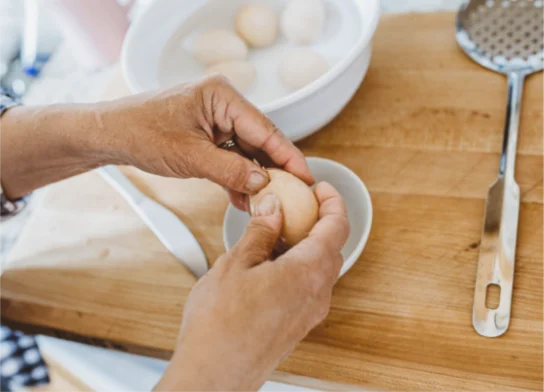
The culinary challenge of peeling hard-cooked eggs, particularly those sourced directly from farms or backyard coops, has long been a subject of frustration for both professional chefs and home cooks. While the hard-boiled egg is a fundamental component of global nutrition—serving as the basis for salads, hors d’oeuvres, and high-protein snacks—the physical bond between the eggshell membrane and the albumen often results in a mangled, aesthetically unpleasing product. Recent evaluations in culinary science and home economics suggest that the traditional method of boiling is fundamentally flawed when applied to fresh poultry products. Instead, the transition toward atmospheric steaming has emerged as the most reliable technique for ensuring a clean separation of the shell, regardless of the egg’s age.

Understanding the Culinary Challenge of Fresh Poultry Products
The difficulty in peeling eggs is primarily a function of the egg’s internal chemistry, specifically its pH levels. When an egg is freshly laid, the albumen (egg white) has a relatively low pH, making it slightly acidic. In this acidic environment, the proteins in the albumen bond strongly to the inner shell membrane during the cooking process. As an egg ages, carbon dioxide escapes through the thousands of microscopic pores in the shell, causing the pH of the albumen to rise. A higher pH level—typically achieved after several weeks of refrigeration—weakens the bond between the membrane and the white, which is why older, "supermarket-grade" eggs are generally easier to peel after boiling.

However, relying on the degradation of the egg’s freshness to facilitate easier peeling presents a distinct culinary trade-off. As an egg ages, the structural integrity of the yolk and white diminishes. The air cell at the blunt end of the egg expands significantly as moisture evaporates, leading to a flattened or "dipped" appearance in the finished product. For preparations where visual symmetry is paramount, such as deviled eggs or Niçoise salads, the use of aged eggs is suboptimal. The challenge, therefore, lies in identifying a cooking medium that allows for the immediate use of farm-fresh eggs without compromising the ease of the peeling process.

Evaluating Traditional Boiling Myths and Additives
Over decades, a variety of "folk" methods and additives have been proposed to mitigate the sticking of eggshells. These include the addition of sodium chloride (table salt), acetic acid (vinegar), or sodium bicarbonate (baking soda) to the boiling water. The logic behind these additives varies: vinegar is thought to dissolve some of the calcium carbonate in the shell, while baking soda is intended to raise the pH of the water in hopes of influencing the internal pH of the egg.

Experimental data and anecdotal evidence from high-volume kitchens suggest that these additives provide inconsistent results. Physical interventions, such as piercing the shell with a pin prior to submerged boiling, are intended to prevent the shell from cracking due to internal pressure, but they do little to address the membrane adhesion issue. Furthermore, the transition of eggs from various starting temperatures—moving them directly from a 40°F refrigerator to 212°F boiling water—often results in thermal shock, leading to fractured shells and lost albumen.

The Mechanics of Steam-Based Thermal Processing
The shift from submerged boiling to atmospheric steaming represents a significant advancement in domestic food preparation. Unlike boiling, where the egg is surrounded by turbulent liquid, steaming utilizes gaseous water vapor to transfer heat. This method offers several distinct advantages that contribute to the "perfect peel."

First, steam provides a more consistent and gentle heat transfer. When an egg is dropped into boiling water, the exterior is subjected to immediate and violent thermal energy, which can cause the proteins to seize instantly against the membrane. Steam, while maintaining a consistent temperature of 212°F (at sea level), surrounds the egg uniformly. This "shocks" the exterior of the albumen just enough to cause it to contract away from the membrane without the mechanical agitation of bubbling water.

Second, the use of a steamer basket or colander keeps the eggs elevated above the liquid. This prevents the eggs from knocking against the bottom of the pot or against one another, significantly reducing the rate of shell breakage. Because the eggs are not submerged, the pressure differential between the inside and outside of the egg is managed more effectively, allowing the steam to penetrate the pores of the shell and assist in the separation of the membrane.

Step-by-Step Implementation of the Steaming Protocol
To achieve consistent results with farm-fresh eggs, a systematic approach to steaming is required. The following protocol has been identified as the most effective for eggs ranging from a few hours to a few days old.

- Equipment Preparation: A large pot is filled with approximately two to three inches of water. A steaming apparatus—such as a stainless steel folding basket, a bamboo steamer, or even a heat-safe colander—is placed inside, ensuring that the bottom of the steamer does not touch the surface of the water.
- Thermal Priming: The water is brought to a full boil over high heat until a robust column of steam is produced.
- Egg Integration: Eggs should be rinsed in warm water to prevent extreme thermal shock. Using tongs, the eggs are placed in a single layer within the steamer basket. Crowding the eggs should be avoided to ensure even steam circulation.
- Temporal Management: The pot is covered with a tight-fitting lid to trap the steam. The duration of the cook is determined by the desired consistency of the yolk:
- Soft-Cooked (Runny Yolk): 6 to 7 minutes.
- Medium-Cooked (Custard-like Yolk): 8 to 9 minutes.
- Hard-Cooked (Solid Yolk): 12 to 13 minutes.
- The Instant Pot Alternative: Modern electric pressure cookers have popularized the "5-5-5 method" (five minutes of high pressure, five minutes of natural release, and five minutes in an ice bath). This is essentially a pressurized steaming method. While effective, atmospheric steaming on a stovetop offers more control for those without specialized appliances.
The Critical Role of Rapid Cryogenic Cooling
The steaming process does not conclude when the heat is turned off. The "ice bath" phase is perhaps the most critical step in ensuring an easy peel and a high-quality yolk. As soon as the timer expires, the eggs must be immediately transferred from the steamer to a bowl filled with a slurry of ice and cold water.

This rapid cooling serves two purposes. Physically, it causes the egg’s internal structure to contract further, pulling the albumen away from the shell membrane and creating a small gap that facilitates peeling. Chemically, it halts the cooking process instantly. If eggs are allowed to cool slowly at room temperature, the residual heat continues to cook the yolk, often leading to overcoagulation and the development of undesirable odors and colors.

Mitigating the Formation of Iron Sulfide Discoloration
A common defect in hard-cooked eggs is the appearance of a greenish-gray ring surrounding the yolk. While safe for consumption, this discoloration is a sign of overcooking or improper cooling. The phenomenon is the result of a chemical reaction between the sulfur found in the egg whites and the iron present in the yolks.

When an egg is heated for too long, the sulfur proteins in the white break down and form hydrogen sulfide gas. This gas migrates toward the center of the egg, where it reacts with the iron in the yolk to create iron sulfide. By utilizing the steaming method—which offers more precise timing—and following it with an immediate ice bath, the production of hydrogen sulfide is minimized, and the gas is prevented from reacting with the yolk. This results in a bright, yellow, and creamy yolk center.

Peeling Technique and Final Presentation
Once the eggs have reached a cold internal temperature—typically after 10 to 15 minutes in the ice bath—the peeling process can begin. The recommended technique involves gently rolling the egg on a hard surface to create a network of fine cracks across the entire shell.

Peeling should ideally begin at the blunt end of the egg, where the air sac is located. By breaking into this pocket of air, the cook can more easily grasp the membrane. If the steaming and cooling steps were performed correctly, the membrane will remain attached to the shell, allowing the entire exterior to be removed in large sections, often leaving the albumen perfectly smooth and intact.

Broader Impact and Culinary Implications
The transition from boiling to steaming has broader implications for food waste and culinary efficiency. In high-volume environments, such as catering or restaurant prep, the loss of albumen due to "sticky" shells represents a tangible financial cost. By adopting steaming, kitchens can utilize the freshest possible eggs, which offer superior flavor and nutritional profiles, without the labor-intensive struggle of traditional peeling.

Furthermore, as the "farm-to-table" and backyard poultry movements continue to grow, the need for specialized knowledge regarding fresh ingredients becomes more acute. The steaming method empowers small-scale producers and consumers to enjoy the fruits of their labor with the same convenience as processed, store-bought alternatives. This methodology reaffirms that in the culinary arts, a minor shift in the application of physics and chemistry can solve a perennial problem, resulting in a superior product that meets both aesthetic and nutritional standards.
