
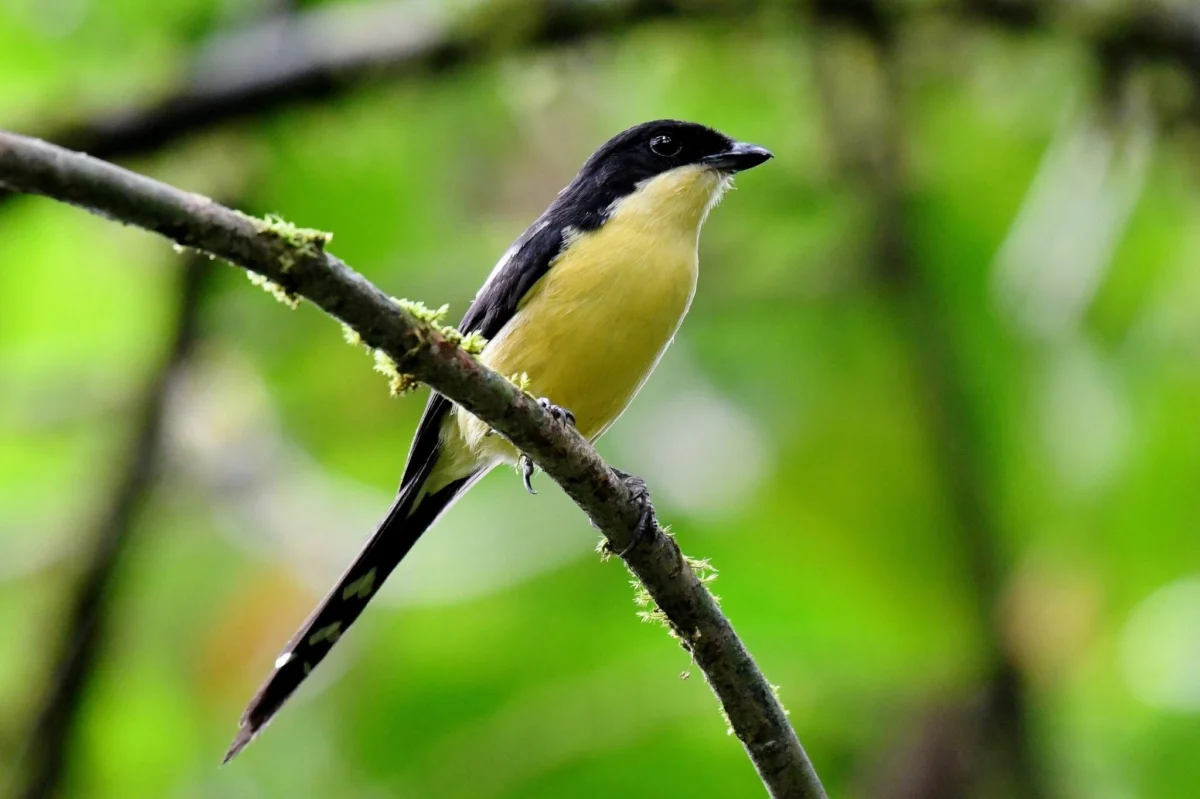
The Global Birdfair 2026 has officially pledged its support to BirdLife International’s critical conservation initiatives aimed at safeguarding the unique endemic bird species of São Tomé, an island nation striving to prevent the irreversible loss of its extraordinary avian heritage. This significant partnership underscores a global commitment to protecting some of Africa’s rarest and most vulnerable birds, particularly the Critically Endangered Dwarf Ibis, São Tomé Grosbeak, and Newton’s Fiscal.
São Tomé: A Biodiversity Hotspot Under Threat
São Tomé, the larger island of the Democratic Republic of São Tomé and Príncipe, is a verdant gem nestled in the Gulf of Guinea, often referred to as the "Galapagos of Africa" due to its exceptional biodiversity and high rates of endemism. Its isolation over millions of years has fostered a unique evolutionary laboratory, resulting in species found nowhere else on Earth. However, this very uniqueness also renders its wildlife acutely vulnerable to human pressures. The island’s lush, humid equatorial forests, which cover much of its mountainous interior, are the last bastions for a suite of extraordinary creatures, many teetering on the brink of extinction.
Among the most iconic and imperiled residents are three avian species, each a testament to São Tomé’s unparalleled natural history: the Dwarf Ibis (Bostrychia bocagei), the São Tomé Grosbeak (Crithagra concolor), and Newton’s Fiscal (Lanius newtoni). All three are classified as Critically Endangered on the IUCN Red List, signifying an extremely high risk of extinction in the wild. Their survival is intrinsically linked to the health and integrity of São Tomé’s diminishing forest ecosystems and the effectiveness of targeted conservation interventions.
The Dwarf Ibis, a shy and elusive forest dweller, is characterized by its small stature for an ibis and a distinctive, haunting call that echoes through the dense undergrowth. With an estimated population believed to be fewer than 2,000 individuals, its secretive nature makes precise population counts challenging, yet every sighting is a beacon of hope for researchers. This species prefers primary forest habitats, making it particularly susceptible to habitat fragmentation and degradation.
The São Tomé Grosbeak presents an even more dramatic tale of rarity and rediscovery. Once feared lost to science for over a century, with no confirmed sightings between 1888 and 1991, its rediscovery sent ripples of excitement through the ornithological community. This large, robust finch is now known to persist in scattered, isolated pockets of forest, with current estimates suggesting a perilous population of possibly fewer than 250 mature adults. Its extraordinary beak, adapted for cracking large, hard seeds, is a remarkable example of evolutionary specialization.
Newton’s Fiscal, a striking black-and-white shrike, patrols the forest ridges in the central highlands of São Tomé. Named after its discoverer, the Portuguese naturalist Francisco Newton, this predatory bird is considered one of Africa’s rarest, with its population also estimated at fewer than 250 individuals. Its distinctive plumage and territorial behavior make it a compelling subject for conservation, but its low numbers highlight the urgent need for intensive protection.
Deepening Crisis: The Multifaceted Threats to São Tomé’s Avian Endemics
Despite their legal protection under national law, these critically endangered species face a relentless onslaught of threats that continually erode their chances of survival. The primary driver of decline is habitat loss and degradation. São Tomé’s economy, historically reliant on agricultural exports such as cocoa and coffee, continues to exert immense pressure on its natural forests. The expansion of agricultural land, coupled with timber extraction—both legal and illicit—leads to deforestation and fragmentation of critical habitats. This not only reduces the available living space for forest-dependent birds but also isolates populations, hindering genetic exchange and increasing vulnerability to local extinctions. The conversion of biodiverse natural forests into monoculture plantations further exacerbates the problem, offering little ecological value for these specialized species.
Beyond habitat destruction, direct anthropogenic pressures also play a significant role. Hunting, although illegal for protected species, persists in some areas, driven by subsistence needs or cultural practices. Disturbance from human activities, including encroachment into protected areas, further stresses already fragile populations.
A pervasive and insidious threat comes from invasive alien species. Introduced unintentionally or intentionally by humans over centuries, species such as rats, feral cats, and even certain types of monkeys prey upon the eggs, nestlings, and even adult birds of ground-nesting or low-nesting species. They also compete for food resources and can introduce diseases, compounding the challenges faced by native wildlife. The confined nature of island ecosystems means that native species, having evolved in the absence of such predators, often lack the defensive mechanisms to cope, making them particularly susceptible to the impacts of invasives.
Furthermore, while not explicitly detailed in the initial summary, island nations like São Tomé are acutely vulnerable to the overarching threat of climate change. Rising sea levels could impact coastal ecosystems, while altered rainfall patterns and increased frequency of extreme weather events could disrupt forest hydrology and vegetation dynamics, further stressing already vulnerable avian populations and their habitats.
A History of Intervention: BirdLife’s Enduring Commitment

Recognizing the escalating crisis, BirdLife International, through its global network and in collaboration with local partners, has been actively engaged in conservation efforts in São Tomé and Príncipe since 2018. This long-term commitment reflects a strategic approach to addressing the root causes of biodiversity loss on the islands.
Key to BirdLife’s strategy has been strengthening protected area management. This involves working with national authorities and park rangers to enhance surveillance, enforce conservation laws, and implement effective management plans for areas designated for biodiversity protection. Activities include boundary demarcation, regular patrols to deter illegal activities, and ecological monitoring to assess the health of ecosystems and the status of target species.
Crucially, BirdLife’s approach extends beyond simply safeguarding forests; it emphasizes integrating conservation with sustainable livelihoods for local communities. The understanding is that conservation cannot succeed in isolation from human needs. By promoting alternative economic activities that reduce pressure on natural resources, such as sustainable agriculture, ecotourism development, and responsible forestry practices, BirdLife aims to foster a symbiotic relationship between people and nature. This strategy helps to demonstrate the tangible benefits of conservation to local populations, encouraging their participation and stewardship.
Empowering Communities: The "Agents of Change" Model (2022-2024)
A groundbreaking initiative implemented between 2022 and 2024 exemplifies the power of community engagement in São Tomé. This project specifically targeted local hunters, a group often perceived as a challenge to conservation efforts. Rather than adopting a purely punitive approach, BirdLife and its partners sought to transform perceptions and harness invaluable local knowledge for conservation.
The initiative aimed to shift the narrative, encouraging hunters to view themselves not as adversaries but as "stewards of the forest." Through direct engagement, workshops, and dialogue, the project fostered a deeper understanding of wildlife conservation principles and the importance of sustainable hunting practices. The results were remarkably positive: 75 hunters voluntarily joined the initiative as "Agents of Change."
These "Agents of Change" bring unparalleled knowledge of the forest and its intricate pathways, honed over generations. They are now actively utilizing this expertise to assist conservation efforts by helping to locate rare and elusive species like the Dwarf Ibis and, critically, by reporting instances of illegal bird hunting. Their participation provides invaluable intelligence and significantly extends the reach of conservation monitoring and enforcement.
Beyond direct monitoring, these local hunters played a pivotal role in a collaborative process to review and update São Tomé’s hunting laws. Working alongside national authorities, biologists, and other civil society members, they contributed their practical insights, helping to shape a more effective and equitable roadmap for wildlife management. This participatory approach ensures that new regulations are not only scientifically sound but also culturally sensitive and practically implementable.
To further empower these individuals and reduce their reliance on unsustainable practices, a mentoring program was made available to 25 selected hunters. This program focused on developing alternative economic activities, providing training in basic management and financial skills. The goal was to equip them with the tools to explore new income-generating opportunities, demonstrating the positive impact of economic diversification on family income and community well-being.
The initiative culminated in a competition where the five most promising business ideas developed by the mentored hunters received technical and financial support for their implementation. This tangible investment in local entrepreneurship served as a powerful demonstration of how former hunters can become active contributors to conservation, fostering a balance between human needs and the preservation of biodiversity. This model is a compelling example of how transforming human-wildlife relationships can yield significant conservation dividends.
Global Birdfair 2026: Catalyzing Future Conservation Action
Building on the successes and lessons learned from these previous interventions, the Global Birdfair 2026 project will infuse renewed momentum into São Tomé’s conservation efforts. The Global Birdfair, a premier international event for birdwatching and conservation, serves as a vital platform for raising awareness and generating crucial funds for biodiversity protection worldwide. Its decision to support São Tomé’s endemic birds highlights the global significance of this island’s unique avian fauna.
The project’s strategic focus will be twofold: addressing critical knowledge gaps and strengthening local capacity. Despite years of research, there remains a significant need for more comprehensive data on the target species. Researchers, working in close collaboration with park rangers and community members, will undertake intensive field studies to better understand the precise distribution of these species, their ecological requirements, population dynamics, and the specific threats they face in different microhabitats. This will involve detailed population surveys, habitat mapping using advanced technologies, and potentially genetic analysis to assess population connectivity and health. Such robust scientific data is essential for developing highly targeted and effective conservation strategies.
Simultaneously, the project will invest in strengthening the capacity of local personnel. This includes training for park rangers in advanced monitoring techniques, law enforcement, and protected area management. Local researchers will receive mentorship and resources to conduct independent studies, fostering homegrown expertise. Community members, including the "Agents of Change," will continue to receive training in citizen science protocols, data collection, and sustainable resource management, ensuring that conservation efforts are deeply rooted in local knowledge and participation.

The Global Birdfair 2026 project aims to create a self-sustaining model where informed conservation actions are driven by capable local institutions and empowered communities, leading to long-term stewardship of São Tomé’s natural heritage. The financial support from Global Birdfair is anticipated to facilitate these expanded research and capacity-building activities, enabling a more intensive and sustained effort to reverse the decline of these critically endangered birds.
Broader Impact and Implications
The success of conservation efforts in São Tomé carries implications far beyond the island’s shores. Ecologically, safeguarding these endemic birds contributes to the preservation of unique island ecosystems, which in turn support a myriad of other species and ecological processes, such as seed dispersal and insect control. The island’s forests also play a crucial role in regulating local climate and water cycles.
Socio-economically, successful conservation initiatives can pave the way for sustainable development. A healthy natural environment with thriving wildlife populations can enhance the potential for ecotourism, providing alternative income streams for local communities and diversifying the national economy. The "Agents of Change" model demonstrates how conservation can directly improve livelihoods and empower local people, transforming them into active participants in sustainable resource management. This fosters a sense of ownership and pride in their natural heritage.
On a global scale, São Tomé serves as a vital case study for island conservation, offering valuable lessons for other biodiversity hotspots facing similar threats. The innovative community engagement strategies implemented by BirdLife International could be replicated and adapted in other contexts. Furthermore, protecting these species contributes directly to global biodiversity targets, such as those outlined in the Kunming-Montreal Global Biodiversity Framework, which aims to halt and reverse nature loss by 2030.
The sustained focus on São Tomé’s critically endangered birds also reinforces the importance of international collaboration in addressing global environmental challenges. The partnership between BirdLife International, local São Toméan entities, and the Global Birdfair exemplifies how collective action, combining scientific expertise, local knowledge, and financial support, can make a tangible difference in the face of escalating biodiversity crises.
Inferred reactions from stakeholders highlight the significance of this collaboration. A BirdLife International representative might express profound gratitude for the Global Birdfair’s support, emphasizing the urgency of the situation and the transformative power of community-led conservation. They would likely reiterate that "these birds are not just species; they are symbols of São Tomé’s extraordinary natural heritage, and their protection means safeguarding the entire ecosystem and the communities dependent on it."
An organizer from Global Birdfair would likely underscore their commitment to supporting impactful projects that yield measurable results, stating, "Our mission is to connect people with nature and to channel passion into protection. São Tomé represents a unique opportunity to make a real difference, and we are proud to stand with BirdLife in this vital endeavor."
A São Toméan government official might acknowledge the invaluable international support and reaffirm the nation’s commitment to strengthening environmental policies and protected areas, recognizing the long-term ecological and economic benefits of preserving their natural capital. A former hunter, now an "Agent of Change," could offer a powerful personal testimony, explaining how the program has not only provided new skills and opportunities but also instilled a deeper appreciation for the forest and its incredible inhabitants, stating, "We are now guardians of our land, working to ensure these birds sing for our children and grandchildren."
A Future for São Tomé’s Feathered Jewels
The trio of critically endangered birds—the Dwarf Ibis, the São Tomé Grosbeak, and Newton’s Fiscal—are more than just biological rarities; they are living testaments to São Tomé’s irreplaceable natural heritage. Their continued existence is a barometer of the health of the island’s ecosystems and a symbol of the global responsibility to protect our planet’s biodiversity.
With the unwavering support of the Global Birdfair 2026, BirdLife International and its local partners are poised to make significant strides in ensuring the survival of these magnificent species. Through enhanced research, strengthened local capacity, and deeply embedded community engagement, the project aims to build a sustainable future where human development and nature conservation are harmoniously intertwined. The haunting call of the Dwarf Ibis, the quiet presence of the São Tomé Grosbeak, and the watchful silhouette of Newton’s Fiscal are integral to the soundscape and spirit of São Tomé’s forests. Through continued collaboration, curiosity, and concerted action from people around the world, these unique voices will continue to enrich the island for generations to come, standing as a beacon of hope for conservation efforts across Africa and beyond.
