
The Albanian coast in spring is a spectacle of unparalleled natural beauty, where the Pishë Poro-Nartë protected landscape stands as a critical ecological haven. This pristine stretch of coastline, renowned as one of the finest remaining wild Mediterranean ecosystems, hosts an astonishing array of biodiversity. Flocks of vibrant flamingos gracefully wade through its tranquil lagoons, while majestic Dalmatian Pelicans glide effortlessly overhead. Millions of migratory birds, undertaking arduous journeys between their European breeding grounds and African wintering sites, find indispensable respite and sustenance within the ancient pine forests that line its shores. This area, part of the broader Vjosë-Nartë Protected Landscape and integral to the delta of the Vjosë River—celebrated as one of Europe’s last wild rivers—is not merely a national treasure but a site of profound global ecological importance. However, this irreplaceable natural heritage is currently facing an existential threat, as heavy machinery has moved into the protected zone, initiating construction activities without apparent legal authorisation or transparency.
Unauthorised Development Plunges Protected Area into Crisis
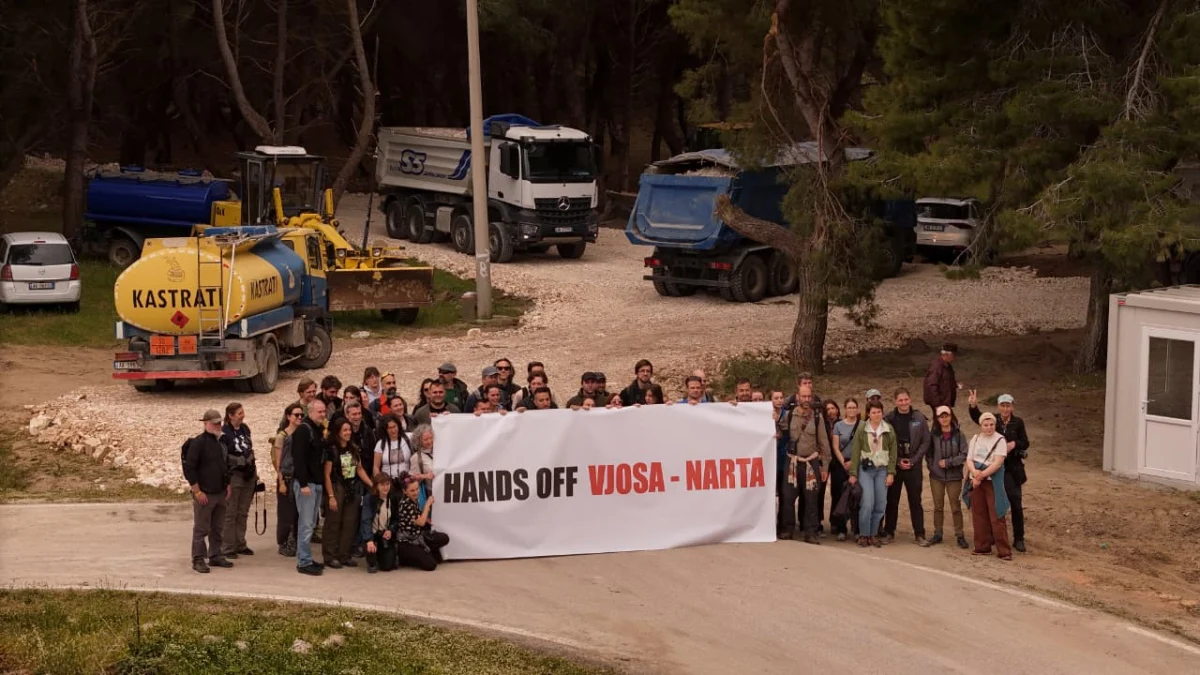
At the close of April, bulldozers and heavy machinery commenced operations within the Pishë Poro-Nartë protected area, a development that has sent shockwaves through environmental conservation circles both domestically and internationally. These unpermitted works involve the systematic felling of ancient trees and the levelling of sand dunes, natural formations painstakingly shaped over centuries, which are crucial components of the delicate coastal ecosystem. The core of the scandal lies in the complete lack of due process: there is no approved project plan, no record of public consultation, no environmental impact assessment (EIA) conducted, and critically, no sign of a construction permit. The profound absence of official authorisation or even a clear explanation from any governmental authority regarding the nature of the construction or the entities responsible has fueled widespread concern and accusations of a blatant disregard for national and international environmental protection laws.
This clandestine operation directly contravenes not only the spirit but, by all indications, the letter of existing Albanian environmental legislation, however controversial. The fact that such extensive damage is being inflicted upon a designated protected area without any public record or accountability underscores a severe breakdown in governance and the rule of law. The implications of this unchecked destruction extend far beyond the immediate environmental damage, raising serious questions about transparency, corruption, and Albania’s commitment to its international obligations and its aspirations for European Union membership.
Pishë Poro-Nartë: A Sanctuary of Global Significance
The Vjosë-Nartë Protected Landscape, within which Pishë Poro-Nartë is situated, is a designated category V protected area under the IUCN classification, recognized for its exceptional natural and cultural values. This vast deltaic system, fed by the Vjosë River, is a biodiversity hotspot. It hosts over 70 species listed as endangered or critically endangered under national and international conservation frameworks, including numerous endemic flora and fauna. The area is a vital haven for more than 200 bird species, many of which are migratory. It forms an indispensable part of the Adriatic Flyway, one of Europe’s most critical bird migration corridors. This avian superhighway funnels millions of birds, from raptors and waders to songbirds, across the Mediterranean twice a year, linking vast ecosystems from the Arctic to sub-Saharan Africa. The ancient pine forests of Pishë Poro-Nartë provide crucial stopover sites, offering shelter, food, and resting grounds for these exhausted travelers before they continue their arduous journeys. The destruction of these forests and coastal habitats would not only devastate local populations but would have ripple effects across continents, disrupting the migratory patterns and survival rates of countless species, impacting global biodiversity.
Beyond its avian significance, the wetlands, lagoons, and coastal dunes support a complex web of life, including diverse fish populations, amphibians, reptiles, and mammals. The Vjosë River itself, flowing unimpeded from source to sea, represents a unique and increasingly rare example of a truly wild river system in Europe. Its delta, therefore, is an ecological treasure, providing critical ecosystem services such as flood regulation, water purification, and carbon sequestration. The loss of Pishë Poro-Nartë’s integrity would thus represent an irreversible blow to an ecosystem that provides invaluable natural capital and supports regional ecological resilience. The area’s inclusion in the Emerald Network, a system of protected areas established under the Bern Convention, further underscores its international importance for biodiversity conservation.
A Troubling Timeline of Legal Maneuvers and Alleged Violations
The current crisis at Pishë Poro-Nartë is not an isolated incident but appears to be the culmination of a series of controversial legislative and administrative actions.
- Prior to the Current Works (Ongoing Legislative Debates): The Albanian government previously amended its Law on Protected Areas, introducing provisions that controversially permitted the construction of luxury resorts within designated protected zones. This amendment immediately drew sharp criticism from environmental organizations and the European Union, as it directly contradicts established EU nature protection standards, particularly those enshrined in the Birds and and Habitats Directives. Albania, as an EU accession candidate, is expected to align its national legislation with the comprehensive EU acquis communautaire. The European Commission has explicitly highlighted this legislative inconsistency as a significant obstacle in Albania’s accession process, demanding that the Albanian government revise the law to meet EU environmental benchmarks. Despite these clear directives, the law remained in effect, creating a problematic legal window.
- Ongoing Discussions and Assurances (Early 2024): The Albanian government has reportedly given assurances to the European Commission and international partners that the controversial law will be reformed to comply with EU standards within the current year. However, while these crucial legal reforms are debated and drafted on paper, the rapid pace of development on the ground suggests a different, more immediate agenda.
- Late April 2024 (Commencement of Works): Heavy machinery, including bulldozers, entered the Pishë Poro-Nartë protected area. Work commenced immediately, involving extensive tree felling and the significant alteration of sand dunes, transforming the natural landscape. Eyewitness accounts and reports from local environmental groups indicated the scale of the operations was substantial, raising immediate alarm.
- Immediate Aftermath (Ongoing Investigations): Local environmental groups, notably PPNEA (Protection and Preservation of Natural Environment in Albania), and concerned citizens swiftly raised alarms. Investigations by these organizations and international partners like BirdLife Europe quickly revealed the absence of required permits, environmental impact assessments (EIAs), or public consultations for the ongoing works. This glaring lack of transparency and legality, even under the existing, already controversial legislation, compounded the outrage. The official explanation for the works or identification of the responsible parties has remained conspicuously absent from governmental authorities.
- Early May 2024 (International Advocacy): BirdLife Europe’s Regional Director Ariel Brunner and Head of Policy Anouk Puymartin traveled to Tirana. They engaged in discussions with Albanian authorities, reiterating the urgency of the situation and the critical need for immediate intervention. During a press conference, Brunner explicitly stated, "Bulldozers are operating in a completely illegal way, based on unclear decisions and a total lack of transparency – and this needs to stop." This strong statement underscored the international community’s deep concern.
The apparent strategy, as articulated by Aleksandër Trajçe, Director of PPNEA, is stark: "build now, before a stricter law makes it impossible." This suggests a deliberate exploitation of a legislative loophole and a rush to complete projects before tighter environmental regulations, mandated by EU accession, come into force. Furthermore, the absence of any official explanation or identification of the responsible parties for the current works adds another layer of legal and ethical concern, hinting at potential illicit activities or corruption. The article also notes a major development project linked to Jared Kushner had been planned for this broader area, though the connection to the current specific, allegedly illegal works remains unconfirmed. This adds to the existing complexity and suspicion surrounding development initiatives in the region, particularly those involving high-profile international investors.
Official Responses and Advocacy Efforts
In response to the escalating crisis, conservation organizations have intensified their advocacy. The visit by BirdLife Europe’s leadership to Tirana underscores the international gravity of the situation. Their constructive conversations with Albanian authorities reportedly yielded renewed assurances that environmental legislation would be updated within the current year to align with EU standards. While BirdLife Europe welcomed these commitments as a positive step towards legislative alignment, they firmly stressed that "good intentions on paper mean nothing while a protected area is being dismantled in real time." The dichotomy between verbal assurances of reform and the ongoing, tangible destruction on the ground highlights a significant credibility gap and a critical test of Albania’s commitment to environmental protection.
Local environmental groups, led by organizations such as PPNEA, have been at the forefront of monitoring the situation, meticulously documenting the destruction, and vigorously raising public awareness through media engagement and local activism. Their persistent efforts are crucial in holding authorities accountable and ensuring that the plight of Pishë Poro-Nartë receives the widespread attention it deserves. These groups often operate under significant challenges, including limited resources and potential political pressure, making their role even more vital in the defense of national natural heritage. The lack of transparent permitting processes and official communication from the Albanian government regarding these works has only exacerbated the concerns of these organizations and the wider international community, pointing to a systemic issue in environmental governance.
Broader Implications: Ecological, Legal, Political, and Economic Fallout
The destruction unfolding in Pishë Poro-Nartë carries profound and multi-faceted implications that extend far beyond the immediate ecological damage:
- Ecological Catastrophe and Biodiversity Loss: The immediate and irreversible loss of ancient pine forests, vital sand dune ecosystems, and wetland habitats directly impacts the local biodiversity. Species, many of which are endangered or endemic, face immediate habitat loss and fragmentation, leading to population declines and potential local extinctions. For migratory birds, the destruction of a critical stopover site on the Adriatic Flyway could lead to increased mortality rates, affecting populations across vast geographical ranges from Northern Europe to sub-Saharan Africa. This constitutes a significant blow to national and global efforts in biodiversity conservation and could trigger cascading ecological effects throughout the wider Mediterranean region, disrupting delicate food webs and ecosystem functions. The loss of these unique ecosystems, which have evolved over millennia, represents an irreplaceable natural capital.
- Erosion of Rule of Law and Governance: The alleged illegal nature of the construction, lacking essential permits, EIAs, and public consultation, signifies a severe breakdown in the rule of law. It demonstrates a system where powerful interests can potentially bypass legal requirements and environmental safeguards with impunity. This sets a dangerous precedent, undermining public trust in institutions, fostering an environment of corruption, and potentially encouraging further illicit development in other protected areas across Albania. The absence of official explanation or accountability for such large-scale unauthorized works points to a serious governance deficit and raises fundamental questions about transparency and adherence to legal frameworks within the country.
- Setback for EU Accession and International Reputation: Albania’s aspirations for European Union membership are inextricably linked to its commitment to adopting and rigorously enforcing the EU’s extensive environmental acquis. The current situation in Pishë Poro-Nartë, particularly the non-compliance with EU nature protection standards and the apparent circumvention of legal processes, directly jeopardizes its accession path. The European Commission has made it unequivocally clear that adherence to robust environmental regulations and effective enforcement are non-negotiable prerequisites for membership. Continued disregard for these standards could lead to significant delays in negotiations, potential loss of crucial EU pre-accession funding, and severe damage to Albania’s international reputation as a reliable partner committed to European values. This incident sends a concerning signal about the country’s readiness to uphold the high standards required of a prospective member state.
- Economic Opportunity Cost and Sustainable Development: While proponents of such developments often cite immediate economic benefits, the short-term gains from luxury resorts often come at the expense of long-term sustainable economic development. Pishë Poro-Nartë, with its exceptional biodiversity, pristine nature, and unique ecological characteristics, holds immense untapped potential for eco-tourism, scientific research, and sustainable livelihoods for local communities. The destruction of its natural capital forecloses these opportunities, sacrificing sustainable, nature-based economies for potentially fleeting profits from high-impact, often exclusive, development. The damage to the natural landscape diminishes its appeal for responsible tourism and could deter environmentally conscious foreign direct investment, ultimately hindering a more equitable and sustainable economic future for the region.
- Betrayal of Public Trust and Future Generations: The wild coast of Albania is not merely a resource; it is a shared heritage, a source of national pride, and an invaluable legacy for future generations of Albanian citizens. Destroying it through secretive, unpermitted means, within a legally protected area, is perceived by many as a profound betrayal of the Albanian people, their constitutional rights to a healthy environment, and their European commitments. It also betrays the millions of birds and countless other species that depend on this irreplaceable ecosystem every year, representing a loss not just for Albania, but for the global natural heritage.
Urgent Calls for Intervention and Accountability
In light of the escalating environmental crisis, BirdLife Europe and its partners are issuing an unequivocal call to action for Albanian institutions. They demand:
- Immediate Halt to All Works: An urgent cessation of all construction activities within the Pishë Poro-Nartë protected area to prevent further irreversible damage to its critical ecosystems.
- Full Transparency: The immediate publication of every permit, project document, environmental assessment, and official communication related to the site, ensuring full transparency regarding the development’s nature, scope, and authorisation process. This includes publicly identifying all involved parties and decision-makers.
- Comprehensive Legal Investigation: The launch of a full, independent, and impartial legal investigation into what has already transpired, identifying those responsible for authorising or carrying out the alleged illegal works, and holding them accountable under the full extent of Albanian law and international conventions.
The fate of Pishë Poro-Nartë hangs precariously in the balance. While assurances of future legislative reform are welcome, the urgency of the present destruction cannot be overstated. By the time a reformed and stricter environmental law comes into force, the ancient forests, vital wetlands, and unique ecosystems it was meant to protect may already be irrevocably lost. The ongoing situation serves as a stark reminder that environmental protection requires not just robust laws, but also unwavering political will, transparent governance, and rigorous enforcement to safeguard our planet’s most precious natural assets. The eyes of the international conservation community remain firmly fixed on Albania, awaiting decisive action to protect this globally significant wetland and uphold its commitments to environmental stewardship.
