
Conservation efforts are intensifying along the world’s vital migratory flyways, with a spotlight on Malawi’s Chia Lagoon, a recently designated Key Biodiversity Area (KBA) that plays a critical role in the survival of countless migratory waterbirds traversing the African-Eurasian Flyway. This immense aerial highway connects the Arctic to the southern tip of Africa, and its integrity relies heavily on the protection of crucial stopover and non-breeding habitats like Chia Lagoon. Through a collaborative project supported by the Ecological Restoration Fund (ERF) and the UK Government’s Darwin Initiative, the Wildlife and Environmental Society of Malawi (WESM), a BirdLife Partner, is leading pioneering work to safeguard these vulnerable species and their essential habitats, demonstrating the profound global impact of local conservation.
Understanding the African-Eurasian Flyway: A Global Tapestry of Life
Migratory birds undertake some of nature’s most extraordinary journeys, connecting diverse landscapes, nations, and even continents. These epic migrations follow established aerial routes known as ‘flyways,’ which are critical corridors for millions of birds seeking suitable breeding grounds, feeding sites, and refuges. The African-Eurasian Flyway is one of eight major flyways globally, an intricate network stretching over 13,000 kilometers from the Arctic tundras through Europe and Asia, across the Mediterranean, and deep into the African continent. It is utilized by an astonishing array of species, from tiny warblers to majestic raptors and a vast diversity of waterbirds, all dependent on a chain of healthy wetlands, grasslands, and forests for their survival.
The conservation of this flyway is a monumental task, requiring international cooperation and local action across more than 100 countries. Organizations like the Royal Society for the Protection of Birds (RSPB), a BirdLife Partner in the UK, are at the forefront of these efforts, working with local partners to implement comprehensive conservation strategies. Their focus extends beyond individual species to the entire ecological system that supports these migrations, recognizing that the degradation or loss of a single critical site can have cascading effects on bird populations across multiple countries and continents. The project in Malawi, therefore, is not merely a local initiative but an integral component of a much larger, globally interconnected conservation imperative.

Malawi’s Pivotal Role: The Chia Lagoon Key Biodiversity Area
Nestled in Malawi’s central district of Nkhotatoka, Chia Lagoon stands as a testament to the country’s ecological significance within the African-Eurasian Flyway. Spanning approximately 1,700 hectares, this shallow freshwater wetland has recently earned recognition as a Key Biodiversity Area (KBA). KBAs are globally identified sites critical for the persistence of biodiversity, serving as essential havens for species and ecosystems, particularly those under threat. Chia Lagoon’s designation underscores its exceptional importance as a non-breeding and stopover habitat for migratory waterbirds.
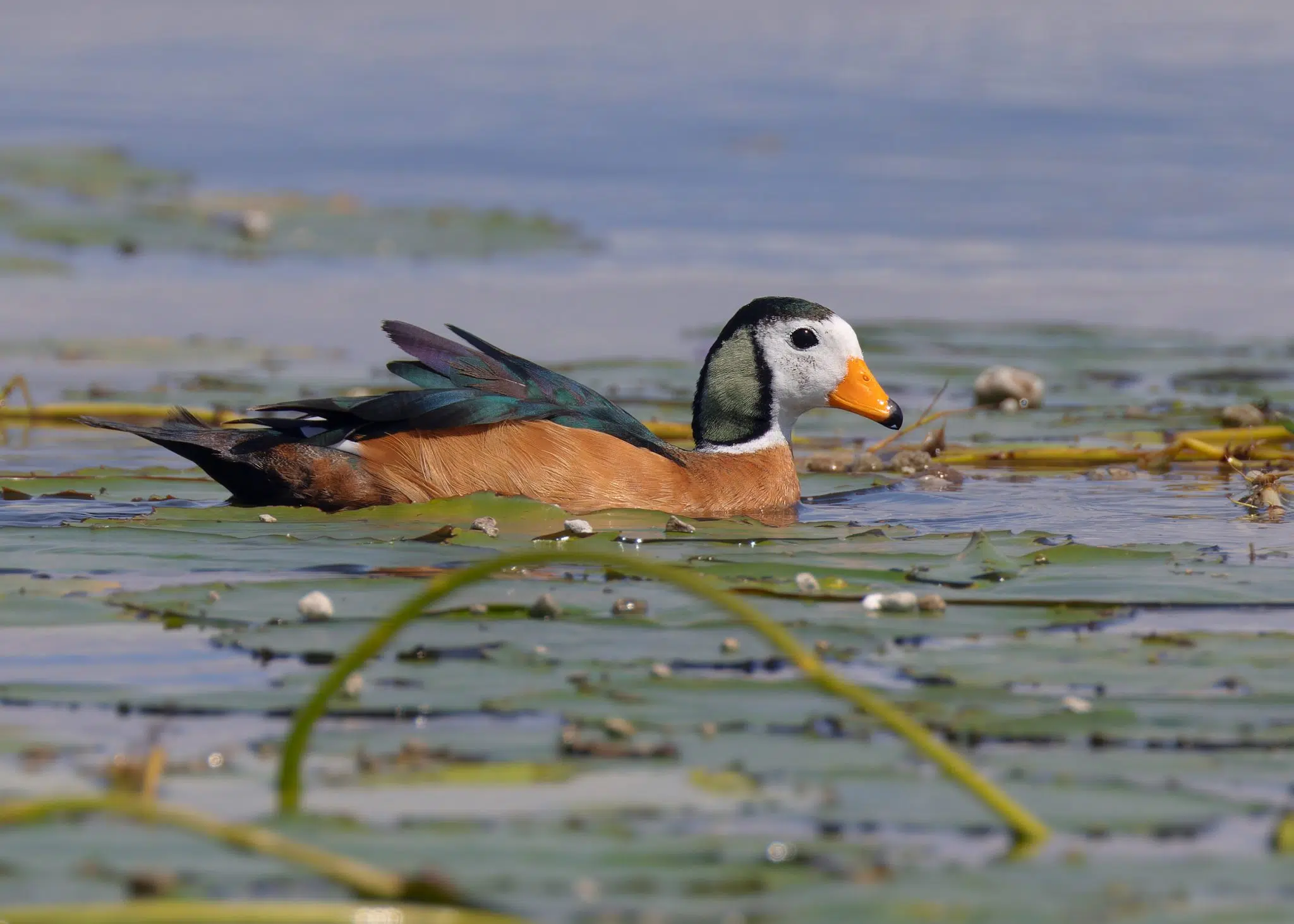
The lagoon’s diverse habitat mosaic includes expansive open water, nutrient-rich mudflats, seasonally flooded grasslands, and surrounding agricultural landscapes. These varied ecological niches support a rich array of life, with the mudflats, in particular, providing an abundant food source of invertebrates crucial for fueling the arduous journeys of migratory and resident waterbirds alike. Among the notable species frequenting Chia Lagoon are the striking Black Heron (Egretta ardesiaca), the common Ring-necked Dove (Streptopelia capicola), the colonial Lesser Masked Weaver (Ploceus intermedius), the distinctive African Jacana (Actophilornis africanus), and the diminutive African Pygmy-goose (Nettapus auritus). For many of these species, Chia Lagoon serves as a vital feeding ground, a safe resting place, and a critical refuge during migration and the non-breeding season, making its ecological productivity and strategic location indispensable to the wider flyway network.
Meet the Conservationist: Blessings Chingagwe’s Vision for Wetlands
At the heart of these conservation efforts is Blessings Chingagwe, the Programme Manager at the Wildlife and Environmental Society of Malawi (WESM). Her dedication to protecting migratory birds and their habitats is evident in her profound understanding of the interconnectedness of global ecosystems. Chingagwe’s work at Chia Lagoon is not just a job but a passion, driven by the understanding that local actions in Malawi have far-reaching implications for bird populations worldwide.

"Migratory birds connect continents," Chingagwe emphasizes, highlighting the global responsibility inherent in their local work. "A bird feeding at Chia Lagoon may have travelled thousands of kilometres from Europe or Asia. If just one important wetland along the flyway is lost or degraded, it can affect populations across multiple countries. Protecting wetlands in Malawi is part of protecting a global ecological system."
Her favorite aspect of the job vividly illustrates this connection. She recounts exhilarating boat rides to the Luwi River, locally dubbed the "African Jacana Bedroom" due to the stunning displays of these long-legged birds. These experiences not only offer personal joy but also serve as powerful tools for community engagement, as local residents, many of whom had never witnessed such natural wonders in their own backyard, are taken to appreciate the biodiversity they are helping to protect. This direct experience transforms abstract conservation concepts into tangible, awe-inspiring realities.
Scientific Foundation: Pioneering Biodiversity Assessments
Under Chingagwe’s leadership, WESM has undertaken groundbreaking scientific work at Chia Lagoon. Over the past three years, with crucial funding from the Darwin Initiative, the organization conducted the first comprehensive biodiversity and ecological assessment of this unprotected wetland. This rigorous scientific endeavor involved meticulous data collection, species identification, and habitat mapping, establishing a vital baseline for future conservation interventions.
A key component of this assessment has been regular waterbird monitoring. For over two years, WESM teams have meticulously recorded bird sightings and populations, yielding significant insights. Chingagwe proudly reports a notable increase in bird records since 2023, with initial datasets of 68 records expanding to over 110. While this increase partly reflects enhanced monitoring capacity and scientific rigor, it also suggests a potentially healthier and more attractive habitat, drawing in a greater diversity of avian visitors. This robust dataset is indispensable for understanding population dynamics, identifying conservation priorities, and measuring the effectiveness of their interventions. The long-term monitoring commitment provides crucial evidence for adaptive management and informs policy decisions regarding the lagoon’s future.

Community Engagement: A Shared Responsibility for Conservation
Recognizing that sustainable conservation is impossible without the active participation and ownership of local communities, WESM has placed a strong emphasis on community engagement. One of their most innovative initiatives has been the establishment of 18 bird hunting clubs. These clubs, comprising local residents, are empowered to regulate hunting practices, ensuring adherence to established quotas, targeting specific species, and employing sustainable hunting methods. This approach transforms former unregulated hunters into stewards of the resource, fostering a sense of shared responsibility.
Furthermore, 12 members from these clubs have received specialized training in continuous bird monitoring, enabling them to contribute directly to data collection while also serving as local conservation ambassadors. These trained individuals actively raise awareness among their communities and stakeholders about the ecological and economic importance of Chia Lagoon, bridging the gap between scientific knowledge and traditional practices.
This community-centric approach has yielded tangible results beyond Chia Lagoon. WESM successfully mobilized local leaders, the "Friends of Mulanje," and the broader community to oppose bauxite mining in the iconic Mulanje Mountain, a designated Heritage Site and a vital ecological area. The Mulhakho wa Alomwe, a cultural group deeply connected to the mountain, voiced strong opposition, leading to the evacuation of miners by local communities and the district council without direct NGO intervention. Chingagwe attributes this success directly to the project’s efforts, supported by the ERF, demonstrating the power of grassroots advocacy and community empowerment in protecting critical natural assets.
WESM’s commitment extends to other priority sites, including Lake Chilwa, another crucial wetland for migratory birds. Here, the existing Bird Hunters Association, established in 2008, remains active and committed to safeguarding birds, identifying poaching, climate change, and habitat degradation as primary threats. WESM is currently developing a comprehensive site profile for Lake Chilwa to define specific threats, opportunities, and existing projects, laying the groundwork for future interventions.

Challenges on the Frontline: Balancing Conservation with Livelihoods
Despite these successes, conservation work in Chia Lagoon is not without its significant challenges. Blessings Chingagwe highlights the delicate balance between securing the lagoon’s protection and ensuring tangible benefits for the local communities who depend on its resources. Fisheries activities, for instance, pose a considerable threat, particularly to aquatic vegetation. The opening of new docks and fishing within designated sanctuaries directly conflict with bird sanctuaries, creating competition for space and resources. Finding sustainable co-existence strategies that support both local livelihoods and ecological integrity remains a central, complex issue.
An even more pressing challenge is the proliferation of Invasive Alien Species (IAS), such as Azolla and Water Hyacinth. These aggressive plants can rapidly blanket water bodies, depleting oxygen, blocking sunlight, and disrupting the entire aquatic ecosystem, making habitats unsuitable for native flora and fauna, including the birds that rely on them. The removal of these invasive species is fraught with difficulty, not least due to the presence of crocodiles, which pose a significant threat to human safety. "We have not progressed much with the removal of these invasive and we are still trying to find a feasible and safe way of doing this," Chingagwe admits, underscoring the complex, multi-faceted problems conservationists face.
A Global Connection: The Whiskered Tern as Ambassador
When asked to choose a single species to represent the African-Eurasian Flyway, Blessings Chingagwe unhesitatingly selects the Whiskered Tern (Chlidonias hybrida). "With the tern being a long-range migratory bird, it is the best representation of global connectivity!" she explains. "Arriving in Malawi with the December rains, it reminds us that this small country, let alone a small wetland, is not isolated from the global community. If we are to protect the Whiskered Tern, we mean to protect every marsh, lake, river and wetland along its path. This is a perfect ambassador of the flyway because it knows no boundaries."

The Whiskered Tern’s annual journey, spanning thousands of kilometers from its Eurasian breeding grounds to its African wintering sites, epitomizes the very essence of flyway conservation. Its survival hinges on the health of countless wetlands across diverse political boundaries, making it a powerful symbol of shared ecological heritage and a reminder that local conservation efforts have truly global ramifications.
Optimism and Future Prospects: A Collective Vision for Protection
Despite the challenges, Blessings Chingagwe expresses profound optimism for the future of Chia Lagoon and migratory bird conservation in Malawi. Her optimism stems from the solid scientific data now available and, crucially, the growing awareness within local communities. "When local stakeholders understand the value of their wetland, conservation becomes a shared responsibility, and that gives real hope for long-term protection," she asserts.
This shared responsibility is already manifesting in significant institutional commitments. Chingagwe highlights that the District Council, directly influenced by the project’s work, has begun discussions on developing a comprehensive management plan for the entire wetland ecosystem. This official recognition and commitment at the local governance level are critical steps towards formalized, long-term protection.
Furthermore, the Department of National Parks and Wildlife, serving as the focal point for the Convention on the Conservation of Migratory Species (CMS), has formally requested that WESM consider proposing Chia Lagoon as a RAMSAR site. RAMSAR designation, under the Convention on Wetlands of International Importance, provides international recognition and a framework for the conservation and wise use of wetlands and their resources. Such a designation would elevate Chia Lagoon’s status, attract further international support, and solidify its place as a globally significant wetland. These developments represent not just milestones for WESM but also a burgeoning national commitment to protecting Malawi’s natural heritage for future generations and for the countless migratory birds that call its wetlands home, however temporarily.

The work at Chia Lagoon, supported by the Ecological Restoration Fund and the Darwin Initiative, stands as a powerful example of how targeted, community-driven conservation efforts, underpinned by robust scientific research, can yield significant results for global biodiversity. It underscores the undeniable truth that the health of our planet’s migratory flyways is intrinsically linked to the dedicated efforts of conservationists and communities working on the ground, connecting local actions to a global ecological imperative.
