
Global Birdfair 2026 has announced its dedicated support for BirdLife International’s critical conservation initiatives aimed at safeguarding the unique endemic bird species of São Tomé and Príncipe, a small island nation in the Gulf of Guinea. The partnership focuses on preventing the extinction of several highly vulnerable species, including the Critically Endangered Dwarf Ibis, São Tomé Grosbeak, and Newton’s Fiscal, which represent an irreplaceable part of the world’s biodiversity. This collaboration underscores a shared commitment to integrated conservation strategies that combine scientific research, protected area management, and robust community engagement.
São Tomé’s Avian Jewels on the Brink
Nestled within the dense, humid forests of São Tomé, a volcanic island renowned for its exceptional biodiversity, live three avian species found nowhere else on Earth. These birds are not merely rare; they are iconic symbols of the island’s unique evolutionary heritage, each facing an existential threat. The Dwarf Ibis (Bostrychia bocagei), a reclusive forest dweller, is characterized by its dark plumage and distinctive, mournful call that echoes through the canopy. Its population is precariously low, estimated at fewer than 2,000 mature individuals. This shy species relies heavily on intact primary forest, making it acutely vulnerable to habitat fragmentation and degradation.
Equally imperiled is the São Tomé Grosbeak (Crithagra concolor), a large, robust finch that was once considered lost to science for over a century, only to be dramatically rediscovered. Its elusive nature and specialized habitat requirements mean that its current population is thought to be alarmingly small, possibly fewer than 250 adult birds. This species’ resilience in the face of historical pressures offers a glimmer of hope, but its continued survival hinges on immediate and effective intervention.
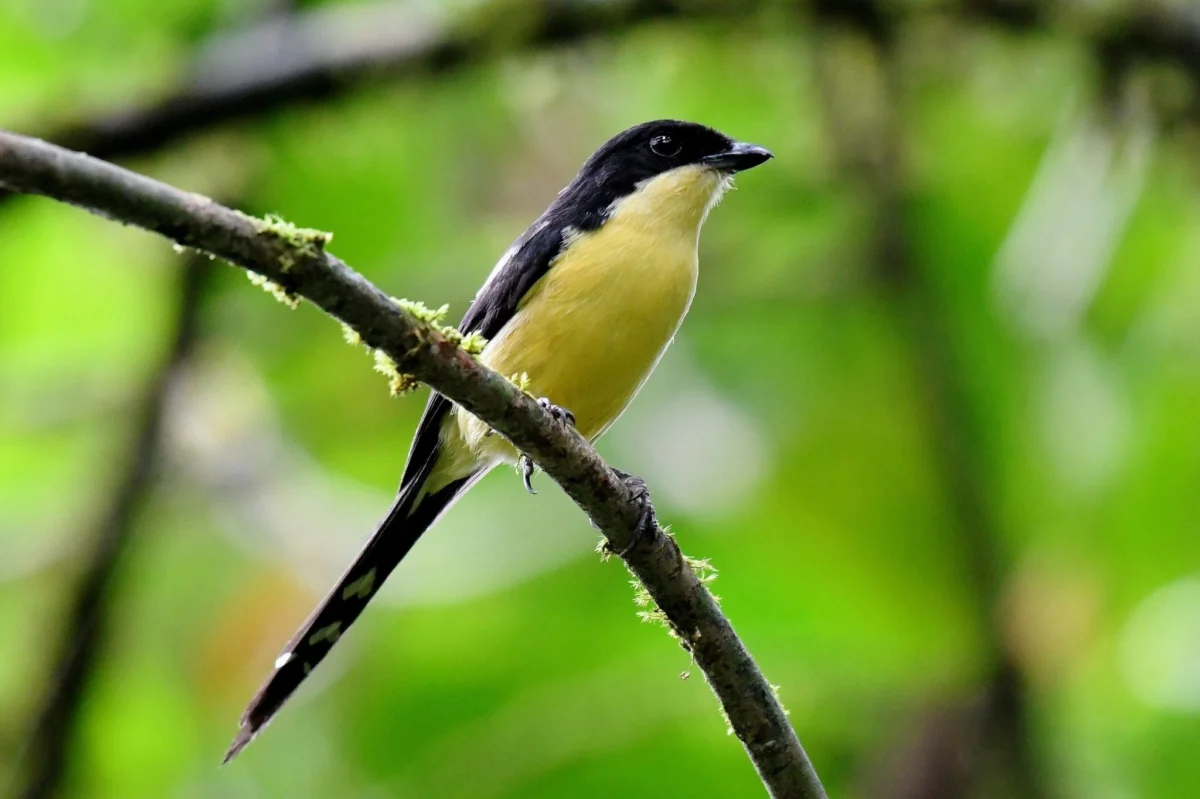
Completing this trio of critically endangered species is Newton’s Fiscal (Lanius newtoni), a striking black-and-white shrike that inhabits the forest ridges in the island’s mountainous interior. Like the grosbeak, its population is estimated at fewer than 250 individuals, solidifying its status as one of Africa’s rarest birds. Its predatory nature and reliance on specific forest structures highlight the delicate balance of its ecosystem. All three species are listed as Critically Endangered on the IUCN Red List, a stark indicator of their dire conservation status and the urgent need for action.
The Ecological Significance of São Tomé and Príncipe
São Tomé and Príncipe, an archipelago off the western equatorial coast of Central Africa, is a global biodiversity hotspot, particularly for its unique flora and fauna. As an oceanic island, its isolation has fostered an extraordinary degree of endemism, where species have evolved in isolation, leading to forms found nowhere else. The islands boast a remarkable array of endemic birds, reptiles, amphibians, and plants. This biological uniqueness, however, comes with inherent vulnerabilities. Island ecosystems are notoriously fragile, with their species often lacking defenses against introduced predators or the resilience to cope with rapid habitat changes. The loss of even a single species on an island can trigger cascading effects throughout the ecosystem, threatening its overall stability and functionality. Protecting São Tomé’s endemic birds is therefore not just about saving individual species; it is about preserving an entire, irreplaceable ecological heritage.
Persistent Threats to Fragile Populations
Despite their legal protection under national law, these endemic species confront a multitude of severe threats that continue to push them towards the brink of extinction. The primary driver of decline is habitat loss and degradation. Agricultural expansion, particularly for cash crops like cocoa and coffee, as well as subsistence farming, encroaches upon critical forest habitats. The practice of timber extraction, both legal and illegal, further fragments and diminishes the dense forests that these birds depend on for survival, foraging, and breeding. As forests shrink, populations become isolated, reducing genetic diversity and increasing susceptibility to local extinction.
Beyond habitat destruction, the presence of invasive alien species poses a significant and insidious threat. Introduced mammals such as rats, feral cats, and monkeys, brought to the islands by human activity over centuries, are highly effective predators of native birds, their eggs, and chicks. These endemic species, having evolved in the absence of such predators, often lack the instinctive defenses necessary for survival. Competition for food resources with invasive species also adds pressure to already stressed populations. Furthermore, human disturbance, including traditional hunting practices (despite legal protections) and general encroachment into sensitive areas, contributes to the ongoing decline of these fragile bird populations. The complex interplay of these factors creates a challenging conservation landscape that requires multifaceted and adaptive solutions.

BirdLife International’s Enduring Commitment: A Chronology of Action
Recognizing the critical situation, BirdLife International, a global partnership of conservation organizations, initiated significant efforts in São Tomé and Príncipe in 2018. Their long-term strategy has been to work collaboratively with local partners, including governmental agencies, local NGOs, and community groups, to strengthen protected area management. This involves developing and implementing effective management plans for key biodiversity areas, enhancing surveillance, and building the capacity of local conservationists.
Crucially, BirdLife’s approach extends beyond mere habitat protection; it embraces the understanding that conservation success is inextricably linked to the well-being of local communities. Therefore, a significant component of their work has focused on promoting sustainable livelihoods. By empowering local communities with economic alternatives that reduce their reliance on unsustainable practices like extensive logging or hunting, BirdLife aims to alleviate direct pressures on biodiversity. This integrated approach acknowledges that people are an integral part of the ecosystem and must be partners in conservation, rather than just beneficiaries or subjects of restriction.
The "Agents of Change" Initiative: A Community-Led Transformation (2022-2024)
A pivotal moment in BirdLife’s engagement was the implementation of a groundbreaking initiative between 2022 and 2024, designed to directly involve local communities in conservation efforts. This project ingeniously targeted local hunters, aiming to transform their role from potential adversaries to active stewards of the forest. The premise was simple yet profound: local hunters possess an unparalleled, intimate knowledge of the forest, its trails, its wildlife, and its hidden corners. By harnessing this traditional ecological knowledge, the project sought to shift perceptions and build a shared understanding of sustainable resource management.
The results of this initiative were remarkably successful. A total of 75 hunters embraced the program, becoming recognized "Agents of Change." Leveraging their deep understanding of the terrain and its inhabitants, these individuals now play a vital role in conservation efforts. They assist researchers and park rangers in locating rare species, providing invaluable data on the distribution and behavior of elusive birds like the Dwarf Ibis. More importantly, they actively report instances of illegal bird hunting, acting as vigilant guardians of their natural heritage. This transformation not only enhances conservation outcomes but also fosters a sense of pride and ownership within the community.
Beyond direct monitoring and reporting, the "Agents of Change" were instrumental in policy development. Working alongside national authorities, biologists, and other civil society members, these local hunters played an essential role in reviewing existing hunting laws and contributing to a comprehensive roadmap for their improvement and updating. This direct participation ensures that new regulations are practical, culturally sensitive, and enforceable, moving away from top-down mandates towards community-informed governance.
To further solidify the shift towards sustainable practices, a mentoring program was established for 25 selected hunters. This program focused on developing alternative economic activities, helping participants explore viable options that could supplement or replace income traditionally derived from hunting. The curriculum covered basic management and financial skills, empowering individuals to envision and plan for new ventures. A competition was then held, where the five most promising business ideas received technical and financial support for their development and implementation. These initiatives served as powerful demonstrations of how local communities, when empowered and supported, can be genuine contributors to conservation, fostering a harmonious balance between human needs and the preservation of biodiversity.
Global Birdfair 2026: Catalysing Future Success
Building on the successes and lessons learned from previous initiatives, the Global Birdfair 2026 project represents a significant injection of support and momentum for São Tomé’s conservation efforts. Global Birdfair, a renowned international event that brings together birdwatchers, conservationists, and wildlife enthusiasts from around the globe, plays a crucial role in raising awareness and generating vital funds for conservation projects worldwide. Its decision to support São Tomé in 2026 highlights the urgent global recognition of the island’s unique biodiversity crisis.
The new project, funded by Global Birdfair, will focus on two critical pillars: filling knowledge gaps and strengthening local capacity. Despite BirdLife’s long-standing presence, there remain significant unknowns regarding the precise distribution, population dynamics, and ecological requirements of the Critically Endangered birds. The project will facilitate targeted research efforts, employing a combination of scientific methodologies and the invaluable local knowledge of the "Agents of Change" and other community members. This research will provide crucial data to inform more precise and effective conservation strategies, ensuring that resources are deployed where they can have the greatest impact.

Simultaneously, the project will intensify efforts to strengthen local capacity. This involves providing advanced training for park rangers, local biologists, and community members in areas such as species monitoring techniques, protected area management, anti-poaching strategies, and ecological restoration. By equipping local stakeholders with enhanced skills and resources, the project aims to foster a self-sustaining conservation infrastructure that is resilient and locally driven. The continued emphasis on community involvement ensures that conservation efforts remain deeply rooted in local knowledge, participation, and long-term stewardship, fostering a sense of shared responsibility for the island’s natural heritage.
Statements from Key Stakeholders
"The Global Birdfair is immensely proud to support BirdLife International’s vital work in São Tomé," stated a representative from Global Birdfair. "The plight of these unique birds underscores the urgent need for global collaboration in protecting our planet’s most vulnerable species. We believe that by investing in robust science and, crucially, in the local communities who are the ultimate guardians of these forests, we can create a lasting legacy of conservation success."
A spokesperson for BirdLife International added, "São Tomé’s endemic birds are a testament to the wonders of evolution, but they are also a stark reminder of the global extinction crisis. The partnership with Global Birdfair 2026 is a game-changer, enabling us to deepen our scientific understanding and expand our successful community engagement model. We are particularly grateful for the dedication of the local ‘Agents of Change,’ whose commitment is proving that community-led conservation is not just possible, but essential."
A representative from the local conservation partners in São Tomé remarked, "Our island’s natural heritage is our identity. Seeing our own people, especially former hunters, transform into passionate protectors of our birds and forests is incredibly inspiring. This new support from Global Birdfair will allow us to build on our achievements, further empower our communities, and ensure that the unique sounds and sights of São Tomé’s wildlife remain for future generations."
Broader Implications and The Road Ahead
The conservation model being developed and strengthened in São Tomé, with its emphasis on community engagement and sustainable livelihoods, offers a powerful blueprint for other small island developing states (SIDS) facing similar biodiversity challenges. The success of the "Agents of Change" initiative demonstrates that effective conservation is not about imposing external solutions but about cultivating local ownership and leveraging traditional knowledge. This approach recognizes the intrinsic link between human well-being and environmental health, promoting a holistic vision of sustainable development.
Protecting the Dwarf Ibis, the São Tomé Grosbeak, and Newton’s Fiscal means more than just saving three bird species; it signifies a commitment to safeguarding an entire intricate ecosystem. It means preserving the health of São Tomé’s forests, which provide essential ecosystem services such as water regulation, climate moderation, and soil stability, benefiting both wildlife and human communities. It represents a global effort to combat the ongoing biodiversity crisis, demonstrating that through sustained international support, scientific rigor, and deep community partnership, extinction can be averted.
The haunting call of the Dwarf Ibis, the quiet presence of the São Tomé Grosbeak, and the watchful silhouette of Newton’s Fiscal are not just biological curiosities; they are living testaments to the extraordinary natural heritage of São Tomé. With the renewed and strengthened support from Global Birdfair 2026, coupled with the unwavering dedication of BirdLife International and its local partners, there is tangible hope that these magnificent birds will continue to grace the forests of São Tomé for generations to come. This collaborative endeavor underscores a universal truth: safeguarding Earth’s rarest treasures is a shared responsibility, a global commitment to a richer, more diverse planet.
