
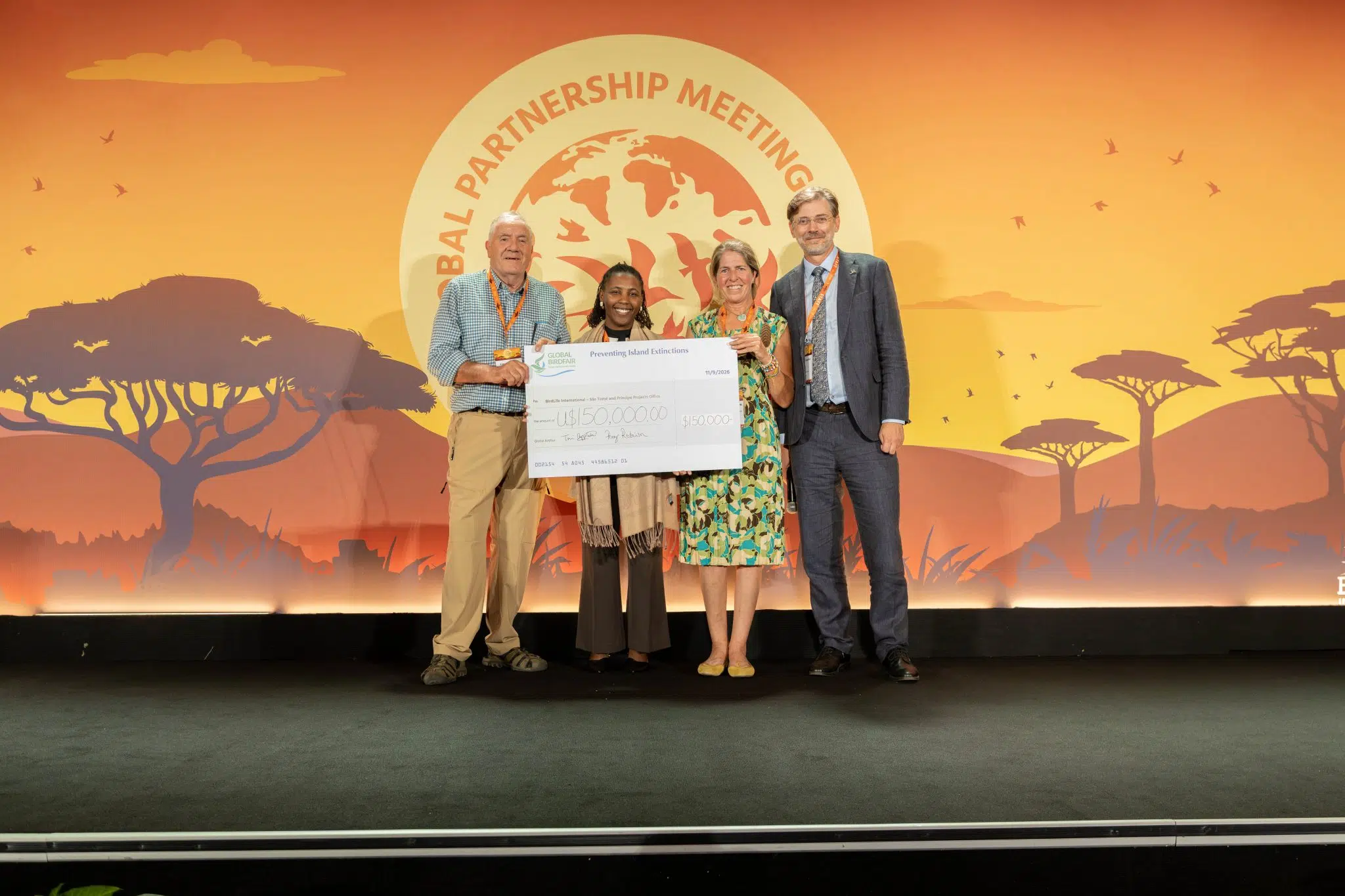
In the remote, verdant forests of the island nation of Sao Tome and Principe, a quiet battle against extinction is being waged beneath the canopy. This archipelago, situated in the Gulf of Guinea off the western coast of Central Africa, serves as a unique evolutionary laboratory, harboring species that exist nowhere else on the planet. Recently, the conservation efforts in this isolated ecosystem received a significant infusion of capital, as Global Birdfair announced a US$150,000 donation to support the BirdLife International programme dedicated to protecting three of the island’s most vulnerable avian residents: the Dwarf Ibis, the Sao Tome Grosbeak, and Newton’s Fiscal.
The Biological Significance of the Archipelago
The biological isolation of Sao Tome and Principe has facilitated a high degree of endemism, a phenomenon where species evolve in confinement to a single geographic location. However, this same isolation renders the local wildlife exceptionally susceptible to anthropogenic disturbances. The three target species represent the front line of this ecological crisis.
The Dwarf Ibis (Bostrychia bocagei) is a secretive, forest-dwelling bird whose survival is intrinsically linked to the health of the primary rainforest. While current estimates suggest a population of fewer than 2,000 individuals, its elusive nature makes precise tracking difficult. More alarming is the status of the Sao Tome Grosbeak (Crithagra concolor). Long thought to be extinct, it remained absent from scientific records for over a century until its dramatic rediscovery in 1991. Today, experts estimate that fewer than 250 mature individuals remain, placing it in the most urgent category of conservation priority. Similarly, Newton’s Fiscal (Lanius newtoni), a striking, predatory songbird, clings to existence with a population estimated at under 250 individuals, its survival dependent on the preservation of high-altitude forest ridges.

A Chronology of Conservation Efforts
The history of modern conservation in the region has been marked by a transition from reactive observation to proactive community engagement.
- 1991: The scientific community is galvanized by the rediscovery of the Sao Tome Grosbeak, proving that "lost" species can be recovered through dedicated field research.
- 2018: BirdLife International formalizes a long-term partnership with local stakeholders to address the growing threats of habitat fragmentation and illegal hunting.
- 2022–2024: A flagship initiative launches, focusing on the human dimensions of conservation. Recognizing that the local population often relies on forest resources for subsistence, the program initiates the "Agents of Change" project.
- 2026: Global Birdfair commits US$150,000 in funding, providing the necessary capital to scale up previous successes and implement more robust monitoring and protective frameworks.
Data-Driven Conservation and the "Agents of Change"
The recent success of the BirdLife programme lies in its pragmatic approach to the human-wildlife interface. For years, environmentalists struggled against the reality that subsistence hunting was a primary threat to the islands’ biodiversity. Rather than imposing top-down restrictions that could alienate local communities, the project opted for a collaborative model.
By recruiting 75 local hunters as "Agents of Change," the project converted potential threats into sentinels. These individuals, who possess an unparalleled knowledge of the forest floor and avian behavior, have become essential to modern field research. They contribute to the mapping of nesting sites, the monitoring of population shifts, and the enforcement of local hunting regulations. Furthermore, the program’s economic component—providing mentoring and financial support to 25 hunters to establish alternative, non-extractive livelihoods—has proven that economic stability and ecological conservation are not mutually exclusive. Five of these entrepreneurial initiatives have already received technical backing, demonstrating a sustainable pathway forward.
Official Responses and Institutional Impact
The donation from Global Birdfair is not merely a financial transaction; it represents a commitment from the global birding community to the preservation of global heritage. Marquinha Martins, Head of the Projects Office for BirdLife International in Sao Tome and Principe, emphasized the strategic importance of this funding. "For these Critically Endangered birds, whose isolation makes them particularly vulnerable, this funding is essential," Martins stated. "We are moving from a state of basic survival to a position where we can actively build our knowledge base and turn that data into tangible conservation actions."

Tim Appleton, MBE, co-founder of Global Birdfair, noted the complexity involved in selecting projects for funding. "We need to know the funds we donate will have a significant, measurable impact," Appleton remarked. "Preventing island extinctions in Sao Tome and Principe offers a rare, high-leverage opportunity. It is a project that addresses the immediate biological needs of the species while simultaneously fostering a stronger, more sustainable future for the local people who serve as the stewards of these forests."
Implications for Global Biodiversity
The implications of the work being done in Sao Tome and Principe extend far beyond the borders of the archipelago. As the global community faces an accelerating rate of species loss, the strategies employed here—specifically the integration of traditional ecological knowledge with modern scientific methodology—serve as a blueprint for conservation in other isolated, high-biodiversity areas.
The primary threats to these birds remain consistent with global trends: habitat loss due to agricultural expansion, the extraction of timber, and the introduction of invasive mammalian species. The US$150,000 will be deployed to mitigate these pressures through systematic monitoring, the expansion of protected forest areas, and the strengthening of national hunting legislation.
Furthermore, this infusion of capital allows for the implementation of advanced bio-acoustic monitoring, which can detect the presence of the Dwarf Ibis and the Sao Tome Grosbeak without the need for invasive physical tracking. This technology, combined with the ground-level patrols conducted by the "Agents of Change," creates a multi-layered defense system.

Future Outlook
As the program enters its next phase, the focus will shift toward long-term population stability. Success will be measured not just by the prevention of extinction, but by the measurable increase in the reproductive success of these birds. The collaboration between international conservation bodies, national authorities, and local community members provides a resilient structure that is capable of adapting to the evolving challenges of the 21st century.
For the ornithologists and local residents working in the shadow of the island’s canopy, every sighting is a victory, and every new data point is a building block for the survival of the species. The donation from Global Birdfair acts as the bridge between the precarious status quo and a potential future where the Dwarf Ibis, the Grosbeak, and the Fiscal are no longer on the precipice of oblivion, but are instead icons of a successful, community-led conservation movement. As the international community watches, the small island nation of Sao Tome and Principe is demonstrating that when global resources meet local expertise, the trajectory of extinction can indeed be altered.
