
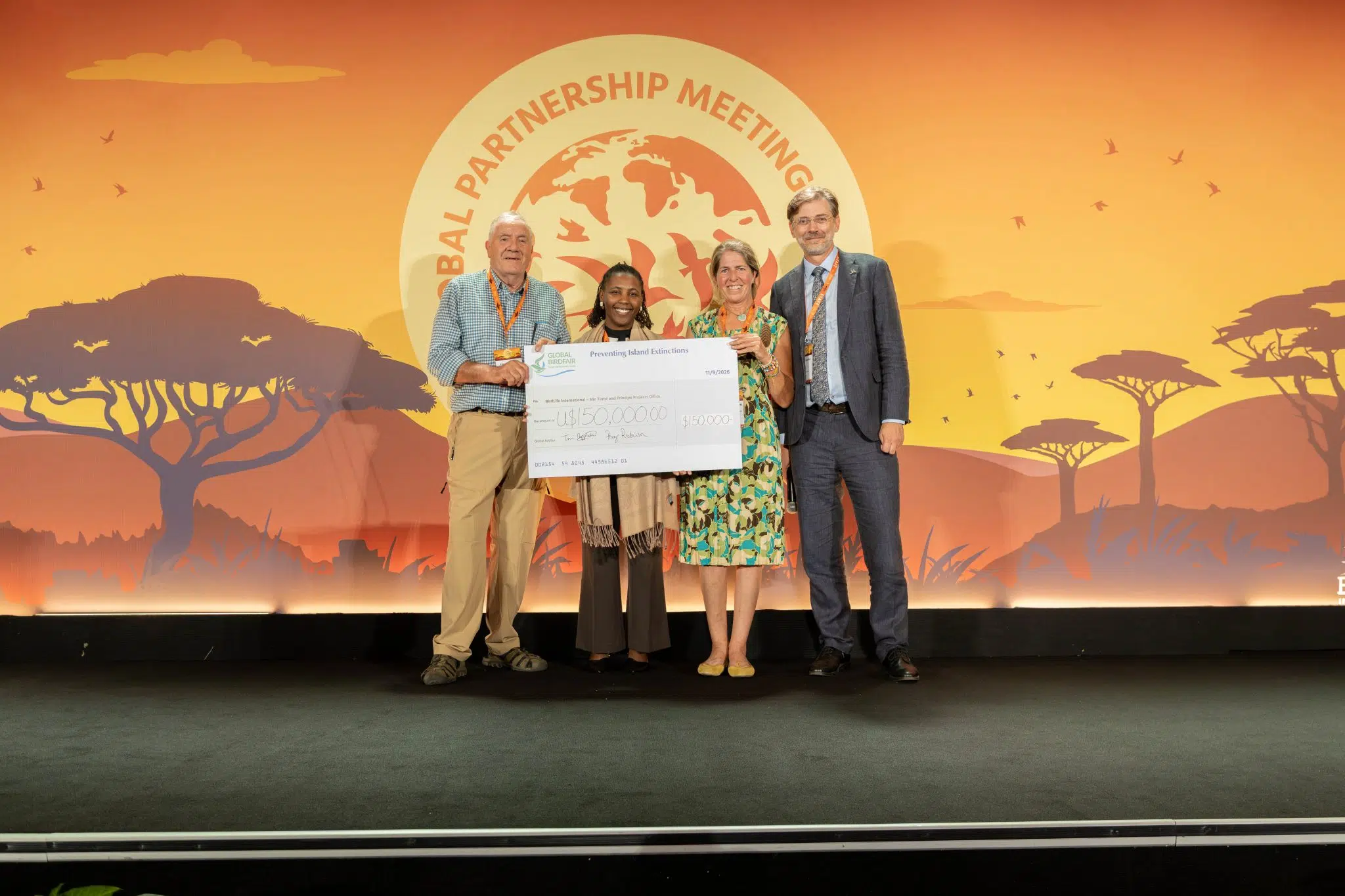
The island nation of São Tomé and Príncipe, situated in the Gulf of Guinea off the western equatorial coast of Central Africa, serves as a natural laboratory for evolutionary biology. Due to its extreme isolation, the archipelago hosts a disproportionately high number of endemic species. However, this same geographic separation has rendered its native fauna acutely vulnerable to habitat loss, invasive species, and human-driven environmental changes. A recent infusion of US$150,000 from the Global Birdfair community has now been earmarked to bolster conservation efforts for three of the planet’s most precarious avian species: the Dwarf Ibis, the São Tomé Grosbeak, and the Newton’s Fiscal.
The Biological Stakes: A Race Against Time
The urgency of this intervention is underscored by the current population estimates for these species. The Dwarf Ibis (Bostrychia bocagei), a notoriously elusive bird, is currently estimated to have fewer than 2,000 individuals remaining. The situation is even more dire for the São Tomé Grosbeak (Crithagra concolor), a species that was considered extinct for over a century until a remarkable rediscovery in 1991. Today, scientists believe fewer than 250 mature individuals persist in the wild. Similarly, the Newton’s Fiscal (Lanius newtoni), a predatory songbird, exists in a population thought to number fewer than 250 birds.
These figures place all three species firmly in the "Critically Endangered" category as defined by the IUCN Red List. For species with such limited ranges—often confined to specific ridges or forest patches—a single localized event, such as a severe storm, an outbreak of disease, or a spike in illegal hunting, could trigger an irreversible extinction vortex.

Chronology of Conservation Efforts
The history of biodiversity protection in the archipelago has evolved significantly over the last three decades. The 1991 rediscovery of the São Tomé Grosbeak served as a watershed moment, galvanizing international interest in the islands’ ecology. Since 2018, BirdLife International has maintained a consistent presence on the ground, transitioning from passive monitoring to active, community-based management.
- 1991: The São Tomé Grosbeak is rediscovered, ending a 100-year period of scientific obscurity and prompting calls for immediate habitat protection.
- 2018: BirdLife International initiates a formal partnership with local entities to address the decline of endemic bird populations through community engagement.
- 2022–2024: A flagship initiative is launched to transform local hunting practices, moving from prohibition-based tactics to an "Agents of Change" model, integrating local hunters into the conservation workforce.
- 2026: Global Birdfair announces a US$150,000 donation, providing the necessary capital to scale these successful pilot programs into a long-term, sustainable conservation strategy.
Transforming Local Livelihoods: The "Agents of Change" Model
A pivotal aspect of the conservation strategy in São Tomé and Príncipe is the recognition that successful environmental management cannot exist in a vacuum, detached from the socio-economic realities of the human population. Historically, hunting has been a subsistence activity in the region. By engaging with 75 local hunters, conservationists have effectively repurposed local ecological knowledge.
These "Agents of Change" are no longer viewed as threats to the ecosystem but as its primary stewards. Through the recent project cycle, these individuals have received training in sustainable harvesting practices and biodiversity monitoring. The program also addressed the underlying economic pressures by mentoring 25 hunters in alternative income generation. By providing technical and financial support for small business development, the program has successfully demonstrated that the economic stability of the local population is intrinsically linked to the health of the surrounding forest.
Official Perspectives on the Funding
The donation from Global Birdfair represents one of the largest private-sector contributions to this specific region in recent years. Marquinha Martins, Head of the Projects Office for BirdLife International in São Tomé and Príncipe, emphasized that the funding is a bridge between academic research and field-level execution.

"We are incredibly proud to receive this support," Martins stated. "The isolation of these islands is a double-edged sword; it fosters unique life but makes that life highly fragile. This funding allows us to move beyond mere observation and toward actionable, on-the-ground interventions. Every piece of data we collect helps us refine our protection strategies, and every hunter we train as a guardian increases the effective range of our protection."
Tim Appleton, MBE, founder of Global Birdfair, noted the difficulty in selecting from the myriad of global conservation needs, stating that the decision to support the São Tomé project was based on its potential for a high return on investment—not just for birds, but for the community. "We need to know our funds are doing more than filling a temporary void," Appleton remarked. "The ‘Preventing Island Extinctions’ initiative provides a model that balances ecological recovery with human development, which we believe is the only sustainable path forward."
Fact-Based Analysis of Future Implications
The implications of this funding extend far beyond the immediate survival of three bird species. If the "Agents of Change" model continues to show positive outcomes, it could serve as a blueprint for conservation in other isolated island ecosystems across the globe.
However, the project faces ongoing challenges. The expansion of agriculture and the continued extraction of timber remain significant threats to the integrity of the forest canopy. Furthermore, the presence of invasive mammals poses a persistent risk to ground-nesting birds, which the new funding will likely help address through the establishment of more rigorous pest-monitoring protocols.

From a scientific standpoint, the next phase of the project is expected to focus on mapping critical nesting sites and identifying the specific migratory or territorial patterns of the Grosbeak and the Fiscal. By utilizing modern tracking technologies alongside the anecdotal knowledge provided by local partners, researchers hope to create a comprehensive habitat management plan that can be codified into national law.
Conclusion: A Global Responsibility
The narrative of São Tomé and Príncipe is a microcosm of the broader struggle for global biodiversity. As international attention turns toward the Gulf of Guinea, the focus remains on the intersection of local traditional knowledge and modern scientific methodology. The US$150,000 donation serves as a critical catalyst, but the long-term success of the initiative will ultimately depend on the continued cooperation between the scientific community, the local government, and the men and women who serve as the forest’s newest guardians.
By prioritizing the protection of the Dwarf Ibis, the São Tomé Grosbeak, and the Newton’s Fiscal, the international conservation community is effectively signaling that the value of a species is not defined by its population count, but by its unique place in the evolutionary tapestry of the planet. As the project enters its next phase, the world will be watching to see if these rare birds can be pulled back from the precipice of extinction, proving that even in the most isolated corners of the Earth, human intervention can be a force for restoration rather than destruction.
