
New research from the University of Cambridge has revealed a stark and previously underappreciated vulnerability in urban and rural ecosystems: bumblebees can accumulate dramatically higher levels of toxic heavy metals than honeybees, even when foraging in identical environments. Published in Ecological Entomology, the journal of the Royal Entomological Society, the study demonstrates that bumblebees collected up to seven times more heavy metals in their pollen than their honeybee counterparts. This disparity raises urgent concerns regarding how invisible chemical pollution quietly compromises the health, survival, and reproductive capabilities of vital wild pollinators.
While heavy metal contamination is frequently associated with heavy industry, active mining operations, and densely populated urban cores, environmental pollutants do not respect municipal boundaries. Contaminants readily migrate into rural and semi-rural landscapes through atmospheric deposition, agricultural sewage sludge, phosphate-based fertilizers, and various municipal and industrial byproducts. As wild and managed bee populations navigate these shared landscapes in search of sustenance, they inevitably ingest and trap microscopic particulate matter, bringing toxic elements back to their colonies.
Methodological Insights and Comparative Findings
The research team, stationed within the Department of Zoology at the University of Cambridge, established a controlled observational framework in Cambridgeshire, England. The study site represented a landscape typically characterized by low baseline soil contamination, providing a conservative estimate of everyday environmental exposure. Researchers strategically deployed side-by-side honeybee and bumblebee colonies, allowing both species to forage naturally within the exact same geographical area.
To quantify the accumulation of contaminants, the team utilized specialized pollen traps and subsequently analyzed both the gathered pollen and the bodies of adult bees. The analytical targets included a slate of hazardous elements: arsenic, cadmium, chromium, cobalt, lead, and tin. Although both species flew across identical terrain and visited overlapping floral resources, the analytical results revealed an undeniable and striking divergence in toxic accumulation.
Pollen harvested by bumblebees contained between two and seven times higher concentrations of heavy metals across nearly every tested element when compared to the pollen gathered by honeybees concurrently. Furthermore, when analyzing the physical bodies of the bees themselves, researchers discovered that bumblebees had accumulated roughly three times higher concentrations of heavy metals internally and externally.
Dr. Sarah Scott, who spearheaded the research during her tenure at the University of Cambridge before transitioning to Newcastle University, contextualized the sublethal nature of the findings. Most of the metal concentrations recovered during the analysis were not immediately lethal to the insects. However, Dr. Scott emphasized that even trace or low-level exposures can exert profound, detrimental effects on bee health and colony success in subtle yet catastrophic ways, directly impairing vital cognitive functions such as spatial learning, foraging efficiency, and reproductive viability.
Behavioral and Biological Drivers of Differential Exposure
The pronounced disparity in heavy metal accumulation between the two species is not a matter of random chance; rather, it is dictated by a complex interplay of evolutionary biology, nesting habits, foraging ranges, and anatomical characteristics.
A primary driver of this disparity lies in the stark contrast between colony architecture and social structure. Honeybees typically construct extensive, perennial colonies above ground, utilizing hollow trees, structural cavities, or managed wooden hives. These massive super-organisms typically house between 30,000 and 60,000 workers at their peak. Conversely, bumblebees establish annual colonies underground, hiding within subterranean burrows or dense leaf litter. These colonies are drastically smaller, usually accommodating between 50 and 500 individuals.
Foraging strategies further exacerbate the vulnerability of bumblebees. Honeybees are generalist foragers capable of traveling extraordinary distances—sometimes spanning up to 10 kilometers away from the central hive. Their massive workforce allows them to sample a vast matrix of floral resources, effectively diluting any localized contamination across a broad dietary spectrum. Furthermore, this expansive range provides honeybees with the mobility to bypass localized pollution hotspots.
Bumblebees, by contrast, are more localized foragers, typically restricting their daily movements to a radius of approximately 1.5 kilometers from their subterranean nests. This restricted foraging range drastically reduces their capacity to avoid localized environmental contamination. In addition, bumblebees tend to exhibit specialized foraging preferences, gathering smaller quantities of pollen from a narrower selection of plant species. If their chosen floral resources happen to hyper-accumulate specific heavy metals from the soil, the bumblebees’ restricted diet concentrates their exposure.
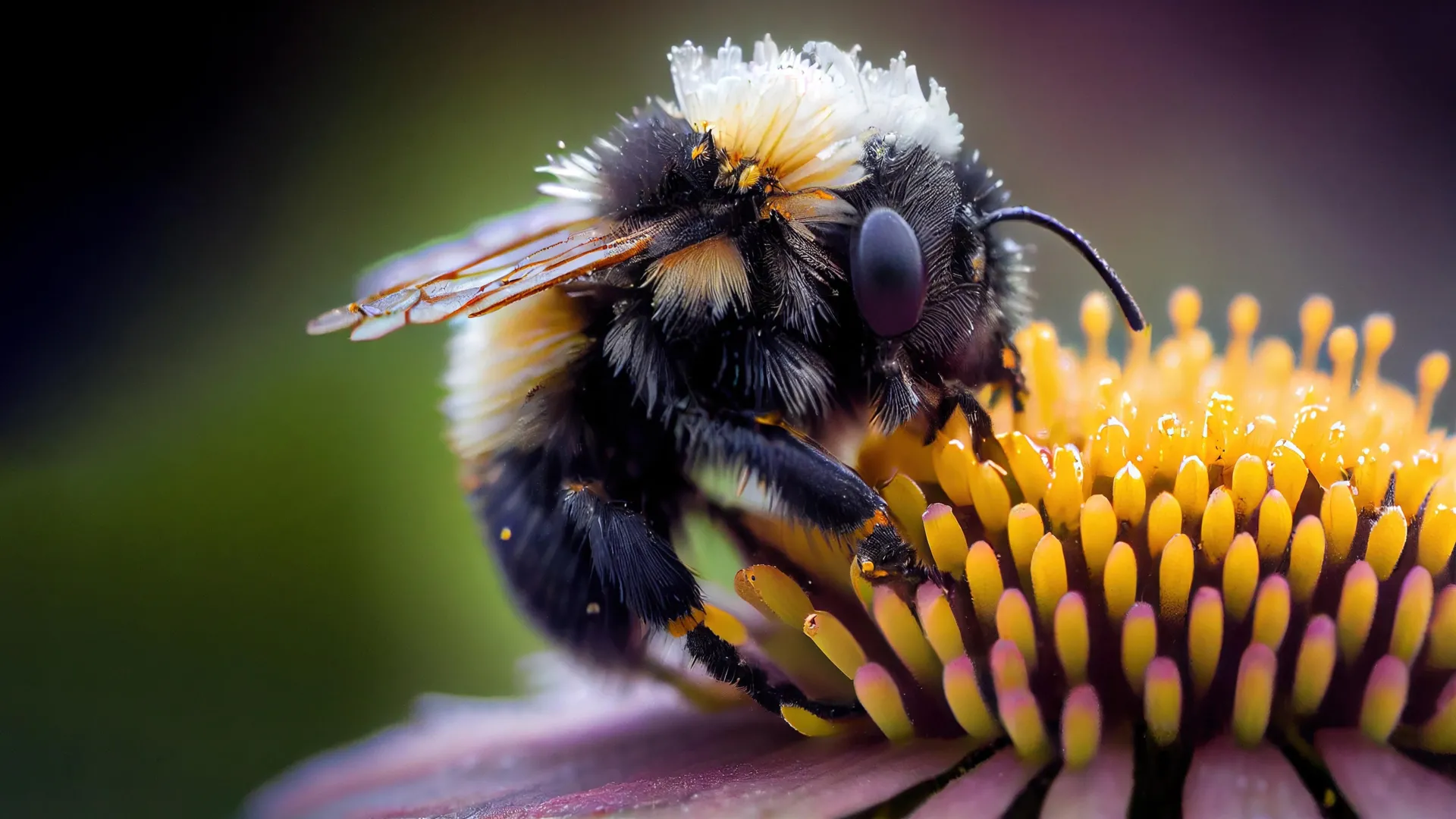
Anatomical differences also play a critical role in particulate collection. Bumblebees possess exceptionally dense, electrostatic coats of branched hair, designed efficiently to catch and transport pollen grains. Unfortunately, this physical trait also makes them highly effective traps for airborne dust and microscopic particulate matter laced with heavy metals. These toxic particles cling effortlessly to their fuzzy bodies, ensuring that contaminants are routinely transported back to the nest alongside provisions.
Toxicological Mechanisms and Ecological Implications
The physiological consequences of heavy metal ingestion and absorption in bees are well-documented in toxicological literature, though their cumulative real-world impacts are only beginning to be fully understood. Elements such as lead, cadmium, and arsenic are potent neurotoxins and metabolic disruptors. Even at sublethal thresholds, exposure to these contaminants interferes with cholinergic neurotransmission, severely degrading a bee’s learning and memory retention capabilities.
For a foraging insect, impaired neurological function translates directly to navigational failure. Bees struggling with metal-induced cognitive deficits lose their ability to map landscapes, recognize floral landmarks, and communicate the location of food sources to nestmates. Consequently, foraging efficiency plummets, reducing the overall caloric intake of the colony.
Previous scientific literature has consistently linked heavy metal exposure to diminished reproductive success, restricted brood development, and lower overall offspring counts. In honeybee colonies numbering tens of thousands of individuals, the loss of foraging workers or a slight dip in brood productivity can be absorbed by the collective super-organism. However, for bumblebee colonies operating with a fraction of that workforce, the math is starkly different. The premature mortality or incapacitation of even a small number of workers can trigger a cascading failure, ultimately destabilizing the entire colony’s ability to provision itself and rear new queens.
Professor Lynn Dicks, senior author of the study from the University of Cambridge’s Department of Zoology and a Fellow at Selwyn College, highlighted the insidious nature of these risks in environments traditionally perceived as safe. Even within rural landscapes far removed from industrial smokestacks and heavy mining operations, ambient contamination levels are sufficient to accumulate within pollinators. Given the fragile workforce dynamics of wild bumblebees, the localized loss of individuals inflicts a disproportionately heavy toll on ecosystem functionality.
Navigating the Paradox: Conservation Advice Amid Contamination
The findings present a complex dilemma for conservationists, urban planners, and everyday citizens striving to support declining pollinator populations. With insect populations facing simultaneous pressures from habitat fragmentation, climate change, pesticide use, and disease, planting pollinator-friendly flora has become a widespread grassroots conservation initiative.
The Cambridge research confirms that even flowers grown in suburban gardens or rural plots can take up trace amounts of heavy metals from local soils and atmospheric fallout, passing those toxins up the food chain to visiting bees. However, the study’s authors strongly caution the public against misinterpreting these results as a reason to abandon gardening efforts or stop planting flowers for bees.
Dr. Scott addressed this conservation paradox directly, emphasizing that nutritional deprivation remains an immediate and catastrophic threat to pollinator survival. Bees require continuous access to nectar and pollen to sustain their metabolic needs. While some available food sources may carry trace levels of heavy metals, consuming contaminated food is vastly superior to starving in an urban or agricultural desert devoid of floral resources. Having some food, even with trace contaminants, remains fundamentally better than having no food at all.
Future Research Horizons and Broader Context
Funded by the Royal Society, this latest investigation opens new avenues for environmental monitoring and ecological risk assessment. Traditionally, researchers and environmental agencies have relied almost exclusively on honeybees as standard bio-indicators for assessing environmental pollution and heavy metal fallout in a given region. The Cambridge study demonstrates that this methodology is fundamentally flawed if researchers seek to understand the holistic ecological risks facing wild insect communities.
Because honeybees and bumblebees interact with their environment through distinct physiological and behavioral pathways, monitoring only managed honeybees drastically underestimates the actual toxic burden borne by wild, native pollinators. Future environmental assessments must incorporate multiple species to accurately map how industrial and agricultural pollutants filter through complex food webs.
As regulatory bodies grapple with the pervasive spread of heavy metals through fertilizers, sewage sludge, and atmospheric deposition, protecting pollinator health will require a dual approach. Alongside continued habitat restoration and public floral planting initiatives, policymakers must address the root sources of environmental contamination, curbing the release of heavy metals into soils and waterways before they silently infiltrate the delicate ecosystems upon which global food security and biodiversity depend.
