
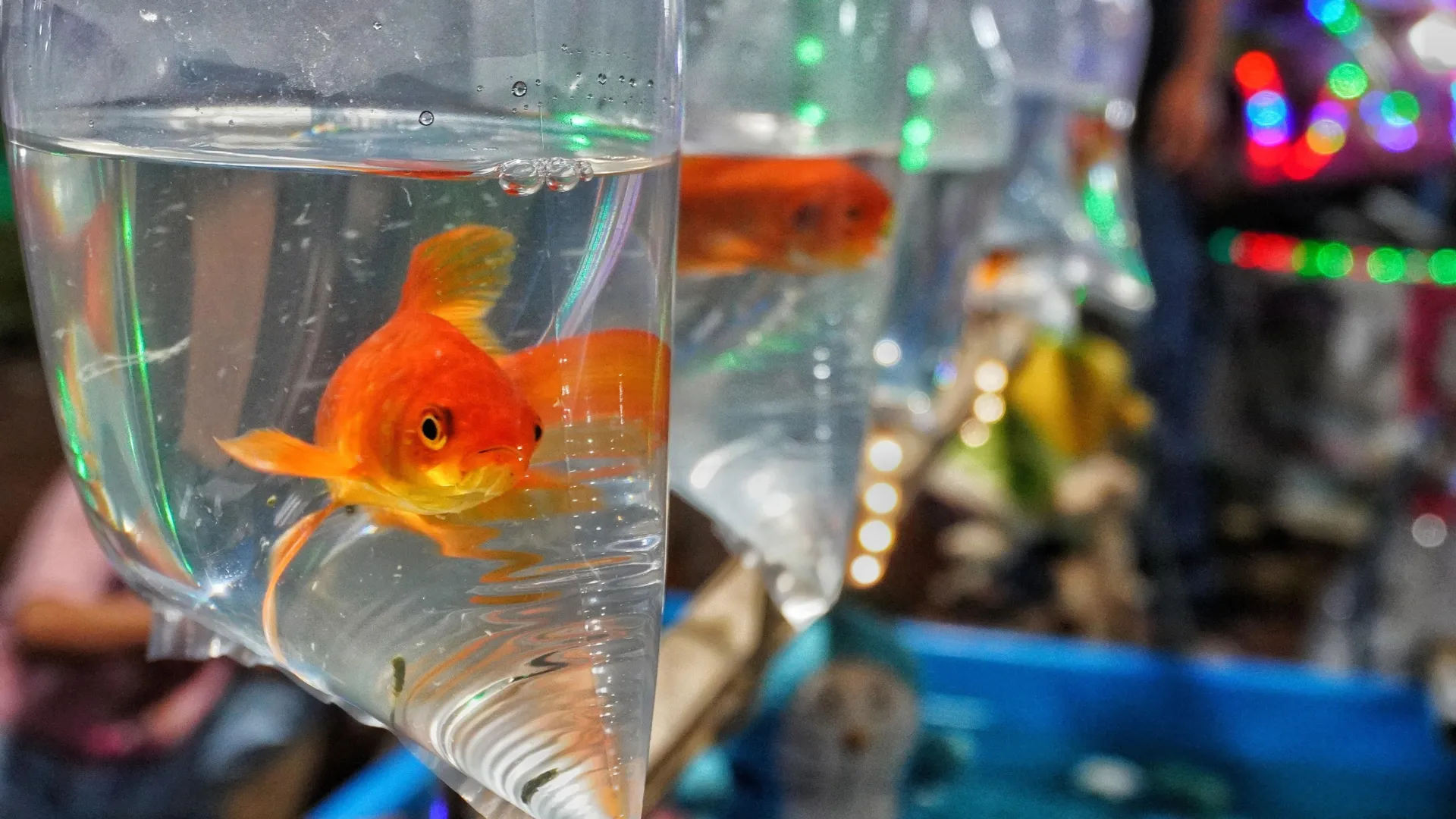
What often begins as a well-intentioned act of compassion or a simple desire to empty an unwanted home aquarium can culminate in an environmental disaster for local waterways. According to a rigorous new peer-reviewed study conducted by researchers at The University of Toledo and the University of Missouri, common goldfish (Carassius auratus) are far from the docile, harmless pets they appear to be. When released or escaping into the wild, these seemingly innocuous fish can instigate profound, destructive transformations in freshwater ecosystems, pushing vulnerable aquatic environments past ecological tipping points from which recovery is exceptionally difficult, costly, and sometimes impossible.
Published in the esteemed Journal of Animal Ecology, the research delivers some of the most definitive experimental evidence to date regarding the ecological perils posed by invasive goldfish. The findings serve as a stark, urgent warning directed squarely at pet owners, commercial pet industry vendors, natural resource managers, and environmental policymakers alike. While goldfish remain a ubiquitous household staple across the globe, the scientific consensus is now undeniable: once removed from glass tanks and introduced to natural ponds, rivers, and lakes, they transform from domestic companions into aggressive ecological threats.
The Human Impulse Meets Ecological Reality
The core driver of the goldfish invasion crisis is behavioral and psychological. Millions of households purchase goldfish annually, often as inexpensive starter pets for children or decorative additions to indoor bowls and backyard water gardens. However, as these fish frequently outgrow their enclosures—or as owners lose interest—well-meaning individuals often decide that releasing them into a local park pond or river is a humane alternative to euthanasia or neglect.
To the untrained eye, releasing a solitary orange fish into a large body of water feels like setting a caged bird free into the open sky. Yet, environmental scientists emphasize that this perception is dangerously misguided. "It is critically important to inform the public that their pets can become pests that will harm freshwater ecosystems," stated Dr. William Hintz, associate professor in UToledo’s Department of Environmental Sciences and Lake Erie Center, as well as the lead investigator of the study. "The evidence is now clear—releasing a goldfish into the wild might be seen as an act of kindness, but it can turn into a major ecological threat."
Simulating Natural Lakes: The Experimental Framework
To understand precisely how goldfish impact freshwater habitats, the research team—which included Dr. Hintz, Hannah Barrett, and Dr. Rick Relyea of the University of Missouri—needed to move beyond observational field studies, which can often be muddied by confounding environmental variables. They constructed a sophisticated, large-scale outdoor freshwater mesocosm facility designed to meticulously replicate real-world lake conditions.
Mesocosms bridge the gap between small-scale laboratory aquariums and uncontrollable natural lakes. By utilizing large outdoor tanks, the researchers could precisely control inputs while allowing natural ecological processes—such as sunlight exposure, temperature fluctuations, and nutrient cycling—to occur organically.
The study, officially titled "Invasive goldfish trigger a regime shift in experimental lake ecosystems of varying trophic state," examined how goldfish (Carassius auratus) alter environments characterized by differing nutrient levels. Specifically, the team investigated two foundational freshwater conditions: oligotrophic waters, which are characteristically nutrient-poor, clear, and low in biological productivity; and eutrophic waters, which are nutrient-rich, often turbid, and prone to heavy algae blooms.
By introducing goldfish into these distinct experimental ecosystems and monitoring the resulting cascading changes over extended periods, the researchers could isolate the specific biological and chemical signatures left by the invasive species.
Isolating the Goldfish Effect: Methodology and Controls
A major challenge in invasion ecology is separating the general impacts of adding any fish biomass to an ecosystem from the specific, insidious traits of a particular invasive species. To overcome this hurdle, the research team employed a clever combination of additive and substitutive experimental designs.
This meticulous methodology allowed the scientists to rigorously separate the effects directly attributable to goldfish from baseline effects associated with having higher overall fish abundance in a body of water. The resulting data analysis yielded a clear distinction: while minor fluctuations in aquatic vegetation could occasionally be correlated to general fish density, the catastrophic structural damage observed in the mesocosms was directly and unequivocally linked to the presence of goldfish.
The research also documented the onset of what ecologists term a "regime shift." In environmental science, a regime shift occurs when an ecosystem absorbs stress up to a critical threshold, past which it abruptly reorganizes into a fundamentally different, typically degraded alternative state. In freshwater systems, this often manifests as a transition from clear, macrophyte-dominated lakes supporting diverse native fish and invertebrate populations to turbid, algae-choked waters dominated by resilient, low-value species. Once an ecosystem crosses this invisible boundary, restoring it to its original baseline requires intensive, multi-year, and often prohibitively expensive management interventions.
The Anatomy of an Aquatic Invasion: Why Goldfish Succeed
To comprehend why goldfish are so devastatingly effective as invasive species, one must look past their domestic image and examine their biological evolutionary traits. Goldfish are hardy members of the cyprinid family—the same taxonomic family that includes carp. Like their carp relatives, goldfish possess physiological adaptations that allow them to endure wide temperature swings, low dissolved oxygen levels, and high pollution concentrations that would quickly kill many native North American sport and forage fish.
Furthermore, domestic goldfish do not retain their diminutive pet-store sizes when given access to natural habitats, abundant food sources, and room to grow. In the wild, goldfish rapidly expand in size and mass, transforming into robust, heavy-bodied benthic feeders.
"If goldfish are released into the wild, they rapidly grow into very large fish that stir up lake sediments, consume large numbers of prey and compete with native fish," explained Dr. Rick Relyea, professor in the University of Missouri College of Agriculture, Food and Natural Resources, and director of Mizzou’s Johnny Morris Institute of Fisheries, Wetlands and Aquatic Systems, as well as a co-author of the study.
This benthic foraging behavior—frequently referred to as "rooting" or "burbling"—involves the fish vacuuming up mouthfuls of sediment, filtering out edible invertebrates, organic matter, and plant seeds, and spitting the mud back out. This constant agitation has profound secondary consequences. It suspends fine sediments in the water column, dramatically reducing water clarity. The loss of water clarity starves submerged aquatic vegetation of necessary sunlight, destroying the foundational habitat used by native fish for spawning and hiding from predators. Moreover, stirring up the sediment releases locked-up nutrients like phosphorus back into the water, frequently triggering massive, noxious algal blooms that consume available oxygen and suffocate local aquatic life.
Global Pet Trade and the Pathways of Introduction
The ecological threat posed by goldfish is not isolated to a single region; it is a global phenomenon driven by the massive scale of the international pet trade. Every year, billions of ornamental fish are bred, transported, and sold across international borders. The sheer volume of this trade creates inevitable leakage points.
While intentional release by well-meaning pet owners remains a primary vector of introduction, natural disasters and infrastructure failures play a significant role. Heavy rainfall events, seasonal floods, and storm surges frequently overwhelm backyard ornamental ponds, botanical garden water features, and commercial aquaculture facilities, washing goldfish directly into local creeks, rivers, and interconnected lake systems.
Once established in an open watershed, goldfish populations can expand exponentially. A single female goldfish can release tens of thousands of eggs in a single spawning season. Their generalist diet allows them to consume zooplankton, macroinvertebrates, plant matter, and the eggs of native fish species, giving them a distinct competitive advantage in disturbed or nutrient-stressed ecosystems. Consequently, natural resource management agencies across North America, Europe, and Australia have increasingly found themselves battling established feral goldfish populations that defy standard eradication techniques.
Policy Implications and Calls for Proactive Management
In light of the empirical findings published in the Journal of Animal Ecology, the study’s authors argue that natural resource agencies and government bodies must elevate goldfish on priority invasive species lists. Historically, management resources have disproportionately targeted high-profile invaders like Asian carp, zebra mussels, or sea lampreys, while smaller ornamental species received comparatively little regulatory oversight or funding.
The researchers advocate for a strategic shift toward proactive prevention, early detection, and rapid response frameworks. Once an invasive goldfish population establishes a self-sustaining breeding loop in a large lake or river network, complete eradication becomes virtually impossible using current tools, leaving agencies to rely on costly, perpetual population suppression efforts.
Preventing the initial introduction remains the most scientifically sound and economically viable defense. To achieve this, the authors stress that public education campaigns must be modernized and significantly expanded. Too many consumers remain entirely unaware of the biological resilience of aquarium species and the legal and environmental consequences of unauthorized animal releases.
Ethical Alternatives for Unwanted Pets
Conservation organizations and wildlife authorities emphasize that pet owners who can no longer care for their goldfish have several responsible, environmentally safe alternatives to releasing them into the wild:
- Return to Retailer: Many local pet stores and commercial aquarium shops will accept healthy surrendered fish, either to resell or to house in display tanks.
- Private Adoption Networks: Utilizing local community boards, hobbyist forums, or aquarium societies can often connect owners with experienced hobbyists looking to expand their collections or stock large indoor or outdoor ponds.
- Humane Surrender or Consultation: Contacting local animal shelters, humane societies, or state/provincial departments of natural resources can provide guidance on permitted surrender options.
- Euthanasia: While difficult for pet owners to contemplate, humane euthanasia administered by a veterinarian or conducted according to established humane guidelines is vastly preferable to introducing an invasive species that could devastate an entire regional watershed.
A Turning Point for Freshwater Conservation
As global biodiversity faces compounding pressures from climate change, habitat loss, and pollution, the silent crisis of aquatic biological invasions demands heightened scientific and political attention. The groundbreaking research from UToledo and the University of Missouri provides the definitive data needed to shift public perception and environmental policy regarding seemingly harmless domestic animals.
Goldfish are no longer merely cute centerpieces of the home aquarium; they are documented agents of ecological transformation. Safeguarding fragile freshwater resources will require a unified commitment from pet owners, industry stakeholders, and environmental policymakers to ensure that creatures kept for human enjoyment remain securely contained—protecting wild lakes and rivers for generations of native biodiversity to come.
