
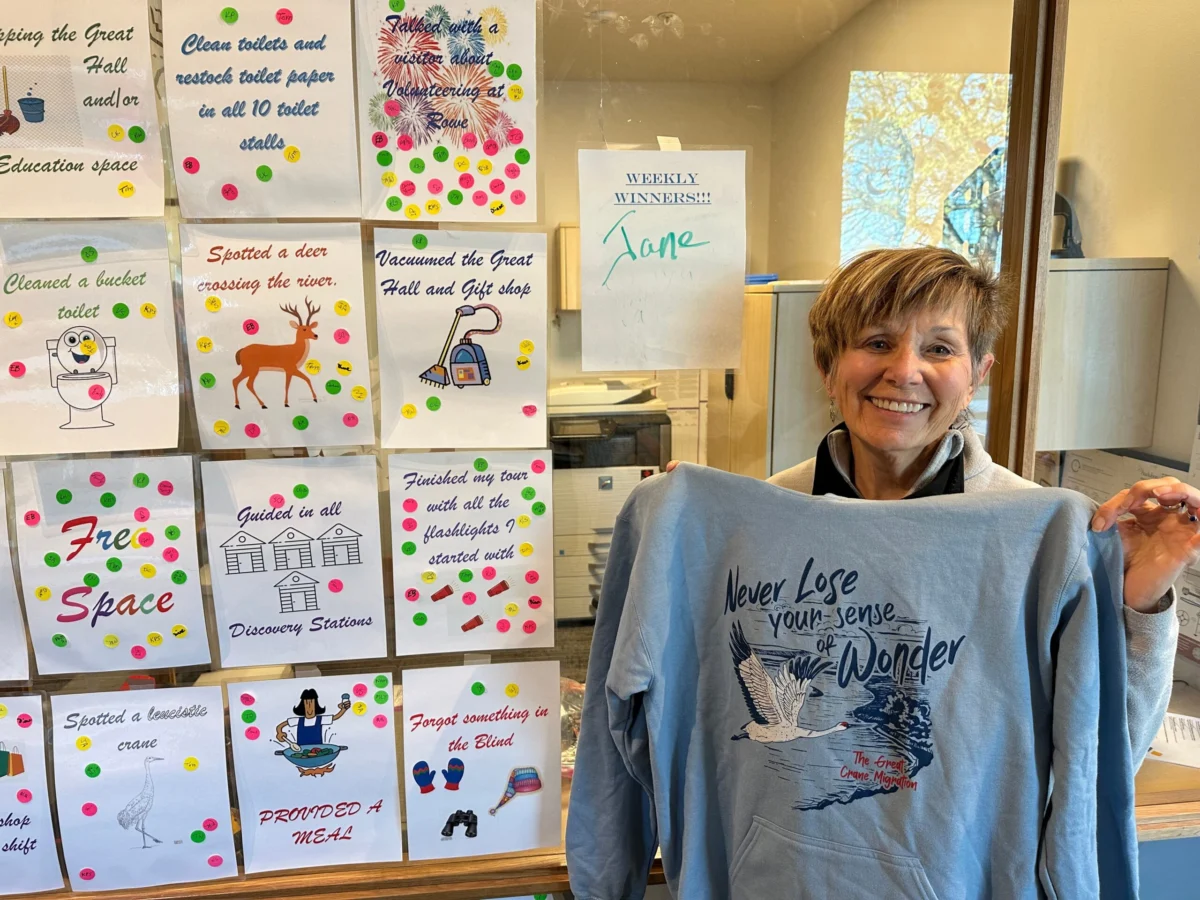
Every spring, a monumental biological event unfolds along the Platte River in Nebraska, drawing observers from across the globe to witness the migration of hundreds of thousands of Sandhill Cranes. While the birds themselves are the primary attraction, the logistics of hosting thousands of visitors during this window require a complex, year-round operational effort. At the heart of this endeavor is the Iain Nicolson Audubon Center at Rowe Sanctuary, which relies heavily on a dedicated network of volunteers to bridge the gap between the natural phenomenon and the human experience. As the sanctuary prepares for future seasons, the recruitment and retention of these individuals remain the linchpin of the facility’s ability to function.
The annual migration, often described as one of the world’s greatest wildlife spectacles, sees roughly 80% of the world’s population of Sandhill Cranes congregate in the Platte River Valley. These birds rely on the river’s shallow, braided channels for safety, using the water as a natural barrier against land-based predators while they rest and refuel on waste grain from local cornfields. This stopover is critical; the birds gain the necessary body mass to continue their northward journey to breeding grounds in Canada, Alaska, and Siberia. The window for this activity is narrow, typically peaking from early March through mid-April, creating a high-pressure environment for sanctuary staff.
The Anatomy of a Volunteer-Driven Operation
The perception of Crane Season often centers on the six-week window of guest arrivals. However, the operational reality is far more extensive. Preparation for the upcoming migration cycle begins months in advance, often as early as the preceding autumn. During this lead-up, the facility undergoes a massive transformation. Maintenance crews, bolstered by volunteers, must clear trails, clean observation blinds, and ensure that infrastructure—such as the specialized bird-approved red lighting systems—is fully functional. These red lights are essential for minimizing disturbance to the cranes, which are highly sensitive to artificial light during their nocturnal roosting.
Once the season begins, the scale of the operation becomes evident. With roughly 30 distinct volunteer roles required daily to manage guest flow, education, and site security, the sanctuary functions less like a nature preserve and more like an intensive hospitality hub. These roles are diverse: volunteers act as docents in the gift shop, facilitate check-ins, guide groups to distant discovery stations, lead interpretive talks, and provide hands-on assistance during educational field trips. For many guests, these volunteers are the primary point of contact, transforming a passive wildlife viewing trip into an immersive educational experience.
Chronology of Preparation and Participation
The lifecycle of an active volunteer at Rowe Sanctuary is structured around strict timelines designed to ensure a seamless experience for the thousands of guests who book guided tours months in advance. Prospective volunteers are encouraged to engage with the organization early. The process involves a formal application and a mandatory background check, followed by an onboarding session with the volunteer coordinator. This initial phase includes training on Volgistics, a specialized management software used to track shifts, assign responsibilities, and coordinate the daily movement of personnel across the sanctuary’s vast acreage.
For the 2027 season, the administrative timeline is already set. The deadline for volunteer applications is December 15, 2026. This lead time is necessary for the vetting process and the coordination of housing, which is a major draw for out-of-state volunteers. Limited housing is provided by the sanctuary to accommodate the influx of participants, but these spots are highly competitive. Volunteers interested in staying on-site during the 2027 season must initiate their requests in October or early November 2026. This structured approach allows the sanctuary to balance the needs of local residents with the high volume of interest from out-of-state "craniacs"—a term affectionately used by the community to describe the most dedicated enthusiasts.
Human Capital and the Volunteer Experience
The longevity of the program is largely attributed to the culture fostered at the sanctuary. Many volunteers return year after year, creating a social environment that includes shared meals, recreational activities like Volunteer Bingo, and communal housing. This social cohesion is a vital component of the retention strategy. When volunteers feel integrated into a community, the demanding nature of the work—which often involves early mornings and late nights in variable Nebraska spring weather—becomes more sustainable.
The motivations for volunteering are varied, yet many participants highlight the intersection of personal fulfillment and environmental stewardship. April M., a long-term volunteer, noted that transitioning from a guest to a volunteer allowed her to shift from a passive observer to an active participant in the conservation narrative. By facilitating a "bucket list" experience for visitors, volunteers gain a sense of ownership over the sanctuary’s success. This feedback loop is essential, as the organization relies on these individuals not just as labor, but as ambassadors for the Platte River ecosystem.
Data and Environmental Implications
The scale of the Sandhill Crane migration is immense, with estimates suggesting that between 400,000 and 600,000 birds pass through the region annually. Managing this volume of wildlife alongside an equally high volume of human visitors presents significant ecological risks. The primary concern for biologists is "flushing"—the disturbance of birds that causes them to take flight, wasting precious energy reserves that are essential for their survival and reproductive success.
The presence of well-trained volunteers is a key mitigation strategy. By guiding visitors to blinds and enforcing strict noise and light protocols, volunteers prevent the unintended disruption of the roost. This is an example of "human-wildlife coexistence" in practice. The data supports the necessity of this intervention; studies in the Platte River Valley have shown that uncontrolled human access leads to increased stress levels in migratory bird populations. Therefore, the volunteer program is not merely a staffing solution; it is a critical component of the sanctuary’s conservation mission.
Organizational Impact and Broader Significance
The model employed at Rowe Sanctuary highlights a growing trend in public-lands management: the professionalization of the volunteer workforce. As funding for environmental non-profits fluctuates, the reliance on highly skilled, motivated, and organized volunteer corps has become a standard requirement for organizations tasked with protecting critical migratory habitats. The ability to manage 30 daily positions for a six-week period requires a sophisticated administrative structure, which is what the current Volgistics-based system provides.
Beyond the immediate goal of a smooth Crane Season, the program serves a broader pedagogical purpose. Volunteers receive training that goes beyond site logistics; they are educated on the hydrology of the Platte River, the biology of the Sandhill Cranes, and the challenges of water management in the American West. This turns the volunteers into local experts who then carry that knowledge back to their home communities. By empowering a diverse group of individuals to act as stewards of the river, the sanctuary extends its influence well beyond its physical borders.
Conclusion: Joining the Effort
For those considering the commitment, the experience offers more than just a view of the migration. It offers an opportunity to play a tangible role in a global conservation event. The transition from visitor to volunteer is often described by participants as a transformative experience that fosters a deeper, more nuanced appreciation for the delicate balance of the natural world.
As the sanctuary looks toward the 2027 season and beyond, the focus remains on ensuring that every person who arrives—whether as a guest or a volunteer—leaves with a greater understanding of the cranes and the importance of the Platte River ecosystem. The success of this effort, however, depends entirely on the willingness of people to commit their time, energy, and enthusiasm to the cause. For those who choose to apply, the reward is a front-row seat to one of the most awe-inspiring spectacles in the natural world, supported by a community that values both the birds and the people who protect them.
