
Conservationists across the globe are engaged in vital efforts to safeguard the world’s migratory flyways, the aerial highways that connect landscapes, countries, and continents. These incredible routes are essential for countless bird species, allowing them to travel vast distances between their breeding grounds and non-breeding habitats. Among these critical pathways is the African-Eurasian Flyway, an immense corridor stretching from the Arctic Circle to the southern tip of Africa, through which billions of birds journey annually. Protecting these intricate networks requires a concerted, transnational effort, often spearheaded by local organizations working in partnership with international bodies. In Malawi, a nation strategically situated along this monumental flyway, the Wildlife and Environmental Society of Malawi (WESM), a BirdLife Partner, is undertaking ambitious projects to protect migratory birds and their habitats, particularly at the ecologically significant Chia Lagoon. This work, supported by the Royal Society for the Protection of Birds (RSPB) in the UK and the Ecological Restoration Fund (ERF), highlights the profound interconnectedness of global ecosystems and the critical role of local stewardship.
The Intricate Web of Migratory Flyways: A Global Imperative
Migratory flyways are not merely routes; they are complex systems of interconnected habitats, including wetlands, forests, and grasslands, that provide essential resources for birds during their arduous journeys. These stopover sites are crucial for resting, feeding, and replenishing energy reserves, enabling birds to complete migrations that can span tens of thousands of kilometers. The African-Eurasian Flyway, one of eight major flyways globally, is particularly diverse, hosting a wide array of waterbirds, raptors, and passerines. Its integrity is paramount for maintaining biodiversity across three continents. The scale of this migration underscores the necessity for international collaboration. Organizations like BirdLife International, through its network of national partners, and the RSPB, a leading conservation charity, play a pivotal role in coordinating these efforts. The Ecological Restoration Fund (ERF) provides crucial financial backing, enabling on-the-ground projects that directly impact bird populations and the communities that coexist with them. Malawi’s geographical position makes it an indispensable link in this chain, with its wetlands serving as vital havens for numerous species undertaking these epic voyages.

Chia Lagoon: A Jewel in Malawi’s Conservation Crown
At the heart of Malawi’s contribution to flyway conservation lies Chia Lagoon, a recently designated Key Biodiversity Area (KBA) located in the central district of Nkhotakota. KBAs are sites recognized internationally for their critical importance in conserving global biodiversity. Covering approximately 1,700 hectares, Chia Lagoon is a shallow freshwater wetland characterized by a mosaic of open water, extensive mudflats, seasonally flooded grasslands, and surrounding agricultural landscapes. This diverse habitat provides a rich tapestry of resources, making it an invaluable stopover and non-breeding site for migratory waterbirds. The seasonal fluctuations in water levels are particularly significant, as they expose nutrient-rich mudflats that teem with invertebrates, a primary food source for many species.
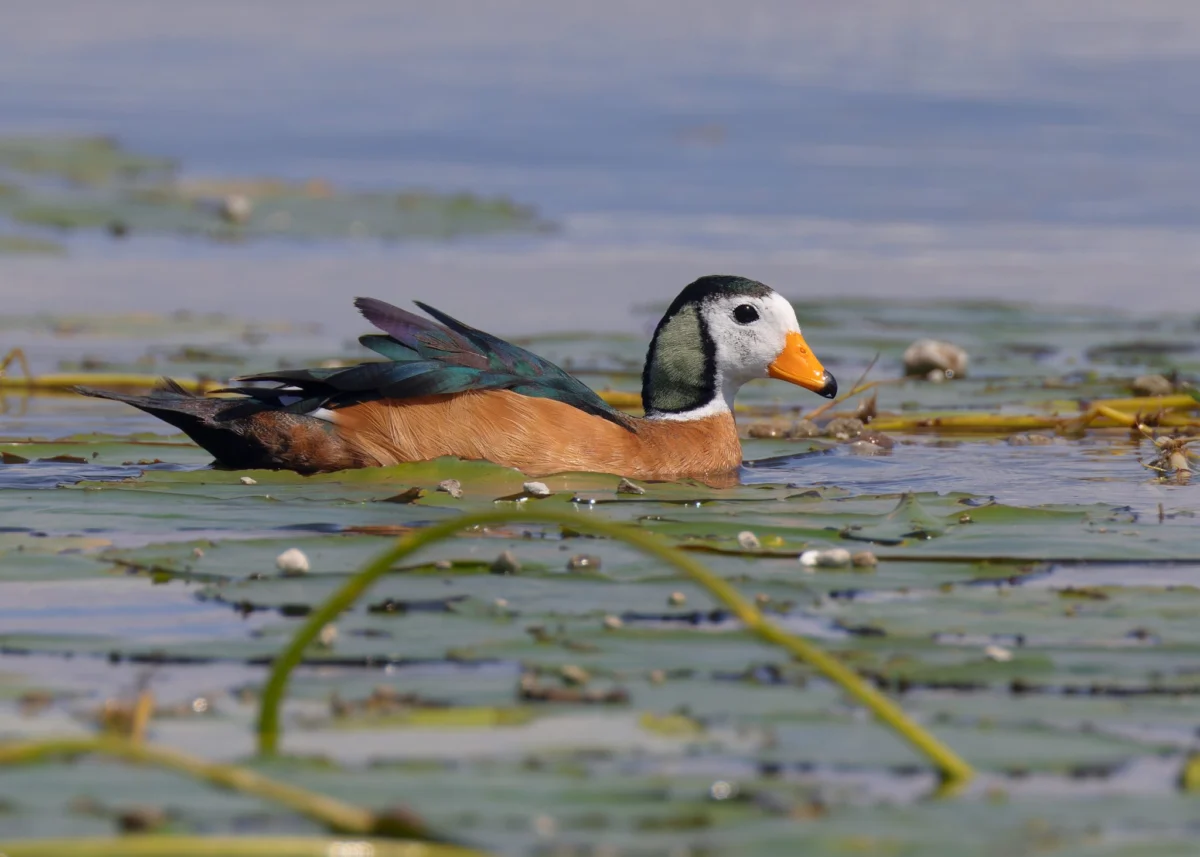
Blessings Chingagwe, the Programme Manager at WESM, emphasizes the lagoon’s unique ecological productivity and strategic location. "The lagoon is home to diverse species, including the Black Heron, Ring-necked Dove, Lesser Masked Weaver, African Jacana, and the charismatic African Pygmy-goose," Chingagwe explains. "It functions as a feeding, resting, and refuge site, particularly during migration and the non-breeding season. Its ecological productivity and strategic location make it an important link within the wider African-Eurasian Flyway network." The presence of such a wide array of species underscores the lagoon’s health and its critical role in supporting both resident and migratory bird populations. The designation as a KBA provides international recognition and a framework for enhanced conservation efforts, attracting further support and ensuring its long-term protection.
WESM’s Groundbreaking Conservation Initiatives

Under Blessings Chingagwe’s leadership, WESM has embarked on a series of groundbreaking initiatives to protect Chia Lagoon and other critical sites. One of their most significant achievements has been conducting the first comprehensive biodiversity and ecological assessment of Chia Lagoon. This pioneering study, supported by the Darwin Initiative, represents a crucial step for an unprotected wetland, providing essential scientific data to inform conservation strategies. Prior to this, detailed ecological understanding of the lagoon was limited, hindering effective management. The assessment has yielded invaluable insights into the lagoon’s ecosystem, its resident species, and the patterns of migratory bird use.
"We have done regular waterbird monitoring for over two years and witnessed a significant increase in bird records since 2023," Chingagwe reports. "Our first dataset had 68 records, but we are currently at over 110 records." This substantial increase in recorded species suggests improved monitoring methodologies, but also potentially a healthier ecosystem that is attracting more birds, a testament to the ongoing conservation efforts. This robust scientific data forms the bedrock of WESM’s advocacy and management plans.
Beyond scientific research, WESM has actively engaged local communities in conservation. Recognizing that human activities often impact bird populations, the organization has established 18 bird hunting clubs around Chia Lagoon. These clubs are empowered to regulate hunting practices, ensuring adherence to quotas, targeting specific species, and promoting sustainable methods. This approach represents a pragmatic balance between traditional livelihoods and conservation needs. Furthermore, 12 members from these clubs have been trained in continual monitoring techniques, transforming them into local conservation stewards who also raise awareness among their communities and other stakeholders about the lagoon’s importance. This community-led approach fosters a sense of ownership and shared responsibility, crucial for the long-term sustainability of conservation initiatives.
Safeguarding Mulanje Mountain and Expanding Horizons to Lake Chilwa

WESM’s impact extends beyond Chia Lagoon. The organization has also been instrumental in protecting other critical natural assets in Malawi, notably Mulanje Mountain. This iconic heritage site faced a severe threat from bauxite mining operations. WESM successfully mobilized local leaders, the "Friends of Mulanje" group, and the wider community to vocally oppose the mining project. The cultural group Mulhakho wa Alomwe, whose identity and heritage are deeply intertwined with Mulanje Mountain, played a particularly strong role in expressing their opposition. This collective action culminated in the evacuation of miners from the mountain by local communities and the district council, a significant victory attributed to the project’s success and the power of grassroots mobilization. This demonstrates WESM’s capacity to translate community engagement into tangible conservation outcomes, even against powerful economic interests.
Concurrently, Lake Chilwa, another vital wetland ecosystem in Malawi, has been identified as a priority site for WESM’s conservation efforts. While specific projects are still being developed, WESM is actively creating a site profile to comprehensively define existing threats, identify opportunities for intervention, and catalog ongoing projects in the area. Lake Chilwa faces significant challenges, including poaching, the impacts of climate change, and widespread habitat degradation, which directly threaten its migratory bird populations. Encouragingly, a Bird Hunters Association established in the area in 2008 remains active and committed to safeguarding birds, indicating a pre-existing local awareness and willingness to collaborate on conservation. This foundation provides a strong platform for WESM to implement new initiatives and integrate Lake Chilwa more formally into its flyway conservation strategy.
The Global Tapestry: Why Local Action Matters
Blessings Chingagwe passionately articulates the global significance of local conservation efforts. "Migratory birds connect continents. A bird feeding at Chia Lagoon may have travelled thousands of kilometers from Europe or Asia," she states. "If just one important wetland along the flyway is lost or degraded, it can affect populations across multiple countries. Protecting wetlands in Malawi is part of protecting a global ecological system." This profound statement underscores the core principle of flyway conservation: local actions have global consequences.

To represent this global connectivity, Chingagwe nominates the Whiskered Tern as the ambassador species for the African-Eurasian Flyway. "With the tern being a long-range migratory bird, it is the best representation of global connectivity! Arriving in Malawi with the December rains, it reminds us that this small country, let alone a small wetland, is not isolated from the global community," she explains. "If we are to protect the Whiskered Tern, we mean to protect every marsh, lake, river, and wetland along its path. This is a perfect ambassador of the flyway because it knows no boundaries." The Whiskered Tern, a species known for its extensive migrations, exemplifies how the health of one wetland in Malawi directly contributes to the survival of a species that traverses vast international boundaries. Its protection necessitates a holistic approach to wetland conservation across its entire migratory range, reinforcing the importance of international agreements like the Convention on Migratory Species (CMS) and the Ramsar Convention.
Navigating Complex Challenges: Balancing Conservation and Livelihoods
Despite the successes, WESM faces significant challenges in its mission. A central dilemma is securing the protection of Chia Lagoon while simultaneously ensuring sustainable benefits for the local communities who depend on its resources. Fisheries activities, a primary livelihood for many, pose a particular threat. The opening of new docks and fishing within designated sanctuaries directly impacts aquatic vegetation, which is vital habitat and food for waterbirds. "The fish sanctuaries often coincide with the bird sanctuaries, leading to unavoidable conflicts," Chingagwe notes, highlighting the complex socio-ecological dynamics at play. Addressing this requires careful planning, community dialogue, and the development of sustainable fishing practices that do not compromise the lagoon’s ecological integrity.
Another pressing issue is the proliferation of Invasive Alien Species (IAS), specifically Azolla and Water Hyacinth. These invasive plants can rapidly cover water surfaces, suffocating native vegetation, reducing oxygen levels, and making habitats inaccessible to waterbirds. The removal of these species is a major challenge, complicated by the presence of crocodiles in the lagoon, which poses a significant risk to human safety. "We have not progressed much with the removal of these invasives and are still trying to find a feasible and safe way of doing this," Chingagwe admits, underscoring the need for innovative solutions and potentially expert assistance in managing this threat. Furthermore, while not explicitly detailed for Chia Lagoon, climate change remains an overarching threat to all wetlands in Malawi, affecting water levels, rainfall patterns, and the timing of migratory cycles, which can disrupt the delicate balance of these ecosystems.

A Future Soaring with Hope: Scientific Data and Community Empowerment
Despite the formidable challenges, Blessings Chingagwe remains optimistic about the future of conservation in Malawi. Her optimism is rooted in two key developments: the accumulation of solid scientific data and the growing awareness within local communities. "What makes me optimistic is that we now have solid scientific data for the first time, along with growing community awareness," she states. "When local stakeholders understand the value of their wetland, conservation becomes a shared responsibility, and that gives real hope for long-term protection." This shift from external enforcement to internal stewardship is a powerful indicator of sustainable conservation success.
The impact of WESM’s work is already resonating at higher levels of governance. "To this end, I would like to acknowledge the District Council that, through this project, has now started talking about developing a comprehensive management plan for the wetland ecosystem," Chingagwe reveals. This official recognition and commitment from local authorities is a critical step towards formalizing protection and integrating conservation into regional development strategies. Even more significantly, the Department of National Parks and Wildlife, the national focal point for the Convention on the Conservation of Migratory Species (CMS), has requested that WESM consider proposing Chia Lagoon as a Ramsar site. Ramsar designation, under the Convention on Wetlands of International Importance, would confer international recognition, enhance the lagoon’s protected status, unlock potential funding opportunities, and provide a framework for wise use and management, significantly bolstering its long-term future. These institutional endorsements reflect a growing national understanding of the intrinsic value of Malawi’s wetlands and their global importance.
The work of WESM, exemplified by Blessings Chingagwe’s dedication, is a powerful illustration of how local action, supported by international partnerships and robust scientific data, can create profound impacts on global conservation. From mobilizing communities against destructive mining to establishing hunting clubs that foster sustainable practices, and from pioneering ecological assessments to advocating for international protected status, Malawi’s conservationists are not just protecting birds; they are safeguarding a global ecological system and empowering local communities to be its custodians. The future of the African-Eurasian Flyway, and indeed global biodiversity, rests on such dedicated efforts across its vast expanse.

Partnerships Fueling Progress
The success of these initiatives would not be possible without the generous support of key partners. The Ecological Restoration Fund (ERF) has been instrumental in funding work that protects biodiverse hotspots, rejuvenates degraded landscapes, and promotes local environmental activism. Their commitment to re-establishing nature’s essential interconnections while fostering cultural, social, and economic opportunities for the communities inhabiting those landscapes aligns perfectly with WESM’s holistic approach. Additionally, significant funding has been provided by the UK Government through the Darwin Initiative, a program dedicated to assisting countries rich in biodiversity but poor in financial resources to meet their commitments under international biodiversity conventions. These partnerships highlight the vital role of international collaboration and financial investment in empowering local organizations to drive meaningful, on-the-ground conservation outcomes that resonate across continents.
