
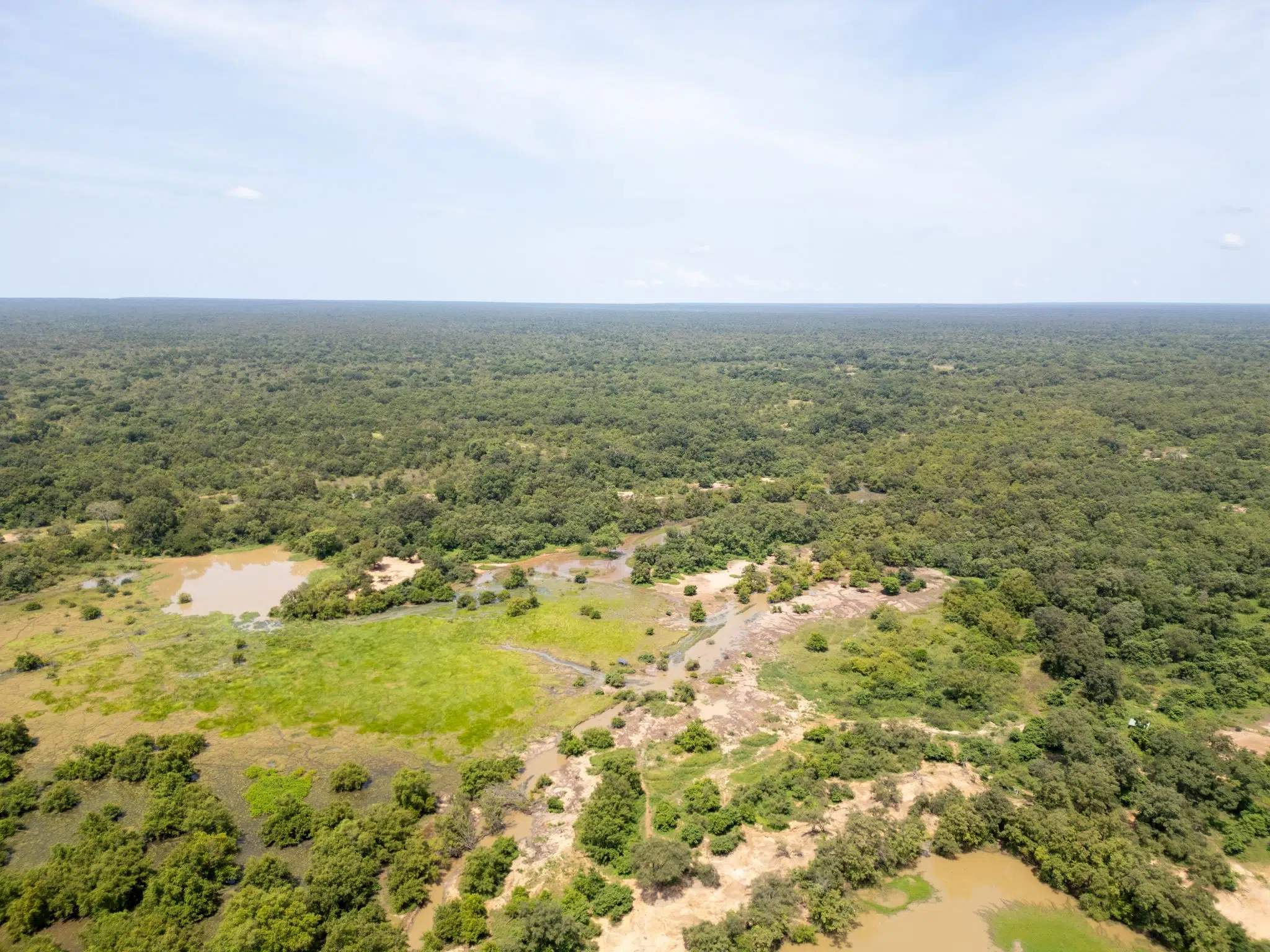
The vast, intricate network of migratory routes known as flyways serves as a vital artery connecting landscapes, countries, and even continents, facilitating the awe-inspiring journeys of millions of birds. Among these globe-spanning pathways is the African-Eurasian Flyway, an immense corridor stretching from the frigid Arctic to the southernmost tip of Africa, through which countless avian species undertake their annual migrations between breeding and non-breeding grounds. Efforts to protect these incredible travellers and their indispensable habitats are spearheaded by collaborative initiatives, such as the ambitious project undertaken by BirdLife International and its UK Partner, the Royal Society for the Protection of Birds (RSPB), with crucial backing from the Ecological Restoration Fund (ERF). This comprehensive conservation programme focuses on critical stopover and overwintering sites, including the vital wooded savannahs of northern Ghana, where local conservationists are working tirelessly to secure a future for these remarkable birds.
The African-Eurasian Flyway: A Lifeline for Millions
The African-Eurasian Flyway is one of the world’s most significant migratory bird routes, traversed by an estimated 6.5 billion birds annually, encompassing over 250 species. These species include raptors, waterbirds, and a multitude of landbirds, many of which are experiencing severe population declines. Their journeys, often spanning thousands of kilometres, highlight the interconnectedness of global ecosystems and the shared responsibility across numerous nations for their survival. Birds navigating this flyway face myriad threats at every stage of their migration, from habitat loss and degradation at breeding, stopover, and non-breeding sites to illegal killing, climate change impacts, and agricultural intensification. The delicate balance of ecosystems along this route is increasingly imperilled, making targeted conservation efforts in key locations, like Ghana, more urgent than ever.
Ghana’s Crucial Role: The Mole Ecological Landscape
At the heart of Ghana’s contribution to this international conservation effort lies the Mole Ecological Landscape in the country’s north-western region. This biodiverse area is characterized by a mosaic of savannah woodland, expansive grasslands, and pockets of riverine and dense canopy forest. Central to this landscape is Mole National Park, Ghana’s largest protected area, encompassing approximately 4,840 square kilometres. Beyond its iconic megafauna such as elephants, kob, and various antelope species, Mole National Park is an indispensable haven for migratory birds. Each year, it welcomes thousands of landbirds that have bravely traversed the Sahara Desert, seeking refuge, sustenance, and rest before their return journey north to breed. For these weary travellers, Mole is not merely a stopover; it is a critical "refreshment" point, a verdant oasis offering vital resources after their strenuous trans-Saharan flight.
Among the notable species making use of this crucial landscape are the European Pied Flycatcher (Ficedula hypoleuca), Willow Warbler (Phylloscopus trochilus), and Tree Pipit (Anthus trivialis). The park also provides essential refuge for migratory raptors, including the Osprey (Pandion haliaetus), European Honey-buzzard (Pernis apivorus), and Montagu’s Harrier (Circus pygargus), underscoring its broad ecological significance. Furthermore, Mole National Park serves as a stronghold for some of Ghana’s Critically Endangered vulture species, highlighting its role in protecting resident as well as migratory avian populations.

The landscape itself undergoes a dramatic annual transformation. The protracted dry season is routinely followed by extensive bushfires, both accidental and deliberately set by livestock grazers seeking to clear land or by communities attempting to mitigate wider fire damage. This cyclical pattern of drought and fire speaks to the resilience of the local biodiversity and the human communities who must adapt to these extreme environmental shifts. Understanding and working with these dynamics is central to the sustainable management strategies being implemented.
Kwame Boafo: A Voice for Conservation
Leading the charge on the ground is Kwame Boafo, Programme Manager for the Research & Conservation Unit at the Ghana Wildlife Society, the national BirdLife Partner. Boafo’s work exemplifies the critical fusion of scientific understanding and community engagement necessary for effective conservation. He emphasizes the often-surprising reaction of local communities when they learn about the incredible journeys of migratory birds. "Usually people from the communities we work with become fascinated when they learn that birds are able to fly across oceans and deserts – they find it very incredible and they lean in to hear more of what we are saying," Boafo explains. This revelation often resonates with their own experiences, particularly among those who, as young boys or hunters, have encountered ringed birds. These bands, placed by researchers in distant lands, serve as tangible proof of the birds’ extraordinary travels, filling a "missing link" in local understanding and fostering a deeper appreciation for the wildlife around them.
When asked to choose a species that best represents the Mole Ecological Landscape, Boafo points to the European Pied Flycatcher. While he holds a personal fondness for the Wood Warbler (Phylloscopus sibilatrix) from his past research, the European Pied Flycatcher, with its remarkable resilience and ability to thrive throughout the migratory season, even singing as early as October, embodies the spirit of the landscape and the challenges it presents.
Connecting Communities and Conservation: The CREMA Model
A cornerstone of the ERF project is its commitment to integrating local communities into conservation governance. With approximately 40,000 people residing within a five-kilometre radius of Mole National Park, their involvement is paramount. The project leverages an established model of Community Resource Management Areas (CREMAs), which empower local communities to participate directly in the management of their natural resources. While many communities around the park already have CREMAs, a significant gap was identified in the south, specifically around the communities of Kananto and Kabampe. These communities occupy a strategic location, "sandwiched" between two protected areas, making their sustainable resource management crucial for broader ecological integrity.
Working closely with these communities, the Ghana Wildlife Society successfully facilitated the official inscription of a new CREMA for Kananto and Kabampe. This achievement is a major triumph for the project, as a CREMA grants communities greater authority over their local resources, enabling more meaningful participation in decision-making and ensuring they benefit directly from conservation efforts. This model not only fosters a sense of ownership but also helps mitigate human-wildlife conflict by providing structured mechanisms for resource sharing and dispute resolution.

Restoring Degraded Lands: A Multifaceted Approach
Beyond governance, the project actively addresses habitat degradation through ambitious restoration efforts. A primary activity involves the restoration of degraded areas within the landscape using native tree species. This initiative serves multiple critical functions: it provides essential cover and habitat for wildlife, restores vital ecosystem services such as soil stabilization and water regulation, and critically, supports the livelihoods of local communities. For instance, species like the shea tree (Vitellaria paradoxa) and dawadawa (Parkia biglobosa) are specifically chosen for their ecological importance and significant economic value.
Shea nuts, for example, represent a major source of income for approximately 90% of women in the Kananto-Kabampe CREMA. The project supports the collection of seeds from these and other ecologically and economically important species, nursing them within a dedicated nursery established by the ERF project. To date, 5,000 seedlings have been successfully planted with the active participation of local communities. The ongoing monitoring of germination rates ensures optimal timing for further planting during the upcoming rainy season, with an ambitious target of at least 10,000 young trees by the project’s conclusion. Kwame Boafo highlights the nuance of this effort: "Planting is easy, keeping them alive is harder. So planting at the right time and making sure you tend to the seedlings is very essential for survival." This underscores the long-term commitment required for successful ecological restoration.
Sustainable Livelihoods and Ecological Resilience
The project’s holistic approach extends to enhancing community livelihoods through various sustainable initiatives. Training in agroforestry techniques is provided, aimed at improving farm yields and integrating trees into agricultural landscapes, thereby increasing biodiversity and soil health. Communities are also connected to external markets, helping them to maximize the economic returns from their sustainable practices.
A particularly innovative initiative involves bee-keeping. Bees are vital pollinators for many of the native trees crucial to both the ecosystem and community livelihoods, including the shea tree. By promoting bee-keeping, the project not only supports ecological processes but also creates an additional income stream for residents through honey production. The overarching goal of these livelihood initiatives is to reduce economic pressure on natural resources. By increasing community income and providing alternative sustainable practices, the project aims to lessen encroachment into protected reserves, especially during the dry season when resources are scarce and the temptation to fell trees or expand agriculture into protected areas is highest.
Citizen Science and Monitoring

A commitment to scientific monitoring underpins all project activities. Involving local communities in citizen science initiatives is a key component. For example, the project has deployed acoustic monitoring devices to carry out passive acoustic monitoring of birds. This technology allows researchers to collect vast amounts of data on bird activity without human presence, providing invaluable insights into species presence, abundance, and behaviour. A specific focus of this monitoring is to compare bird activity across degraded, restored, and non-degraded areas, providing concrete data on the effectiveness of restoration efforts and guiding future conservation strategies.
Navigating Challenges: Fire, Climate, and Human-Wildlife Dynamics
Despite the successes, the project navigates significant challenges. The pervasive practice of slash-and-burn agriculture poses a constant threat. While often intended for cleared areas, fires frequently spread uncontrollably into neighbouring farms or, critically, into protected reserves, destroying habitats and nascent restoration efforts. The harsh climatic conditions of northern Ghana, characterized by a prolonged dry season and limited, often erratic, rainfall, further complicate restoration work. Successful tree planting requires meticulous planning, a deep understanding of the local ecology, and adherence to the phenology (seasonal timing) of the chosen tree species.
Perhaps the most profound challenge lies in securing genuine community buy-in, particularly when conservation measures can initially be perceived as conflicting with immediate livelihood needs. Issues such as crop-raiding by wildlife and broader human-wildlife conflict are common, and resources for compensation and management are often limited. Striking a delicate balance that accommodates both human livelihoods and the conservation of migratory birds and other wildlife requires sustained dialogue, trust-building, and adaptive management.
Building Trust and Fostering Optimism
Despite these hurdles, Kwame Boafo expresses profound optimism. He highlights the willingness of communities to collaborate, even amidst their own challenges and sometimes varying initial appreciation for wildlife. "The trust is building, but it has been a process," he notes. Early suspicions, particularly regarding land tenure when discussing CREMAs, gradually gave way to understanding as communities observed researchers working in the forest. This realization – that the conservationists were "just here for the birds" – began to shift perceptions, fostering a growing appreciation for wildlife beyond its immediate utility as food or a nuisance.
Boafo succinctly captures the essence of their work: "Conservation is about both people and nature. We’ve been able to establish the link between the people and nature, and we are hoping to build on this." This human-centric approach, recognizing that sustainable conservation is inextricably linked to the well-being of local populations, is the foundation of the project’s success.

The Unsung Heroes of the Flyway: Anecdotes from the Field
Even in the face of serious conservation work, moments of levity and surprise can occur. Boafo recounts a peculiar incident where some acoustic monitoring devices were unexpectedly caught in a fire during a period when no fires were anticipated. Remarkably, "even after the devices were burned, they were still recording! That was very interesting, and we were very happy to retrieve the data from those recorders." Such anecdotes underscore the resilience not only of nature but also of the tools and dedicated individuals working to understand and protect it.
Broader Implications and Future Outlook
The work in Ghana’s Mole Ecological Landscape represents a critical microcosm of global conservation efforts along migratory flyways. The project’s success in establishing CREMAs, implementing sustainable restoration and livelihood initiatives, and fostering community engagement offers a replicable model for other regions grappling with similar challenges. By safeguarding these vital stopover and overwintering sites, Ghana is playing an indispensable role in the long-term survival of numerous migratory bird species, contributing directly to global biodiversity targets.
The ongoing partnership between the Ghana Wildlife Society, the RSPB, and the vital financial support from the Ecological Restoration Fund demonstrates the power of international collaboration. Such initiatives are not merely about protecting birds; they are about building resilient landscapes, empowering communities, and ensuring a healthier planet for all. As the world confronts escalating environmental crises, the efforts in northern Ghana stand as a beacon of hope, illustrating that dedicated action, rooted in science and community partnership, can indeed secure the future of our planet’s most extraordinary travellers.
