
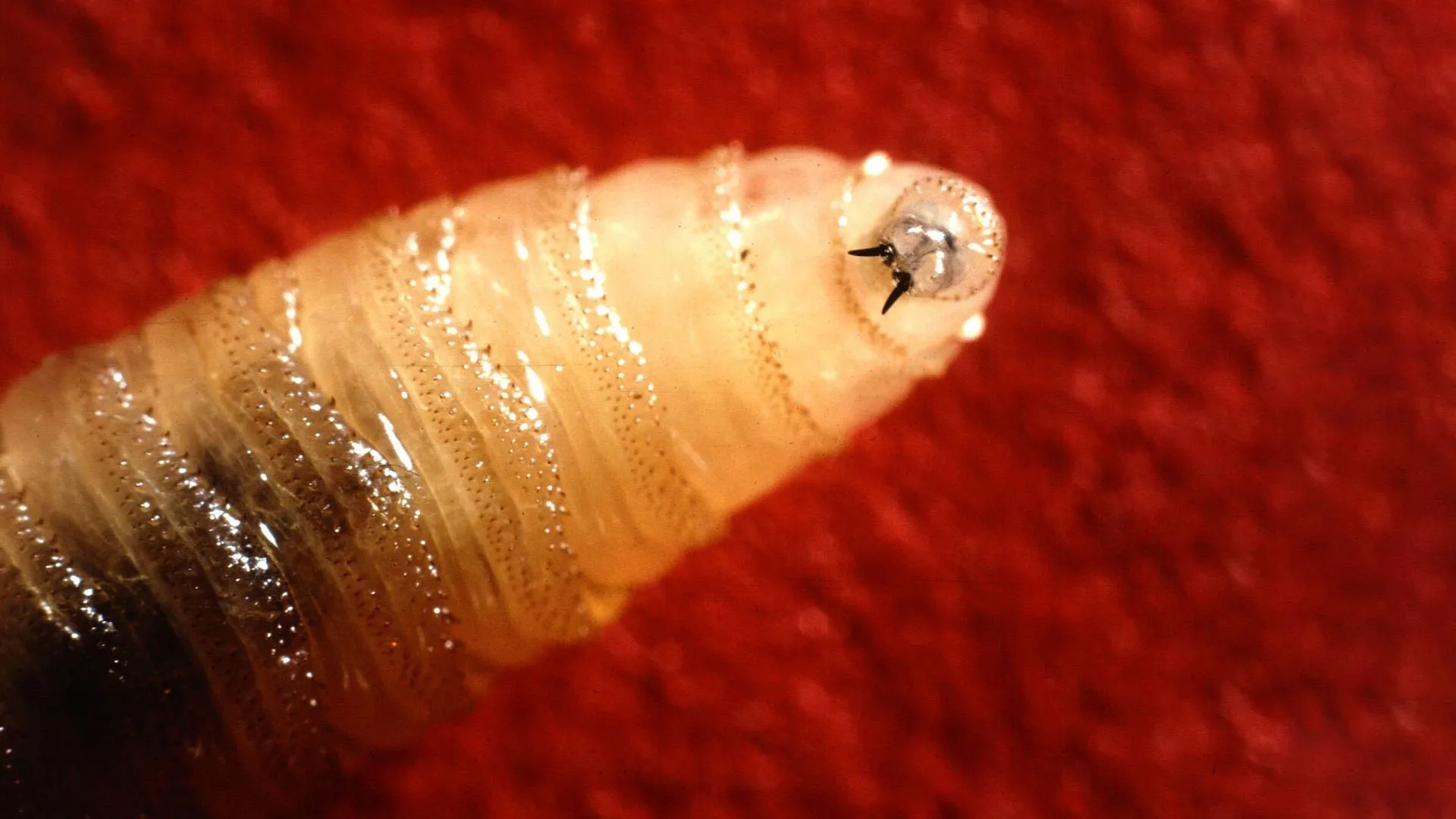
Decades after a monumental eradication campaign pushed the devastating parasite far south to the Isthmus of Panama, the New World screwworm has officially returned to the United States. Recent detections in Texas and New Mexico have sparked profound concern among agricultural producers, wildlife managers, pet owners, and public health officials alike. Unlike typical blowflies whose larvae consume decaying organic matter, Cochliomyia hominivorax—appropriately named the "man-eater"—targets the living tissue of warm-blooded animals. In response to this rapid resurgence, researchers at the University of California San Diego (UC San Diego) and the County of San Diego Health and Human Services Agency (HHSA) Public Health Services have developed a sophisticated, real-time tracking tool. Designed to forecast the parasite’s geographical spread, this dashboard represents a new paradigm in how academic institutions and public health agencies collaborate to combat emerging biological threats.
Historical Context and the 1950s Eradication Triumph
To understand the gravity of the current screwworm re-emergence, one must examine the immense economic and agricultural devastation the pest inflicted upon the United States during the mid-20th century. In the 1950s, New World screwworm infestations caused catastrophic losses for livestock producers across the American Southwest. In that region alone, the parasitic fly inflicted an estimated $50 million to $100 million in annual damages—a staggering sum when adjusted for inflation.
The crisis finally abated thanks to one of the most celebrated biological control campaigns in agricultural history: the sterile insect technique (SIT). Pioneered by entomologists Edward F. Knipling and Raymond C. Bushland, the strategy involved mass-rearing millions of male screwworm flies in laboratory facilities and sterilizing them using ionizing radiation. These sterile males were then systematically released by aircraft over infested regions. Because female screwworm flies mate only once in their lifetimes, mating with a sterile male resulted in zero viable offspring.
Over time, this continuous saturation of sterile insects caused wild populations to collapse entirely. By the late 20th century, the United States was declared screwworm-free, and a cooperative barrier zone was established and maintained in Central America to prevent northward migration. For decades, the victory stood as a gold standard in agricultural pest management, making the recent border-crossing events in Texas and New Mexico particularly alarming to modern epidemiologists and livestock officials.
Biology and Pathogenicity of the Flesh-Eating Pest
The biological mechanics of the New World screwworm render it uniquely terrifying to both veterinary and human medicine. Adult female flies are attracted to warm-blooded hosts, specifically seeking out open wounds, abrasions, or natural body orifices to deposit their eggs. A single female can lay hundreds of eggs in a single batch.
Once hatched within 12 to 24 hours, the resulting larvae immediately begin burrowing directly into healthy, living flesh. Equipped with mouthparts designed to tear and consume vascular tissue, the maggots feed voraciously, deepening and widening the wound over a period of five to seven days. This destructive feeding behavior not only inflicts severe pain and tissue necrosis but also creates prime conditions for secondary bacterial infections and opportunistic myiasis.
If left untreated, severe infestations can rapidly prove fatal, particularly for young, weakened, or injured livestock and wildlife. While human infections remain rare, humans are not immune. The larvae can infest human skin wounds or mucous membranes, requiring immediate surgical removal and medical intervention to prevent extensive tissue destruction and disfigurement. Furthermore, the parasite does not spread directly from person to person through respiratory droplets or casual contact like conventional infectious diseases; rather, transmission is strictly tied to environmental exposure to the adult fly or its deposited eggs.
Chronology of the Resurgence and Rapid Spread
The current crisis did not materialize overnight, yet its velocity has caught seasoned epidemiologists off guard.
- Late 2023: Veterinary authorities and international surveillance networks noted worrying southward trends in monitoring data, signaling that the biological barrier zones in Central America were under extreme pressure. Epidemiologists recognized that a northward expansion was becoming increasingly probable.
- Early to Mid-2024: Despite preventative expectations, the parasite breached traditional containment zones, crossing into Mexico and eventually penetrating the southern border of the United States.
- Late 2024: Official confirmations emerged in Texas and New Mexico. The speed with which the population established itself in these states exceeded initial projections. According to public health officials, the pest found hospitable climates and abundant hosts in regions it historically inhabited, allowing it to take hold with alarming efficiency.
- Present Day: Federal, state, and local agencies are actively investigating the exact vectors and entry points of the current infections, while concurrently deploying emergency containment measures to halt further geographical expansion.
High-Tech Intervention: The UC San Diego Tracking Dashboard
Recognizing that traditional public health surveillance systems often suffer from reporting lags—where laboratory confirmations can take days or even weeks—local health authorities realized they needed a proactive tool to maintain situational awareness.
"Our County public health partners alerted us to the need for better situational awareness of New World screwworm," explained Eliah Aronoff-Spencer, MD, PhD, professor of medicine at UC San Diego School of Medicine and affiliate member of the UC San Diego Design Lab and Qualcomm Institute. In response, a multidisciplinary team designed a specialized tracking dashboard to generate regional risk profiles for individual counties across the United States.
The newly developed platform synthesizes a diverse array of data streams. It integrates confirmed veterinary detections, micro-climatic and environmental conditions favorable to the fly’s survival and reproduction, and—in a novel methodological innovation—real-time news media reports.
Seema Shah, MD, MPH, medical director of the Epidemiology and Immunization Services Branch for the County of San Diego’s Public Health Services Department, highlighted the inclusion of media surveillance. "Traditional reporting mechanisms for public health are often delayed," Shah noted. "Lab confirmation can take days or weeks. By incorporating media reports, we can identify potential threats sooner and stay one step ahead."
This predictive capability allows public health agencies to answer critical operational questions. Mark Beatty, MD, MPH, assistant medical director for the County’s Epidemiology and Immunization Services Branch, emphasized the utility of the foresight provided by the tool. "The tool gives you a sense of where you might expect to see cases next," Beatty said. "That’s helpful in determining how we should be preparing. Is the threat imminent, or do we have six months? We’re in a very concerning phase right now, and the tool backs that up."
At present, access to the dashboard is restricted to authorized public health officials and project partners, though researchers are exploring the possibility of releasing a public-facing version in the future.
Institutional Framework: Resilient Shield and CDC Insight Net
The creation of the screwworm tracking tool was not an isolated academic exercise; it is part of a broader, federally funded initiative known as Resilient Shield. Operating as a core facility within the Centers for Disease Control and Prevention’s (CDC) Insight Net—a national network dedicated to modeling outbreaks and biological threats—Resilient Shield embodies a revolutionary model for public health innovation.
Rather than academic researchers operating in a vacuum and developing tools based on theoretical assumptions, the Resilient Shield framework operates on direct requests from public health agencies confronting urgent, real-world problems. Agencies submit their most pressing operational challenges, and academic and technical partners build tailored, scalable solutions.
"In public health, we always know our most urgent priorities, but too often we don’t have the immediate resources or in-house technical solutions to achieve them," Shah observed. "The screwworm is a perfect example. It is a critical threat, but it is an issue our academic partners might never have prioritized without our direct ticket. This partnership solves our immediate problem while providing shareable, open reference designs that demonstrate exactly how public health, academia, and industry can successfully work together."
Working alongside prominent technology partners such as Google and MITRE, Resilient Shield aggregates complex data sets spanning human health records, veterinary databases, meteorological conditions, and social listening metrics. This modular architecture allows the center to rapidly deploy specialized tools—ranging from secure computing platforms to advanced simulation engines—whenever a new public health emergency arises.
Comprehensive Eradication Strategy and Multi-Agency Response
Addressing the New World screwworm threat requires a coordinated, multi-layered defense involving federal agricultural authorities, state departments of public health, local veterinarians, and academic researchers.
The United States Department of Agriculture (USDA) is currently spearheading the national eradication campaign. The strategy relies on a modern iteration of the proven sterile insect technique used in the 1950s, augmented by targeted pesticide applications and strict animal movement quarantines. Furthermore, federal authorities are actively seeking authorization from the U.S. Environmental Protection Agency (EPA) to deploy a genetically modified, all-male sterile strain currently undergoing rigorous field testing. Concurrently, UC San Diego geneticists are developing next-generation biotechnological tools designed to enhance future vector control efficacy.
At the regional level, local integration is vital. Emily Trumbull, DVM, a veterinarian and lead for the County’s Epidemiology Unit’s One Health Program, emphasized the importance of cross-disciplinary collaboration. "We are working closely with the California Department of Food and Agriculture to connect local veterinarians with screwworm resources for surveillance in our region," Trumbull stated. "The flies can affect any warm-blooded animal, so working together with veterinarians serving livestock, pets and wildlife is critical for identifying suspect cases and preventing cases in people. The dashboard takes into account environmental factors that can help us understand how the risk to our local region is changing before the fly arrives. That’s why the dashboard is valuable."
Broader Implications and Future Outlook
The re-establishment of the New World screwworm within the continental United States serves as a sobering reminder of the persistent vulnerability of modern agricultural and public health systems to biological disruptions. Climate variability, increased global trade, and the natural mobility of wildlife vectors ensure that historic pests can re-emerge in unexpected ways.
The economic implications extend far beyond immediate veterinary treatment costs. A widespread infestation could disrupt national meat supplies, trigger stringent international trade embargoes on U.S. livestock, and impose severe financial burdens on rural economies. Moreover, the potential risk to endangered wildlife populations introduces an urgent conservation dimension to the crisis.
Nevertheless, the rapid deployment of advanced predictive modeling tools like the UC San Diego-HHSA screwworm dashboard demonstrates a significant leap forward in outbreak response capabilities. By wedding agile academic engineering with the real-world operational priorities of public health agencies, the scientific community is better equipped than ever to anticipate, track, and ultimately neutralize biological threats before they escalate into full-scale national catastrophes.
