
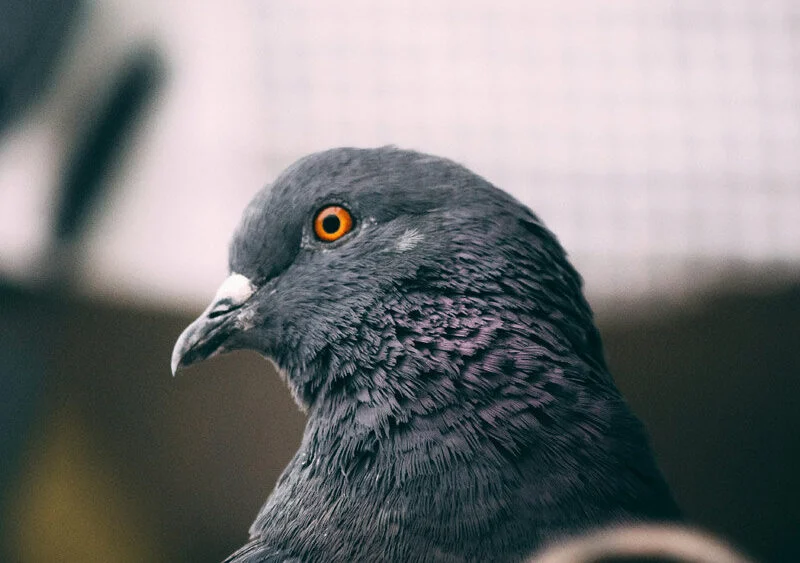
The biological mechanisms governing how birds perceive their environment have long fascinated biologists and aerospace engineers alike. A recent breakthrough study conducted by researchers at the University of British Columbia (UBC) has provided unprecedented insight into how homing pigeons utilize controlled eye movements to navigate complex flight paths. By deploying miniaturized recording technology, the research team has decoded the precise ocular strategies these birds employ to process "optic flow"—the visual information generated by relative motion between an observer and a scene—revealing a sophisticated system of visual stabilization that holds significant implications for the development of next-generation autonomous aerial vehicles.
The Anatomy of Avian Navigation and Optic Flow
Birds occupy an environment that requires rapid, high-stakes decision-making. Unlike terrestrial mammals, avian species must constantly contend with three-dimensional movement, variable wind speeds, and the urgent necessity to identify threats while maintaining a steady flight path. Central to this is optic flow. As a pigeon flies, the world moves across its retina; if this information is not managed correctly, the bird would be overwhelmed by a blur of visual data.
Pigeons possess a visual system uniquely adapted to this task. With eyes positioned laterally on their heads, they enjoy a panoramic field of view, which provides a tactical advantage in detecting predators. However, this positioning presents a challenge: it limits the binocular overlap—the area where both eyes see the same point—necessary for accurate depth perception. To compensate, pigeons have evolved a complex interplay between head stabilization and micro-movements of the eyes. This allows them to effectively "filter" the chaotic input of the environment, isolating the critical visual cues required for successful navigation and landing.
Chronology of the UBC Investigation
The study, published in the journal Current Biology, represents the culmination of years of physiological and behavioral observation. The research team, led by Anthony B. Lapsansky and Douglas L. Altshuler of the University of British Columbia, in collaboration with Douglas R. Wylie from the University of Alberta, set out to quantify the relationship between flight dynamics and ocular motor control.
The experimental phase involved 16 homing pigeons, a species renowned for its exceptional navigational capabilities. These subjects were already familiar with a specific flight trajectory, allowing researchers to observe them in a semi-naturalistic environment. To capture high-fidelity data, the team engineered a custom-built, lightweight "backpack" for each bird. This apparatus consisted of a miniature computer and a camera rig positioned to track eye movements in real-time without impeding the bird’s ability to fly or maneuver.
The study progressed through several stages:
- Calibration: Establishing baseline ocular behavior in stationary pigeons to compare against flight data.
- Flight Tracking: Deploying the birds across a standardized flight path while recording ocular response to varying speeds and environmental obstacles.
- Data Synthesis: Comparing the recorded visual intake during transit versus the visual requirements during the deceleration and landing phases.
- Analysis: Differentiating between the "scanning" movements used during transit and the "focusing" movements used during approach to landing.
The Mechanism of Stereopsis and Scanning
One of the most significant findings of the research is the distinction between transit eye movements and terminal landing maneuvers. During mid-flight, the pigeons utilized slow, subtle ocular movements to scan their surroundings. These movements appear to act as a mechanism to stabilize the visual field, allowing the bird to extract consistent information despite the vibrations and speed of flight.
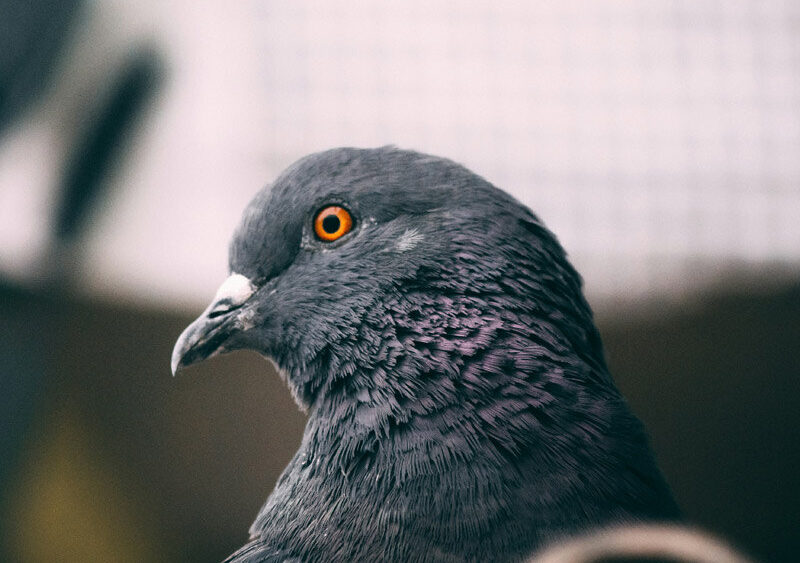
As the pigeons transitioned into a landing phase, the researchers observed a distinct behavioral shift. The birds shifted their eyes inward, a movement known as convergence. This action increases the overlap of their visual fields, triggering stereopsis—the perception of depth through the synthesis of two slightly different images. This is the same principle that allows humans to judge distances accurately. By utilizing stereopsis during the final seconds of a flight, the pigeon is able to precisely calculate its distance from a landing platform, ensuring a controlled and safe touchdown. This finding contradicts earlier theories that suggested birds relied solely on head movements to judge distance; instead, the study confirms that ocular muscles play an active, highly refined role in avian depth perception.
Implications for Aerospace Engineering and Drone Technology
The implications of this research extend far beyond ornithology. For the aerospace and robotics industries, the current limitations of drone navigation are significant. Most contemporary drones rely on fixed-camera systems that provide a static field of view. When these drones maneuver, the image captured can become distorted or lose focus, requiring heavy computational processing to stabilize.
By mimicking the "dynamic gaze" of the pigeon, engineers could revolutionize drone maneuverability. The study suggests three primary areas for technological application:
- Adaptive Optical Tracking: Implementing cameras that mimic the slow-scanning eye movements of the pigeon could allow drones to maintain visual lock on targets more effectively, even during rapid changes in flight direction.
- Depth Perception Algorithms: By integrating software that simulates the pigeons’ convergence behavior, drones could achieve more accurate depth estimation without the need for additional, heavy LiDAR or sonar sensors. This would reduce the weight of the aircraft, thereby increasing battery life and flight efficiency.
- Optimized Optic Flow Processing: Developing onboard computer systems that prioritize visual data based on the pigeon’s "filter" model could reduce the latency currently found in autonomous obstacle avoidance systems.
A New Standard for Biomimetic Robotics
The UBC study serves as a masterclass in biomimicry—the practice of learning from nature to solve human problems. The researchers have effectively mapped how a biological system handles a "tremendous amount of visual information" and distills it into actionable movement.
In the broader context of robotics, the research highlights the necessity of "active sensing." For decades, the trend in robotics has been to increase sensor power and data processing speeds. However, the pigeon suggests that it is not just the volume of data that matters, but the method of acquisition. By moving the "eyes" (or sensors) in harmony with the physical movement of the body, the pigeon achieves a level of reliability and efficiency that current silicon-based systems struggle to match.
Future Directions and Ethical Considerations
As the scientific community continues to explore the intersections of animal behavior and artificial intelligence, the work of Lapsansky, Altshuler, and Wylie provides a critical framework for future study. Understanding how birds stabilize their heads and coordinate ocular motor systems is only the beginning. Further research will likely investigate how these birds account for environmental variables like high-altitude wind currents or low-light conditions.
The researchers note that their work is part of a growing movement to understand how animals acquire information to evaluate their surroundings. By assimilating these biological "tricks" into human technology, we are not only improving our tools but also gaining a deeper appreciation for the complex evolutionary adaptations that define life on Earth. As we move forward, the integration of these findings into hardware and software design will be essential for the next generation of reliable, autonomous systems, whether they are monitoring agricultural crops, assisting in search-and-rescue operations, or navigating urban environments.
The study concludes that the human-avian technological exchange is a rich, ongoing conduit. The pigeon, often overlooked as a common urban resident, has proven itself to be a sophisticated pilot, possessing an internal navigation and visual processing system that remains a gold standard for flight. As engineers and biologists continue to collaborate, the lessons learned from the flight of the pigeon will undoubtedly remain at the forefront of aerial innovation for years to come.
