
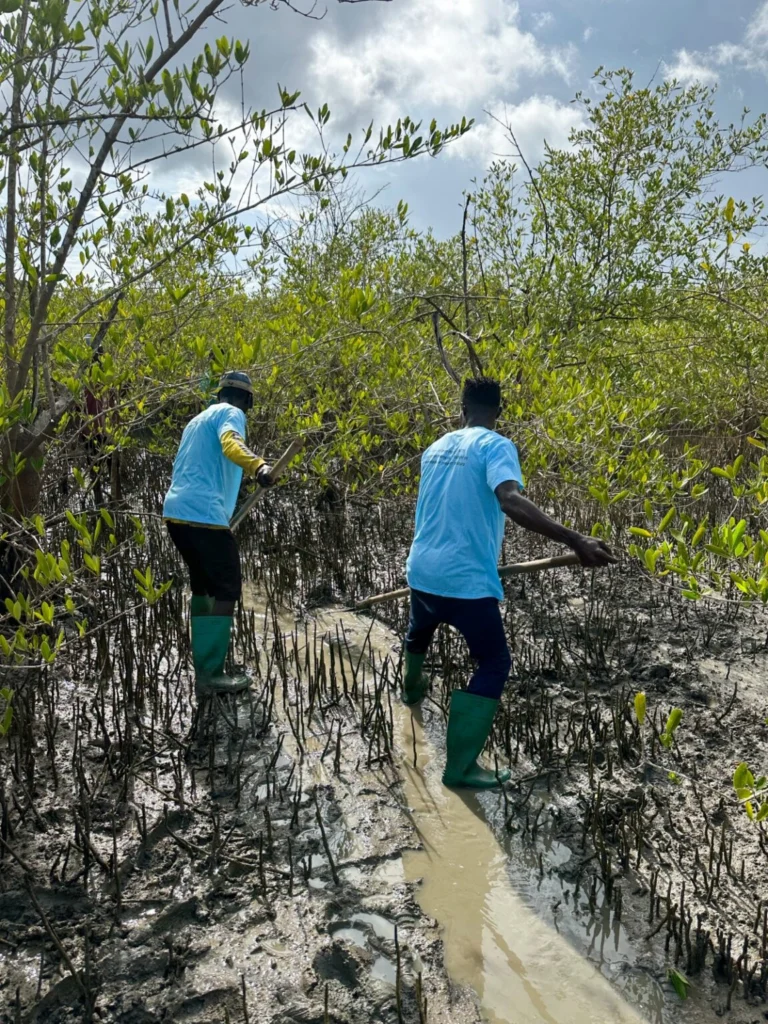
The coastal landscapes of Guinea-Bissau are undergoing a profound ecological transformation as Wetlands International, in close collaboration with local communities, national authorities, and conservation partners, officially launches its 2026 mangrove restoration campaign. Spanning 18 carefully selected sites within the Cantanhez National Park and its surrounding peripheries, this year’s initiative targets the rehabilitation of 270 hectares of degraded coastal wetlands. The ongoing campaign forms a cornerstone of a broader, long-term national strategy aiming to restore 1,000 hectares of vital mangrove ecosystems, ultimately pushing the cumulative area successfully revitalized through the program to an impressive 3,500 hectares.
Mangrove forests represent far more than mere coastal vegetation; they are indispensable ecological anchors for Guinea-Bissau. These dynamic intertidal ecosystems provide critical breeding grounds and nurseries for diverse marine life, directly supporting local fisheries upon which coastal economies depend. Furthermore, dense mangrove canopies and complex root systems act as natural buffers against severe coastal erosion, storm surges, and the intensifying impacts of global climate change. Crucially, they function as prolific carbon sinks, sequestering significant quantities of blue carbon in their biomass and underlying soils, thereby playing a localized yet vital role in global climate mitigation efforts.
A Paradigm Shift: Embracing Community-Based Ecological Mangrove Restoration
Departing from conventional, labor-intensive tree-planting methods that historically suffered from high mortality rates due to unaddressed environmental stressors, the 2026 campaign relies on Assisted Natural Regeneration (ANR), widely recognized as Community-Based Ecological Mangrove Restoration (CBEMR). This science-based methodology prioritizes working in harmony with natural ecological processes rather than imposing artificial solutions onto damaged landscapes.

At the heart of the CBEMR approach is a rigorous diagnostic phase designed to identify and rectify the root causes preventing natural mangrove recovery. In the vast majority of degraded West African coastal sites, the primary obstacle is the disruption of natural tidal hydrology—often caused by poorly planned historical infrastructure, abandoned agricultural practices, or anthropogenic barriers that block the free flow of saltwater and freshwater. By strategically removing these hydrological bottlenecks, restoration teams facilitate the spontaneous return of pioneer mangrove species, such as Avicennia, allowing the ecosystem to harness its inherent regenerative capacity.
The operational phase of the 2026 campaign, which commenced on August 27 and is scheduled to run through September 10, was inaugurated through high-visibility launch events across three key settlements: Cassumba in Cacine, Kauntchintchi in Yemberem, and Weldekeia Wangha. These gatherings served as practical field laboratories where community members, national park rangers, and environmental scientists demonstrated hydrological intervention techniques directly on-site. These immersive sessions fostered deep community engagement, enabling residents to analyze the historical drivers of mangrove degradation in their localities and master the monitoring protocols essential for long-term ecological health.
Strict Site Selection and Collaborative Stewardship
A defining characteristic of Guinea-Bissau’s current restoration drive is its uncompromising commitment to precision and social equity in site selection. Not every degraded coastal patch is deemed suitable for immediate intervention. To qualify for the Wetlands International program, targeted plots must fulfill a strict set of ecological and socioeconomic criteria.
Primarily, the selected zones consist of former rice fields on tidal wetlands or deforested areas that have been abandoned from agricultural use for a minimum of two years and show little to no capacity for unassisted natural recovery. Furthermore, candidate sites must exhibit clear signs of anthropogenic hydrological disruption, be entirely free from overlapping restoration initiatives, and remain clear of active land tenure or resource-use disputes.

Crucially, the principle of Free, Prior, and Informed Consent (FPIC) governs every phase of the project. Restoration proceeds exclusively in areas where local landowners and resource users have been fully consulted and integrated as active decision-makers from the outset. Following the initial launch demonstrations, empowered community members—supported by local non-governmental organizations, national park staff, and Wetlands International technicians—take charge of the continuous implementation, site maintenance, and biological monitoring.
Chronology and Operational Timeline of the 2026 Campaign
The execution of the 2026 restoration initiative follows a meticulously structured timeline designed to maximize ecological efficiency during the optimal seasonal window:
- Pre-Campaign Phase (June – July 2026): Technical teams conduct comprehensive hydrological surveys, soil salinity assessments, and community consultations across potential sites in the Cantanhez National Park region. Sites meeting all ecological and social criteria are formally mapped and prioritized.
- Official Launch and Demonstrations (August 27 – August 30, 2026): Public mobilization events take place in Cassumba (Cacine), Kauntchintchi (Yemberem), and Weldekeia Wangha. Field technicians demonstrate canal-clearing and hydrological restoration techniques to local stakeholders.
- Active Field Interventions (August 31 – September 10, 2026): Community-led teams execute physical restoration works across the 18 designated sites, focusing on the removal of tidal blockages, clearing of suffocating succulent vegetation like Sesuvium, and re-establishing natural water channels across the targeted 270 hectares.
- Post-Intervention Monitoring Phase (September 2026 Onward): Continuous scientific tracking of vegetation density, soil recovery parameters, salinity gradients, and fauna return is initiated to evaluate the efficacy of the applied CBEMR techniques and inform future adaptive management strategies.
Multi-Stakeholder Collaboration and Institutional Support
The immense scale and complexity of the Guinea-Bissau mangrove restoration initiative necessitate a robust framework of national and international partnerships. The program is spearheaded jointly with the Ministry of the Environment, Biodiversity and Climate Action, alongside the Institute for Biodiversity and Protected Areas (IBAP). Operational execution on the ground is heavily bolstered by national civil society organizations and local networks, including Proativos, REDE AGIR, AJUTS, and Face the Future.
Strategic alignment is further maintained with prominent conservation bodies such as the BioGuinea Conservation Trust Fund, the International Union for Conservation of Nature (IUCN), the Regional Partnership for Coastal and Marine Conservation (PRCM), the World Bank’s West Africa Coastal Areas Management Program (WACA), and PLANTA, the national mangrove platform. Financial backing and philanthropic support for the ongoing conservation efforts are generously provided by international institutional donors Greenchoice and DOB Ecology.

Broader Implications and Socioeconomic Impacts
The implications of the 2026 restoration campaign extend far beyond the immediate boundaries of the 18 project sites in Cantanhez National Park. By fusing rigorous ecological science with community-led stewardship, the initiative addresses the intertwined crises of biodiversity loss and rural economic vulnerability in West Africa.
Ecologically, the return of healthy mangrove belts fortifies Guinea-Bissau’s coastal resilience against the accelerating threats of sea-level rise and severe weather events driven by global climate change. Economically, the revitalization of these habitats directly revitalizes artisanal fishing stocks and secures sustainable livelihoods for rural populations who depend on the coastal zone for food security and income generation. Ultimately, by embedding ecological knowledge and ownership firmly within local communities, Guinea-Bissau is establishing a replicable, resilient model for coastal conservation across the entire African continent.
