
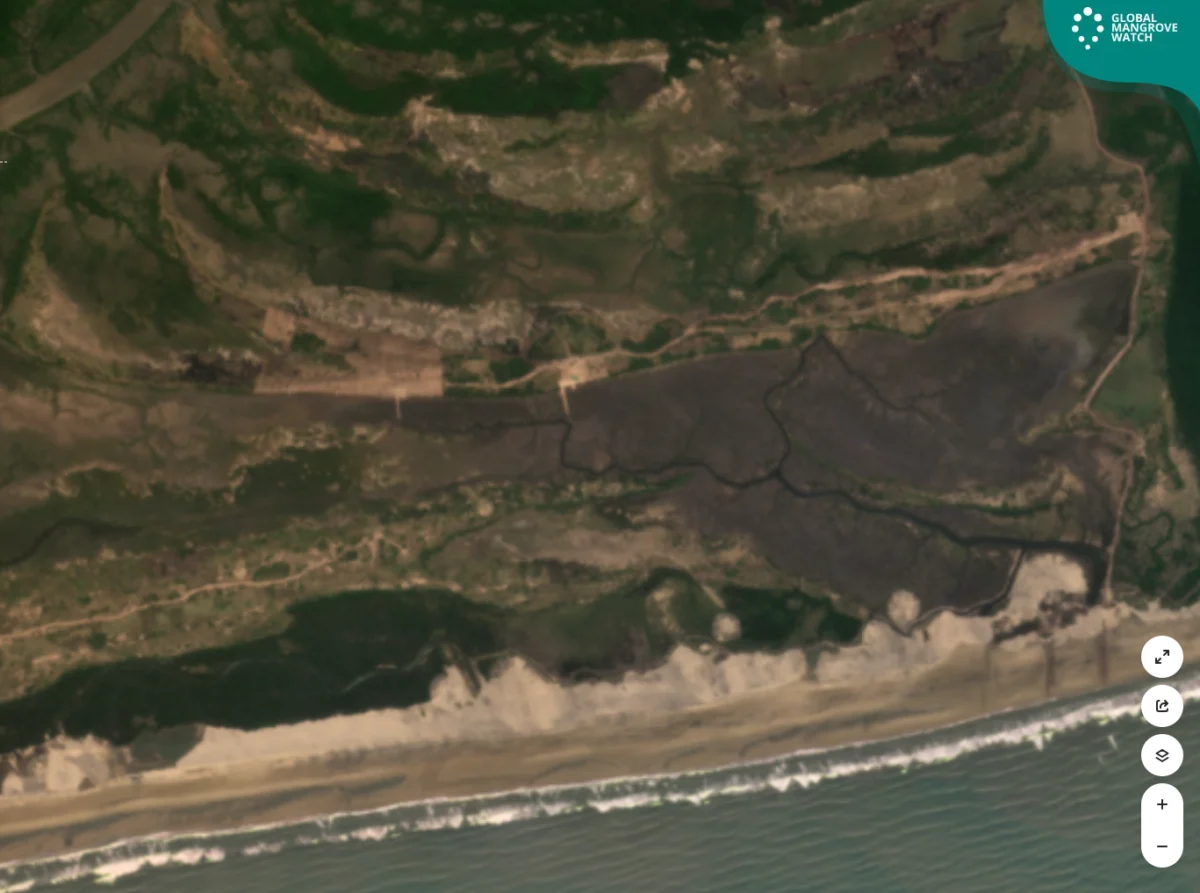
Mozambique’s globally significant coastal ecosystems are facing an escalating environmental crisis following the revelation of substantial mangrove habitat destruction within the Zambezi Delta. Recent high-resolution satellite analysis, powered by Global Mangrove Watch (GMW) alerts, has exposed alarming rates of canopy loss and hydrological disruption in one of Africa’s most expansive and ecologically vital mangrove forests. Investigative findings recently published by Mongabay have directly linked this severe environmental degradation to heavy sand mining operations conducted by a leading Chinese mining enterprise operating in the region.
The findings have intensified scrutiny over the extraction of marine and coastal sand—currently the world’s second-most exploited natural resource after water. Conservationists, environmental scientists, and international bodies are calling for immediate policy interventions to balance industrial development with the preservation of irreplaceable blue carbon ecosystems that safeguard both local livelihoods and global climate stability.
Chronology of a Developing Ecological Crisis
For decades, Mozambique’s coastal ecosystems have absorbed immense pressures from anthropogenic activities and extreme weather events. The historical timeline of environmental threats to the region outlines a compounding series of challenges that have left these natural buffers increasingly vulnerable:
- 2004: In recognition of its extraordinary ecological value, the Zambezi Delta is officially designated as a Wetland of International Importance under the Ramsar Convention, joining an elite global network of protected hydrological sites.
- 2010–2020: Mozambique experiences heightened vulnerability to severe meteorological events, enduring successive destructive tropical cyclones and extensive inland flooding that degrade coastal margins, while localized resource extraction, including firewood harvesting, artisanal logging, and urban expansion, steadily chips away at fringe mangrove forests.
- 2020–2024: Commercial aquaculture developments, saltpan expansions, and regional port construction projects introduce industrial-scale pressures to coastal zones, altering natural tidal flows and sediment transport across the river delta.
- August 2026: Investigative reporting published by Mongabay reveals that industrial heavy sand mining operations—spearheaded by a prominent Chinese resource extraction firm—are actively driving large-scale mangrove habitat loss in the Delta.
- September 2026: Global Mangrove Watch publishes detailed remote-sensing alerts and satellite imagery documenting the acute degradation of the Zambezi Delta’s intricate hydrological network, prompting international calls from organizations like Wetlands International for urgent mitigation and remediation strategies.
The Ecological and Economic Value of the Zambezi Delta
The Zambezi Delta represents a cornerstone of Southern Africa’s biodiversity and coastal geography. Situated on the East African coast, Mozambique commands the largest extent of mangroves within the Western Indian Ocean region, housing approximately 10 percent of the entire African continent’s mangrove biomass. Within Mozambique, the Zambezi Delta stands out as the country’s single largest continuous mangrove area, encompassing roughly 16 percent of the nation’s total mangrove coverage.
Beyond its physical expanse, the Delta functions as a critical ecological powerhouse. Ecologically, it supports a diverse array of megafauna and wildlife, providing a protected habitat for large mammals such as African elephants, hippopotamuses, lions, leopards, and African buffalo. Furthermore, the wetlands sustain massive concentrations of waterbirds—including vulnerable species like grey crowned cranes, pink-backed and white-backed pelicans, flamingos, and various herons—alongside marine life ranging from humpback and bottlenose dolphins to commercially vital fish and shellfish stocks.
Economically and socially, the value of these wetlands is immense. Approximately 400,000 coastal residents in Mozambique rely directly on mangrove-associated fisheries for their daily sustenance and economic survival. Economic valuations estimate that Mozambique’s mangroves generate upward of $7 billion in annual net benefits for the national economy, acting as a natural financial and nutritional anchor for local communities.
Climate Mitigation, Adaptation, and the Blue Carbon Imperative
As global carbon emissions continue to test planetary boundaries, the preservation of Mozambique’s coastal wetlands has taken on international significance. Mangroves are among the most efficient carbon sinks on Earth, trapping carbon within their dense above-ground root systems and deep, anaerobic underwater soils at rates up to four times higher than terrestrial tropical rainforests.
Data indicates that Mozambique’s extensive mangroves sequester more than one-third—specifically 39 percent—of the nation’s total annual fossil fuel emissions, positioning the Zambezi Delta as a globally critical "blue carbon hotspot." In addition to carbon sequestration, the dense labyrinth of mangrove roots serves as a formidable natural defense mechanism against escalating climate risks, shielding vulnerable coastal settlements from the devastating impacts of rising sea levels, severe coastal erosion, and intensifying tropical storm surges.

The Unregulated Global Sand Crisis
The destruction uncovered in the Zambezi Delta highlights a broader, systemic global crisis regarding the extraction of sand. Following water, sand is the most heavily consumed natural resource on the planet, serving as an irreplaceable ingredient in global construction, infrastructure development, and industrial manufacturing.
However, marine and coastal sand extraction frequently occurs within a regulatory vacuum. Environmental experts emphasize that there are currently few, if any, binding global standards governing how sand is mined from ecologically sensitive marine and transitional zones. The extraction processes often dredge riverbeds, alter coastal sediment budgets, and physically smother or uproot foundational marine vegetation.
In the case of the Zambezi Delta, heavy sand mining has directly disrupted delicate hydrological pathways, starving downstream mangrove forests of the precise balance of freshwater, saltwater, and nutrient-laden sediment they require to survive. When natural tidal flows are physically blocked or diverted by industrial operations, large swaths of mangroves rapidly desiccate, die off, and lose their structural integrity.
Expert Recommendations and Mitigation Pathways
Environmental organizations, including Wetlands International, stress that industrial extraction and ecological preservation do not inherently have to be mutually exclusive, provided that mandatory environmental safeguards and strict operational oversight are enforced. When sand mining projects are deemed legally unavoidable by national authorities, mining corporations must be mandated to consult directly with local hydrologists, ecologists, and environmental experts to determine the least invasive extraction methodologies.
In the Zambezi Delta, conservation scientists suggest that targeted restorative interventions—such as mechanically unblocking restricted tidal channels, removing accumulated industrial dredge spoil, or engineering alternative feeder canals—could successfully restore the natural flow of water. Reestablishing proper hydrological connectivity is often sufficient to revive stressed or moderately degraded mangrove ecosystems, jumpstarting natural regeneration processes.
Furthermore, conservation advocates argue that the true, long-term economic and environmental value of intact mangroves vastly outweighs the short-term, localized financial gains extracted through destructive mining practices. Disrupting these ecosystems not only decimates regional biodiversity but actively undermines national climate adaptation frameworks, international commitments under the Paris Agreement, and domestic disaster-risk reduction strategies.
The Technological Role of Global Mangrove Watch
Tracking and addressing environmental infractions in remote, expansive ecosystems like the Zambezi Delta has historically posed a significant challenge for regulatory authorities and independent watchdogs. The deployment of advanced technological monitoring platforms such as Global Mangrove Watch has fundamentally transformed this dynamic.
GMW operates as an accessible online remote-sensing platform that delivers near real-time, high-resolution spatial data tracking changes to mangrove habitats worldwide. By integrating satellite radar and optical imagery with granular data on soil conditions, coastal topography, and hydrological dynamics, the platform equips park managers, coastal authorities, policymakers, and civil society organizations with verifiable evidence of habitat loss.
This transparency allows governments and international bodies to pinpoint the precise drivers of deforestation and degradation—whether caused by illegal logging, aquaculture expansion, or heavy industrial mining—and track the progress of ongoing ecological restoration initiatives. As pressures on global coastlines mount, tools like GMW ensure that environmental accountability can be maintained across remote frontiers, helping policymakers embed robust mangrove protection into broader sustainable development and climate resilience agendas.
