
The tropical rainforests of Costa Rica are world-renowned for their breathtaking biodiversity, serving as a sanctuary for countless species of flora and fauna. Among the most iconic residents of this lush ecosystem is the sloth, a creature uniquely adapted for an arboreal existence high within the forest canopy. However, as human infrastructure encroaches deeper into natural habitats, the traditional pathways of these slow-moving mammals have increasingly intersected with modern hazards. Chief among these threats are uninsulated electrical power lines that crisscross the landscape, transforming what should be a safe highway of branches into a lethal grid. While humans can be taught to recognize and avoid the invisible dangers of electrical current, wildlife possesses no such comprehension, leaving arboreal animals catastrophically vulnerable to high-voltage shocks and devastating falls.
The scale of this crisis is starkly illustrated by official data released by Costa Rica’s Ministry of Environment and Energy (MINAE). In 2024 alone, electricity distribution companies reported a staggering 6,703 cases of animals electrocuted on power lines nationwide. This figure translates to an average of more than 18 wildlife electrocutions every single day. For conservation organizations operating on the front lines, such as the Toucan Rescue Ranch (TRR), these numbers represent a relentless daily battle to rescue, rehabilitate, and release the survivors of human-wildlife infrastructure conflicts.
The human-wildlife interface in Costa Rica has grown increasingly fraught over the past several decades. As rural areas develop and urban centers expand, utility poles and overhead lines have proliferated, often cutting directly through primary and secondary forests. For sloths, anteaters, monkeys, and other arboreal species, these cables frequently appear indistinguishable from lianas and branches. When a sloth attempts to traverse a power line, its body can complete a circuit between two lines or a line and a grounded structure, resulting in massive electrical trauma. Alternatively, the shock causes the animal to lose consciousness and its grip, sending it plummeting to the forest floor from heights that can easily exceed 10 meters. The combination of high-voltage burns and severe blunt-force trauma from falls creates a complex clinical picture that challenges even the most experienced wildlife veterinarians.
Data compiled by rescue and rehabilitation facilities underscore a troubling demographic reality: sloths are disproportionately represented among the victims of power line accidents. Over a recent two-year evaluation period at the Toucan Rescue Ranch, sloths accounted for more than 80 percent of all electrocution cases treated at the facility. This disproportionate impact stems directly from their biological traits. Moving slowly and deliberately, sloths lack the rapid escape responses of birds or agile primates. Furthermore, when startled or injured, their instinctual reaction is often to curl up or firmly grasp whatever is closest—which, on a power line, exacerbates the severity of the electrical contact rather than mitigating it.
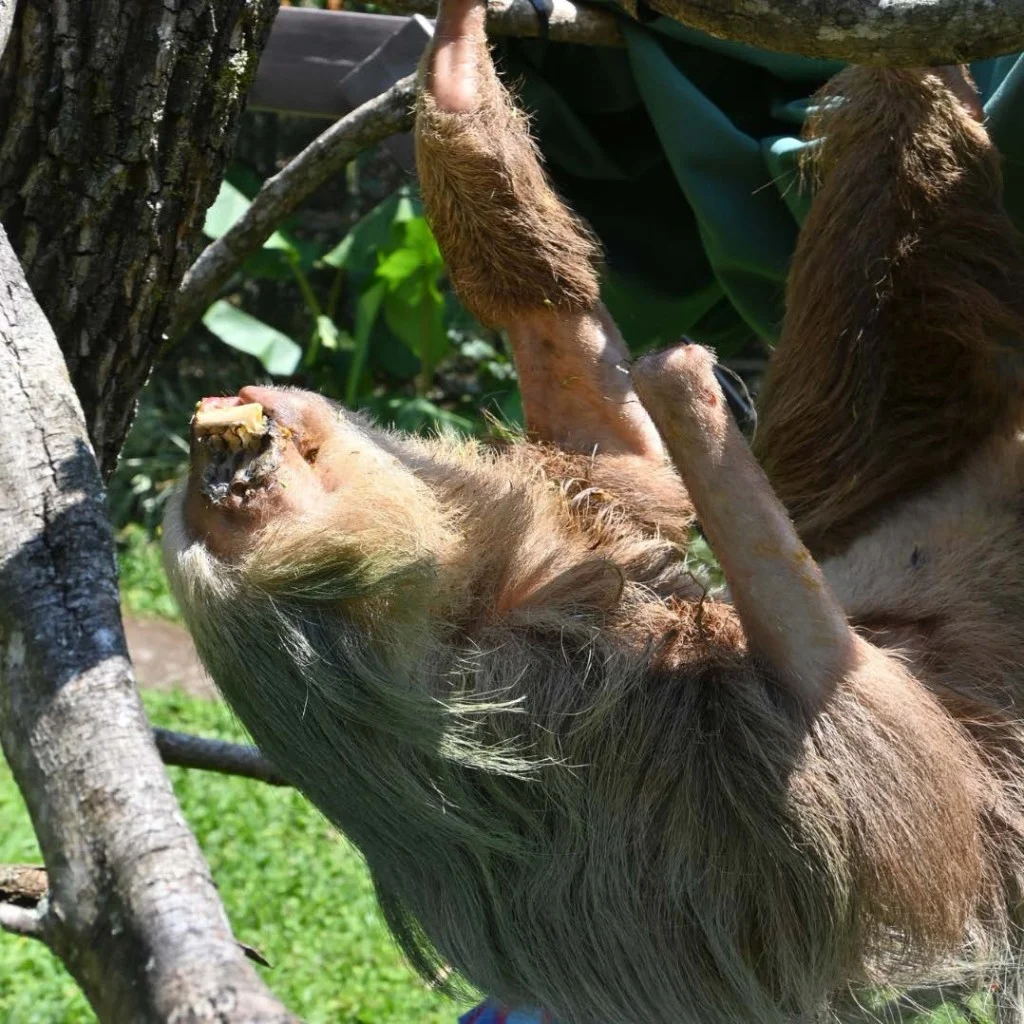
The journey of recovery for an electrocuted sloth is arduous, expensive, and emotionally taxing for veterinary teams. A prime example of this reality is the case of Champ, a two-fingered sloth rescued in the province of Limón. Discovered by a local police officer in Guácimo, Champ had suffered severe burns across his face, body, and limbs, alongside significant trauma to one of his eyes. What should have been a routine transit through the forest canopy had instead resulted in catastrophic injuries. Upon admission to the clinic at the Toucan Rescue Ranch’s release site, veterinary specialists determined that the damage to one of Champ’s hands was so extensive that necrosis had set in, necessitating a partial amputation to save his life.
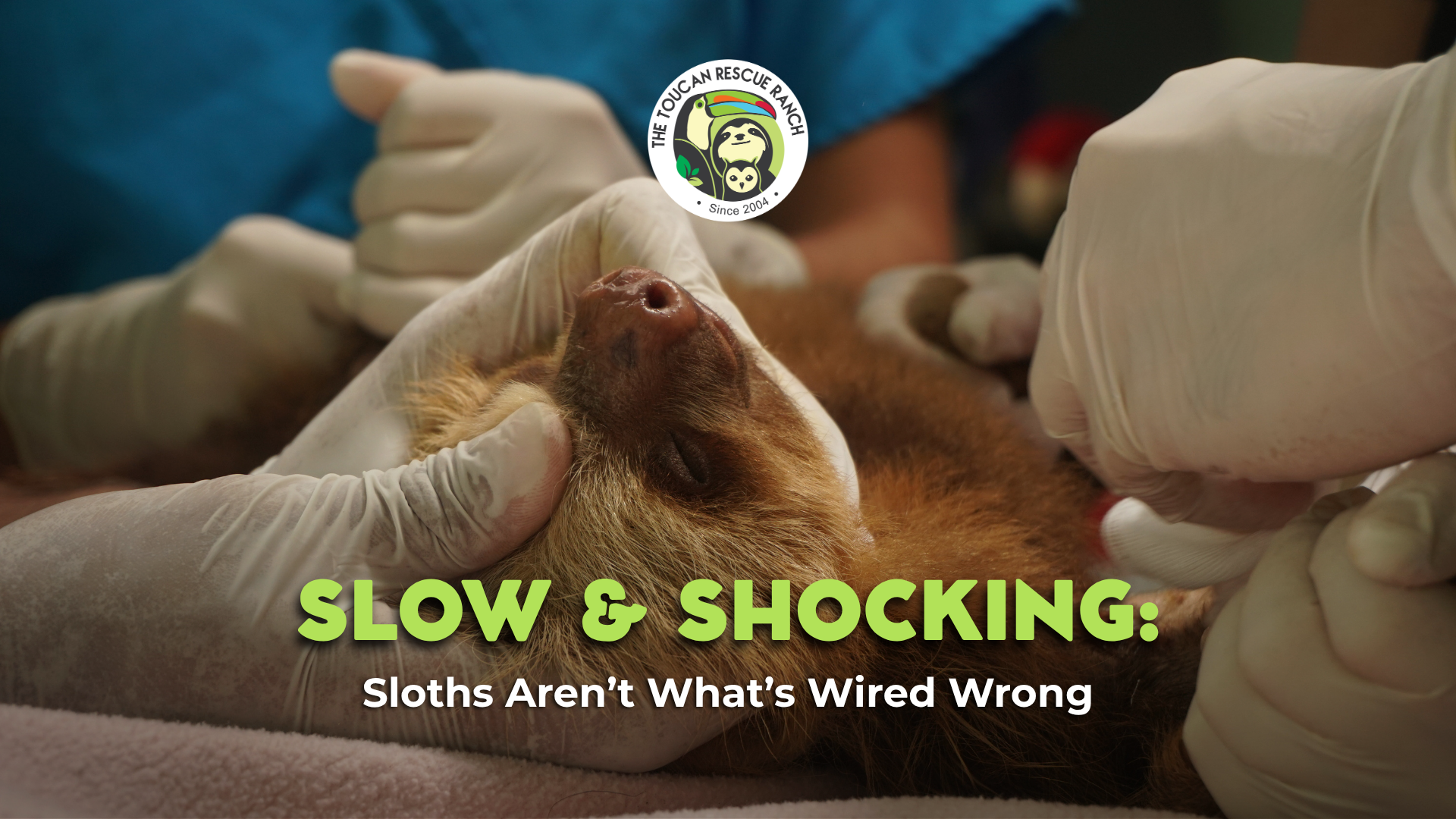
Cases like Champ’s highlight the profound hidden costs borne by wildlife rescue organizations. Specialized medical care for electrical burns requires intensive pharmacological intervention, specialized wound management, long-term rehabilitation enclosures, and customized diets. Funding these operations is a constant challenge. Thanks to the generosity of international donors and local supporters, the rescue ranch successfully raised $1,380 specifically to offset the extraordinary medical expenses incurred during Champ’s treatment and rehabilitation. Yet, for every individual animal fortunate enough to be discovered, reported, and transported to a specialized facility, conservationists estimate that hundreds more perish silently in the forest canopy, their deaths unrecorded and unassisted.
Recognizing the gravity of the situation, various stakeholders—including environmental NGOs, government ministries, and private utility companies—have sought collaborative solutions to mitigate the crisis. A cornerstone of these mitigation efforts involves the installation of wildlife bridges and anti-climbing devices on utility poles. These physical barriers prevent animals from ascending poles into the danger zone, while insulated cables reduce the risk of completed circuits should contact occur. Facilities like the Toucan Rescue Ranch have increasingly served as testing grounds and observation posts, providing utility providers with empirical data on the efficacy of these structural interventions. Through this symbiotic relationship, engineers and biologists can evaluate whether newly deployed anti-climbing technology successfully deters local fauna before scaling implementation nationwide.
The timeline of regulatory and societal response has accelerated in recent years, marked by a pivotal policy shift in mid-2026. In June of that year, the Costa Rican government officially rolled out a comprehensive national strategy specifically designed to halt wildlife electrocutions. This landmark initiative established stringent mandates for electricity providers across the country, requiring them systematically to insulate high-risk power lines in critical wildlife corridors. Furthermore, the strategy institutionalized formal cooperation frameworks between commercial utility companies and authorized wildlife rescue and rehabilitation centers. By bridging the gap between corporate infrastructure management and grassroots conservation expertise, the national strategy aims to systematically drive down the daily mortality statistics that have plagued the country’s biodiversity for decades.
Beyond structural modifications and government policy, public education remains a vital pillar in the ongoing effort to reduce wildlife trauma. Conservationists emphasize that the public acts as the primary early-warning and response network. Educating citizens on how to identify injured wildlife, understanding the strict protocols required when encountering a distressed animal, and knowing whom to contact can mean the difference between life and death for a victim of electrocution. Moreover, growing public awareness places necessary pressure on corporations and local municipalities to prioritize environmental safety standards and ensure that field personnel receive adequate training in wildlife handling and mitigation protocols.
While the challenges facing Costa Rica’s arboreal populations remain formidable, the implementation of the national strategy and the unwavering dedication of rescue personnel offer a foundation for cautious optimism. The path forward requires a sustained commitment from all sectors of society—from government regulators and utility executives to everyday citizens and international donors. Each insulated cable installed, every anti-climbing device deployed, and every rescued sloth nursed back to health represents a tangible step toward a more harmonious coexistence between human development and the natural world. As conservation efforts continue to mature, the ultimate objective remains clear: to ensure that the iconic canopies of Costa Rica can once again be navigated safely by the unique wildlife that calls them home.
