
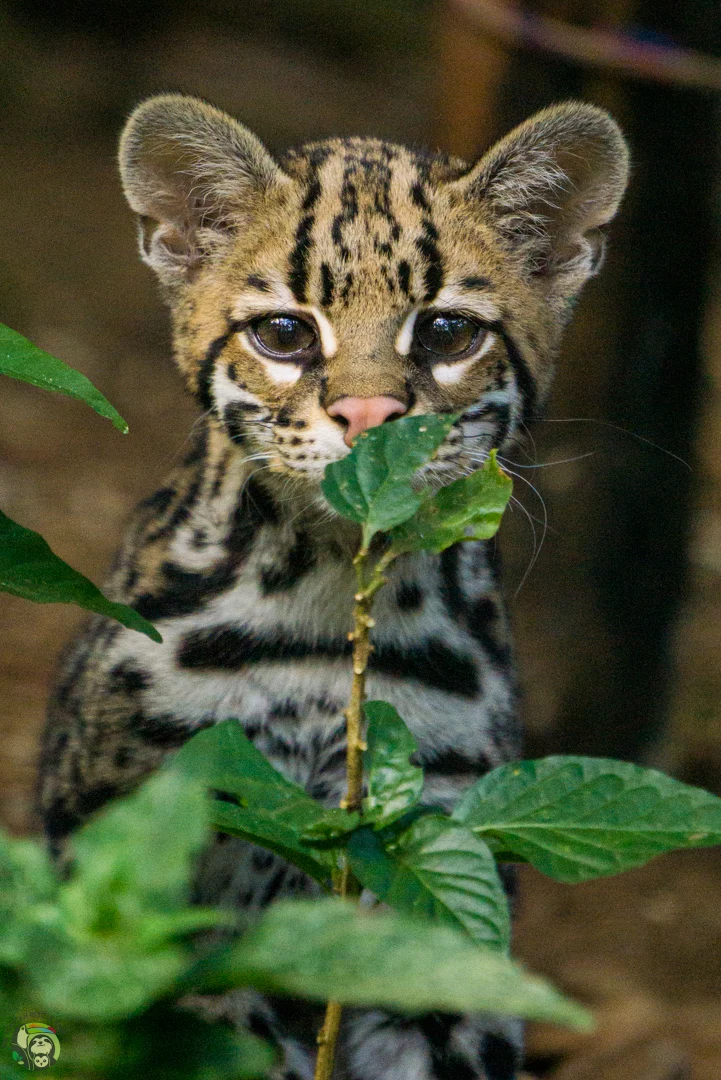
Visitors to zoos, wildlife sanctuaries, and rescue centers occasionally observe an animal—such as a jaguar, ocelot, bear, or wolf—walking back and forth endlessly along a fixed, invisible track. To the untrained eye, this repetitive motion might resemble restless energy, boredom, or even an eagerness to move. However, animal behaviorists, zoologists, and wildlife rehabilitators recognize this phenomenon as "pacing," a classic manifestation of stereotypic behavior. Far from being a benign quirk, pacing serves as a vital behavioral indicator that something is fundamentally amiss in an animal’s captive environment, highlighting deep-seated psychological stress and unfulfilled natural instincts.
At institutions like the Toucan Rescue Ranch, decoding animal behavior is a foundational element of daily operations. Because wild animals cannot communicate their distress through human language, their physical movements, vocalizations, feeding habits, and resting postures form a complex narrative of internal well-being. Among these expressions, pacing is one of the most critical warning signs. Evaluating this behavior requires a comprehensive understanding of what pacing is, why it develops, how to distinguish pathological habits from healthy anticipation, and what modern sanctuaries are doing to mitigate the psychological tolls of captivity.
Defining Stereotypic Behavior in Wildlife
Pacing is formally classified as a stereotypic behavior—a repetitive, invariant, and seemingly purposeless movement performed by an animal over and over again. In zoological settings, this typically materializes as an animal repeatedly walking the exact same perimeter along a fence line, spinning endlessly in circles, swaying from side to side, or tracing a rigid, unchanging route within its enclosure.
These behaviors are exceedingly rare in wild populations operating within their natural habitats, yet they are notoriously common among animals placed in captivity. The root cause often lies in the fundamental mismatch between an artificial enclosure and the vast, complex, and unpredictable nature of a wild ecosystem. Apex predators and wide-ranging mammals—including jaguars, pumas, bears, wolves, and smaller carnivores like ocelots—evolved to navigate enormous territories spanning many square kilometers. Modern enclosure design, despite decades of architectural and biological advancements, faces an inherent limitation: it is nearly impossible to simultaneously ensure absolute captive safety while replicating the boundless freedom of a natural range.
Consequently, wildlife experts emphasize environmental enrichment as a non-negotiable component of captive animal management. Enrichment introduces physical structures, novel scents, puzzle feeders, and variable terrain designed to stimulate an animal’s cognitive faculties and mimic natural challenges.
The Psychological Etiology of Pacing
Contrary to common misconceptions, pacing is not an innate trait that animals are born with. Instead, it develops progressively over time as a direct neurobiological response to chronic stress, frustration, and the prolonged inability to execute natural behaviors.
In the wild, an animal’s daily routine is consumed by vital survival tasks: patrolling vast territories, establishing and defending home ranges, navigating intricate social hierarchies, hunting or foraging for prey, and responding to a constantly changing sensory landscape. When an animal is introduced to a reduced space, these innate behavioral drives do not simply switch off. An ocelot or a big cat programmed by millennia of evolution to hunt cannot simply deactivate its predatory drive because a manufactured diet is conveniently provided in a bowl.
When these powerful behavioral motivations encounter insurmountable physical barriers, the animal experiences chronic frustration. Neuroscientists and ethologists have established that stereotypic behaviors like pacing share neural pathways with human anxiety and obsessive-compulsive disorders. Interestingly, behavioral studies suggest that the act of pacing may provide a temporary, minor measure of psychological relief—acting as an involuntary self-soothing mechanism to cope with overwhelming sensory deprivation. Nevertheless, it remains an outward symptom of an unmet internal need.
One of the most profound challenges in wildlife rehabilitation is the persistence of these behaviors. Once stereotypic pacing becomes deeply ingrained in an animal’s neural pathways, it is exceptionally difficult to reverse. Even when a distressed animal is transferred from a substandard holding facility to a vastly superior, highly enriched habitat, pacing can persist for years out of sheer habit. This reality underscores why early intervention, sophisticated enclosure design, and proactive enrichment programs are paramount; preventing the onset of pacing is exponentially more effective than attempting to eliminate it once established.
Diagnostic Indicators: What Pacing Communicates
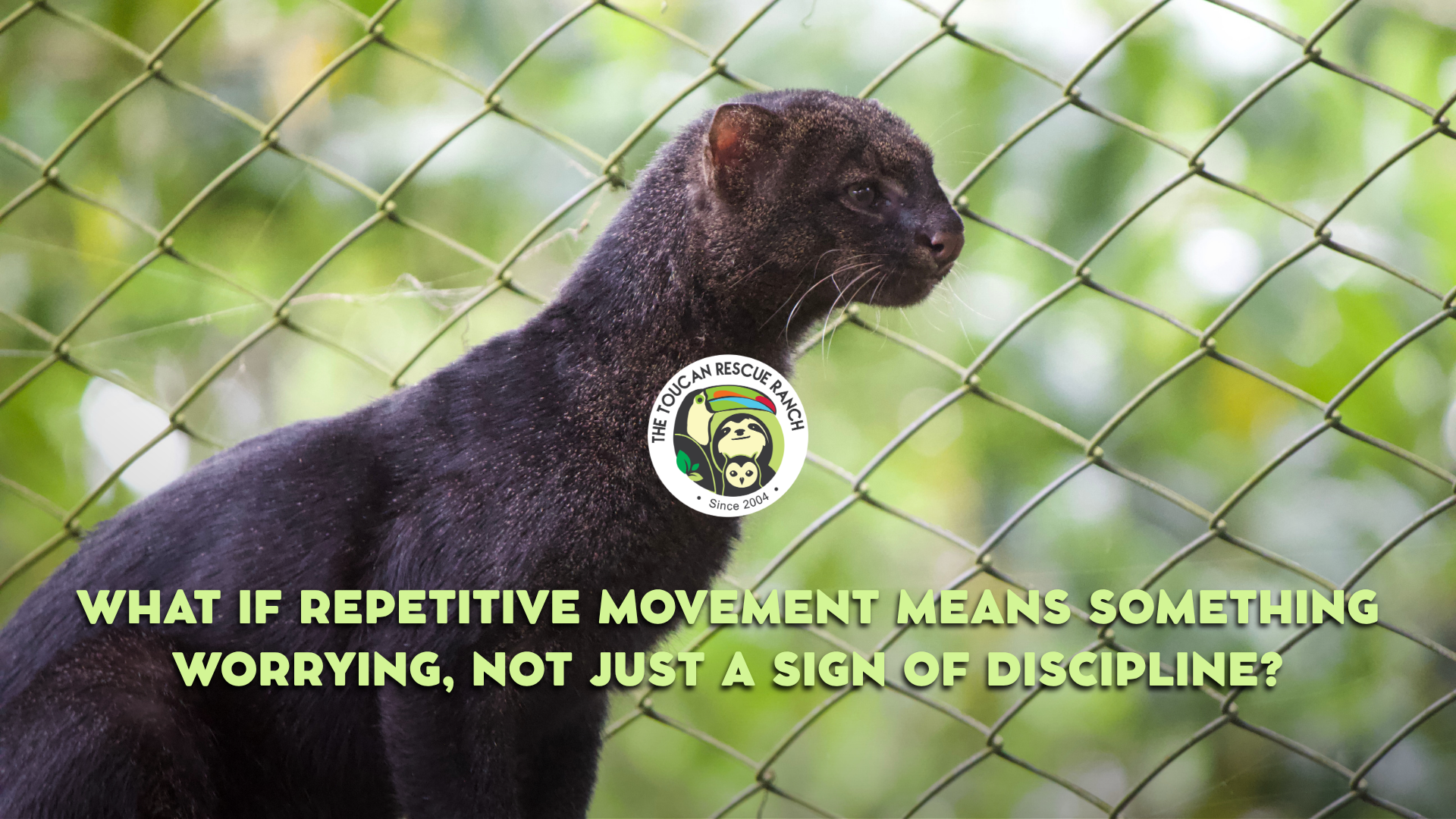
When wildlife caretakers observe chronic pacing, the behavior acts as a diagnostic tool pointing toward specific environmental or psychological deficits.
First, it often indicates that an enclosure is physically inadequate—either too small, too barren, or lacking structural complexity. Wildlife species require multi-dimensional environments that incorporate vertical climbing structures, dense foliage, diverse substrates, pools of water, and secluded areas where animals can retreat entirely from public view. Without these elements, an enclosure remains an artificial box rather than a functional habitat.
Second, chronic pacing can signal profound social isolation or psychological trauma. Many social species suffer immensely when removed from conspecifics or separated from adult role models during critical developmental stages.
Third, pacing highlights the complete frustration of ecologically driven behaviors. When predatory, foraging, or exploratory drives are persistently thwarted with no constructive outlet, stereotypic movement fills the vacuum, substituting natural motion with a sterile, repetitive loop.
Distinguishing Pathology from Healthy Anticipation
A critical responsibility for professional wildlife rehabilitators is differentiating between pathological stereotypic pacing and normal, healthy anticipatory behavior. Not all repetitive movement is a sign of distress.
Many healthy animals exhibit pacing, rapid walking, or excited repetitive movements immediately prior to feeding time. This phenomenon, known in ethology as anticipatory behavior, is documented across a broad phylogenetic spectrum, ranging from large felids and raptors to primates and small carnivores. Functionally, it is the behavioral equivalent of a domestic dog spinning in excited circles upon hearing the rattle of its food bowl.
This healthy form of anticipation possesses distinct characteristics. It is invariably brief, tightly synchronized with a predictable daily event (such as the arrival of caretakers with meals), and accompanied by positive physiological indicators of arousal, including bright, alert eyes, vocalizations, and an upright, engaged posture. Crucially, this behavior ceases immediately once the animal receives its food, after which it returns to a calm, species-typical routine. It does not recur persistently throughout the day in the absence of a stimulus.
The definitive dividing line rests on context, frequency, and duration. Feeding-time anticipation is a goal-directed, transient expression of healthy excitement. Chronic stereotypic pacing, conversely, occurs continuously throughout the day, persists independently of environmental events, and tends to escalate in severity over time in the absence of corrective intervention.
The Role of Institutional and Community Intervention
Addressing the root causes of pacing requires continuous observation, behavioral assessment, and targeted environmental enhancement. Modern wildlife sanctuaries prioritize these metrics by investing heavily in customized enrichment workshops, species-appropriate social groupings, and highly attentive husbandry staff who monitor the psychological states of every resident.
Furthermore, capital improvements to infrastructure play a decisive role in animal welfare. Constructing advanced, science-backed enclosures—such as state-of-the-art habitats designed for species like Grisons, ocelots, and small wild cats—requires substantial financial resources, cross-sector collaboration, and community participation. Corporate volunteering initiatives and symbolic adoption programs frequently bridge the gap, enabling the construction of expansive, highly enriched environments that directly suppress the emergence of stress-induced behaviors.
Ultimately, rehabilitating rescued wildlife requires addressing both physiological health and psychological peace. By replacing barren enclosures with dynamic, complex ecosystems and ensuring that animals have constructive outlets for their natural instincts, wildlife sanctuaries can successfully mitigate the shadows of captivity. Through sustained vigilance, scientific enrichment, and dedicated public support, institutions continue to refine the standard of care, ensuring that rescued animals can truly thrive in their new surroundings.
