
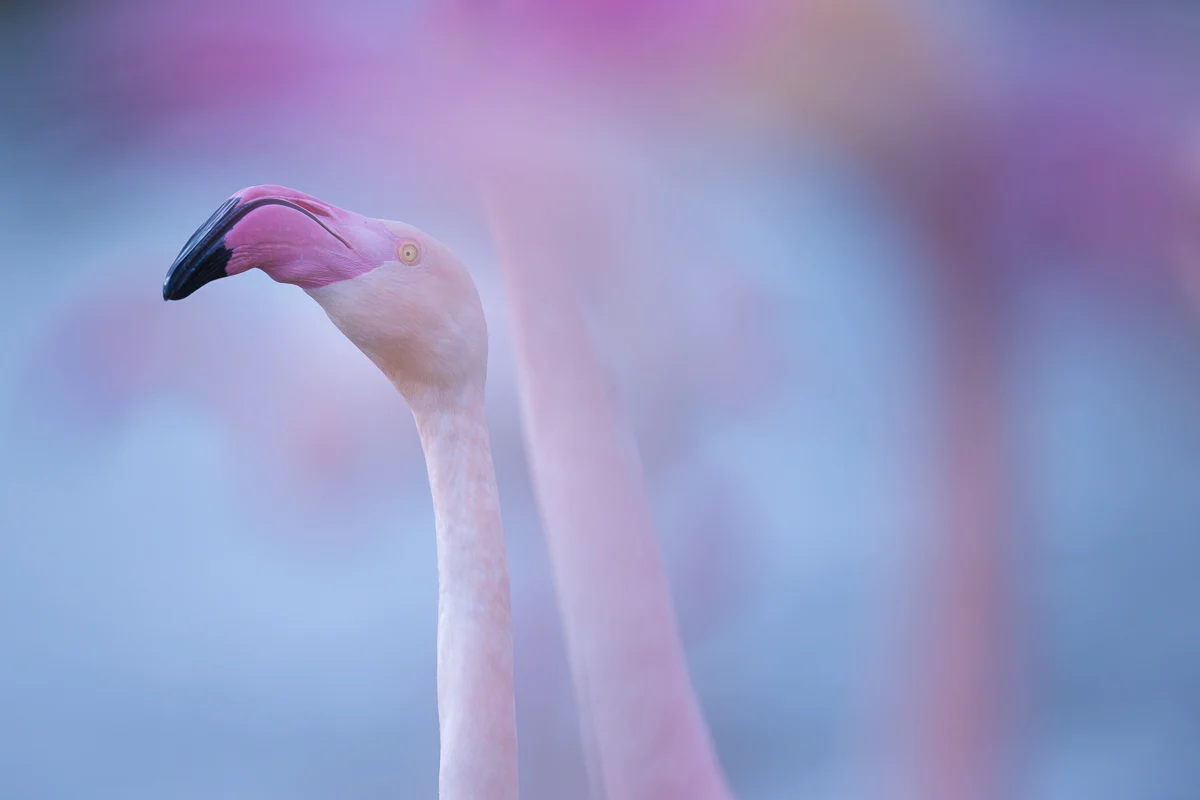
The evolution of contemporary wildlife photography has increasingly shifted away from sterile, documentary-style portraiture toward an impressionistic medium that prioritizes mood, environmental context, and emotional resonance. Among the techniques driving this aesthetic transformation is the intentional incorporation of foreground blur—a method wherein photographers deliberately interpose natural elements between their camera lens and the primary subject. By rendering these intervening objects out of focus, practitioners create soft, luminous veils that frame wildlife within its natural habitat without diminishing the subject’s visual prominence. Far from being a mere technical flaw, controlled foreground diffusion has emerged as a sophisticated storytelling device, offering a painterly approach that bridges the gap between scientific observation and fine art.

Understanding the Mechanics and Aesthetic Impact of Foreground Blurs
At its technical core, foreground blurring relies on shallow depth of field and object placement relative to the focal plane. When an element such as a branch, leaf, blade of grass, or patch of snow sits mere inches from the camera element while the autofocus locks onto a subject meters away, the foreground object dissolves into a translucent wash of color and light. According to wildlife conservation photographers and optical analysts, this technique alters the viewer’s psychological entry point into an image. Rather than confronting the subject immediately, the human eye is guided along a curated visual pathway, moving past environmental cues that establish scale, atmosphere, and behavioral context.

Industry surveys and photographic arts evaluations indicate that images utilizing layered atmospheric depth evoke significantly higher viewer engagement than flat, clinical portraits. By introducing partial obscurations—such as natural frames or glowing halos of out-of-greenery—photographers replicate the authentic experience of observing wildlife in the wild, where creatures are rarely viewed in total isolation from their ecosystems. This methodology imbues digital captures with a textural, almost tactile quality, reminiscent of classical landscape painting where foreground shadows and highlights lead the viewer deeper into the canvas.
Cataloging Natural Elements and Field Techniques

Mastering the use of soft atmospheres requires photographers to work opportunistically with the materials immediately present in a given ecosystem. Field practitioners generally categorize these natural elements into four primary groups: botanical structures (branches, leaves, and wildflowers), geological formations (snowdrifts, water surfaces, and rock crevices), environmental phenomena (haze, mist, and shafts of crepuscular light), and even other wildlife.
For instance, capturing social species such as griffon vultures at feeding stations in the Pyrenees or migrating flocks of flamingos often presents accidental opportunities where one animal’s body serves as a soft, out-of-focus barrier for another. Similarly, forest-dwelling species like the Pyrenean capercaillie are frequently photographed through curtains of local underbrush during early morning leks. The low-angled morning light interacts with the blurred foliage, casting elongated shadows that amplify the quiet mystery of the woodland environment.

Professional wildlife conservationists emphasize that utilizing these techniques demands a high degree of fieldcraft. When working with skittish or endangered species, photographers must rely entirely on natural blind setups, long focal-length lenses, and patient observation rather than physical manipulation of the environment. The art of waiting—enduring hours in concealed hides for light, weather, and animal behavior to align—remains foundational to securing these evocative frames.
Genre Suitability and Methodological Variations

Not all wildlife photography lends itself equally to atmospheric blurring. Fast-paced action genres, such as capturing birds in flight or mammalian predators in active pursuit, require exceptionally fast shutter speeds, wide tracking zones, and absolute clarity. In these dynamic scenarios, the introduction of static foreground elements can severely disrupt autofocus tracking systems and obscure critical behavioral moments.
Consequently, foreground blur is predominantly deployed within wildlife portraiture and static behavioral documentation. Within this niche, photographers employ distinct variations of the technique depending on their artistic intent:

- Abstract Veils: Objects are placed extremely close to the front element of the lens to create a complete, ethereal wash over the frame, rendering the environment dreamlike and highly abstract.
- Partial Framing and Look-Throughs: The camera lens is positioned through narrow natural openings in foliage or rocky terrain, utilizing the surrounding blur to anchor the subject within a protective, cave-like enclosure.
- Look-Overs: The lower third of the frame is saturated with a blurred foreground element, establishing a solid foundational base that gives the two-dimensional image a powerful sense of three-dimensional depth.
Industry Experts and Conservation Implications
Professional photography associations and wildlife conservation bodies have increasingly recognized the value of artistic expression in fostering public empathy for nature. While documentary precision remains vital for scientific surveys and behavioral research, artistic wildlife imagery plays an essential role in environmental advocacy. By moving away from hyper-sharp, clinical identification photos toward evocative, mood-driven narratives, photographers can inspire a deeper emotional connection between the public and vulnerable ecosystems.

Renowned nature photographers note that incorporating foreground blurs allows professionals to revisit familiar, heavily documented species and present them in entirely original ways. This creative renewal prevents visual fatigue among audiences and encourages a more contemplative appreciation of common wildlife species. Furthermore, because the technique is fully compatible with other advanced photographic disciplines—such as intentional overexposure, controlled shutter-drag motion, backlighting, and double exposures—it provides an expansive toolkit for modern visual storytellers.
As the boundary between documentary recording and fine art photography continues to blur, the deliberate use of soft atmospheres stands out as a testament to the power of human perception in the wild. By embracing imperfection, optical abstraction, and the unpredictable nature of light and environment, wildlife photographers can transform a simple snapshot into a profound visual narrative that speaks as much to the soul of the observer as it does to the life of the animal.
