
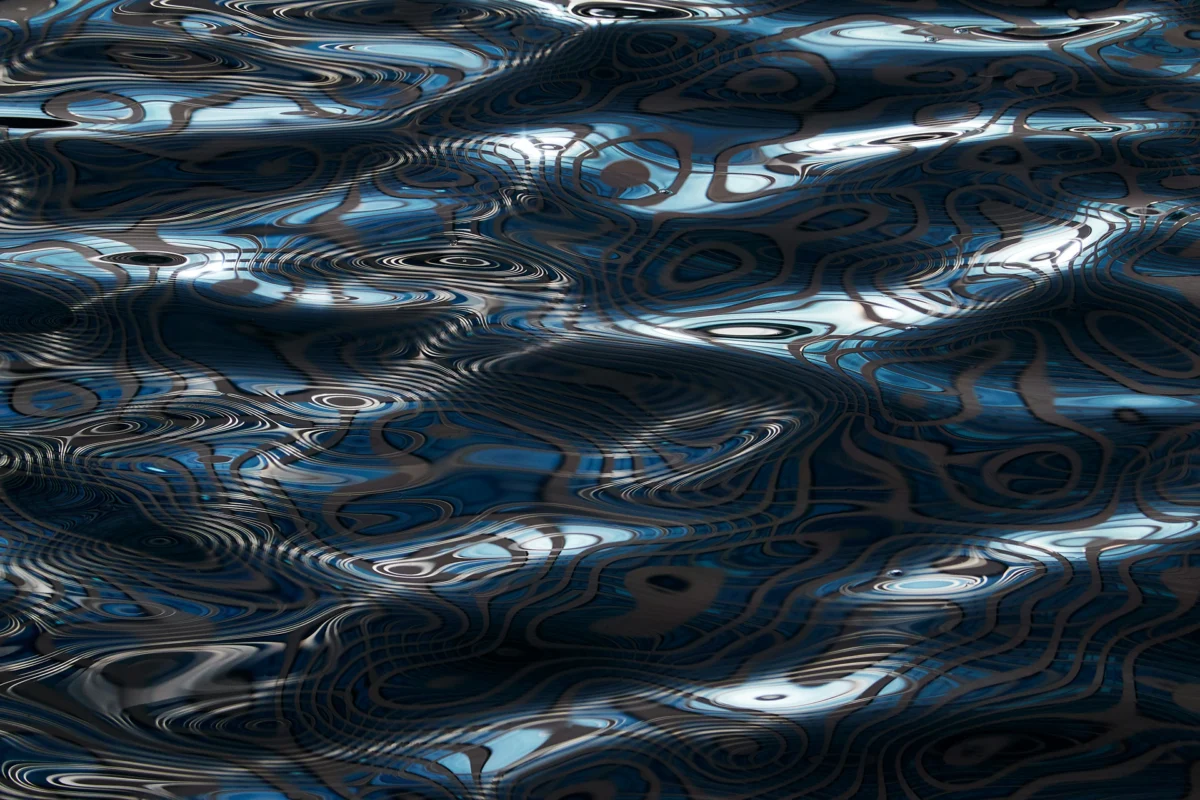
The contemporary landscape of fine-art photography is frequently dominated by the pursuit of remote grandeur, requiring exhaustive travel to pristine wilderness areas, mountain ranges, or national parks. Yet, a counter-movement within the medium emphasizes that profound creative output relies less on geographical distance and more on sustained, intimate engagement with a single environment. This philosophy underpins the acclaimed Fleeting Reflections series, a multi-year photographic exploration centered entirely within a single square mile of urban docklands in London’s Canary Wharf financial district.

Rather than utilizing digital manipulation software to generate abstract compositions, the creator of the series captures natural phenomena in-camera. The resulting images—characterized by fluid bands of color, fractured geometries, and iridescent oil patterns—are the product of light interacting with glass, steel, and water. Over more than a decade, this body of work has challenged traditional assumptions about nature photography, culminating in published volumes, gallery exhibitions, and a reevaluation of how urban spaces can yield fine-art subjects.
The Genesis and Environment of Canary Wharf
Canary Wharf, located in London’s East End, is globally recognized as a dense commercial hub dominated by corporate skyscrapers, multinational banking headquarters, and modern architectural engineering. Historically, however, the area comprised the West India Docks, one of the busiest shipping ports in the British Empire during the 19th and early 20th centuries. Following the decline of traditional port activities and the subsequent urban regeneration of the late 1980s and 1990s, the district transformed into a hyper-modern urban landscape defined by towering vertical facades of glass and steel surrounding deep-water docks.

For the photographer behind Fleeting Reflections, this industrial and corporate environment served not as a barrier to natural expression, but as a controlled laboratory of light. The sheer verticality of the office towers functions as an array of massive light sources, casting precise chromatic reflections onto the surface of the docks below. Wind action, tidal shifts, and passing vessel traffic continuously sculpt these reflections into dynamic, shifting patterns. By focusing the camera downward onto the water rather than upward at the architecture, the project shifts the viewer’s perspective from monumental urbanism to fluid abstraction.
The Three Pillars of Practice: Accessibility, Repeatability, and Patience
The theoretical framework of the Fleeting Reflections project rests upon three distinct operational principles: accessibility, repeatability, and patience. Industry analysts and photography educators frequently note that these pillars offer a sustainable alternative to the burnout often experienced by photographers chasing remote, one-off locations.

Accessibility as a Creative Catalyst
The principle of accessibility challenges the myth that worthwhile nature and abstract photography demands exotic travel, expensive permits, or arduous pre-dawn hikes. By selecting a location within a short distance of the artist’s base, logistical barriers are effectively removed. This proximity allows for spontaneous sessions lasting as little as forty minutes, enabling the photographer to work during unconventional weather conditions—such as heavy rain or overcast skies—that conventional landscape photographers might otherwise dismiss. Consequently, physical and logistical accessibility fosters an intimate familiarity with the subject matter that cannot be achieved through sporadic, distant visits.
Repeatability and Subject Behaviour
Repeatability refers to the selection of a subject that perpetually changes, thereby offering infinite variation despite remaining geographically static. At Canary Wharf, environmental variables ensure that no single session duplicates another. A calm morning produces elongated, glassy bands of color, whereas a gusty afternoon fragments the reflections into jagged waveforms reminiscent of scientific data readouts. Furthermore, external factors such as passing watercraft or microscopic traces of surface diesel create ephemeral iridescent interference patterns that vanish within minutes.

This inherent variability allows a practitioner to photograph the exact same physical coordinates thousands of times without redundancy. Rather than documenting static architecture, the photographer is effectively recording the behavioral physics of light, wind, and water. Advanced in-camera techniques—including high-speed continuous burst shooting and multi-exposure layering—are employed to capture micro-moments before they dissolve, relying entirely on the raw material provided by the environment.
Patience and Rigorous Curation
Patience forms the unglamorous core of the methodology. Fieldwork requires enduring hours of observation at a single water’s edge, often yielding thousands of frames in pursuit of a single moment where color, rhythm, structure, and spatial tension align. This labor-intensive process extends directly into the post-production phase.

Editing sessions involve systematically reviewing thousands of nearly identical source files to select only the most precise representations. The curation process maintains a deliberately low retention rate. Furthermore, post-processing is executed with strict restraint using software such as Capture One, applying only global adjustments like exposure levels, contrast, and sharpness. The conscious decision to eschew digital shape manipulation in programs like Adobe Photoshop underscores a commitment to documentary honesty. The guiding principle remains steadfast: the abstract forms are not artificially created by the artist, but merely revealed through observation.
Chronology and Milestones of the Project
The evolution of Fleeting Reflections followed a protracted, deliberate trajectory prior to its public introduction. A detailed timeline illustrates the methodical development of the body of work:

- 2010–2017: A seven-year period of sustained, private field documentation conducted primarily in and around the docks of Canary Wharf. During this phase, the methodology was refined, and the core portfolio was curated.
- 2017: The publication of the debut monograph, Fleeting Reflections, by Triplekite Publishing, marking the formal public introduction of the project. This was followed by a dedicated solo exhibition at the Greenwich Gallery in London.
- 2019: The project expanded into physical gallery spaces with a subsequent exhibition at the Anise Gallery in London, drawing critical praise for its unique intersection of urban geography and abstract naturalism.
- 2023: The release of the second volume, Fleeting Reflections II, expanding upon the foundational visual vocabulary established in the first book and incorporating advanced in-camera multiple-exposure techniques developed over the preceding years.
Industry Implications and Broader Impact
The success and critical reception of the Fleeting Reflections series offer broader implications for contemporary visual arts, particularly within nature and abstract photography. In an era dominated by instantaneous digital capture and heavily manipulated composite imagery, the project demonstrates the enduring value of traditional in-camera discipline and prolonged subject engagement.
Art historians and photography critics have noted that the series bridges the gap between mid-century abstract expressionist painting and contemporary digital capture. By demonstrating that profound artistic expression can be extracted from hyper-developed urban environments, the work encourages emerging photographers to re-evaluate their immediate surroundings. Rather than measuring photographic validity by geographical isolation, the project advocates for a methodology rooted in deep regional familiarity, rigorous technical restraint, and active, unyielding patience.
