
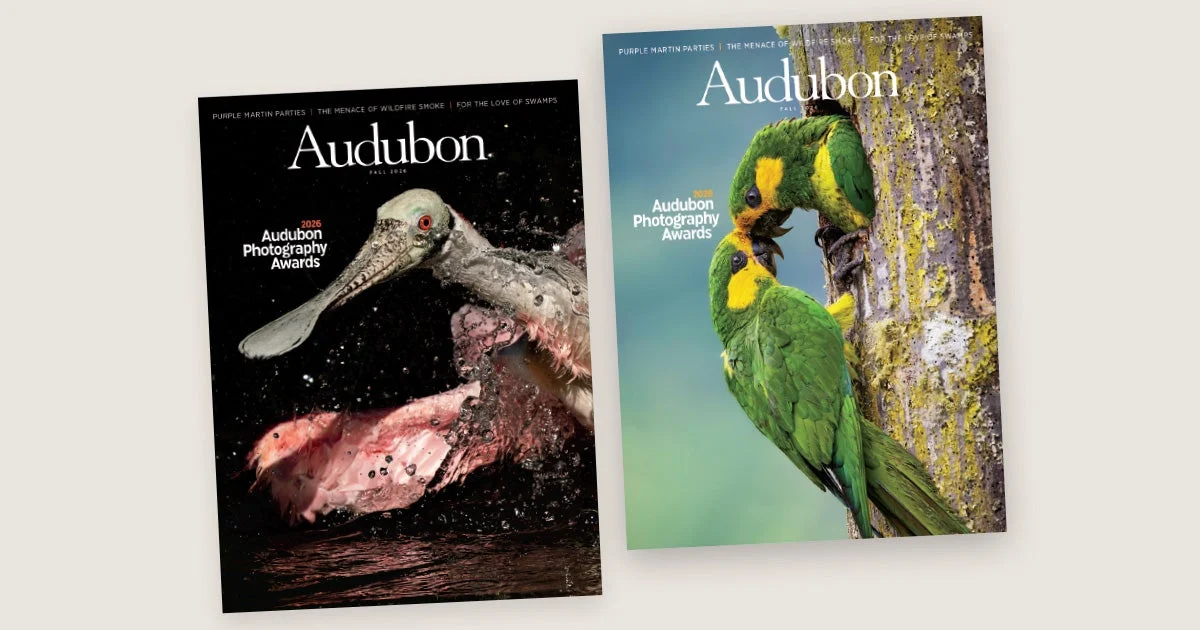
The 2026 Audubon Photography Awards serve as more than a celebration of aesthetic excellence; they represent a sophisticated intersection of high-fidelity wildlife documentation and urgent environmental advocacy. By spotlighting species teetering on the edge of extinction—such as the Yellow-eared Parrot—and documenting landscapes defined by their fragility, the awards have evolved into a primary tool for environmental literacy. The competition, which draws thousands of entries from across the globe, has shifted its focus toward the "Conservation Prize," a category specifically designed to leverage the visceral power of photography to influence policy and public perception regarding habitat preservation.
A Chronology of the Audubon Photography Awards
The Audubon Photography Awards have long been recognized as a benchmark for nature photography, but their evolution over the last decade marks a significant shift toward conservation-centric journalism. Initially established to highlight the beauty of North American birdlife, the scope has expanded to include international entries, reflecting the migratory nature of the species they depict and the global scale of habitat loss.
- 2010–2015: The foundational years focused heavily on technical prowess, macro-photography, and the documentation of popular species. The goal was to increase general interest in birding.
- 2016–2020: The introduction of the "Conservation" category marked a turning point. Judges began prioritizing images that included environmental context, such as human-built structures, agricultural encroachment, or climate-impacted landscapes.
- 2021–2025: A pivot toward "storytelling" emerged. Photographers were encouraged to submit portfolios rather than single frames, allowing for a longitudinal view of a species’ struggle.
- 2026: This year’s edition marks the integration of data visualization with traditional photography, acknowledging that some threats—like smoke pollution and avian strikes—are difficult to capture through a standard lens alone.
The Yellow-eared Parrot: A Case Study in Recovery
The Yellow-eared Parrot (Ognorhynchus icterotis) serves as the emotional and biological centerpiece of the 2026 awards. In the late 1990s, the species was famously reduced to a population of fewer than 100 individuals due to the destruction of the Andean wax palms (Ceroxylon quindiuense) upon which they exclusively depend for nesting and feeding.
The image captured by Santiago Pérez Rincón, a winner of this year’s Conservation Prize, provides a stark view of this recovery. By placing the parrot within the frame of an agricultural mosaic, Rincón highlights the precarious nature of the species’ existence. While the population has climbed back into the thousands due to aggressive community-led conservation efforts, the fragmentation of their forest corridors remains a significant threat.
According to data from the International Union for Conservation of Nature (IUCN), the Yellow-eared Parrot remains "Endangered." The primary driver of its recovery—the protection of the wax palm—is a direct result of local "Parrot Committees" in Colombia that have worked to restore corridors through land-use management. Rincón’s photograph serves as a reminder that without sustained intervention, the success of the last 25 years could be reversed in a single decade.
Documenting the Imperiled Landscapes
Beyond individual species, the 2026 awards emphasize the importance of "nursery" ecosystems. Gerrit Vyn’s documentation of Teshekpuk Lake in the Alaskan Arctic provides a vital visual record of a region facing the dual pressures of oil exploration and rapid permafrost degradation. Vyn has spent five consecutive years documenting the area, creating a longitudinal record of how Arctic nesting grounds are shifting in response to temperature anomalies.
Similarly, Mac Stone’s work on the South’s old-growth cypress forests addresses the "shifting baseline" syndrome. With fewer than 12,000 acres of these ancient forests remaining—a staggering decline from the original 40 million acres—Stone’s photography is intended to create a sense of urgency. His work demonstrates that these swamps are not merely static landscapes, but complex biological engines that support migratory warblers and apex predators, playing a crucial role in carbon sequestration.
The Intersection of Art and Architecture
A notable shift in the 2026 awards is the inclusion of "non-traditional" photography that addresses anthropogenic threats, specifically bird-building collisions. It is estimated by the American Bird Conservancy that up to one billion birds die annually in the United States alone due to collisions with glass surfaces.
To translate this staggering data into something the public can grasp, the awards have highlighted creative responses:
- The Fabric of Loss: Artist Holly Greenberg’s project involves community engagement where hundreds of volunteers create birds from scrap fabric, physically manifesting the scale of bird mortality in urban environments like Chicago.
- Origami as Protest: Fourteen-year-old Miles Wu’s work, "The Aviary," utilizes origami to memorialize birds that have collided with New York City skyscrapers.
These projects underscore a trend within the conservation community: when traditional photography cannot fully capture the scale of a mass-mortality event, art installations and crowdsourced visuals are being utilized to fill the gap.
Addressing the Hazy Threat: Wildfire Smoke and Data Visualization
Perhaps the most ambitious aspect of the 2026 awards is the attempt to visualize the impact of wildfire smoke on bird health. As deputy editor Jessica Leber notes, the threat of air pollution is often "palpable, yet by definition hazy."
To address this, the Audubon team collaborated with data visualization expert Julie Rossman and photo editor Lucia Vazquez. By overlaying health data regarding respiratory distress in avian populations with photographic collages of smoke-choked landscapes, they have created a new medium for science communication. This approach is grounded in emerging research that suggests wildfire smoke particles—specifically PM2.5—can cause long-term physiological stress in birds, potentially affecting their reproductive success and migration timing.
Broader Implications and Institutional Response
The Audubon Society’s decision to prioritize these narratives is indicative of a broader move toward "solution-based" journalism. By providing a platform for photographers who are also environmental activists, the institution is positioning itself as a primary source for both scientific data and public policy advocacy.
Conservationists and academics have reacted positively to this shift. Dr. Elena Vance, an avian ecologist not involved in the awards, stated: "We have reached a point where the raw data is no longer enough to motivate policy change. People need to see the intersection of human industry and avian life to understand that the protection of these species is a mirror for the protection of our own health."
The economic implications are also clear. Habitat protection, such as the restoration of cypress forests or the safeguarding of Andean wax palms, often provides ecosystem services that benefit local economies through improved water quality, carbon credits, and eco-tourism.
Conclusion
The 2026 Audubon Photography Awards represent a synthesis of art, biology, and advocacy. From the high-altitude forests of the Andes to the industrial-urban centers of the United States, the featured works provide a comprehensive look at the state of the world’s birdlife. As the climate continues to change and habitats face unprecedented levels of fragmentation, the role of the visual storyteller becomes paramount. These images are not merely archival; they are calls to action, designed to move the viewer from a passive observer to an informed participant in the ongoing effort to sustain the "wild heart" of our planet. The message remains consistent: the survival of these species is inextricably linked to the decisions made by humans today, and through the lens of a camera, the urgency of those decisions has never been clearer.
