
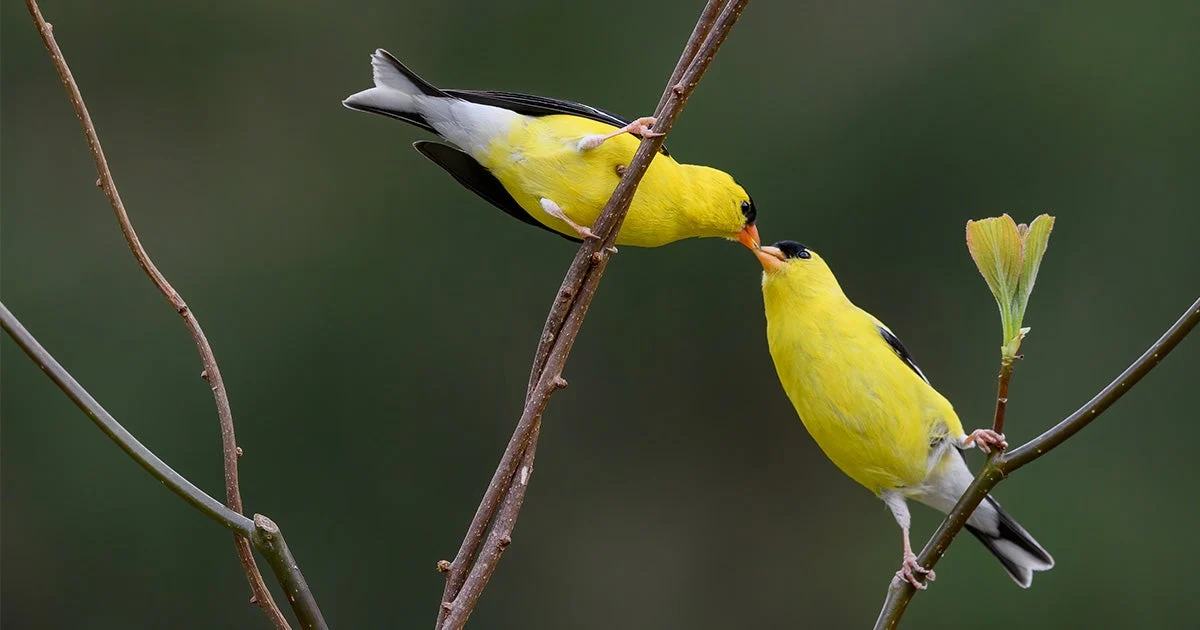
The male American Goldfinch (Spinus tristis), a vibrant spectacle in its sunny yellow breeding plumage, stands as one of the most cherished and recognizable visitors to backyard feeders across North America during the spring and summer months. This widespread presence is not coincidental; the American Goldfinch holds the distinction of being the most common species of goldfinch in the United States, with a robust year-round range encompassing a significant portion of the continent. Its strong preference for seeds makes it a relatively easy species to attract, cementing its status as a favorite among birdwatchers and casual observers alike. However, beneath its bright, approachable exterior lies a species of remarkable ecological adaptations and fascinating biological intricacies, many of which remain hidden to the casual eye, particularly during its less flamboyant winter guise.
The Striking Metamorphosis: Seasonal Plumage and Beak Changes
One of the most dramatic characteristics of the American Goldfinch is its pronounced sexual dimorphism and seasonal plumage variation. The vibrant, almost neon yellow of the breeding male, offset by a contrasting black cap and black wings with prominent white wing bars, is an iconic sight. This brilliant display, however, is a temporary phenomenon, a testament to the species’ twice-yearly molting cycle.
The goldfinch undergoes two complete molts annually, a relatively rare occurrence among passerine birds. The pre-alternate molt occurs in late winter, typically from February to April, where males acquire their stunning yellow breeding plumage. This process is driven by hormonal changes triggered by increasing daylight hours and prepares the birds for the demanding breeding season. The carotenoid pigments responsible for the yellow coloration are derived directly from their diet, primarily seeds, highlighting the link between nutrition and reproductive display. As spring progresses into summer, this yellow intensifies, often reaching its peak brilliance during the height of the nesting period. Females, while not as intensely yellow as males, also undergo a similar molt, adopting a more subdued yellowish-green hue during the breeding season, providing effective camouflage during incubation.
Following the breeding season, in late summer and early fall (August to October), both sexes undergo a second, pre-basic molt. During this period, the males shed their bright yellow feathers, replacing them with a duller, more cryptic olive-brown or tan plumage, closely resembling the female’s non-breeding coloration. The black cap disappears, and the overall appearance becomes significantly less flashy. This stark transition can be so profound that observers might fail to recognize the same individuals they enthusiastically watched just months prior. During these non-breeding periods, the most reliable identification markers for both sexes become their largely black wings, consistently adorned with thick white or cream wing bars.
Beyond feather coloration, the American Goldfinch exhibits another remarkable seasonal shift: its beak color. During the breeding season, both male and female goldfinches sport a cheerful, bright orange beak. Research suggests that the intensity of this orange coloration in females may play a role in their social standing within a flock, potentially signaling health and reproductive fitness. As the breeding season concludes, the beaks of both sexes fade to a dark gray color, blending more subtly with their winter plumage. These combined morphological changes underscore the species’ adaptation to different ecological demands throughout the year, from attracting mates to evading predators.
A Granivorous Rarity: The Vegetarian Songbird
Among the vast diversity of songbirds, the American Goldfinch stands out for its almost exclusively vegetarian diet. This dietary specialization is highly unusual in the passerine world, where even species with predominantly seed-based adult diets typically rely heavily on insects to provide the essential protein required for their rapidly growing young. Goldfinch nestlings, however, possess a remarkable adaptation that allows them to thrive on a diet consisting almost entirely of seeds, with only a very occasional insect supplement.
This unique granivorous strategy is supported by specialized digestive enzymes and a robust gizzard capable of processing tough seed husks. Their conical, pointed beaks are perfectly evolved for extracting tiny seeds from various plant heads, particularly their favored thistle. This dietary choice dictates much of their life history, from their preferred habitats to their breeding timeline.
A Fortuitous Defense: Evading Brood Parasitism
The American Goldfinch’s specialized diet inadvertently provides a significant advantage against one of the avian world’s most insidious threats: brood parasitism by the Brown-headed Cowbird (Molothrus ater). Brown-headed Cowbirds are obligate brood parasites, meaning they lay their eggs in the nests of other bird species, relying on the unwitting host parents to incubate their eggs and raise their young. Cowbird chicks are often larger and develop faster than their nestmates, frequently outcompeting them for food delivered by the host parents, thanks in part to their notably strong neck muscles that enable vigorous begging.
However, the American Goldfinch’s diet creates an ecological trap for cowbirds. Cowbird nestlings, unlike goldfinch chicks, require a high-protein diet rich in insects to survive and develop properly. Since goldfinch parents feed their young almost exclusively seeds, any cowbird eggs laid in an American Goldfinch nest are highly unlikely to result in a surviving cowbird chick. The lack of crucial insect protein typically leads to the cowbird nestling’s demise within a few days of hatching, effectively rendering the goldfinch nest a "death trap" for the parasite. This natural defense mechanism is a striking example of how a highly specialized diet can confer unexpected evolutionary benefits.
The Late Bloomers: Nesting Synchronized with Thistle Abundance
Further demonstrating their strong reliance on seeds, American Goldfinches exhibit one of the latest nesting seasons among North American songbirds. While most passerines begin breeding in late spring, goldfinches typically initiate nesting during the "dog days" of July and August. This delayed schedule is directly linked to the availability of their primary food source and preferred nesting material: thistle seeds and down.
Thistle plants, particularly various species of Cirsium, reach their peak seed production in mid to late summer. By nesting at this time, goldfinches ensure an abundant and readily available food supply for themselves and their hungry nestlings. Beyond sustenance, thistle down provides the primary construction material for their nests. Goldfinches meticulously weave this soft, fibrous material together with spider silk, creating an incredibly compact and tightly knit structure. These nests are so densely constructed that they have been observed to hold water, a remarkable feat of avian engineering that offers excellent insulation and protection for the eggs and young.
A typical clutch consists of 4-6 pale blue-white eggs, incubated by the female for approximately 12-14 days. The male diligently feeds the female during this period. After hatching, the altricial young remain in the nest for another 11-17 days, being fed by both parents. The synchronized timing with thistle availability is critical for the successful rearing of their brood, highlighting a finely tuned ecological relationship.
The Language of Flight: Vocalizations and Social Dynamics
American Goldfinches are highly vocal birds, frequently announcing their presence with distinctive calls, particularly while in flight. Their most recognizable call is a four-syllable phrase with an even cadence, often transliterated as "po-ta-to-chip" or "per-chick-or-y." This call is intrinsically linked to their characteristic undulating flight pattern: a series of dips down and zips back up. Goldfinches time their vocalizations to coincide with the "up" portion of their flight arc, creating a rhythmic and easily identifiable auditory signature.
Beyond their general recognition, research suggests that these "flight calls" play a more complex role in goldfinch social structure. Like several other finch species, American Goldfinches appear to possess the ability to recognize individual differences in these calls. Once mates pair up for the breeding season, they begin to produce nearly identical flight calls. This "shared tune" is believed by researchers to serve multiple functions within their social context. In a species that frequently travels in flocks, this synchronized calling may enable mates to locate each other more easily within a group or to be recognized as a distinct pair unit by their peers, facilitating social cohesion and maintaining pair bonds amidst the flock’s movements. This level of vocal individual recognition points to a sophisticated communication system.
Geographic Distribution and Migratory Patterns
The American Goldfinch boasts an expansive range across North America. During the breeding season, they can be found from coast to coast, extending north into southern Canada and south into the central and eastern United States. Their winter range typically covers much of the United States, stretching into parts of Mexico.
They are classified as partially migratory, meaning that while some populations, particularly those in the northernmost parts of their range (e.g., Canada and northern states), undertake significant southward movements for winter, many individuals in more temperate regions remain in roughly the same general area, shifting locally in response to food availability. A 1988 study indicated that populations migrating south generally avoid regions where the average minimum January temperature drops below 0 degrees Fahrenheit (-18 degrees Celsius), suggesting a clear physiological limit to their winter tolerance. This migratory strategy allows them to exploit abundant summer food resources in northern areas while retreating to milder climates to conserve energy during the leaner winter months.
While the original article mentions three goldfinch species, it’s worth noting that within Spinus tristis, there are recognized subspecies, often distinguished by subtle variations in size, plumage, and geographical distribution. These include the Eastern Goldfinch (S. t. tristis), the Pacific or Willow Goldfinch (S. t. salicamans), and the Pale Goldfinch (S. t. pallidus). These subspecific distinctions highlight genetic adaptations to regional environments across their vast range.
State Bird Status and Nomenclature Nuances
The American Goldfinch enjoys the esteemed position of being the state bird for three different U.S. states: New Jersey, Iowa, and Washington. Interestingly, however, none of these states officially use the precise name "American Goldfinch" in their designation. New Jersey and Iowa refer to their state bird as the "Eastern Goldfinch," while Washington recognizes it as the "Willow Goldfinch." These names, while seemingly distinct, all refer to the same species, Spinus tristis, specifically to regional subspecies found on the Eastern and Pacific coasts, respectively. This nomenclature quirk underscores the historical and regional variations in common bird names, even for a widely recognized species, and reflects the local identity associated with these beloved birds.
Attracting Goldfinches: A Boon for Backyard Birding
The American Goldfinch’s predilection for seeds makes it a prime target for backyard bird enthusiasts. Attracting these "cheery chirpers" is relatively straightforward with the right setup. Their absolute favorite natural food source is thistle seeds, and a commercially available alternative called Nyjer (often mistakenly called "thistle seed") is incredibly effective. Nyjer seeds are small and black, requiring specialized feeders to prevent spillage and allow access. Most tube feeders designed for Nyjer feature small, narrow slits rather than large holes and often include perches both above and below the feeding ports. This design accommodates the goldfinches’ unique foraging behavior, as they often cling to plants in inverted positions to extract seeds, a skill they readily transfer to feeders. Black oil sunflower seeds are also a popular choice and can attract them, though Nyjer is often considered their top preference.
The popularity of feeding American Goldfinches contributes significantly to the multi-billion-dollar backyard birding industry. This hobby not only provides enjoyment for millions but also fosters a deeper connection to nature and raises awareness about bird conservation. By providing supplemental food sources, particularly during harsh winter months or periods of natural food scarcity, backyard feeders can play a localized role in supporting goldfinch populations.
Conservation Status and Ecological Impact
Currently, the American Goldfinch is classified as a species of "Least Concern" by the International Union for Conservation of Nature (IUCN) Red List. Its population is considered stable and even increasing in some areas, a testament to its adaptability and the widespread availability of its preferred food sources, often found in disturbed habitats and open fields. Its broad distribution and dietary flexibility contribute to its resilience.
Ecologically, while goldfinches consume vast quantities of seeds, they also play a minor role in seed dispersal. Some seeds may pass undigested through their system, or be dropped during handling, potentially aiding in the propagation of certain plant species. Their presence in an ecosystem indicates a healthy supply of the herbaceous plants they rely upon, particularly thistles and other composite-family plants.
Conclusion
The American Goldfinch, with its dazzling seasonal plumage, unique dietary adaptations, and distinctive vocalizations, is far more than just a pretty face at the feeder. It is a remarkable species whose life cycle is intricately woven with the rhythms of the North American landscape. From its two annual molts and specialized seed-only diet to its late nesting season perfectly timed with thistle abundance and its ingenious evasion of brood parasites, every aspect of the goldfinch’s biology speaks to a finely tuned evolutionary success story. Its widespread presence and charming demeanor ensure its continued role as a beloved symbol of nature’s beauty and resilience, reminding us of the intricate wonders that exist within the avian world.
