
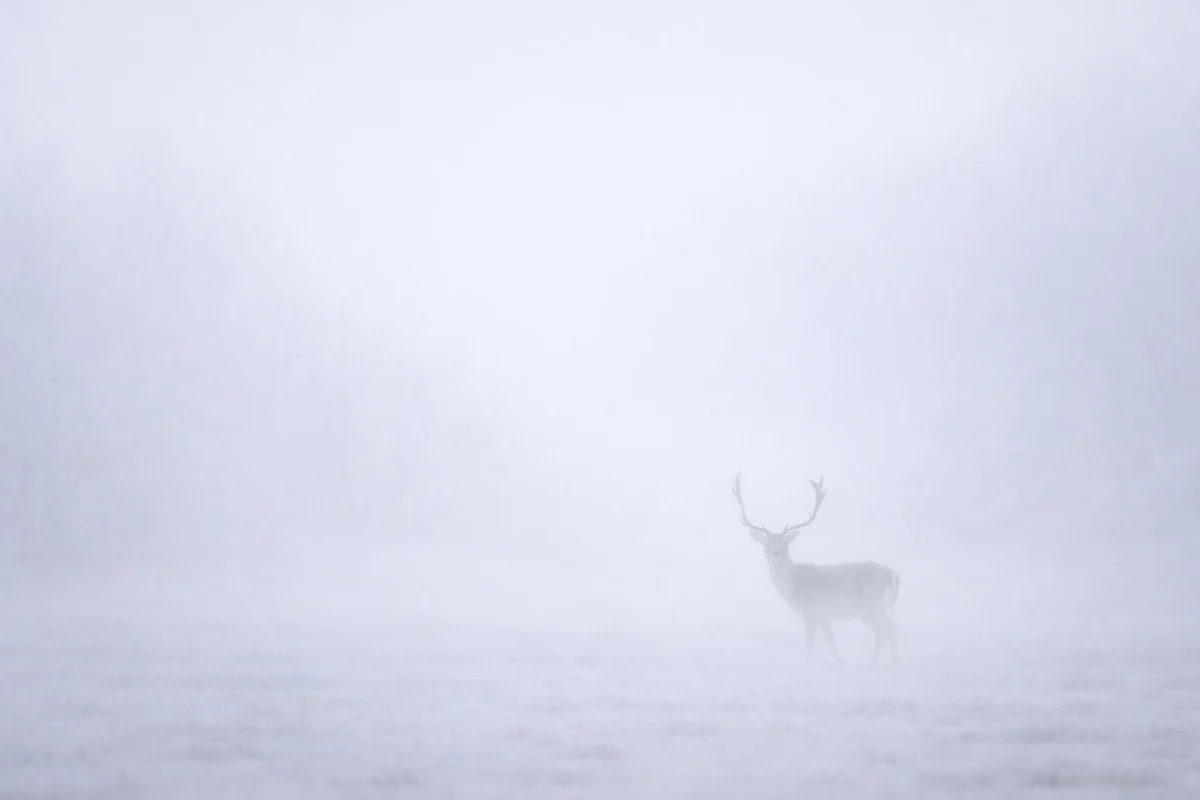
In an era saturated with visual information, where the pursuit of the spectacular often dictates photographic trends, one artist offers a profound counter-narrative through a deeply personal and minimalist approach to nature photography. This distinctive style, characterized by vast negative space, subdued subjects, and an overwhelming sense of calm, transcends mere aesthetic preference to become a philosophical imperative. It is a journey not of conscious decision, but of an unfolding recognition, where the camera serves as a conduit for an inner quest for stillness and presence.
The Genesis of a Vision: An Unfolding Aesthetic
The genesis of this unique photographic vision was not marked by a definitive moment or a deliberate choice. Instead, it emerged organically during the photographer’s nascent stages of learning the craft. As the artist began to master the camera and develop a discerning eye, an innate inclination towards stepping back, allowing subjects to diminish in scale within the frame, and embracing expansive space became apparent. This subconscious gravitation was, in retrospect, an unwitting search for quiet. The initial exploration of photography quickly revealed a profound attraction to simplicity – calm backgrounds, a sense of airiness – not as a means to strip away detail, but as a necessary antidote to the overwhelming sensation of clutter.

The discovery of high-key and low-key photography techniques proved to be a pivotal moment, described not as a learned skill but as a "recognition." High-key photography, employing predominantly light tones, often with minimal shadows, creates a bright, airy, and sometimes ethereal mood. Conversely, low-key photography utilizes dark tones and shadows to create a dramatic, mysterious, or introspective atmosphere. Historically, these techniques have been employed across various photographic genres to evoke specific emotional responses. For this photographer, however, their application was less about technical mastery and more about aligning with an internal resonance, a means to articulate an inherent desire for peace and clarity in their visual language. This intuitive understanding allowed the artist to soften the visual world, paring it down until only the essence remained, not to subtract meaning but to create ample room for its profound presence.
Nature as Sanctuary: The Embrace of Stillness
Central to this photographic philosophy is the artist’s profound connection with nature, particularly during moments of atmospheric transformation like fog or snowfall. These conditions, which naturally obscure and simplify landscapes, induce a deeply personal and meditative state. Thoughts soften, the world assumes a gentle quality, and these moments are described as experiences of "deep happiness" – not boisterous or overtly expressive, but rich with an inner fullness. There are instances where a wave of quiet gratitude washes over the artist, fostering a powerful sense of being precisely where they are meant to be.
In these solitary encounters, the photographer reports feeling profoundly alone yet never lonely. The natural world provides a sanctuary free from the pressures of explanation or the relentless pace of societal demands. Nature, in its immutable presence, is perceived as holding the artist "without questions," offering a profound sense of understanding within its stillness. This aligns with a growing body of psychological research on the benefits of nature exposure, often referred to as "forest bathing" or "ecotherapy." Studies published in journals like Environmental Science & Technology and Scientific Reports indicate that spending time in natural environments can significantly reduce stress, improve mood, and enhance cognitive function. The artist’s experience mirrors these findings, using nature as a restorative force that brings balance to an intensely perceived inner world. For individuals whose internal landscapes are "layered and complex, constantly moving," nature’s openness offers a crucial counterpoint, creating an internal spaciousness that mirrors the expansive frames of their photography.

The Power of Pause: Redefining Observation
A critical distinction in this minimalist approach lies in the practice of observation. In a world accustomed to rapid movement and constant transition, even encounters with nature are often fleeting. People walk through natural spaces, passing by without lingering, rarely pausing long enough for the subtle intricacies of the environment to reveal themselves. The photographer, however, advocates for a deliberate deceleration. When one commits to remaining in a single location for an extended period, devoid of urgency or predetermined expectations, the environment begins to transform. The light shifts almost imperceptibly, faint movements emerge at the periphery of vision, and elements previously unnoticed slowly come into focus. This is not because new phenomena have suddenly appeared, but because the observer has finally allowed themselves the time and mental space to truly perceive them.
This profound shift in viewing methodology invites slowness, attention, and deep presence. Once experienced, this heightened state of observation makes it challenging to revert to the hurried pace of everyday life. The implications of such a practice extend beyond personal artistic development. In an increasingly fast-paced and distraction-laden society, the act of intentional stillness and prolonged observation, as advocated by this photographic philosophy, offers a potent antidote. It encourages a more mindful engagement with the environment, fostering a deeper appreciation for the subtle beauty that often goes unseen. This deliberate cultivation of patience and presence can be viewed as a form of applied mindfulness, where the artistic process itself becomes a meditative practice.
Minimalism: More Than an Aesthetic, A Philosophical Imperative

For this artist, minimalism transcends its common definition as a mere aesthetic choice; it becomes a fundamental necessity, a "direction" rather than a fleeting preference. The emptiness observed in the images is not a void but a deliberate reflection of a profound need for calm. What appears minimal on the surface is understood to hold significant depth beneath. Silence, far from being empty, is regarded as a container for meaning and emotion.
This perspective aligns with the broader historical trajectory of minimalism in art. Emerging in the 1960s, primarily in Western art, minimalism sought to strip away non-essential forms, focusing on elemental shapes, materials, and spatial relationships. Artists like Donald Judd, Dan Flavin, and Agnes Martin explored how reduction could intensify the viewer’s experience of form, color, and space. However, the roots of this philosophy can be traced back further, particularly to Eastern aesthetics such as Zen Buddhism and Wabi-sabi, which emphasize simplicity, austerity, naturalness, and the beauty of imperfection and transience. For this photographer, minimalism is not about removing meaning but about making room for it. White becomes "breathing room," darkness offers "rest." High-key and low-key techniques serve to soften the world, distilling it to its essential components and allowing for a heightened emotional connection. This approach fundamentally redefines minimalism, transforming it from a potentially stark or cold style into a profoundly empathetic and inviting one.
The Photographer’s Creed: Authenticity Over Convention
The unwavering commitment to this artistic path means that the choice to work in this minimalist manner is no longer questioned. It is not a phase or a fleeting preference but a deeply ingrained "direction." The artist prioritizes simplicity because it preserves the raw feeling of the moment of capture. Distance is chosen because it grants space – both to the subject within the frame and to the photographer’s own internal landscape. Restraint is employed to ensure the image remains open, inviting viewer interpretation rather than dictating it. This profound connection means minimalism is not an afterthought, a technique applied in post-processing. It begins in the very act of being present, in the duration of the stay, and in the conscious decision of how much to leave untouched within the scene.

This artistic integrity extends to the motivation behind sharing the work. The photographs are not created to appease an audience, chase trends, or fulfill external expectations. Only images that carry a deeply felt story, a physical resonance within the artist, are deemed worthy of public display. If an image fails to evoke this internal movement, it remains private, irrespective of its technical perfection. This rejection of external validation and adherence to internal truth defines the core of the practice. Technical knowledge, while present, never dictates the creative process; instead, it quietly supports the primacy of the moment and the artist’s intuitive response. A split-second physical sensation determines an image’s truthfulness. If it doesn’t feel true, it is released; if it does, it is trusted, even if it defies conventional photographic rules. This radical embrace of intuition over convention fosters a unique artistic voice that challenges the commercial pressures and aesthetic norms often prevalent in contemporary photography. Photography, in this context, becomes a space for self-discovery, a realm where one can "disappear without losing myself," where "feeling is enough."
Encounters in Fragility: Distance as Narrative
When asked about the subject matter of their photographs, the artist rarely offers a direct, categorical answer. The work is not primarily "about animals, landscapes, or minimalism as a concept," but rather "about presence." It is about being fully immersed in a moment that demands nothing in return. Encounters with wildlife, such as a fox in a snowy field or a deer in heavy mist, are often fleeting and imbued with a delicate fragility. These moments are described as "almost weightless," and the artist’s approach is to avoid disturbance. Stepping back, maintaining distance, and giving ample space become integral components of the narrative. The physical distance between the photographer and the subject is not merely a compositional choice but a philosophical statement, making distance "part of the story." What truly resonates is not the encounter itself, but the lingering feeling it imparts.
This non-intrusive approach stands in contrast to much of conventional wildlife photography, which often seeks close-up, highly detailed shots. By maintaining distance and embracing the environment’s vastness, the photographer allows the animal to exist within its natural context, emphasizing its smallness against the grandeur of nature. This perspective can evoke a sense of awe and humility in the viewer, reminding them of humanity’s place within the larger ecosystem. The fragility of these moments, captured with such restraint, implicitly carries a message of conservation and respect for the wild.

The Voice of Silence: Inviting Viewer Engagement
At the heart of this minimalist philosophy is the profound conviction that stillness possesses a voice, that softness embodies strength, and that there is inherent value in restraint – in consciously choosing less over more. Minimalism, often misinterpreted as emptiness or a lack of content, is reframed by the artist as an "invitation." It is presented as an open space where viewers are encouraged to pause, to breathe, and to bring their own experiences and interpretations to the image. In this space, nothing requires explicit explanation, and no problem needs to be solved.
This interactive quality of minimalist art allows for a deeply personal engagement. When a viewer looks at one of these photographs and feels a moment of pause, however brief, the image has achieved its intended purpose. The artist’s aim is not to impress but to invite – into quiet, into space, into a moment where the pressure to solve or understand is lifted. This approach offers a powerful counter-narrative to the often-didactic or overtly narrative-driven forms of art. By providing an uncluttered visual field, the work encourages introspection and allows emotions to surface without the impedance of excessive detail. This can be particularly impactful in a world that constantly bombards individuals with complex information, offering a much-needed respite and a space for quiet contemplation.
Conclusion: A Legacy of Quiet Presence

Ultimately, this photographic journey is a testament to the profound power of presence and feeling. The artist photographs not to merely document what nature looks like, but to authentically share how it feels when silence is not merely an absence of sound but a rich, resonant presence. This unique fusion of minimalist aesthetics with a deeply intuitive and emotional approach creates a body of work that challenges conventional perceptions of nature photography. It advocates for a slower, more mindful engagement with the world, both external and internal. Through vast, quiet compositions, the photographer extends an invitation to viewers to step back, to breathe, and to discover the profound beauty and meaning that can be found when one allows themselves to simply be, and when silence, in its profound depth, is truly enough. In an increasingly noisy world, this art offers a powerful reminder of the enduring value of quiet contemplation and the unspoken narratives that emerge from sustained presence.
