
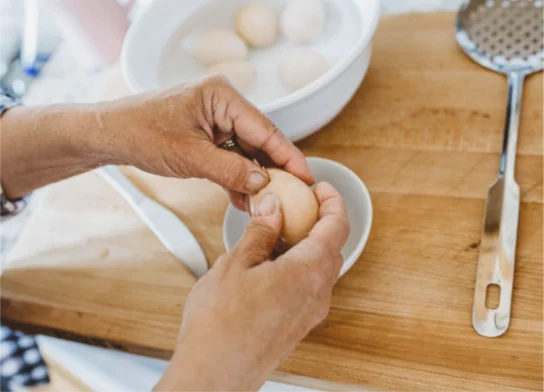
The culinary challenge of peeling hard-boiled eggs, particularly those sourced directly from farms or backyard coops, has long been a source of frustration for both professional chefs and home cooks. While the market for farm-fresh poultry products continues to expand as consumers prioritize nutrition and animal welfare, the physical properties of fresh eggs often make them notoriously difficult to peel using traditional boiling methods. However, recent practical applications and culinary analysis have identified steaming as the definitive solution to this age-old problem, offering a reliable, science-based alternative that ensures perfectly smooth results regardless of the egg’s age.

The Chemistry of the Fresh Egg Challenge
To understand why steaming is superior, one must first examine the biological and chemical composition of a fresh egg. When an egg is newly laid, the pH level of the albumen (the egg white) is relatively low, typically around 7.6 to 7.9. In this slightly acidic environment, the proteins in the egg white bind strongly to the keratin in the inner shell membrane during the cooking process. This bond is so tenacious that attempting to remove the shell often results in the membrane tearing away chunks of the white, leading to a pitted, unattractive appearance.

As an egg ages, carbon dioxide escapes through the thousands of microscopic pores in the shell, causing the pH of the albumen to rise to approximately 9.2. This more alkaline environment weakens the bond between the protein and the membrane, which is why store-bought eggs—which are often several weeks old by the time they reach the consumer—are generally easier to peel than those collected from a nest the same morning. Furthermore, as moisture evaporates over time, the air cell at the blunt end of the egg expands, providing a physical gap that aids in the peeling process.

For the farm-to-table enthusiast, waiting weeks for an egg to age is counterproductive to the goal of consuming fresh, nutrient-dense food. Steaming bypasses these chronological requirements by utilizing thermal shock and moisture penetration to achieve what traditional boiling cannot.

The Chronology of Failed Traditional Methods
Before the widespread adoption of steaming, the culinary world experimented with various additives and techniques to facilitate easier peeling. A historical review of these methods reveals a pattern of inconsistent results and scientific shortcomings.

- Chemical Additives: Common advice often suggested adding white vinegar or baking soda to the boiling water. The theory behind vinegar was that the acid would soften the calcium carbonate shell; however, the contact time is rarely sufficient to make a meaningful difference. Conversely, baking soda aimed to increase the alkalinity of the water to mimic an older egg, but this often resulted in a soapy flavor without significantly improving peelability.
- Physical Alterations: Some techniques involved pricking the blunt end of the egg with a pin before cooking to release pressure. While this occasionally reduced the "flat end" caused by the air sac, it frequently led to cracked shells and leaked whites during the turbulent boiling process.
- Temperature Variations: Starting eggs in cold water versus dropping them into already boiling water has been a point of contention for decades. A cold start allows the egg to heat gradually, but this often causes the membrane to fuse more tightly to the white. A hot start (dropping eggs into boiling water) provides the necessary thermal shock but increases the risk of the shell cracking upon impact.
The discovery of steaming as the "gold standard" was a pivot toward a more controlled thermal environment. Unlike boiling water, which can be turbulent and uneven in temperature distribution, steam provides a consistent 212°F (100°C) environment that surrounds the egg evenly without the mechanical stress of bubbling water.

The Steaming Methodology: A Step-by-Step Technical Guide
The transition from boiling to steaming requires minimal equipment but demands precision in execution. The following protocol has been vetted by culinary experts for maximum efficiency.

Required Apparatus
- A Steaming Vessel: This can include a stainless steel steamer basket, a bamboo steamer, or even a common kitchen colander that fits securely inside a large pot.
- A Lidded Pot: A tight-fitting lid is essential to maintain a constant steam pressure and temperature.
- The Thermal Shock Basin: A bowl filled with a high concentration of ice and cold water, known as an ice bath, is required to immediately arrest the cooking process.
The Procedure
- Water Preparation: Fill the pot with approximately one to two inches of water. It is vital that the water level remains below the bottom of the steamer basket to ensure the eggs are cooked by vapor rather than submersion.
- The Boiling Phase: Bring the water to a vigorous boil before introducing the eggs. This "hot start" via steam is the catalyst for the thermal shock that causes the egg white to contract away from the membrane.
- Egg Integration: Using tongs, place the fresh eggs in a single layer within the steamer basket. Rinse the eggs in warm water beforehand to prevent the cold shells from cracking when they encounter the intense heat of the steam.
- Temporal Precision: Cover the pot and maintain the heat. The duration of the steam determines the final texture of the yolk:
- 6-7 Minutes: Soft-boiled (liquid yolk, set whites).
- 8-9 Minutes: Medium-boiled (jammy, custard-like yolk).
- 11-12 Minutes: Hard-boiled (fully set, opaque yolk).
- The Quenching Phase: Once the timer expires, immediately transfer the eggs to the ice bath. They should remain submerged for at least 10 to 15 minutes. This rapid cooling prevents the "green ring" phenomenon and further aids in separating the membrane from the shell.
Supporting Data: Why Steam Prevents the "Green Ring"
A frequent aesthetic flaw in hard-boiled eggs is the appearance of a grayish-green ring around the yolk. Data from food science laboratories indicates that this is the result of a chemical reaction between sulfur in the egg whites and iron in the egg yolks. When an egg is overheated or cooled too slowly, these elements combine to form iron sulfide.

Steaming offers a distinct advantage in preventing this reaction. Because the heat transfer in steam is more efficient and consistent than in water, the cook can time the process with higher accuracy, avoiding the overcooking that triggers the sulfur-iron bond. Additionally, the ease with which steamed eggs can be transferred to an ice bath ensures that the internal temperature drops rapidly, locking in a bright, golden-yellow yolk.

Practical Peeling Techniques for Farm-Fresh Eggs
Even with the superior steaming method, the physical act of peeling should be performed with care to maintain the integrity of the egg white. Expert recommendations suggest the following:

- Cracking Strategy: Gently tap the egg on a hard surface or roll it lightly under the palm of the hand to create a network of fine cracks across the entire shell.
- The Blunt End Entry: Always begin peeling at the blunt end of the egg, where the air cell is located. This provides a starting point where the membrane is already slightly separated from the white.
- Water Assistance: Peeling the egg under a thin stream of cool running water or submerged in a bowl of water can help the shell slip off more easily, as the water acts as a lubricant between the membrane and the albumen.
Broader Impact and Implications for the Food Industry
The shift toward steaming eggs has broader implications for the culinary industry and food waste reduction. In commercial settings, such as catering or high-volume restaurants, the loss of egg white due to poor peeling can represent a significant percentage of food waste. By adopting steaming protocols, kitchens can ensure a 100% success rate, improving the presentation of dishes like deviled eggs, Niçoise salads, and ramen.

Furthermore, the rise of the "backyard chicken" movement has increased the demand for information on handling fresh poultry products. As more households move away from industrial agriculture, the need for traditional "grandmother’s wisdom" backed by modern scientific understanding becomes paramount. The steaming method empowers small-scale producers to enjoy the fruits of their labor without the frustration traditionally associated with fresh-laid eggs.

Conclusion
The evidence overwhelmingly supports steaming as the most effective method for preparing farm-fresh eggs. By understanding the underlying chemistry of the egg—specifically the relationship between pH levels and membrane adhesion—cooks can move past outdated boiling techniques that produce inconsistent results. Steaming provides the necessary thermal shock, consistent temperature, and ease of cooling required to produce perfectly peeled eggs every time. As culinary standards continue to evolve toward fresh, local ingredients, the steaming method stands as an essential technique in the modern kitchen’s repertoire, ensuring that the quality of the preparation matches the quality of the produce.
