
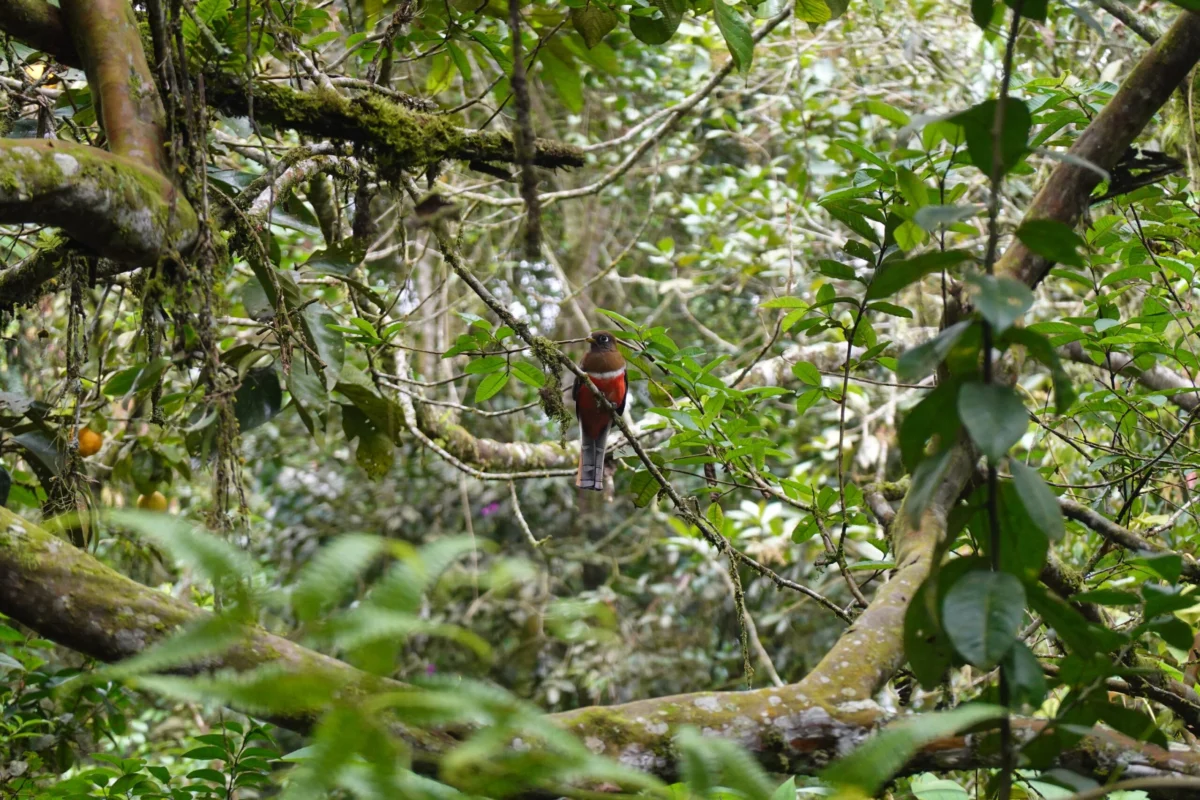
As world leaders, policymakers, Indigenous representatives, and climate scientists gather for the Convention on Biological Diversity’s COP17 and the UN Framework Convention on Climate Change’s COP31, the global community faces a defining moment for the planet’s terrestrial health. The scientific consensus is unequivocal: forests are no longer merely a backdrop to climate negotiations; they must be restored to the very center of global climate and biodiversity action. With the world currently on a trajectory to exceed the 1.5 degrees Celsius warming threshold established by the Paris Agreement, the urgency of protecting and regenerating the world’s forests has moved from a long-term goal to an immediate survival strategy.
The Science of Survival: Limiting the Overshoot
The United Nations Environment Programme’s 2026 "Limiting Overshoot" report serves as a stark reminder of the current climate reality. As we inevitably surpass the 1.5-degree benchmark, the global focus must shift toward limiting this exceedance and returning to a sustainable temperature pathway. Recent peer-reviewed research, including pre-print studies by Cui et al., highlights a critical lever in this effort: the halting of deforestation and forest degradation.
Data suggests that by combining an end to deforestation with large-scale ecosystem restoration, the international community could provide up to one-third of the total carbon mitigation required by 2030. This is not merely a technical solution; it is a fundamental shift in land management. Forests function as the world’s most sophisticated carbon sequestration technology, capturing atmospheric carbon while simultaneously regulating regional water cycles and stabilizing soil health.
A Chronology of Unmet Commitments
The global history of forest protection is characterized by ambitious rhetoric that has frequently outpaced actual progress. Understanding this timeline is essential to grasping the current geopolitical climate:
- 2014: The New York Declaration on Forests was launched at the UN Climate Summit, marking the first major global commitment to halve the rate of deforestation by 2020 and end it by 2030.
- 2021: At COP26 in Glasgow, world leaders reaffirmed these goals through the Glasgow Leaders’ Declaration on Forests and Land Use, expanding the commitment to cover over 90% of the world’s forests.
- 2023: The first Global Stocktake under the Paris Agreement formally codified the 2030 deadline for halting and reversing deforestation and forest degradation.
- 2025: A glimmer of progress emerged as global deforestation rates dropped by 15%, proving that targeted policy and investment can yield results, though the rate of decline remains insufficient to meet the 2030 targets.
- 2026–2027: The current convergence of COP17 and COP31 represents the "make or break" period for the 2030 promises.
Despite these milestones, the world remains off-track. The shift in global attention toward other pressing crises—including geopolitical instability and economic volatility—has allowed the momentum for forest protection to wane. This drift carries profound implications for the global economy and the stability of the biosphere.
The Socio-Economic Case for Conservation
The narrative that conservation exists in opposition to economic growth is being dismantled by recent data. Forests are not just ecological assets; they are economic engines upon which more than one billion people directly depend for their livelihoods. From timber and non-timber forest products to the burgeoning bioeconomy, the value proposition of standing forests is immense.
Recent financial analysis indicates that the global forest bioeconomy is worth at least $1.73 billion annually, with certified forest products generating an additional $2.3 billion. Furthermore, the rise of carbon credit markets—valued at over $473 million annually—demonstrates that markets are beginning to price the service of carbon sequestration. Perhaps most compelling is the return on investment (ROI) metric: for every dollar invested in halting deforestation, it is estimated that the global economy saves 83 times that amount in preserved ecosystem services, such as water filtration, flood mitigation, and agricultural productivity.
Biodiversity and the Avian Canary
For organizations like the National Audubon Society, the forest crisis is inherently linked to the survival of migratory and resident bird species. Forests host 75% of all bird species, 80% of amphibians, and 68% of mammals. Audubon research underscores that over 75% of threatened forest bird species in Latin America face extinction if current warming trends continue unchecked.
However, the science also offers a path forward: healthy, intact forests act as "climate strongholds." By protecting these core habitats, we provide birds and other wildlife the refuge they need to adapt to a changing climate, while simultaneously ensuring that these ecosystems continue to perform the carbon-storing functions that protect human civilization.
Galvanizing Global Leadership
As delegates descend on the current COP summits, they are armed with more tools than ever before. The Forests & Climate Leaders’ Partnership, representing over 40 governments, is coordinating high-level policy shifts, while the Tropical Forests Forever Facility offers a new mechanism to reward conservation rather than merely penalizing destruction. These initiatives are bolstered by the International Civil Aviation Organization’s CORSIA framework and Article 6 of the Paris Agreement, which provide the regulatory scaffolding for robust carbon markets.
Yet, technology and policy frameworks alone are insufficient. The most effective conservation efforts continue to be those led by Indigenous peoples, who possess the traditional ecological knowledge and territorial stewardship required to protect the world’s most sensitive biomes. Their inclusion in high-level governance is not just a matter of equity; it is a matter of efficacy.
Implications for the Future
The path forward requires a transition from "pledge-making" to "resource-deploying." The forthcoming "Forests Roadmap" is expected to synthesize these disparate tools into a cohesive strategy, but the ultimate success of these COPs will be measured by the flow of capital toward on-the-ground action.
Failure to meet the 2030 goals would represent more than a missed diplomatic target. It would signal a permanent loss of biodiversity that can never be recovered, a permanent elevation of the global climate baseline, and a multi-billion dollar hit to the global economy. As leaders from government, finance, and the private sector meet in the coming days, the message from the scientific community is clear: the era of incrementalism must end. We must treat the preservation of our forests with the same strategic urgency as we do the energy transition.
The #ForestsForward movement is calling for a systemic reset. Whether through insurance reform, sustainable agribusiness practices, or multilateral investment, the goal is to integrate the value of forests into every facet of the global economy. As the world watches these summits, the consensus is firm: we have the data, we have the tools, and we have the frameworks. What remains is the political will to treat our forests as the global public good they truly are. The next few years will determine whether we have the foresight to protect the lungs of our planet or the negligence to watch them fade.
