
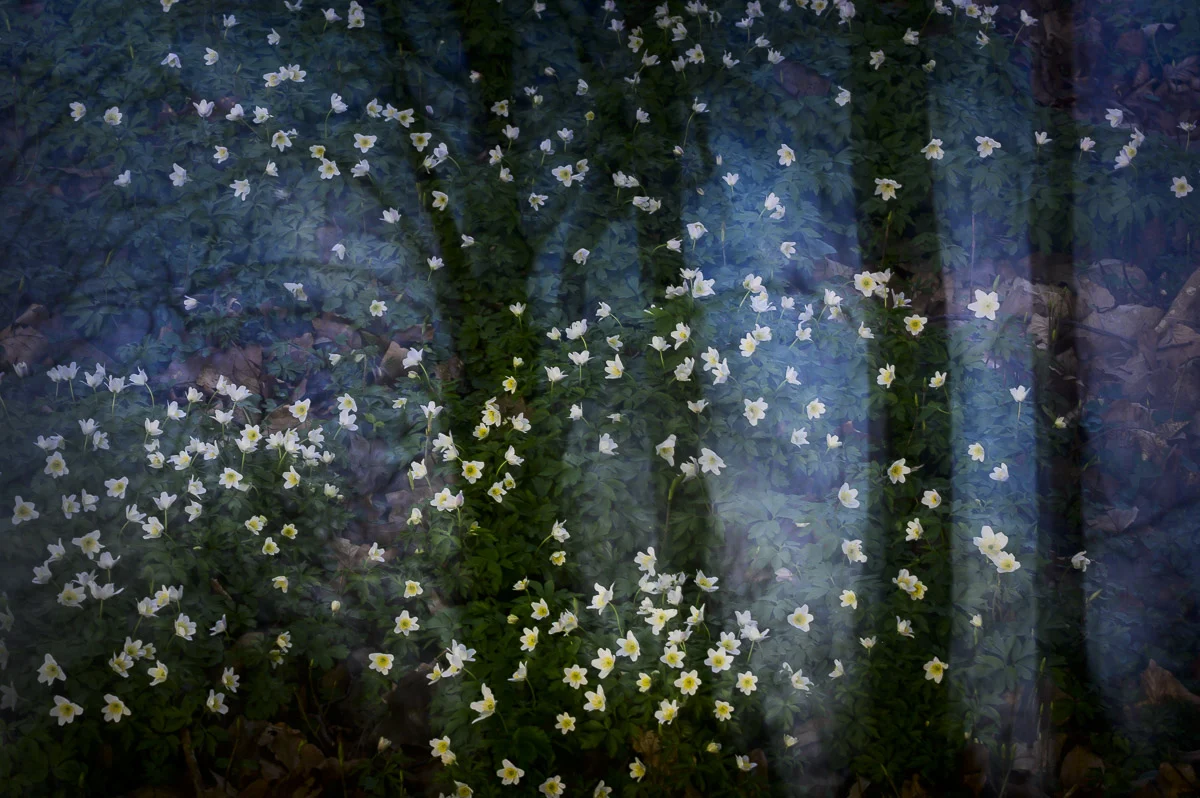
The conventional understanding of capturing a compelling photograph often centers on the finished product: a meticulously composed image, executed with flawless technique, and imbued with aesthetically pleasing color. These elements are undeniably crucial to a photograph’s impact and quality. However, a recent discourse from a prominent nature photographer, shared through the Nature Photographers Network, offers a profound recalibration of this perspective, asserting that the true artistry unfolds long before the shutter clicks, deep within the immersive process of observation and interaction on location. This philosophy champions an approach where the photographer acts as a responsive participant rather than a directive controller, allowing the image to emerge organically from the interplay of nature, perception, and design.
Shifting Paradigms: From Target to Emergence
The prevailing wisdom in photography often encourages the visualization of a "target photo" – a predefined outcome that guides the photographer’s actions. Yet, the presented methodology advocates for a radical departure from this checklist-driven mindset. Instead, the focus shifts to an active receptivity, a willingness to observe "what’s there without forcing it toward a predetermined conclusion." This proactive openness is paramount, as the unpredictability inherent in natural environments frequently renders preconceived notions obsolete. A photographer might arrive on site with a clear vision, only to find the light vastly different, the anticipated wildlife absent, or an unexpected element dominating the frame. In such dynamic scenarios, the environment itself dictates new priorities, and the photographer’s role transforms into one of agile response.

Technical mastery and accumulated experience are not dismissed but are recontextualized as indispensable tools rather than dictatorial frameworks. They serve as a comprehensive toolkit, readily available to address the demands of an evolving scene, rather than predetermining the final image. This fluid interaction underscores a central tenet: the journey of discovering what the situation yields is as vital as the final capture. This perspective aligns with a growing movement in contemporary art and photography that values process and serendipity over rigid planning, encouraging artists to embrace the unexpected as a co-creator.
The Interactive Triad: Nature, Perception, and Design
At the heart of this process-oriented philosophy lies an "interactive triad": Nature, Perception, and Design. This conceptual framework elucidates the dynamic relationship between the external world and the photographer’s creative response.
- Nature: The Unscripted Canvas. Nature, in this triad, provides the raw, untamed situation. It is the unscripted stage where light shifts, weather patterns evolve, and subjects move with inherent autonomy. This element emphasizes the external, uncontrollable factors that initiate the photographic journey, underscoring the necessity for flexibility and attentiveness.
- Perception: The Evolving Gaze. Perception acts as the critical filter, determining what registers in the photographer’s field of vision. It’s an active process of selection – deciding where the gaze lingers, what details are foregrounded, and what elements are consciously or unconsciously overlooked. This selective attention reduces the overwhelming complexity of a natural scene, condenses information, and continually shifts the focal point of interest. It is not a passive reception but an iterative engagement, where initial observations feed into subsequent visual assessments. Research in cognitive psychology often highlights the subjective nature of perception, demonstrating how individual experiences and intentions shape what is "seen" in any given environment.
- Design: The Responsive Articulation. Design represents the photographer’s considered response to the confluence of nature and perception. It encompasses not just technical execution – camera settings, lens choice, lighting adjustments – but the broader creative decisions made to articulate the emerging image. Crucially, this design phase is in service of an image that is forming, not one that has been rigidly predetermined. By relinquishing a fixed outcome, the photographer opens the door for chance to play a significant, often transformative, role. The initial photograph is never the conclusion; it serves as invaluable feedback, informing subsequent perceptions and guiding further design decisions in an ongoing loop. This iterative process, akin to the scientific method of hypothesis, experiment, and revision, allows for continuous refinement and discovery.
Chronicles of Emergence: Three Case Studies

To illustrate this triad in action, the photographer offers three distinct, unstaged encounters from personal experience, each demonstrating the dynamic evolution of attention and decision-making on location.
1. The Frost Leaf: Unveiling Hidden Connections
One frigid night, a sudden drop in temperature transformed a local park pond into a tableau of ice, bald cypress branches, and scattered leaves. The photographer, driven by intuition rather than a specific plan, arrived to find a scene teeming with intricate detail. Amidst the frozen expanse, a solitary leaf, encased in the ice, captured immediate attention. The initial impulse was to document the delicate crystal structures surrounding it. However, the first image revealed a disconnect: the leaf appeared isolated, its relationship to the icy surface unclear.
This immediate feedback loop prompted a shift in focus. The photographer recognized the need to establish a coherent connection between the subject and its environment. Technical intervention became the means to this end. A flash, equipped with a wireless trigger, was strategically placed directly on the ice, introducing a low, directional side light. This was not a one-time adjustment but an iterative process of repositioning the flash, evaluating the result on the camera’s display, and refining its placement until the light began to articulate the surface texture. Further adjustments included adding an LED light to subtly open up shadows, again followed by a cycle of testing and adjustment.

A pivotal moment of serendipity occurred when the flash inadvertently slipped, aiming more directly into the ice. This accidental redirection of light, visible on the display, dramatically altered the scene. The leaf suddenly achieved a distinct separation from the surface, and, unexpectedly, subsurface structures within the ice became visible. This unforeseen development transformed the image from a simple "leaf on ice" into a complex exploration of leaf, ice, and light as an integrated system, demonstrating how chance can fundamentally reshape creative direction.
2. Dragonfly in Backlight: The Art of Focused Waiting
A return visit to a familiar lake, initially driven by memories of previous successful dragonfly photography, was met with entirely changed conditions. This forced the photographer to abandon preconceptions and respond to the present reality. What immediately captivated attention was the reed grass, backlit by the low sun, causing the stems to glow with ethereal luminescence. The initial photographic quest became about finding an angle where this glow could be emphasized against a dark, receding background.
As the photographer worked with the reeds, dragonflies intermittently darted through the frame. This dynamic interplay of light, motion, and structure seized the photographer’s attention, shifting the focus from the reeds alone to the potential of incorporating these ephemeral subjects. A state of "focused waiting" ensued, characterized by framing the shot with anticipatory space for the insects and setting a very fast shutter speed – a crucial technical decision given the dragonflies’ rapid, non-hovering flight patterns.

Initial bursts of continuous shooting often yielded out-of-focus dragonflies. This feedback prompted a critical technical adjustment: switching to manual focus and stopping down the aperture. This trade-off, sacrificing some background softness for a deeper depth of field, ensured that both the reeds and the anticipated flight corridor of the dragonflies would be within the plane of focus. The process then returned to waiting, observing, and firing bursts whenever a dart of motion was perceived. To enhance responsiveness, the photographer intentionally softened their gaze through the viewfinder, allowing movement to register sooner. Out of hundreds of frames, a single image eventually materialized, perfectly aligning focus and position, a testament to persistent adaptation and the embrace of chance.
3. Slime Moulds: Discovery in the Microcosm
Autumn woods, often rich in macro detail, initially presented no clear subject. The photographer, adhering to the process-driven approach, photographed general elements – trees, leaves, mushrooms – using the camera’s display as a continuous feedback mechanism. None of the initial images held significant "weight."
It was within one of these review frames that a subtle detail emerged: fine, threadlike structures on a fungus, identified as slime moulds. This was a moment of revelation, where the camera, acting as an extension of perception, unveiled something the naked eye had initially overlooked. This discovery prompted a profound shift in scale and focus. The photographer moved closer, sitting on the forest floor, immersing in the "earthy" scent, and consciously attempting to frame this tiny world.

As time was spent with the subject, observation deepened. Small swellings at the ends of the threads became apparent, providing a natural focal point around which attention tightened. Introducing an LED light dramatically transformed the scene, creating dynamic shadows that shifted and reformed. This iterative process of checking the display, adjusting the light, and re-evaluating continued, drawing the photographer deeper into the intricate microcosm. Frame by frame, this previously unseen world unfolded, illustrating how sustained attention and technical experimentation can reveal profound beauty in the smallest details.
Broader Implications: The Art of Responsive Engagement
These three diverse situations, despite their varied subjects and environmental conditions, underscore a consistent underlying logic: the photographic process is a fluid dance where attention continually shifts, and decisions organically grow out of that evolving focus. The photographer’s insights challenge the notion that truly impactful photography stems from the rigid application of rules. Instead, it arises from the synergistic moment when "seeing and choosing start to work together."
Technical competence, far from being a creative constraint, is presented as an enabler. When a photographer is fluent in composition and technique, these elements become intuitive, freeing the mind from conscious deliberation. This liberation allows for an unhindered, immediate response to the unfolding realities of the scene. Rules, experience, and technique are thus positioned as supportive tools, to be deployed when they enhance the image and discarded when they impede genuine engagement.

This philosophy holds significant implications for aspiring nature photographers and the broader artistic community. It champions a mindful, present-moment approach, encouraging artists to cultivate deep observation skills and embrace the inherent unpredictability of the natural world. By fostering a dialogue between nature, perception, and design, photographers can move beyond mere documentation to create images that are not just technically proficient but profoundly resonant, reflecting an authentic interaction with their subject. In a world increasingly dominated by pre-packaged experiences and instant gratification, this process-driven methodology offers a valuable counter-narrative, advocating for patience, receptivity, and the often-serendipitous journey of artistic discovery. The enduring power of the triad—nature setting the scene, perception guiding the gaze, and design providing the response—remains central, a testament to the transformative power of allowing a "small piece of chance to shift everything."
