
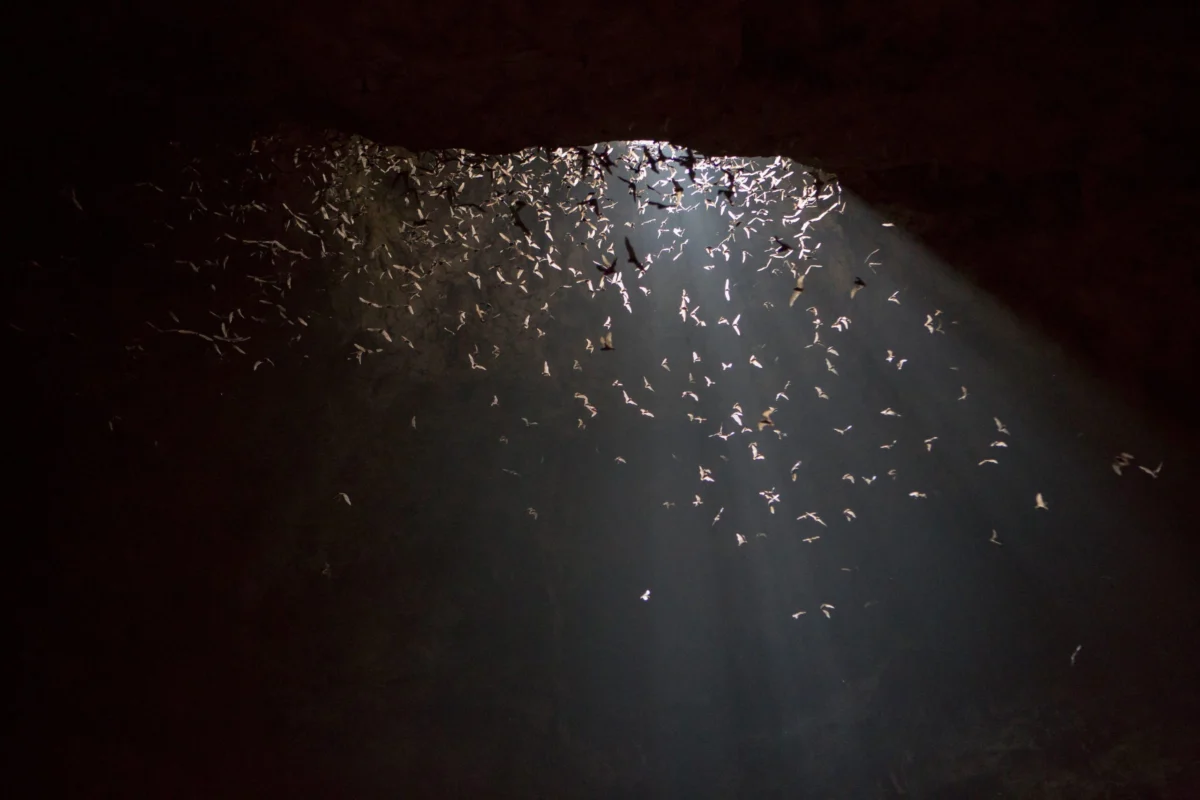
More than 50 million years ago, bats first took flight, carving out their own nighttime niche to avoid avian rivals and dangerous daytime skies. This monumental evolutionary shift represents one of the most successful adaptations in the history of vertebrate life. While the fossil record remains frustratingly sparse regarding the transitional phases of this transformation, modern genetic sequencing and comparative anatomy have allowed scientists to piece together a compelling narrative of how a small, earth-bound mammal became the only mammal capable of true, powered flight.
A Chronology of the Nocturnal Pioneers
The story of the bat begins in the shadow of the K-Pg extinction event, the asteroid impact approximately 66 million years ago that terminated the age of the dinosaurs. In the aftermath of this planetary catastrophe, the biological landscape underwent a radical reorganization. While avian species—the direct descendants of theropod dinosaurs—had already been diversifying for roughly 100 million years prior to the impact, the sudden vacancy of ecological niches provided a canvas for rapid mammalian radiation.
Paleontologists and evolutionary biologists generally place the emergence of the Chiroptera order between 65 and 52 million years ago. During the Eocene epoch, the Earth was significantly warmer, with dense, sprawling forests covering much of the globe. It was within these humid, insect-rich environments that the ancestor of the modern bat likely began its transition. The prevailing scientific theory suggests a progression from small, terrestrial, insectivorous mammals that utilized gliding membranes—similar to those seen in extant colugos or flying squirrels—to minimize the energy expenditure required for movement across a complex forest canopy.
By the time the earliest identifiable bat fossils appear in the geological record—dating back approximately 52 million years—these creatures were already morphologically sophisticated. These ancient specimens, such as Onychonycteris finneyi, possessed well-developed wings, suggesting that the transition from gliding to flapping flight occurred with remarkable speed in evolutionary terms. This "fossil gap" remains a subject of intense study, as scientists seek to determine whether the development of powered flight and the acquisition of sophisticated echolocation occurred simultaneously or in a staggered, multi-stage process.
Anatomy of the Wing: Convergent Evolution
The flight of the bat is a masterclass in convergent evolution. Though they share the skies with birds, their aerodynamic solutions are fundamentally distinct. While bird wings are composed of fused skeletal elements covered in feathers, the bat wing is a marvel of manual dexterity. A bat’s wing is essentially a hyper-extended, webbed hand. The four digits of the forelimb are elongated to support a flexible, sensitive skin membrane known as the patagium.
This structural difference provides bats with a degree of aerial maneuverability that surpasses most avian species. By independently manipulating their finger bones, bats can adjust the curvature, tension, and surface area of their wings mid-flight. This allows for precise, rapid turns and hovering capabilities that are essential for hunting high-speed, unpredictable insect prey in cluttered, low-light environments.
Conversely, birds are largely restricted by the rigid geometry of their feathered wings. While birds generally excel in long-distance, high-altitude migration and efficient soaring, bats are the undisputed masters of short-range, high-agility navigation. This anatomical divergence underscores the different selective pressures that shaped these two groups: birds largely optimized for daylight efficiency, while bats evolved to thrive in the complex, three-dimensional labyrinth of the night.
The Ecological "Night Shift"
The success of the bat is intrinsically linked to its ability to monopolize the nocturnal sky. When bats began their expansion, the daytime skies were already heavily populated by birds. By moving into the "night shift," bats avoided direct competition for resources and minimized exposure to diurnal raptors.
This decision was reinforced by physiological constraints. Powered flight is an incredibly metabolically expensive activity that generates significant heat. By limiting their activity to the cooler temperatures of the night, bats were able to mitigate the risk of overheating. Furthermore, the nocturnal environment offered a massive, largely untapped reservoir of biomass in the form of nocturnal insects.
The evolution of echolocation—a sophisticated biological sonar system—served as the final key to unlocking this domain. By emitting high-frequency sound pulses and analyzing the returning echoes, bats can map their surroundings and track the movement of prey with pinpoint accuracy in total darkness. Recent genomic studies suggest that the capacity for vocal learning and sensory processing required for echolocation may have deep evolutionary roots, appearing in the lineage well before the first fully functional bat took to the air.
Economic and Ecological Significance
Today, the Chiroptera order comprises over 1,500 species, representing roughly 20 percent of all living mammalian species. Their role in global ecosystems is profound. As nocturnal predators, they exert immense pressure on insect populations, acting as a natural form of pest control. According to data from the U.S. Geological Survey, the agricultural value provided by bats in the United States alone exceeds $3.7 billion annually, primarily through the suppression of crop-destroying insects that would otherwise require heavy pesticide intervention.
Beyond pest management, bats serve as critical pollinators and seed dispersers. Many plant species, including the agave plant—vital to the production of tequila—rely exclusively on bats for pollination. Their migratory patterns and wide geographic distribution make them essential conduits for forest regeneration, as they carry seeds across vast distances that birds and terrestrial mammals cannot easily traverse.
Despite their ecological importance, bats face mounting threats. Habitat loss, pesticide use, and the devastating spread of White-Nose Syndrome—a fungal infection that has claimed millions of lives in North American colonies—have placed significant pressure on populations worldwide. The vulnerability of these animals is exacerbated by their slow reproductive rates; most bats produce only one pup per year, making recovery from population collapses a multi-generational challenge.
Analysis of Modern Threats and Conservation Efforts
The conservation of bats is inextricably linked to the broader health of global biodiversity. Because bats occupy a high trophic level, they serve as excellent indicators of environmental stability. Their presence (or absence) provides researchers with critical data regarding the health of insect populations and the integrity of forest ecosystems.
The parallels between bird conservation and bat conservation are striking. Both groups benefit from the mitigation of light pollution, which disrupts navigation and foraging, and the preservation of native vegetation, which supports the insect populations that sustain them. Furthermore, the practice of integrated pest management, which prioritizes biological controls over chemical pesticides, is essential for the long-term survival of insectivorous bats.
"There may be just as many bats as birds in your neighborhood," notes Dr. Nancy Simmons, a curator at the American Museum of Natural History. This observation highlights a fundamental disconnect in public perception. While birds are highly visible, diurnal ambassadors for nature, bats remain hidden in the shadows, performing their vital ecological services unseen. Bridging this gap in public understanding is a central goal for conservationists who argue that the loss of bat populations would trigger a cascade of negative effects throughout the global food chain.
Conclusion: A Continuing Evolutionary Story
The journey of the bat, from a small, scurrying insectivore to a master of the night sky, is a testament to the power of adaptation. Their survival through the extinction of the dinosaurs and their subsequent radiation into every continent except Antarctica demonstrates a remarkable evolutionary resilience.
As the Earth enters a new period of rapid climatic and environmental change, the future of the bat remains uncertain. However, their history suggests that they possess the flexibility to survive, provided they are granted the space and resources to do so. The legacy of those first, tentative flaps of a membrane-covered hand continues to echo through our forests and agricultural fields today. Protecting these animals is not merely an act of environmental charity; it is a pragmatic necessity for maintaining the delicate balance of the ecosystems upon which human agriculture and natural biodiversity depend.
As we look toward the future, the integration of genetic research, fossil analysis, and rigorous field observation will continue to illuminate the story of these nocturnal survivors. Their evolutionary narrative is far from over, and the ongoing adaptation of these enigmatic mammals will remain a critical component of the planet’s biological future.
