
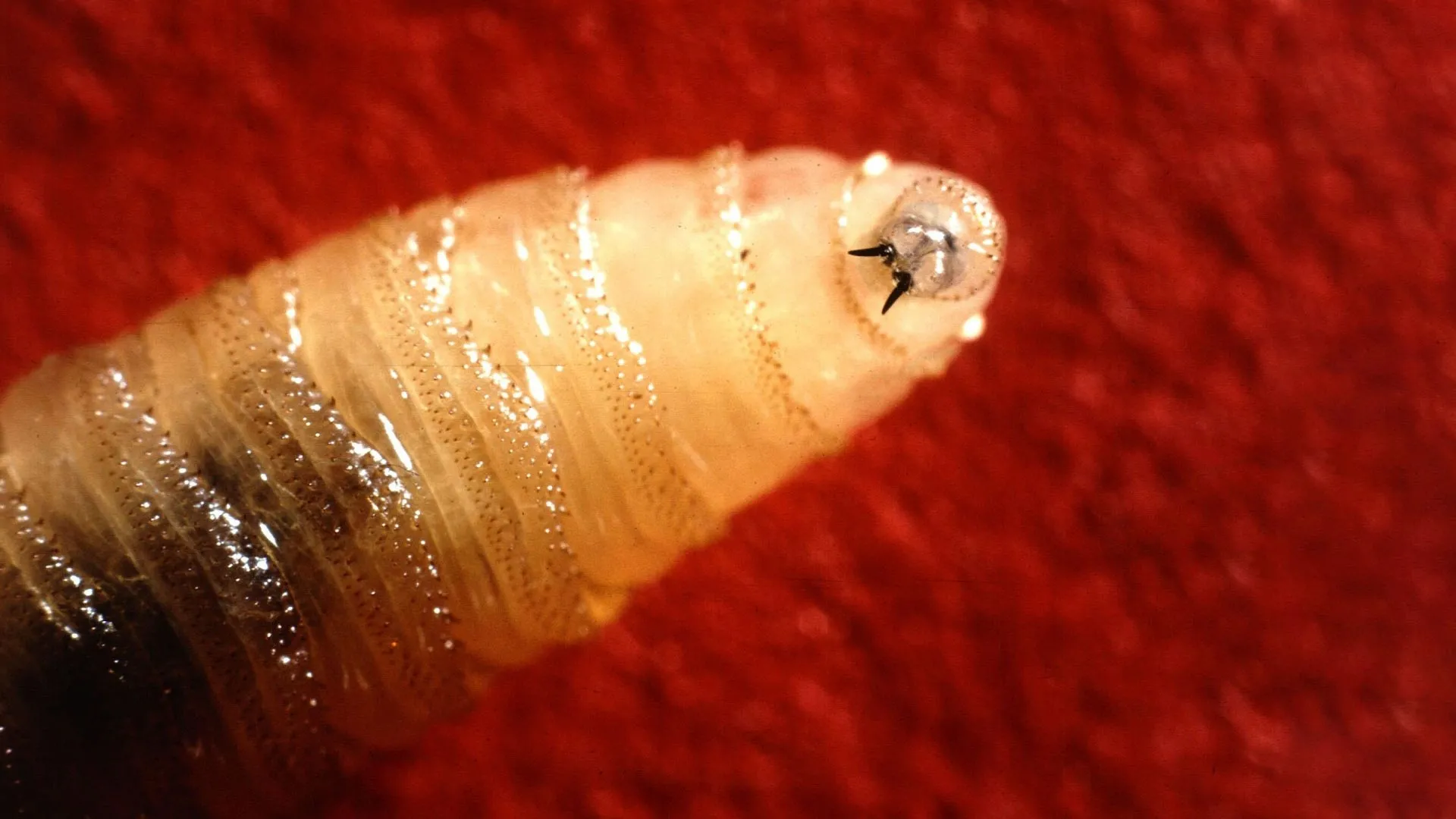
The New World screwworm, a devastating parasitic insect whose larvae consume the living tissue of warm-blooded animals, is staging an alarming northward resurgence in the United States. Decades after a monumental mid-20th-century eradication campaign pushed the pest’s breeding range hundreds of miles south to Panama, confirmed sightings have once again been documented in Texas and New Mexico. This modern reappearance has galvanized federal, state, and local public health officials, who fear the potential fallout for the domestic livestock industry, wildlife conservation efforts, domestic pets, and, in rare instances, human health.
In response to the escalating crisis, a collaborative team of researchers at the University of California San Diego (UC San Diego) alongside the County of San Diego Health and Human Services Agency (HHSA) Public Health Services has engineered a sophisticated, real-time tracking tool. Designed to anticipate where the parasitic fly might strike next, this dashboard represents a new frontier in epidemiological surveillance, blending traditional public health metrics with advanced data streams to keep communities a crucial step ahead of the biological threat.
Historical Context and the 1950s Eradication Campaign
To understand the gravity of the current outbreak, agricultural historians and entomologists point to the devastating impact of the New World screwworm—scientifically known as Cochliomyia hominivorax—during the 1950s. Before modern control measures were established, the parasite inflicted catastrophic financial losses on United States livestock producers, particularly across the American Southwest. Annual damages were estimated between $50 million and $100 million at the time, a sum that would equate to hundreds of millions of dollars in modern currency when adjusted for inflation.
The pest’s lifecycle is uniquely destructive. Unlike common blowfly maggots that thrive on dead, rotting flesh, female New World screwworms seek out open wounds, abrasions, or natural body openings of living animals to deposit their eggs. Once hatched, the ravenous larvae burrow deep into healthy tissue, expanding wounds, causing excruciating pain, and predisposing the host to severe secondary infections. Left untreated, a heavy infestation can prove fatal to cattle, horses, sheep, deer, and other wildlife within days.
Faced with this persistent agricultural emergency, U.S. agricultural scientists in the 1950s devised one of the most successful biological control operations in history: the sterile insect technique (SIT). By mass-rearing male screwworm flies, sterilizing them via radiation, and releasing millions of them into infested wild populations, authorities disrupted the reproductive cycle. Because wild females mated only once or a limited number of times, encounters with sterile males yielded no viable offspring. The wild population steadily collapsed, eventually eradicating the pest from the continental United States and establishing a protective biological barrier further south in Central America.
A Rapid and Surprising Northern Spread
Despite decades of vigilance, recent epidemiological developments indicate that the screwworm has managed to breach historical boundaries. Following initial detections in regions to the south, the parasite has crossed back into U.S. territory, establishing a presence in Texas and New Mexico.
Dr. Mark Beatty, assistant medical director for the County of San Diego’s Epidemiology and Immunization Services Branch, admitted that the velocity of the northward expansion caught officials off guard. "We knew in 2023 that New World screwworm was going to move northward, but I wasn’t expecting it to move as fast as it has," Beatty noted. While investigations into the exact vector and source of the initial U.S. re-incursions remain ongoing, the physical presence of the parasite is indisputable. "Once it entered Texas, we quickly saw an increase in detections," Beatty explained. "It’s in a place where it used to live, so it’s not surprising it’s taking a hold again."
The mechanisms driving this expansion are manifold. Adult screwworm flies are robust fliers capable of traversing significant distances in search of hosts and breeding grounds. Furthermore, the modern globalized movement of livestock, domestic pets, migratory birds, and regional wildlife can inadvertently transport infected hosts across state and national borders, accelerating the dissemination of the parasite into vulnerable ecosystems.
Innovative Surveillance: The Resilient Shield Screwworm Dashboard
Recognizing the urgent need for heightened situational awareness, specialists at UC San Diego and the San Diego County HHSA joined forces to develop a regional risk-profiling dashboard. The project was spearheaded through Resilient Shield, a specialized research center funded by the U.S. Centers for Disease Control and Prevention (CDC) and co-led by Dr. Eliah Aronoff-Spencer, a professor of medicine at UC San Diego School of Medicine and affiliate member of the UC San Diego Design Lab and Qualcomm Institute.
"Our County public health partners alerted us to the need for better situational awareness of New World screwworm," Dr. Aronoff-Spencer stated. "We built a dashboard to generate regional risk profiles. This is just one example of how we are responding to County needs with a focus on real-world issues. It’s a model that has brought us great success, like the Tijuana River Crisis Environmental Dashboard."
The newly minted dashboard operates by synthesizing diverse datasets into actionable intelligence. It incorporates verified laboratory detections, microclimatic and environmental conditions favorable to the flies and their larvae, and, notably, real-time media reports.
While public access to the dashboard is currently restricted to authorized public health officials, veterinarians, and project partners, developers harbor long-term plans to release a generalized version for public utility.
Bridging Data Gaps with Media Intelligence
One of the most groundbreaking elements of the San Diego tracking tool is its integration of news coverage and digital media listening tools. Traditional public health surveillance networks, while rigorous, are frequently bottlenecked by administrative and logistical delays. Laboratory confirmations of parasitic or infectious agents can often require days or weeks to process through official reporting chains.
Dr. Seema Shah, medical director of the Epidemiology and Immunization Services Branch for the County of San Diego’s Public Health Services Department, emphasized the strategic advantage of this methodology. "Traditional reporting mechanisms for public health are often delayed," Shah observed. "Lab confirmation can take days or weeks. By incorporating media reports, we can identify potential threats sooner and stay one step ahead."
By analyzing early-stage journalistic reports, localized agricultural alerts, and unstructured digital data, the platform can flag anomalous biological events before official laboratory pipelines complete their verification cycles. This early-warning capability allows regional planners to calculate whether an approaching threat is imminent or if agencies have a multi-month window to bolster defenses.
"The tool gives you a sense of where you might expect to see cases next," Dr. Beatty added. "That’s helpful in determining how we should be preparing. Is the threat imminent, or do we have six months? We’re in a very concerning phase right now, and the tool backs that up."
The Human Dimension and Public Health Implications
Although the primary victims of New World screwworm are livestock and wildlife, the parasite also poses a rare, albeit serious, zoonotic threat to human health. Human myiasis—infestation of human tissue by fly larvae—occurs when adult flies deposit eggs into open sores, cuts, or mucosal membranes such as the eyes, nose, or ears.
Public health experts emphasize that human-to-human transmission is nonexistent; the screwworm does not spread contagiously via respiratory droplets or casual contact like viral pathogens such as influenza or COVID-19. Nevertheless, an accidental human exposure requires immediate medical intervention. Healthcare providers must manually and promptly extract the burrowing larvae to halt tissue destruction and prevent severe secondary bacterial infections.
To safeguard against widespread human or animal exposure, local veterinary networks are mobilizing. Dr. Emily Trumbull, a veterinarian and lead for the San Diego County Epidemiology Unit’s One Health Program, stressed the importance of interdisciplinary cooperation. "We are working closely with the California Department of Food and Agriculture to connect local veterinarians with screwworm resources for surveillance in our region," Trumbull said. "The flies can affect any warm-blooded animal, so working together with veterinarians serving livestock, pets and wildlife is critical for identifying suspect cases and preventing cases in people."
Dr. Trumbull noted that the predictive nature of the new dashboard gives regional stakeholders a vital head start. "The dashboard takes into account environmental factors that can help us understand how the risk to our local region is changing before the fly arrives. That’s why the dashboard is valuable."
A National Network: The CDC Insight Net Framework
The creation of the screwworm dashboard is not an isolated academic exercise; it forms part of a broader national paradigm shift in how public health agencies collaborate with academic research institutions. Resilient Shield is one of 13 core facilities operating under the CDC’s Insight Net, a nationwide initiative dedicated to advanced infectious disease modeling, outbreak forecasting, and rapid threat response.
The operational philosophy of Insight Net upends traditional academic workflows. Rather than academic researchers pursuing theoretical studies in a vacuum, public health departments facing acute, real-world crises submit their most pressing operational challenges directly to the network. Researchers then rapidly engineer tailored technological solutions.
"In public health, we always know our most urgent priorities, but too often we don’t have the immediate resources or in-house technical solutions to achieve them," Dr. Shah remarked. "The screwworm is a perfect example. It is a critical threat, but it is an issue our academic partners might never have prioritized without our direct ticket. This partnership solves our immediate problem while providing shareable, open reference designs that demonstrate exactly how public health, academia, and industry can successfully work together."
This demand-driven model was first tested when Dr. Shah submitted a request to track influenza trends, a project co-led by Resilient Shield co-principal investigator Ruy Ribeiro at the Los Alamos National Laboratory. For the screwworm initiative, Dr. Aronoff-Spencer collaborated closely with mathematical epidemiologist Dr. Natasha Martin, a professor of medicine and vice chief in the Division of Infectious Diseases and Global Public Health at UC San Diego School of Medicine.
Furthermore, Resilient Shield has engineered a modular, scalable resource hub in partnership with technology leaders such as Google and MITRE. This technological infrastructure consolidates disparate data streams—ranging from human medical records and agricultural statistics to meteorological data, weather patterns, and social listening metrics—into a unified platform. When a new public health crisis arises, engineers can rapidly deploy customized websites, secure data-processing systems, advanced predictive simulation engines, or artificial intelligence agent builders.
"Our central innovation is the true convergence of partner priorities with scalable engineering," Dr. Aronoff-Spencer concluded. "We do not build in a vacuum. Our infrastructure is built directly on the priorities dictated by our partners. In addition, because our platform is built on an open, modular architecture, every solution we develop strengthens the system and makes it more adaptable for the next public health challenge."
Coordinated Federal and State Eradication Efforts
As regional authorities refine their predictive modeling capabilities, federal agencies are spearheading physical containment and eradication protocols on the ground. The U.S. Department of Agriculture (USDA) is leading the active response, deploying a multi-faceted campaign that revives the foundational principles of the historic 1950s intervention.
Current containment strategies rely on a combination of strategic sterile insect releases, targeted pesticide applications, and strict animal movement quarantines designed to halt the transit of potentially infested livestock. In parallel, agricultural authorities are seeking formal approval from the U.S. Environmental Protection Agency (EPA) to deploy a genetically modified, all-male screwworm strain currently undergoing rigorous field testing. Concurrently, molecular biologists at UC San Diego and other partner institutions are pioneering next-generation genetic technologies designed to enhance the precision and efficacy of future pest control operations.
Public health authorities emphasize that containing the northward expansion of the New World screwworm will require sustained vigilance, cross-sectoral collaboration between agricultural and human health practitioners, and continued technological innovation. While the pest’s re-emergence in Texas and New Mexico presents a formidable challenge to modern biosecurity, the integration of predictive data dashboards and time-tested biological controls offers a robust framework for defending American agriculture and public health against the flesh-eating threat.
