
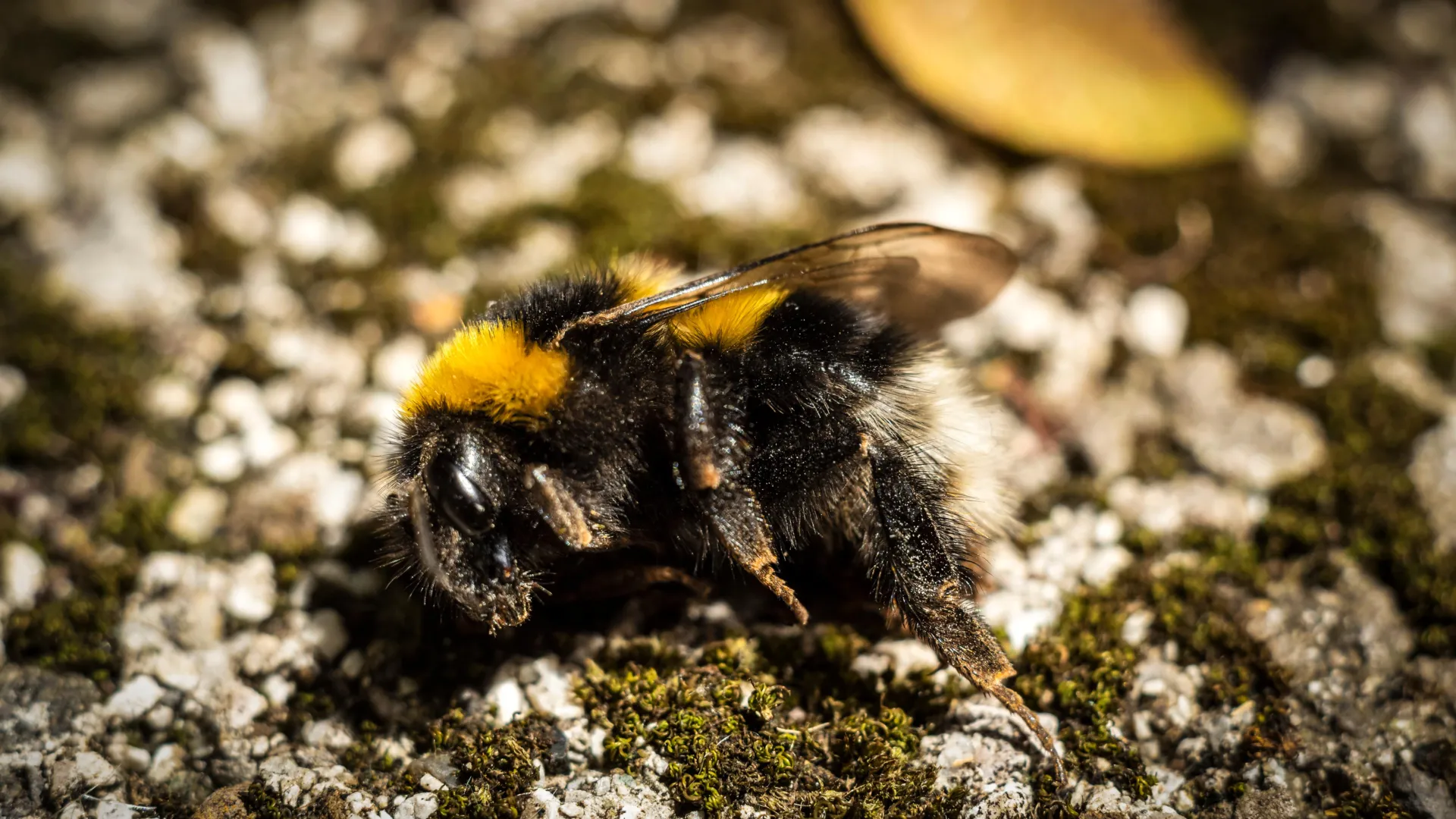
During the peak of the summer months, a quiet and unsettling discovery is becoming increasingly common across urban and suburban pavements: the motionless bodies of dead bumblebees. While pedestrian traffic often bypasses these tiny casualties, their presence signals a deepening ecological crisis. The sudden appearance of these insects is not merely a random occurrence of nature; it is the culmination of severe environmental pressures, ranging from extreme weather events and habitat fragmentation to chemical exposure and the subtle disruptions of climate change.
Understanding why these bees are dying in such visible locations requires examining the intricate social structures of bumblebee colonies, the physiological toll of modern climate extremes, and the heavy burden that human activity places on the world’s most critical pollinators.
Inside the Colony: Life, Death, and Housekeeping
Bumblebees are highly social insects that form complex colonies governed by strict labor divisions. At the heart of these societies are the active worker bees, whose lives are remarkably brief. A typical worker bee has a lifespan limited to just four to six weeks. Consequently, within a relatively compressed window during the spring and summer seasons, entire generations of older bees naturally reach the end of their biological cycle and die off.
However, the manner in which these bodies end up on pavements involves a deliberate behavioral adaptation designed to protect the surviving hive members. To prevent disease and pathogens from spreading through the confined space of the colony, healthy young worker bees take on the responsibility of waste management. They actively retrieve the bodies of deceased nestmates and carry them far away from the nest. Urban pavements, often adjacent to gardens and green spaces, frequently become the terminal drop-off points for these hygienic flights.
While natural mortality and colony maintenance account for a baseline number of deceased bees, the sheer volume observed in recent years points to compounding external stressors that are shortening lifespans and destabilizing entire populations.
The Thermal Crucible: Heatwaves and Physiological Stress
Weather anomalies, particularly record-breaking temperatures, have emerged as a devastating factor in bee mortality. Following England’s warmest June on record—a milestone mirrored across much of the United Kingdom—meteorological agencies and ecological researchers have sounded the alarm regarding the frequency of intense summer heatwaves.
For ectothermic creatures like bees, extreme ambient temperatures induce severe thermal stress. Prolonged exposure to high heat alters developmental stages, limits flight capacity, and severely impairs foraging behavior. While social insects utilize sophisticated cooling mechanisms—such as fanning their wings rapidly to circulate air and lower internal hive temperatures—these adaptations have strict biological limits.
When ambient temperatures soar beyond manageable thresholds, bees struggle to thermoregulate, even while in flight. Although bees can theoretically manage internal heat by redistributing hemolymph through their bodies during transit, prolonged exposure to extreme heatwaves leads to exhaustion, dehydration, and eventual collapse. This heat-induced fatigue often leaves them stranded on hot pavement surfaces, unable to return to the colony.
Chemical Pressures and the War on Weeds
Beyond climatic pressures, anthropogenic chemical use remains a foundational driver of pollinator decline. Pesticides and herbicides are heavily integrated into modern agricultural and domestic land management, significantly diminishing the overall fitness of wild bee populations.
While insecticides are engineered to target agricultural pests, their collateral damage extends broadly across beneficial insect communities. Compounds such as organophosphates, synthetic pyrethroids, and phenylpyrazoles are known to induce paralysis, disrupt neurological navigation systems, and cause direct mortality in bees. Although regulatory bodies in the United Kingdom and the European Union have implemented strict bans on the most hazardous neonicotinoids, agricultural sectors continue to rely on alternative systemic chemicals that yield profound, sublethal knock-on effects, such as reducing wild bee reproduction rates by staggering margins.
Simultaneously, the widespread use of herbicides targets essential floral resources that bees rely upon for sustenance. Dandelions, frequently categorized as unsightly weeds and targeted with chemical eradication, serve as a vital early-season lifeline for emerging pollinators. The removal of these foundational nectar sources through aggressive weeding and municipal landscaping deprives bees of crucial carbohydrates, accelerating starvation in urban and suburban environments.
Habitat Fragmentation and Phenological Mismatches
The degradation and loss of natural habitats further exacerbate the vulnerability of bee populations. As land is continually repurposed for intensive housing developments, commercial expansion, expansive road networks, and intensive monoculture farming, the contiguous landscapes that once supported diverse insect life have become fragmented islands. Without connected corridors of diverse flora, wild bees struggle to secure adequate forage and nesting sites.
Compounding this spatial crisis is the temporal disruption caused by climate change, known scientifically as phenological mismatch. As global temperatures fluctuate unpredictably, the finely tuned synchronization between pollinators and their floral hosts is falling out of alignment. Plants are increasingly triggered to flower earlier in the year, occasionally before bees emerge from hibernation, or conversely, peaking outside the active windows of local pollinator populations. This temporal dislocation deprives waking colonies of essential nutrition while simultaneously leaving flowers unpollinated, threatening the reproductive success of both flora and fauna.
The Broader Implications for Global Biodiversity and Agriculture
Insects represent the most diverse and abundant animal group on Earth, yet they face unprecedented threats. Recent assessments by conservation bodies, including the International Union for Conservation of Nature (IUCN), highlight a dramatic escalation in risk; the number of European wild bee species categorized as threatened with extinction has more than doubled over the past decade, with roughly 10 percent of all assessed species now facing extinction risks.
The loss of these organisms carries profound implications that extend far beyond the natural world, striking directly at the heart of human economic stability and global food security. Ecosystem services provided by insects—including decomposition, pest regulation, and nutrient cycling—are fundamental to planetary health. However, the most economically significant service delivered almost exclusively by bees is crop pollination.
Scientific estimates indicate that bees support approximately 75 percent of global crop pollination and contribute directly to the reproduction of nearly 90 percent of all wild flowering plants. A vast array of fruits, vegetables, nuts, and forage crops rely entirely on insect-mediated fertilization. The ongoing depletion of pollinator reservoirs introduces a severe vulnerability into global agricultural supply chains, raising the distinct prospect of a widespread nutritional and economic crisis if systemic declines are left unchecked.
Actionable Mitigation: What Can Be Done?
Addressing a crisis of this scale requires coordinated intervention at both macro and micro levels. Policymakers, agricultural producers, and individual citizens all play a role in altering the trajectory of pollinator decline.
Consumers can exert significant influence by adopting mindful purchasing habits. Supporting local, sustainably produced agriculture and favoring food growers who employ nature-friendly, low-chemical farming systems helps reduce the systemic demand for harmful pesticides. Homeowners can similarly pivot toward ecological land management by eliminating routine chemical treatments, replacing manicured lawns with diverse native plant species, and intentionally leaving sections of turf unmown to establish micro-habitats and foraging sanctuaries.
On a localized, immediate level, individuals encountering a distressed bee stranded on a pavement during hot summer weather can take simple steps to assist. Providing emergency hydration using a straightforward solution of two parts granulated sugar to one part water in a shallow dish can rapidly revive an exhausted forager. If conditions permit and the individual has no underlying insect allergies, gently relocating the bee to a nearby shaded spot or onto a flowering plant can mean the difference between survival and demise.
Ultimately, the dead bumblebees found on summer pavements serve as an urgent biological indicator. They are visible reminders of a fragile ecological balance under extreme pressure, demanding immediate and sustained attention from society before the silent architects of our food supply disappear entirely.
