
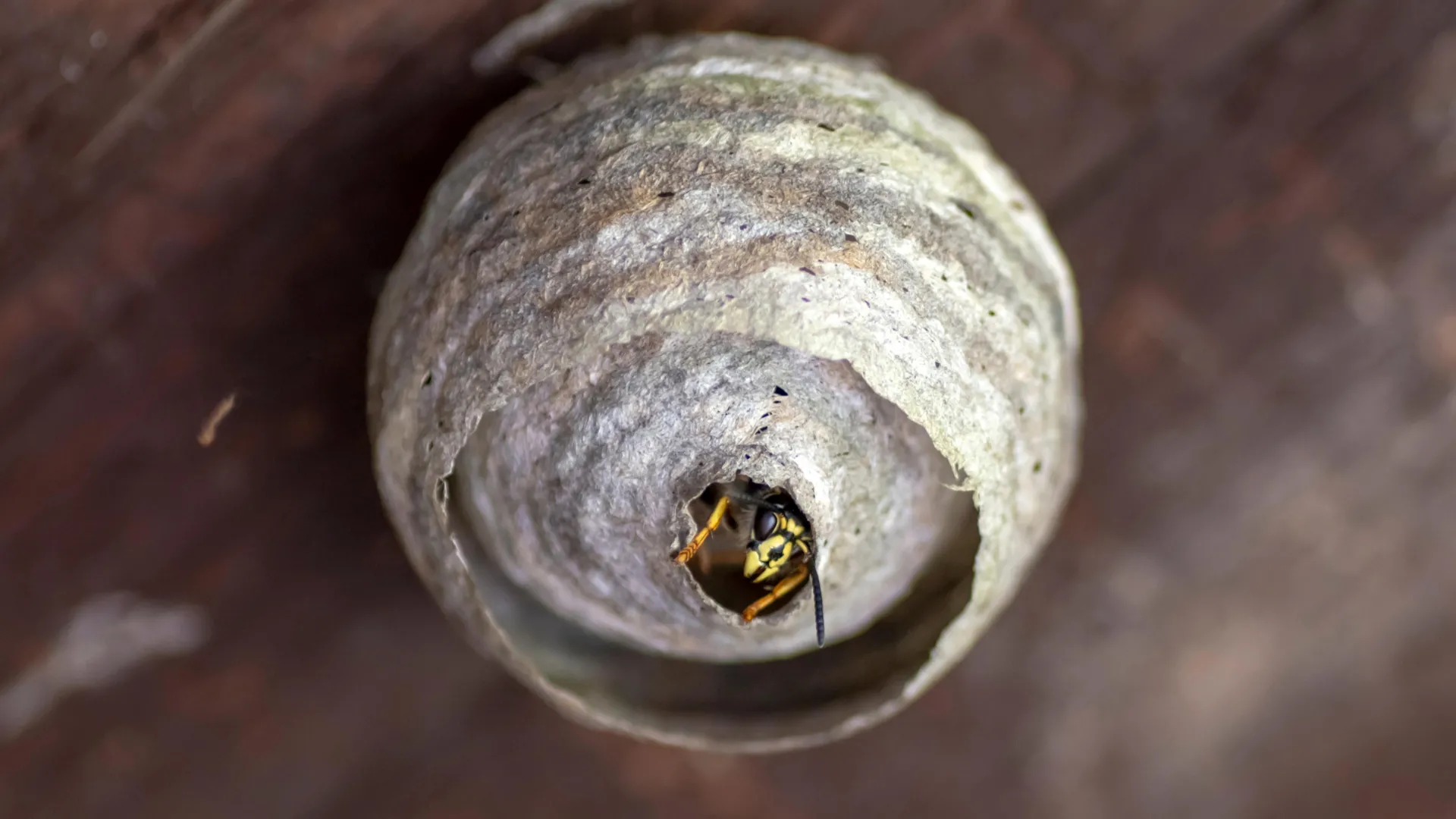
For millions of people across the United Kingdom and Northern Europe, the arrival of summer reliably brings a familiar set of seasonal rituals: outdoor festivals, the application of sun cream, and the inevitable standoff with common social wasps at picnics and barbecues. Historically viewed more as pests than ecological cornerstones, these yellow-and-black insects are as synonymous with the warmest months of the year as long days and school holidays. Pest control agencies regularly field thousands of emergency calls during July and August, responding to panicked homeowners discovering uninvited nests in lofts, wall cavities, and garden sheds.
However, the summer of 2026 has deviated dramatically from historical norms. Across multiple regions, a conspicuous and eerie silence has settled over outdoor spaces. The customary barrage of media reports warning of "plagues of wasps" and aggressive picnic scavengers is entirely absent. For entomologists, academic researchers, and professional pest-controllers alike, this sudden scarcity is not a welcome reprieve, but rather a profound anomaly demanding urgent scientific investigation.
The Observational Evidence: From Laboratories to Pest Control
The realization that something was fundamentally amiss first surfaced within academic research facilities. Entomologists and wasp biologists relying on field-caught specimens for seasonal behavioral and ecological experiments quickly discovered that their usual collection sites were yielding virtually nothing. Field researchers attempting to source subjects for university laboratories found themselves returning empty-handed, unable to locate sufficient colonies for study.
This localized frustration soon found broader validation within the pest management industry. Commercial pest-control operators, who typically experience peak operational demand during the mid-summer months for nest eradication and removal, report an exceptionally quiet season. Requests to clear social wasp colonies have plummeted to a fraction of their historical averages for a warm-weather year.
While these early indicators remain largely anecdotal pending the formal rollout of the Big Wasp Survey—the premier citizen-science monitoring initiative tracking national populations—the convergence of observations from academic fieldworkers and commercial technicians paints a deeply concerning picture. If rigorous ecological data ultimately confirms these preliminary observations, the ramifications extend far beyond the temporary convenience of undisturbed outdoor dining. Despite their often-maligned reputation, social wasps function as vital ecological agents, serving simultaneously as apex invertebrate predators, effective pollinators, and essential decomposers that regulate broader ecosystem health.
A Chronology of Climate Disruption: Spring 2026
To understand the current crisis, scientists are examining the precise sequence of meteorological events that have shaped the biological calendar of 2026. The year began with considerable promise for the Vespula genus. As winter receded, a warm and dry spring prompted a bumper emergence of "foundresses"—new, fertilized queens waking from hibernation to establish foundational colonies.
During this vulnerable solitary phase, a queen must shoulder the entire burden of nest construction, egg fertilization, foraging, and early brood rearing without the assistance of a worker caste. Historical data indicates that a warm, dry spring is typically beneficial, providing an abundance of early floral nectar for the queen’s nutritional needs and robust prey populations to feed her initial larvae.
However, the spring of 2026 quickly morphed into a volatile meteorological roller coaster. Periods of unseasonable, unprecedented heat were abruptly punctuated by sharp drops in temperature, cold damp days, and unexpectedly freezing nights. This extreme meteorological whip-sawing created a hostile environment for the solitary queens. Biologists theorize that these extreme fluctuations exceeded the physiological limits of many newly emerged monarchs, causing them to abandon their newly established nests, fail in their foraging duties, or perish outright before their first brood of worker wasps could emerge. Consequently, the massive spring bounty of queens was drastically winnowed down to a fraction of its normal size.
Thermal Thresholds and the Impact of Summer Heatwaves
The compounding disasters for the wasp population did not end with erratic spring weather. As the season progressed into early summer, consecutive and prolonged heatwaves gripped the region, driving ambient and surface temperatures to unprecedented levels.
While certain insect species adapt well or even thrive under such conditions—conservation groups noted that the prolonged sunshine created a "bumper summer" for various butterfly species due to uninterrupted foraging and mating opportunities—social wasps faced a different physiological reality. All insects possess a critical thermal maximum, scientifically designated as CTmax. When ambient or surface temperatures exceed this threshold, insects suffer from severe physiological distress, including desiccation, debilitating muscle spasms, and eventual thermal stupor.
For honeybees, the CTmax hovers around 49°C, a threshold frequently approached or surpassed as ground surface temperatures in parts of the UK exceeded 50°C during the peak summer heatwaves. Even when temperatures remain strictly below the absolute CTmax, sustained heat severely degrades insect productivity and neurological function. Research into bumblebee cognition and foraging efficiency demonstrates that heatwaves exceeding 32°C severely impair their ability to locate food, leading conservationists to warn of accelerated population declines as flora wither prematurely under thermal stress.

Wasps are generally considered robust and resilient organisms. They rank among the most successful invasive species globally, aided by advanced social thermoregulation behaviors—such as rapid wing-fanning to cool developing larvae—and sophisticated nest architecture featuring insulating paper envelopes that buffer environmental perturbations. Furthermore, social wasps possess specialized cuticular hydrocarbons, waxy outer molecules on their exoskeletons that structurally alter in response to extreme heat to prevent fatal water loss.
Despite these evolutionary adaptations, the physiological data suggests that the CTmax for many social wasps sits closer to 45°C (113°F). This lower thermal threshold likely rendered them uniquely susceptible to the blistering ground temperatures and relentless thermal stress recorded throughout the 2026 heatwaves, leading to high mortality rates within exposed subterranean and aerial nests.
The Shrinking Wasp: Size Anomalies and Nutritional Deficits
Beyond the sheer drop in population density, researchers have identified another disturbing morphological trend: the few adult wasps observed this season are noticeably diminished in physical size.
In entomology, the adult size of most holometabolous insects is permanently fixed during their larval development phase, dictated strictly by the quality and quantity of nutrition they receive. Once an insect pupates and emerges as an adult, it cannot grow larger. Typically, the very first generation of worker wasps emerging in spring are small simply because a lone queen is limited in how much food she can independently forage and provide. However, by August, as colonies mature, the exponentially expanding workforce typically captures larger prey, resulting in robust, significantly larger summer workers.
The persistence of "spring-sized" adult workers deep into the summer of 2026 points to two interconnected systemic failures. First, the widespread ecological stress caused by drought and heat likely suppressed local insect and prey populations, severely restricting the dietary intake available to developing larvae. Second, thermal stress directly accelerates insect metabolic rates; larvae reared under excessive ambient temperatures develop at unnaturally accelerated rates, leading them to enter pupation prematurely at a fraction of their normal bodily size.
This localized phenomenon mirrors a broader century-long ecological trend linking global temperature increases to the gradual shrinkage of social wasp species worldwide—a process that researchers appear to be witnessing in accelerated, real-time clarity this year.
Broader Ecological Implications and Economic Ramifications
The sudden deflation of social wasp populations carries significant, multi-layered implications for natural ecosystems and human agriculture alike. While public perception often reduces wasps to bothersome picnic intruders, their functional role as biological pest controllers is monumental. A single mature yellowjacket colony consumes thousands of caterpillars, flies, aphids, and agricultural pests daily, acting as an organic pesticide that naturally curtails herbivorous insect explosions.
Furthermore, while bees command the primary spotlight as agricultural pollinators, various wasp species visit an extensive array of flowering plants, fulfilling essential pollination duties for crops and wild flora that bees routinely ignore. As decomposers, they help clear organic detritus and carrion from the environment. The widespread suppression of these populations threatens to create trophic imbalances across local food webs, potentially leaving farmers and gardeners to contend with rising pest pressures in subsequent growing seasons.
How the Public Can Assist Wasp Conservation
In response to the current population crisis, academic researchers are urging the public to shift their perspective toward wasps during this critical period. Rather than instinctively swatting or destroying foraging workers encountered at outdoor meals, citizens are encouraged to observe them.
In an environment depleted of wild prey and nectar-producing flowers due to drought, a wasp visiting an outdoor setting may be desperately seeking protein—such as scraps of meat—to feed starving larvae back at the nest, or simple sugars for its own survival.
Furthermore, academic institutions monitoring the crisis are actively enlisting citizen scientists to map the remaining population. Researchers have launched specialized public data-collection initiatives, such as the Wasp Picnic Survey, encouraging individuals to photograph wasps interacting with food sources and submit their field observations online. By participating in these monitoring efforts, the public can directly assist entomologists in charting the survival, distribution, and morphology of surviving wasp populations, providing vital data to safeguard these misunderstood and ecologically indispensable insects for the future.
