
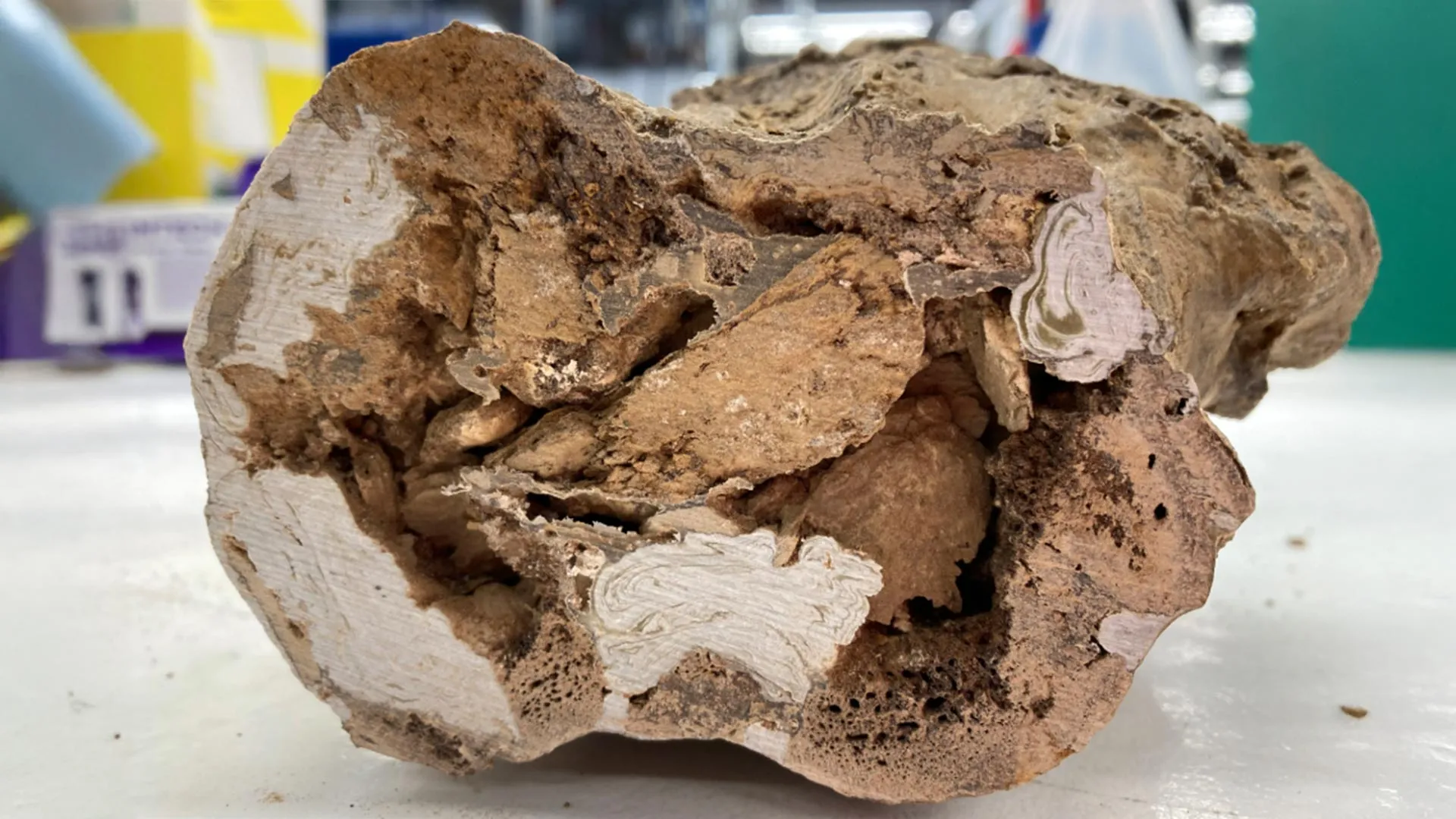
For generations, the foundational dogma of paleontology and molecular biology was built upon a neat, seemingly unbreakable rule: deep time erases everything soft. When an organism dies and its remains are buried under layers of sediment, the immense pressures, mineral-rich groundwaters, and immense spans of geological time—often stretching across tens or hundreds of millions of years—were universally understood to obliterate original organic molecules. Bones, teeth, and soft tissues were thought to undergo a complete metamorphic overhaul, substituting fragile biological structures with hardy rock minerals. In this traditional view, proteins, DNA, and other labile organic compounds were simply incapable of surviving the journey from the Mesozoic Era to the modern laboratory.
However, a groundbreaking study led by researchers at the University of Liverpool has shattered this long-standing assumption. Providing some of the strongest evidence to date, the multidisciplinary research team has demonstrated conclusively that original organic materials—specifically traces of structural proteins—can indeed survive within Mesozoic fossils, including the bones and teeth of dinosaurs. Published in the prestigious journal Analytical Chemistry, this landmark study focuses on an exceptionally preserved 22-kilogram sacrum of an Edmontosaurus, a duck-billed herbivorous dinosaur that roamed the Earth during the Late Cretaceous epoch. By deploying an array of state-of-the-art analytical techniques, the research team detected undeniable molecular signatures of collagen, breathing new life into a contentious scientific debate that has divided the paleontology community for approximately three decades.
The Anatomy of a Discovery: Inside the Hell Creek Specimen
At the heart of this revelation is an extraordinarily well-preserved Edmontosaurus sacrum—a complex structure formed by fused vertebrae connected to the pelvis, which historically served to support the massive animal’s lower spine and weight distribution. This specific fossil was meticulously excavated from the Upper Cretaceous rock layers of the Hell Creek Formation in South Dakota, a geological deposit world-renowned for yielding some of the finest dinosaur specimens from the twilight of the Mesozoic Era, just before the catastrophic asteroid impact that ended their reign. Following its excavation, the specimen found a home within the scientific collections of the University of Liverpool.
What set this fossil apart from thousands of others was its anomalous state of preservation. While most bones undergo extensive degradation and replacement by minerals like silica or calcium phosphate with little to no organic matrix left behind, this Edmontosaurus sacrum retained microstructural integrity that caught the eye of researchers. Recognizing a rare opportunity, the Liverpool team, in collaboration with institutions including the University of California, Los Angeles (UCLA), subjected the fossilized bone to rigorous, cutting-edge analytical procedures: protein sequencing, tandem mass spectrometry, and advanced material characterizations.
Mass spectrometry—a powerful analytical technique that identifies molecules by measuring their mass-to-charge ratio and chemical fragmentation patterns—proved to be the linchpin of the investigation. By ionizing components of the bone matrix, the researchers were able to hunt for specific molecular fingerprints associated with collagen, the principal structural protein found in vertebrate bones, skin, and connective tissues.
Overcoming the Contamination Hurdle
To fully appreciate the gravity of the University of Liverpool’s findings, one must understand the fierce controversy that has shadowed the field of paleoproteomics for the last thirty years. When researchers first began claiming the discovery of ancient proteins and soft-tissue remnants in dinosaur fossils during the 1990s and early 2000s, the broader scientific community met these announcements with intense skepticism.
The core argument against ancient proteins has always been contamination. Skeptics pointed out that dinosaur bones buried in sedimentary rock are routinely exposed to modern groundwater, soil bacteria, fungal hyphae, and human handling during and after excavation. Consequently, many argued that any organic material extracted from a fossilized bone must be a modern interloper—a biofilm of bacteria or a speck of modern keratin and skin cells introduced during lab processing, rather than an indigenous molecular relic of a Cretaceous creature.
The new study from Liverpool directly confronts and dismantles this primary objection. Professor Steve Taylor, chair of the Mass Spectrometry Research Group at the University of Liverpool’s Department of Electrical Engineering & Electronics, emphasized the definitive nature of their results.
"This research shows beyond doubt that organic biomolecules, such as proteins like collagen, appear to be present in some fossils," Professor Taylor stated. "Our results have far-reaching implications. Firstly, it refutes the hypothesis that any organics found in fossils must result from contamination."
By utilizing rigorous protocols, blind testing, and high-resolution spatial mapping of the bone matrix, the team demonstrated that the detected protein fragments are deeply embedded within the mineralized architecture of the bone, perfectly aligned with the biological framework where living collagen would naturally reside, rather than merely coating the exterior or filling porous cracks where modern contaminants would typically lodge.
A Multi-Institutional Technological Triumph
The success of the research relied heavily on a synergistic approach combining expertise from diverse scientific disciplines and institutions. No single analytical tool could have resolved the complex chemical matrix of a 70-million-year-old fossil, necessitating a multi-pronged laboratory assault.
Researchers from UCLA played a pivotal role by employing tandem mass spectrometry to detect and quantify, for the very first time in this specimen, the amino acid hydroxyproline. Hydroxyproline is a major component of the protein collagen and plays a crucial role in stabilizing its triple-helix structure. Because it is rarely found in significant quantities outside of collagen and a few other specific proteins, identifying hydroxyproline serves as a robust chemical proxy for the presence of degraded collagen within the bone matrix.
Concurrently, the University of Liverpool’s Mass Spectrometry Research Group spearheaded protein sequencing and comprehensive mass spectrometry tests, while specialists from the university’s cutting-edge Materials Innovation Factory conducted structural and chemical corroborations. Furthermore, the Centre for Proteome Research at Liverpool successfully identified distinct fragments of collagen alpha-1, the predominant form of collagen found in healthy vertebrate bone tissue.
This convergent line of evidence from multiple independent laboratories essentially closes the loop, providing a level of empirical certainty that has eluded previous paleoproteomic investigations.
A Century of Archives Awaiting Reexamination
One of the most exciting downstream implications of this research extends far beyond the Edmontosaurus specimen sitting in the Liverpool collections. The study suggests that paleontologists may have a vast, untapped archive of molecular data sitting right in front of them in museum drawers around the world.
For roughly a century, geologists and paleontologists have utilized cross-polarized light microscopy to examine thin sections of fossilized bone. When viewed through cross-polarized light, certain fossil bones display distinct, birefringent patterns—patches of structural preservation that have long been documented simply as petrographic curiosities or variations in mineralization.
According to Professor Taylor and his colleagues, these historical microscopy images and the physical thin sections they represent should be urgently revisited. The optical properties captured in these century-old archives may actually reveal intact, well-preserved patches of bone collagen. If researchers can use these historical datasets to screen and pinpoint promising fossil candidates, it could provide a ready-made trove of specimens ripe for modern protein analysis, bypassing the tedious process of blind searching.
"This could unlock new insights into dinosaurs—for example, revealing connections between dinosaur species that remain unknown," Professor Taylor noted, pointing to the potential for molecular phylogenetics to resolve evolutionary branches that traditional morphological anatomy—relying solely on fragmented bones and teeth—cannot definitively parse.
The Enigma of Deep-Time Preservation
Despite the triumph of detecting ancient collagen, the study also underscores a profound theoretical mystery that continues to perplex biophysicists and biochemists: How do proteins manage to persist across geological timescales spanning tens of millions of years?
Under standard thermodynamic conditions, proteins are thermodynamically unstable polymers. Over time, peptide bonds naturally undergo hydrolysis, breaking down into their constituent amino acids. Microbial decay, temperature fluctuations, and background radiation in the surrounding rock strata should theoretically degrade all organic molecules long before a million years have passed, let alone the roughly 66 to 75 million years since the Cretaceous-Paleogene extinction event.
The survival of collagen in the Edmontosaurus bone implies that unique, highly localized chemical environments must exist within certain fossils. Scientists hypothesize that mechanisms such as "fossilization shielding"—where mineral crystals tightly bind to and encase protein chains, effectively locking them away from water, oxygen, and microbial enzymes—may play a crucial role. Additionally, the cross-linking of collagen molecules during advanced mineralization might create an ultra-stable polymer network that resists thermal degradation. Unlocking the exact biochemical recipe for this extreme preservation remains one of the final frontiers in molecular paleontology.
Broader Impact and the Future of Extinct Animal Research
The implications of the Liverpool-led study stretch far beyond confirming the existence of dinosaur proteins. By demonstrating that original biological molecules can indeed survive the fossilization process, the research paves the way for a revolutionary approach to studying extinct fauna.
For decades, our understanding of dinosaurs, pterosaurs, and other Mesozoic organisms has been strictly limited to osteological data—bones, teeth, and occasionally fossilized skin impressions or feather outlines. While these macroscopic traits tell us a great deal about locomotion, size, and ecological niches, they frequently leave deep evolutionary relationships ambiguous, particularly when dealing with convergent evolution or highly specialized species.
Introducing molecular data into paleontology changes the game entirely. Protein sequencing allows scientists to reconstruct amino acid sequences, which can then be compared across species using cladistic algorithms similar to those used in modern genomics. While ancient DNA is widely considered too fragile to survive past a million years under most fossilization conditions, proteins are significantly more robust. Consequently, ancient proteins like collagen serve as the ultimate molecular proxy, bridging the vast gulf between classical paleontology and modern molecular biology.
As researchers begin to apply these advanced mass spectrometry techniques to a broader array of curated museum specimens, the boundaries of what we can know about extinct life are expanding rapidly. The long-running dispute over whether original biological molecules can endure deep time appears to be settled, opening a dazzling new chapter in our quest to decode the history of life on Earth.
