
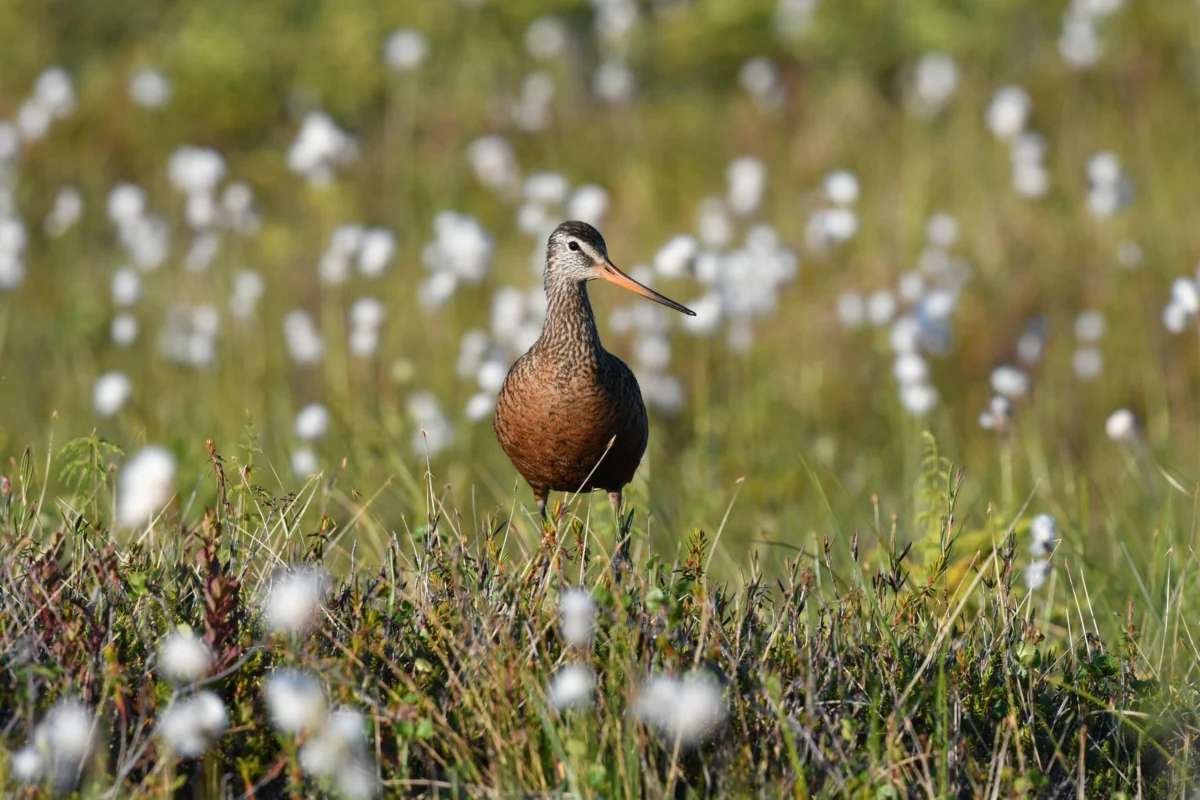
Spring’s annual thaw in Alaska signals more than just the melting of ice and snow; it heralds the return of millions of migratory shorebirds, feathered travelers undertaking epic hemispheric journeys to reach their breeding grounds. Among their critical destinations is Alaska’s vast Cook Inlet, a region of immense ecological significance whose precise role in the life cycle of these global voyagers has, until now, been insufficiently quantified. This spring marks a pivotal moment, as a comprehensive new research initiative launches, poised to unlock the mysteries surrounding Cook Inlet’s importance for breeding shorebirds and to inform urgent conservation efforts. The project, building on over a decade of dedicated study, aims to meticulously map and understand how the region’s unique boreal bogs and salt marshes sustain these vulnerable populations, providing crucial data in an era of accelerating environmental change.
A Crucial Stopover and Breeding Haven
While many shorebirds utilize Cook Inlet as a vital refueling stop, gorging on the abundant invertebrates and organisms found in its expansive intertidal mudflats before continuing their northward or westward journeys across Alaska, for thousands of individuals representing at least ten distinct species, the Inlet is far more than a waypoint—it is home. These are the birds that may have hatched from eggs laid directly within Cook Inlet’s intricate network of boreal bogs and salt marshes, returning after months of arduous migration and a long winter in southern climes to perpetuate their species. The annual return of these birds, driven by an instinct honed over millennia, underscores the irreplaceable value of these specific habitats. Species such as the Lesser Yellowlegs, Western Sandpiper, and the critically important Hudsonian Godwit rely heavily on these wetlands for nesting, foraging, and raising their young. The intertidal zone, characterized by one of the world’s largest tidal ranges, supports an incredible biomass of invertebrates, providing an essential energy source for these birds before and during the demanding breeding season. The mosaic of habitats, from sedge-dominated marshes to peatlands, offers diverse microclimates and food resources necessary for successful reproduction.
Expanding the Scope of Research
Since 2009, a focused research project has been underway near the mouth of the Beluga River, primarily concentrating on the Hudsonian Godwit (Limosa haemastica). This species, a long-distance migrant known for its striking plumage and impressive flights between the Arctic and Patagonia, has experienced concerning population declines over the past decade. Scientists have observed a correlation between these declines and the gradual drying out of critical bog habitats within the region, a trend exacerbated by changing precipitation patterns and rising temperatures associated with climate change. Recognizing the urgency of the situation and the need for a broader understanding, the research project is significantly expanding its scope this spring. It will now incorporate three additional shorebird species, broadening the data set to understand how diverse species respond to environmental pressures. Crucially, the expanded study will directly measure the success—and failure—of these birds’ breeding efforts in relation to vital habitat characteristics, particularly water levels. This direct linkage between hydrological conditions and reproductive output is paramount for developing targeted conservation strategies. Furthermore, the new research will extend beyond the immediate vicinity of the Beluga River, encompassing a wider array of breeding areas scattered throughout the Upper Cook Inlet region. This comprehensive geographical expansion is vital to understanding regional habitat connectivity and identifying other critical, yet previously unstudied, breeding strongholds.
A Collaborative Endeavor Driven by Innovation and Tradition
Leading this ambitious research is Dr. Nathan Senner, a professor at the University of Massachusetts Amherst and a proud graduate of West Anchorage High School. Dr. Senner’s team operates through a robust partnership, exemplifying the power of collaborative conservation. Key partners include Birds ‘n’ Bogs, a citizen-science initiative powered by the Alaska Department of Fish & Game, which leverages local knowledge and volunteer engagement; Audubon Alaska, a leading voice in bird conservation; and the U.S. Fish and Wildlife Service, a federal agency with a mandate to protect migratory birds.
The project employs a multifaceted approach, blending cutting-edge technology with time-honored field methods. High-tech tools are integral to the study, including a state-of-the-art tracking system capable of automatically logging the precise locations of newly hatched shorebird chicks. This technology allows researchers to monitor dispersal patterns, survival rates, and fine-scale habitat use with unprecedented detail, minimizing disturbance to sensitive nests and young birds. Dr. Senner elaborated on the methodological advancements, stating, "Integrating advanced telemetry and remote sensing allows us to gather data on a scale and with a precision that was previously impossible. We can track individual chicks, understand their movements, and link these directly to habitat quality and threats, all while minimizing human impact on these vulnerable populations."
Alongside these technological marvels, traditional field methods remain indispensable. Researchers continue to conduct extensive surveys by sight and sound, meticulously identifying species and assessing their presence across vast landscapes. The painstaking work of searching for extremely well-camouflaged nests, often requiring researchers to slog through knee-high water in challenging bog environments, remains a core component of the data collection. This direct, boots-on-the-ground observation provides invaluable context and ground-truthing for the remote sensing data. "There’s no substitute for being in the field, observing the birds directly, and understanding the nuances of their behavior and habitat interactions," Dr. Senner remarked, emphasizing the synergy between old and new techniques.
Mapping Habitat Change and Informing Conservation
Perhaps the most far-reaching objective of this project is its capacity to assess shorebird breeding habitat and population trends across the entire Upper Cook Inlet region. The research team will use their detailed on-the-ground observations to calibrate and validate drone and satellite imagery of wetlands around the Inlet. This integration of ground-based data with remote sensing allows for the extrapolation of findings across expansive, often inaccessible, areas, creating a comprehensive map of habitat conditions. This contemporary data will then be combined with historical records spanning the past four decades, providing a critical temporal dimension to the analysis. By examining these long-term trends, Dr. Senner’s team can precisely identify which areas are most vital to breeding shorebirds and, crucially, measure how these sites have changed over time. This includes identifying areas of habitat degradation, expansion, or shifts in water regimes.
A spokesperson for the Alaska Department of Fish & Game’s Birds ‘n’ Bogs initiative highlighted the significance of this holistic approach: "Understanding the historical trajectory of these habitats is just as important as knowing their current state. This allows us to predict future changes and intervene proactively rather than reactively." The ultimate purpose of this extensive data collection and analysis is to provide a clear, scientifically robust focus for future conservation efforts. Understanding which habitats, and indeed which specific breeding locations, our shorebirds rely on is an essential prerequisite for developing effective strategies to conserve their dwindling populations. The intricate salt marshes and boreal bogs of Cook Inlet are home to an entire, beautifully complex array of living organisms, from specialized plants to diverse insect life. Yet, the presence of breeding shorebirds signifies something truly special—it is an ecological indicator of a healthy, functioning wetland ecosystem, a phenomenon that does not occur just anywhere.
The Unique Ecology of Boreal Bogs and the Global Crisis of Shorebirds
While a boreal bog, with its often challenging terrain of mud, deep water, and the persistent threat of late-spring mosquitoes, may not immediately appeal to everyone, it is undeniably a remarkable haven of life. These peatlands are characterized by acidic, nutrient-poor soils and a unique assemblage of flora adapted to these conditions. Tiny carnivorous plants, such as sundews and pitcher plants, thrive here, capturing insects to supplement their nutrient intake. Unique flower species, found almost exclusively in bog environments, add splashes of color to the verdant landscape. Below the surface, treasure troves of buried insect larvae provide a rich food source for developing chicks. The bog ecosystem supports biodiversity that extends all the way up to scrubby spruce trees, where shorebirds like lesser yellowlegs and Hudsonian Godwits often perch as vigilant lookouts, surveying their territories. Beyond their direct role as bird habitat, boreal bogs are also crucial for carbon sequestration, acting as significant carbon sinks that play a role in mitigating climate change. They also contribute to water filtration and regulation, providing vital ecosystem services.
However, the health of these unique ecosystems, and by extension, the shorebirds that depend on them, is increasingly imperiled. Shorebird species around the world are declining at alarming rates. Global estimates suggest that North American shorebird populations have plummeted by an estimated 70% since 1970, with some species facing even more dire circumstances. The Hudsonian Godwit, for instance, has seen significant declines in its breeding range, making targeted research in critical areas like Cook Inlet all the more urgent. One of the primary reasons for this precipitous decline is these birds’ reliance on specialized breeding habitats that are rapidly deteriorating and disappearing due to a confluence of pressures. Coastal development, urbanization, and agricultural expansion encroach upon and fragment vital wetlands. Climate change presents a multifaceted threat, altering hydrological regimes, causing permafrost thaw in Arctic and sub-Arctic regions which can lead to bog drying or collapse, and shifting vegetation patterns. These changes directly impact the availability of suitable nesting sites and food resources.
Furthermore, like all migratory animals, shorebirds face a wide array of vulnerabilities throughout their epic annual journeys. A single shorebird population can be severely impacted by problems such as habitat loss, pollution, and food web disruption not just at their breeding grounds, but also at crucial stopover sites and wintering grounds across an entire hemisphere. For example, a godwit breeding in Cook Inlet might winter on the coast of Argentina, relying on a chain of healthy wetlands in between. Disruptions at any point along this global flyway can have cascading, detrimental effects on the entire population. This interconnectedness makes shorebird conservation an inherently international challenge, requiring coordinated efforts across continents.
The Interwoven Tapestry of Life
"Everything is connected" is a familiar mantra in conversations about the natural world, a concept often invoked but sometimes difficult to fully grasp or visualize. Often, these connections are invisible, or seem too numerous and complex to fully decipher. This spring’s expanded research in Cook Inlet will play a crucial role in illuminating these intricate threads within the global tapestry of shorebird migration. By meticulously documenting the relationship between specific habitat characteristics and breeding success, the project will provide tangible evidence of these connections, making them clearer and more actionable for conservation managers.
A representative from the U.S. Fish and Wildlife Service underscored the broader implications: "The data emerging from Cook Inlet will not only guide local conservation actions but will also contribute to international strategies for migratory bird protection. What we learn here resonates across entire flyways and continents."
As tens of thousands of these resilient birds embark on their arduous flights from southern climes, navigating vast oceans and continents to return to their ancestral breeding grounds, they serve as living, feathered proof of the natural world’s profound and intricate connecting links. Their survival hinges on the health of diverse ecosystems separated by thousands of miles, including the vital, yet increasingly fragile, bogs and salt marshes of Cook Inlet. The commitment to understanding and protecting these crucial Alaskan habitats represents not just a local endeavor, but a global imperative for biodiversity conservation. The future of these magnificent migratory birds, and indeed the health of the planet’s interconnected ecosystems, depends on the insights and actions spurred by such dedicated scientific inquiry.
