
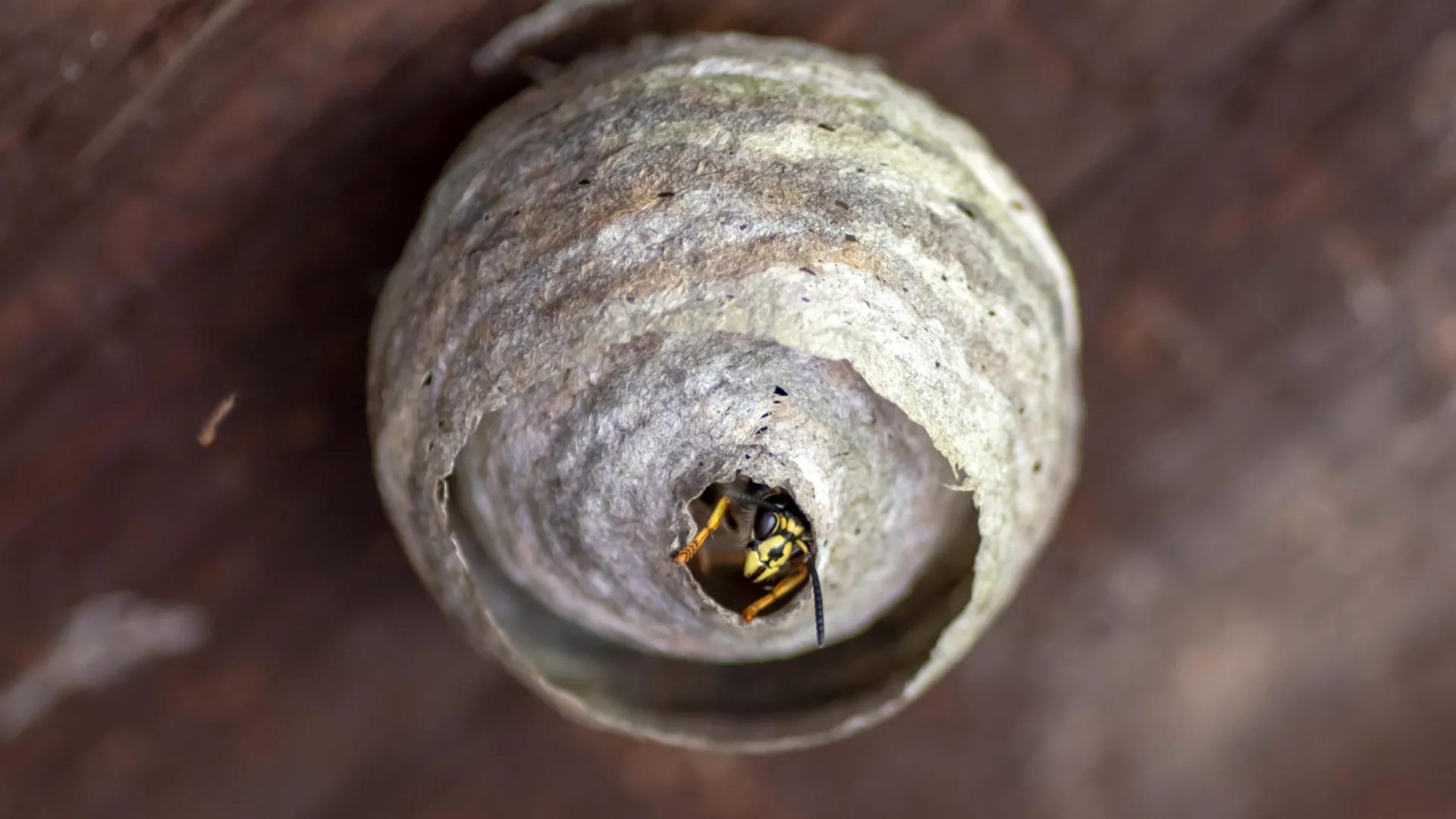
The common social wasp is as much a staple of the warmer months as outdoor festivals, sunscreen, and the perennial challenge of keeping children entertained during the school break. Usually regarded as an unwelcome picnic guest or a nuisance in the loft, these stinging insects are an unavoidable fixture of human life from June through September. However, the summer of 2026 is defying conventional ecological norms. Across much of the country, common social wasps are conspicuously absent.
This unexpected population slump has been noted with mounting alarm by entomologists, researchers, and professional pest-control operators alike. Academic research teams who rely on live specimens for seasonal behavioral and ecological experiments have reported an acute shortage of available subjects, struggling to find nests or foragers in their usual abundance. At the same time, commercial pest management companies note an unprecedented drop in service requests for the removal or management of wasp nests compared to previous years.
A Striking Silence in the Media and the Field
A reliable barometer for wasp activity in the Northern Hemisphere has historically been the volume of media reports detailing encounters between humans and insects. During warm springs and hot summers, wasp colonies typically experience accelerated growth, leading to widespread public friction and annual headlines warning of "plagues of wasps." By this point in the year in 2025—which also experienced a warm spring and a hot summer—news cycles and broadcast airwaves were saturated with accounts of aggressive foragers disrupting outdoor dining and public events.
In stark contrast, the summer of 2026 has yielded virtually no such stories. While formal nationwide monitoring initiatives, such as the Big Wasp Survey, typically require weeks of peak summer sampling to generate verified empirical data, the preliminary anecdotal consensus from the field points toward a significant downward shift in population density. If forthcoming ecological data substantiate these observations, the implications extend far beyond the immediate relief of picnickers. Despite their reputation, social wasps fulfill vital ecosystem services, functioning simultaneously as efficient pest-controllers, secondary pollinators, and essential decomposers.
A Chronology of Climatic Disruption
To understand the current scarcity, entomologists have looked back at the unusual meteorological trajectory of 2026. The year began with conditions that initially favored the insect’s lifecycle. A warm and dry spring encouraged a prolific emergence of foundresses—newly fertilized queen wasps waking from hibernation to establish colonies entirely on their own. During this vulnerable founding phase, a queen must construct the initial comb, lay eggs, forage for sustenance, and rear her first brood without assistance.
Ordinarily, warm and dry spring conditions bolster the survival rates of these nascent colonies by securing an abundant nectar supply to help the queen develop her ovaries, alongside stable prey populations to feed the emerging larvae. However, the spring of 2026 departed from historical climatic baselines. The season was characterized by unprecedented spikes in early heat, abruptly punctuated by unseasonably cold, damp days and followed by unexpectedly freezing nighttime temperatures.
These severe meteorological swings appear to have disrupted the delicate biological timing of the queens. Climatologists and entomologists suggest that such erratic weather conditions forced a significant number of queens to abandon their newly established nests prematurely or resulted in mortality rates high enough to drastically thin the initial population of foundresses before their first worker broods could hatch.
Extreme Heatwaves and Thermal Tolerances
Following the turbulent spring, the region entered a prolonged sequence of intense heatwaves. While certain insect groups have thrived under these conditions—with organizations like Butterfly Conservation projecting a bumper season for butterflies due to uninterrupted days for foraging, mating, and egg-laying—social wasps faced a different biological threshold.

All ectothermic organisms possess a critical thermal maximum (CTmax), a specific physiological limit beyond which environmental temperatures cause severe physical stress, including desiccation, muscle spasms, and eventual stupor. While honeybees exhibit a CTmax of approximately 49°C—a threshold frequently approached or exceeded by actual ground surface temperatures during recent UK heatwaves—sub-lethal temperatures can also severely degrade insect productivity and behavior. Research demonstrates that bumblebee cognition and foraging efficiency decline significantly during heatwaves reaching 32°C, leading conservation groups to voice concerns regarding long-term population declines as local flora withers under heat stress.
Social wasps possess notable physiological adaptations designed to buffer environmental extremes. As social insects, they utilize complex thermoregulation behaviors, such as coordinated wing-fanning to cool developing larvae, alongside insulated nest architectures featuring multi-layered envelopes surrounding the brood combs. Furthermore, their exoskeletons are coated with specialized waxy molecules known as cuticular hydrocarbons. These hydrocarbons alter their chemical structure in response to ambient heat, providing enhanced protection against moisture loss during severe heatwaves. Their diverse dietary habits also protect them against localized shortages of specific prey species.
Despite these evolutionary safeguards, research indicates that the CTmax for certain social wasp species hovers near 45°C (113°F). This lower thermal threshold likely rendered them exceptionally vulnerable to the extreme ground temperatures recorded during the successive heatwaves of 2026, causing widespread mortality among foraging workers away from the protective insulation of the nest.
The Phenomenon of the Shrinking Wasp
Field researchers have identified another peculiar anomaly accompanying the low population numbers: the few adult workers that have been observed are unusually small. The final body size of most holometabolous insects is permanently fixed during their larval development and is directly proportional to the nutritional quality and quantity provided by the colony. Once an insect pupates and emerges as an adult, its physical dimensions cannot increase.
Under normal seasonal progression, the first worker wasps to emerge in the spring are diminutive because a solitary queen is physically limited in the amount of food she can provision. However, as the colony transitions into late summer, the exponential growth of the workforce dramatically expands foraging capacity, resulting in better-fed larvae and substantially larger adult workers by the month of August.
The persistence of "spring-sized" wasps deep into the summer suggests two primary environmental pressures. First, a diminished diversity and abundance of available prey in the landscape has severely restricted larval nutrition. Second, a direct physiological response to ambient heat may be at play: insect larvae reared under elevated thermal conditions consistently develop at an accelerated rate, forcing them to enter pupation prematurely at a smaller overall body size. This phenomenon aligns with broader ecological studies suggesting a multi-decadal trend of social wasps decreasing in physical size over the past century in response to global temperature increases—a process that field biologists appear to be witnessing in real-time during the summer of 2026.
Broader Implications and Conservation Perspectives
The potential downturn in social wasp populations carries significant ecological ramifications. As apex invertebrate predators, social wasps consume immense quantities of garden pests, including aphids, caterpillars, and flies, providing a natural regulatory service that benefits agriculture and horticulture. Their role as opportunistic pollinators, visiting a wide array of flowering plants while searching for nectar, is frequently underestimated by the public. Furthermore, as decomposers, they accelerate the breakdown of organic material within local food webs.
The current scientific consensus emphasizes that public perception of wasps as purely antagonistic pests overlooks their foundational ecological contributions. As researchers work to quantify the extent of the 2026 population drop through targeted surveys and citizen science initiatives—such as the Wasp Picnic Survey tracking urban foraging behaviors—experts encourage a shift in human interaction. Rather than instinctively reacting with hostility toward wasps visiting outdoor dining areas, observers are encouraged to recognize that an exhausted forager approaching a picnic table may simply be searching for essential protein or carbohydrates desperately needed to sustain a struggling colony. Through continued monitoring and public engagement, researchers hope to map the recovery trajectory of these resilient yet heavily stressed insects in a rapidly warming climate.
