
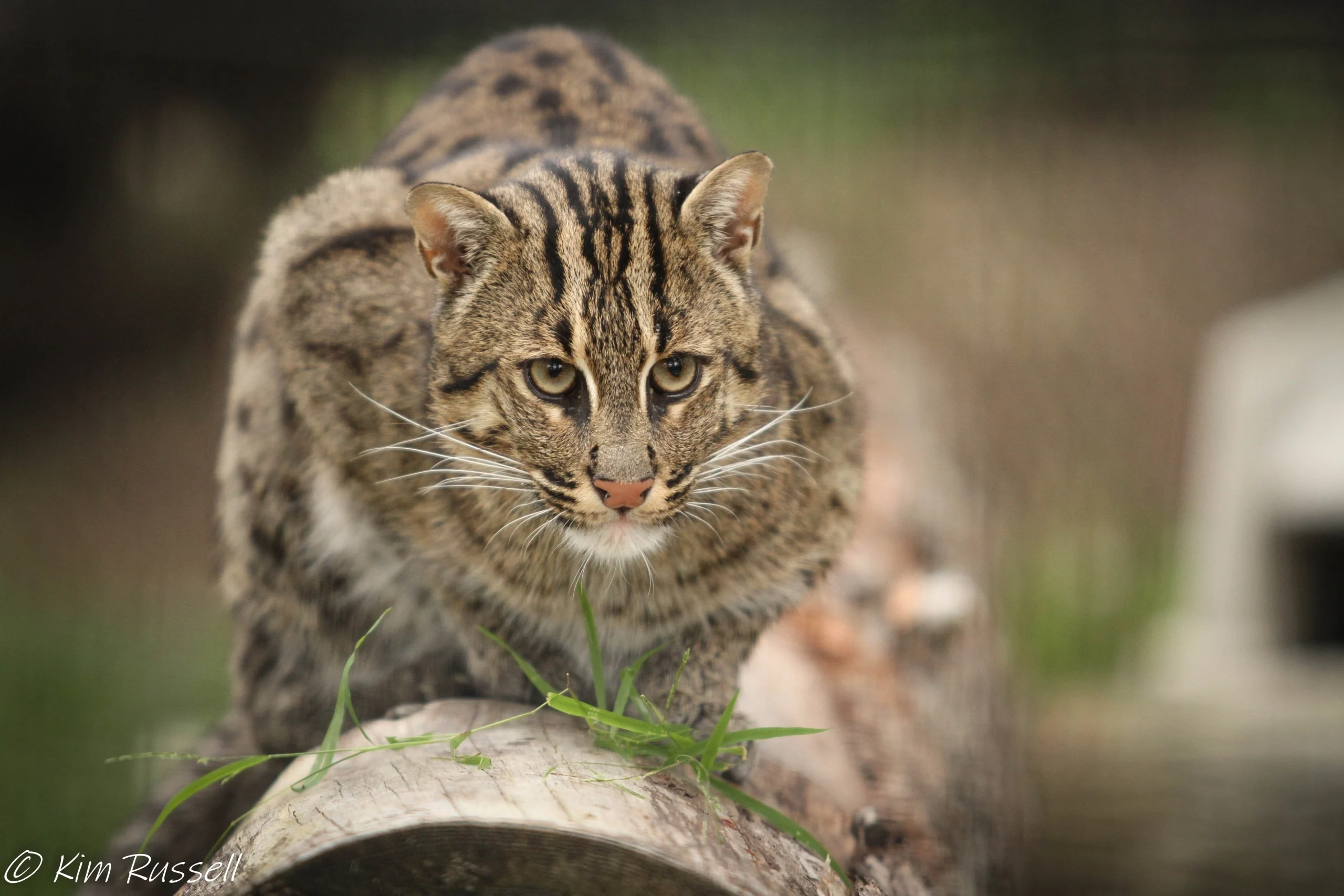
March 3 marks the annual observance of World Wildlife Day, a global initiative established by the United Nations General Assembly in 2013 to celebrate the world’s wild animals and plants and to raise awareness of the multitude of benefits that conservation provides to people. This year’s theme, "Partnerships for Wildlife Conservation," underscores the necessity of collaborative efforts between non-governmental organizations, scientific researchers, local communities, and the public to prevent the extinction of at-risk species. Among the animals currently benefiting from such collaborative frameworks is the fishing cat (Prionailurus viverrinus), a medium-sized wild cat species that remains largely understudied and critically overlooked in the broader discourse of global biodiversity.
The Role of Ambassador Animals in Modern Conservation
At the forefront of these efforts is River, a six-year-old fishing cat residing at the Hawk Creek Wildlife Center. In the realm of zoological management and conservation education, "ambassador animals" serve as a vital bridge between the public and the natural world. River’s primary function is to foster a sense of connection and urgency regarding the plight of her species, which is currently classified as "Vulnerable" on the International Union for Conservation of Nature (IUCN) Red List.
The population of fishing cats is in a state of consistent decline, primarily driven by the degradation of their natural wetland habitats. Despite their ecological significance as apex predators in their specific niches, fishing cats possess an elusive nature that complicates traditional field research. By serving as an ambassador, River provides scientists with a unique opportunity to conduct controlled observations that would be impossible to replicate in the wild, where the species is notoriously difficult to track or monitor.
Chronology of Scientific Engagement and Research
The research potential of captive ambassadors was recently validated when the founder of the Fishing Cat Conservancy, a leading organization dedicated to the survival of the species, visited Hawk Creek specifically to observe River. This collaboration represents a critical intersection between captive wildlife management and field conservation biology.
Historically, the study of fishing cats has been hampered by the species’ preference for dense, flooded vegetation and their nocturnal or crepuscular activity patterns. During the recent site visit, researchers utilized advanced observational techniques to study River’s biomechanics, specifically focusing on the specialized morphology of her paws. Fishing cats are anatomically distinct from most other felids due to their partially webbed toes, an evolutionary adaptation that facilitates movement through aquatic environments and allows them to effectively scoop prey from the water.
Data points collected from these observations are integrated into broader conservation models. Understanding the precise mechanics of how these cats hunt allows researchers to better identify the specific types of wetland micro-habitats that must be protected to ensure the survival of wild populations. By documenting River’s behavioral patterns, the Fishing Cat Conservancy can extrapolate findings to develop more effective deterrents for human-wildlife conflict and optimize habitat restoration strategies in Southeast Asia and parts of South Asia.
Ecological Data and the Status of the Fishing Cat
The fishing cat’s range is fragmented, stretching across parts of India, Sri Lanka, Bangladesh, and Southeast Asia. According to ecological surveys, the primary threat to the species is the conversion of wetlands into aquaculture ponds, urban infrastructure, and agricultural land. Wetlands are among the most threatened ecosystems globally, and because fishing cats are obligate residents of these areas, their fate is inextricably linked to the health of these marshes and mangroves.
Statistical modeling from conservation biologists suggests that if current rates of wetland loss continue, the population of the fishing cat could experience a further decline of 30% over the next two decades. This loss would have cascading effects on the ecosystem, as the species plays a key role in regulating prey populations, including fish, rodents, and small amphibians.
Furthermore, the lack of public awareness serves as a barrier to funding and legislative protection. Many conservationists argue that because the fishing cat does not possess the high-profile appeal of "charismatic megafauna" like tigers or elephants, it often receives a disproportionately small share of conservation funding. Initiatives like World Wildlife Day are, therefore, essential for elevating the profile of such species to the international stage.
Partnerships for Wildlife Conservation: A Framework for Action
The theme of this year’s World Wildlife Day highlights that the "Partnerships for Wildlife Conservation" framework is not merely an ideological goal but a structural necessity. The Fishing Cat Conservancy has implemented a three-pronged approach that exemplifies this collaborative spirit:
- Habitat Preservation: Working directly with landowners to secure "nature preserves" on private property, ensuring that wetland corridors remain intact rather than being drained for development.
- Community Engagement: Forming partnerships with local residents who live adjacent to fishing cat habitats, providing them with incentives to protect the landscape rather than exploit it.
- Scientific Advocacy: Translating the data collected from ambassador animals into actionable policy recommendations for governments and international environmental bodies.
The partnership between Hawk Creek Wildlife Center and the Fishing Cat Conservancy illustrates how specialized, small-scale centers can contribute to global efforts. By acting as a repository for biological data, Hawk Creek supports the macro-level goals of the Conservancy, proving that successful conservation is a multi-layered process requiring coordination between different stakeholders.
Official Responses and Future Implications
While the organization has not issued a formal statement on the matter, the consensus among wildlife biologists at the Fishing Cat Conservancy is that the integration of behavioral studies from captive populations is a vital step toward long-term success. "The goal is not simply to keep these animals alive in captivity, but to use the knowledge gained from them to secure their future in the wild," a representative noted during the recent research assessment.
The implication for future conservation is clear: the model of "ambassador-led research" is becoming a standard in the industry. By observing the physical and behavioral responses of animals like River, researchers can create better management plans for protected areas, ensuring that the environments being set aside are actually suited to the functional needs of the cats.
Moving Forward: The Role of Public Participation
As World Wildlife Day 2024 concludes, the call to action remains focused on the power of collective support. Public donations to facilities like Hawk Creek are channeled directly into operational support for the care of ambassador animals and the funding of field-based conservation programs.
For the average citizen, the opportunity to support the Fishing Cat Conservancy involves more than financial contributions; it involves raising awareness about the existence of the species and the importance of wetland preservation. The survival of the fishing cat requires a global shift in how humans view wetlands—moving away from seeing them as "wastelands" to be drained and toward recognizing them as essential, life-sustaining ecosystems.
The collaborative success story of River and the Fishing Cat Conservancy serves as a template for other vulnerable species. By fostering partnerships that span the gap between the public, the scientific community, and the animals themselves, organizations are creating a roadmap for the survival of those creatures that are most at risk of being forgotten. As data continues to be gathered and conservation networks expand, the prospect for the fishing cat’s recovery remains cautiously optimistic, provided these partnerships continue to receive the attention and resources they require to function effectively.
