
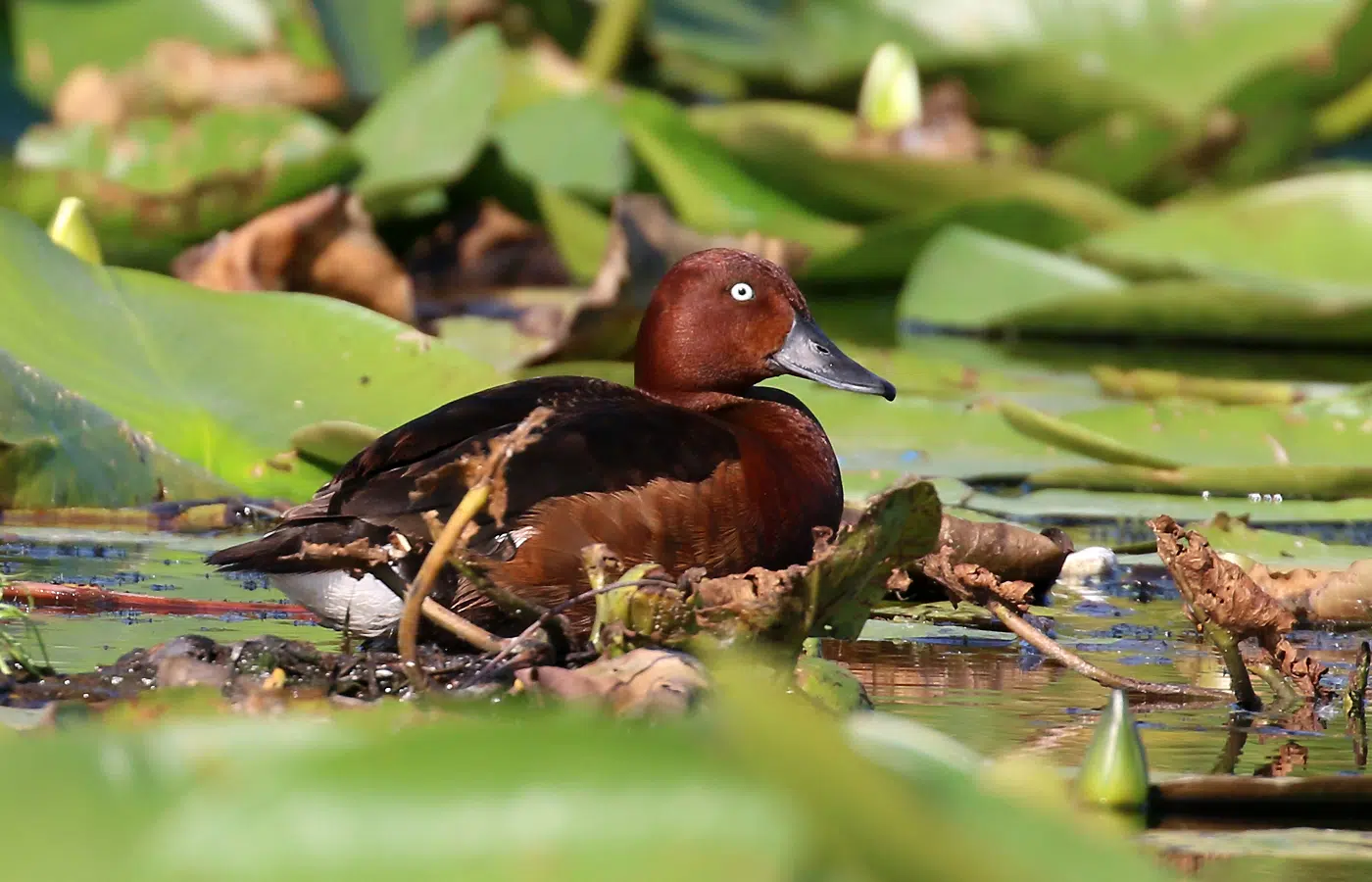
The African-Eurasian Flyway stands as one of the most critical biological corridors on the planet, a sprawling aerial highway that facilitates the seasonal migration of over 2 billion birds representing 465 distinct species. Stretching from the frozen reaches of the Arctic tundra to the southern extremes of the African continent, this route serves as a lifeline for biodiversity, connecting the ecological health of three disparate continents. Among the most vulnerable and iconic travelers navigating this path is the Ferruginous Duck (Aythya nyroca), a species currently categorized as Near Threatened by the International Union for Conservation of Nature (IUCN). As the Ferruginous Duck traverses thousands of miles, its survival becomes a testament to the integrity of a chain of Key Biodiversity Areas (KBAs), which serve as essential refueling and breeding grounds.
The plight of the Ferruginous Duck highlights a systemic challenge: the migratory cycle is only as strong as its weakest link. For this species, the loss of any single stopover site could have catastrophic impacts on population stability. By examining the biological and environmental requirements of the duck, conservationists are mapping a broader strategy to preserve the flyway’s connectivity, ensuring that the ecological services provided by these wetlands remain intact for future generations.

The Anatomy of the African-Eurasian Flyway
The flyway is not merely a path; it is a complex, interdependent network of wetlands, coastal lagoons, and river systems. Migratory birds like the Ferruginous Duck rely on these sites to replenish energy reserves depleted by thousands of kilometers of flight. Data from BirdLife International suggests that approximately 8% of all bird species using this flyway are currently threatened with extinction, while 44% are experiencing population declines.
These statistics underscore the gravity of habitat degradation. The primary drivers of this decline include the intensification of agricultural practices, which often lead to the draining of wetlands, and the expansion of aquaculture, which can inadvertently replace natural foraging habitats. Furthermore, the spread of pathogens such as the West Nile virus and avian influenza, coupled with the illegal hunting of migratory birds, creates a multifaceted crisis that transcends national borders.
The European Stronghold: The Pokuplje Basin
In the northern segment of the migration route, the Pokuplje Basin in Croatia serves as a critical node. Spanning approximately 350 square kilometers, this wet lowland landscape is defined by its mosaic of ancient oak forests and expansive meadows. The basin’s ecological significance is bolstered by a historic network of carp fishponds, such as Crna Mlaka and Draganic, which provide high-quality foraging habitat for the Ferruginous Duck.

Beyond its role as a sanctuary for the Ferruginous Duck, the Pokuplje Basin supports a staggering array of wildlife. During peak migration, the area hosts upwards of 20,000 waterbirds. It also functions as a vital nesting ground for apex predators and specialized species, including the White-tailed Sea-eagle and the Collared Flycatcher. The presence of these birds serves as an indicator of the basin’s health; their continued success suggests that the local food web remains resilient despite the mounting pressures of climate change and land-use shifts.
The African Sanctuary: Lake Nasser
As the Ferruginous Duck progresses into the wintering phase of its cycle, it finds refuge in the man-made expanse of Lake Nasser in Egypt. As one of the largest reservoirs in the world, the lake serves as a primary freshwater nexus for migratory birds exiting the Northern Hemisphere. It is estimated that Lake Nasser can sustain over 200,000 wintering waterbirds at any given time, providing a critical buffer against the harsh conditions of the journey.
Lake Nasser is not only a biological reservoir but a cornerstone of Egyptian stability. Created by the construction of the Aswan High Dam, the lake is essential for agricultural irrigation, regional fisheries, and hydroelectric power generation. The coexistence of high-intensity human utility and high-density biodiversity makes it a model for sustainable management. The lake provides a habitat for the last remaining populations of Nile Crocodiles in Egypt, the African Softshell Turtle, and the Dorcas Gazelle. This intersection of human economic necessity and environmental preservation is where the most effective conservation work is being tested.

Chronology of Conservation Efforts
The history of protection efforts for the Ferruginous Duck has shifted from localized, sporadic observations to a coordinated, international framework.
- Early 2000s: Initial recognition of the Ferruginous Duck as a species in decline prompted regional surveys across the Mediterranean basin.
- 2015–2020: Increased monitoring of the Pokuplje Basin revealed that habitat fragmentation was the primary threat to local breeding populations.
- 2023: Nature Conservation Egypt (NCE) successfully advocated for a permanent hunting ban within the perimeter of Lake Nasser, marking a significant policy victory.
- 2026 (June): BirdLife International was awarded a £7.5 million grant from the Ecological Restoration Fund (ERF). This funding represents the largest single infusion of capital for the flyway in recent memory, designed to initiate a three-year intensive restoration project.
Official Responses and Strategic Shifts
The £7.5 million grant from the ERF is widely viewed by environmental scientists as a pivot point in flyway management. Dr. Elena Vance, a lead researcher involved in the flyway initiative, noted that "the funding allows us to move beyond reactive conservation and toward a proactive model of landscape-scale restoration."
The strategy, as outlined by BirdLife International, focuses on creating an "ecologically coherent network" of sites. This means ensuring that if a wetland is restored in Croatia, there is a corresponding, protected wintering site in Egypt. This cross-continental planning is essential for the Ferruginous Duck, which lacks the ability to identify new stopover sites if its traditional ones are destroyed.

In Egypt, the success of Nature Conservation Egypt (NCE) provides a template for local engagement. By integrating local fishing communities into the protection efforts of Lake Nasser, NCE has turned former hunters into citizen scientists. The return of the Long-tailed Cormorant to the lake—a species that had been absent for years—serves as a tangible metric of success that resonates with local stakeholders and policymakers alike.
Broader Impact and Global Implications
The implications of the Ferruginous Duck’s survival extend far beyond the conservation of a single species. It acts as a sentinel for the health of the global water cycle and the resilience of the African-Eurasian Flyway. If these wetlands are allowed to degrade, the impact on human societies—ranging from water scarcity in the Nile Valley to the loss of natural flood mitigation in the Balkans—would be profound.
The current conservation trajectory emphasizes that environmental protection must be tied to economic viability. Sustainable aquaculture, which maintains the bird-friendly features of fishponds while allowing for commercial harvest, is being promoted as a solution to the conflicts between local farmers and wildlife conservationists.

Looking Ahead
The future of the Ferruginous Duck rests on the ability of international coalitions to maintain the integrity of these vital corridors. As the three-year initiative funded by the ERF begins to take shape, the focus will likely remain on three core pillars: legal protection of key sites, the restoration of degraded wetlands, and the implementation of community-led monitoring programs.
The story of the Ferruginous Duck is one of shared heritage. It is a story that links the oak forests of Croatia with the desert reservoirs of Egypt, reminding observers that borders are human constructs, while the pathways of migratory birds are fixed by millions of years of evolution. The success of this conservation effort will serve as a bellwether for the future of international environmental cooperation in an era of rapid climatic and environmental change. The path forward is clear: to save the bird, one must save the landscape, and to save the landscape, one must bring together the people who inhabit it.
